

















































Music studio in Burkina Faso capital bombed after coup
18 Sep 2015 - 08:42


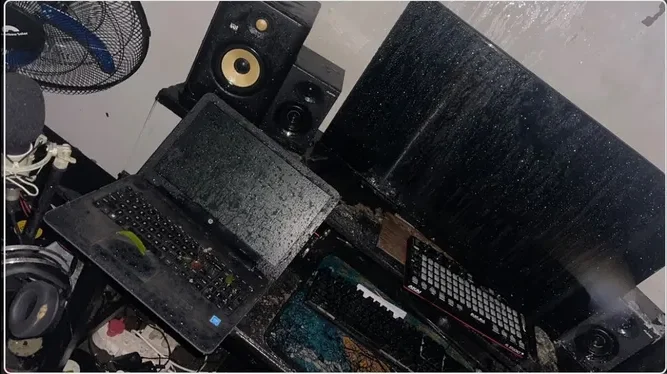
Studio Abazon in Ouagadougou, the capital of Burkina Faso, was attacked in the early hours of Thursday 17 September. The studio is owned and run by top Burkinabe rapper and revolutionary artist, Serges Martin Bambara - aka Smockey (or Smokey). The attack was reportedly carried out by members of the RSP, otherwise known as the ‘Presidential Guard,’ led by General Gilbert Diendéré, the leader of the military junta that seized power in the country this week.
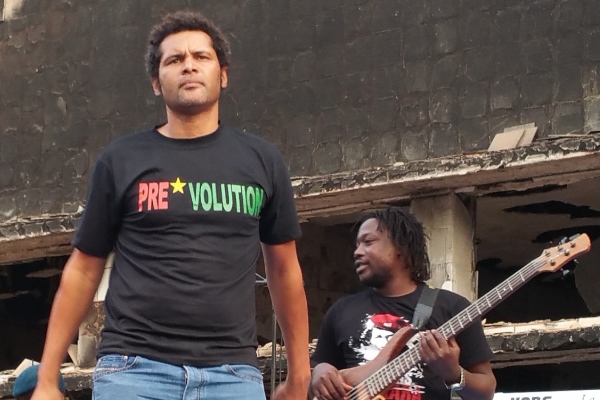
Studio Abazon, according to rights activists in Ouaga, was rocket-bombed by members of the RSP. According to reports, the well-equipped studio, a hub for young and aspiring musicians in Ouga, was damaged beyond repair - which confirms the suspicion that it was an orchestrated attack on the artist, who in recent years has become the rallying voice for the politically decimated angry and idealistic young Burkinabe. Smockey is the leader of a popular socio-political movement called Balai Citoyen (The Citizens’ Broom), which led the revolt against the dictatorial actions of former President Blaise Compaoré. The popular revolt forced Compaoré to resign and flee the country on 31 October 2014. General Diendéré was number two man to Compaoré. His leadership of the RSP targeted Smockey and members of The Citizens’ Broom, who they perceived as enemies of the ousted Compaoré.
Earlier in March, Smockey had played host to top musicians from eight African countries, known collectively as the Ambassadors for Creative Expressions, under Artwatch Africa, a project promoted by Arterial Network, a pan-African body of artists and cultural workers. The 11 musicians had recorded a single track in the studio titled ‘Right To Life’, which called for the freedom of artistic expressions.
Two of Africa’s most prominent musical activists, Nigeria’s Ade Bantu and Senegal's Didier Awadi, both of whom were Artwatch Ambasadors, have spoken against the bombing of Studio Abazon. They said the bombing reaffirms the fact that artists’ lives are not secure in many parts of the continent. They urged the Economic Community of West African States (ECOWAS), the African Union (AU) and the United Nations (UN) to make necessary intervention to ensure that the attackers of Smokey’s Abazon studio are brought to justice.
The project manager of Artwatch Africa, Diana Ramarohetra, who coordinated a Ambassadors workshop and recording in Ouaga in March, stated: “Artists are in danger in Ouagadougou. The artist is not terrorist; the artist has the right to defend what he thinks is right. Of course, his voice can be stronger, his words more aggressive. But as it is often said, the truth hurts.
“The artist has a responsibility to the public towards his convictions. The artist is there to denounce where the social contract has been broken. These artists, despite their commitment to organizations in civil society, and despite the challenges that confront their legitimacy, are non-political. They aspire to one thing: that Africa puts an end to political unrest that continues to hurt our image and our future,” added Ramarohetra.
‘Right To Life’ video to be launched in Lagos
Meanwhile, the video for ‘Right To Life’ (or 'Droit de vivre'), the song that was recorded in the bombed studio and mastered by Smockey, will be formally presented in Nigeria on Friday 18 September at the monthly Afropolitan Vibes concert, which is hosted Ade Bantu. Awadi will also feature at the concert, as well as presenting the video clip. The event takes place from 7pm at Freedom Park in Lagos.
The 11 leading artists that featured in the audio and video recordings of ‘Right To Life’ under the collective name of Artwatch Africa Ambassadors for Creative Expressions are: Didier Awadi (Sénégal), Soum Bill (Côte d'Ivoire), Josey (Côte d'Ivoire), Zeynab (Benin), Master Soumy (Mali), Monza (Mauritania), Smockey (Burkina Faso), Alif Naaba (Burkina Faso), Awa Sissao (Burkina Faso), Pheno Bi (Niger) and Ade Bantu (Nigéria)
Launched earlier this year by Artwatch Africa, an arm of the pan-continental body Arterial Network, the sole aim of the Ambassadors for Creative Expressions project has been to canvas for freedom of artistic rights and creative expression. The launch was held at a two-day workshop in Ouagadougou during the 24th Pan-African Cinema and Television (FESPACO) 2015. In the two-day workshop on 4 to 5 March, the artists were taken through a workshop on various issues involved in freedom of creative expression. Many of them met for the first time at the workshop and collaborated to forge common aims and strategies to champion freedom of artistic and creative expression on the continent, and to identify challenges to be overcome so that artists would be accorded their due respect in all the countries of the continent.
The two-day session was concluded with a concert by Smockey as he launched his latest album, leading his fellow hip-hoppers, members of the Balai Citoyen collective, on 5 March in the ruins of the old National Assembly in Ouagadougou. The highlight of the workshop was the recording of joint single titled ‘Right To Life’, which was initiated by Awadi. The song, according to him, is an opportunity by the artistes from across the continent to unite their voices and record song on freedom of expression. Watch the video below.


Most popular
Open call: 2026 Gender@Work music industry training in Johannesburg
09 Oct 2026

Top amapiano songs of 2026
16 Feb 2026
Gambia: Suntou Susso announce UK tour for ‘The Path of a Griot’
09 Oct 2026

Top Naija songs of 2026
31 Mar 2026

Top Afrobeats songs of 2026
19 Mar 2026
Call for applications: ACCES 2026 Emerging Artist Spotlight Competition
01 Oct 2026
Disclaimer: Music In Africa provides a platform for musicians and contributors to embed music and videos solely for promotional purposes. If any track or video embedded on this platform violates any copyrights please inform us immediately and we will take it down. Please read our Terms of Use for more.

Subscribe to our monthly Newsletter
Follow us on social media


Please log in to post a comment.