






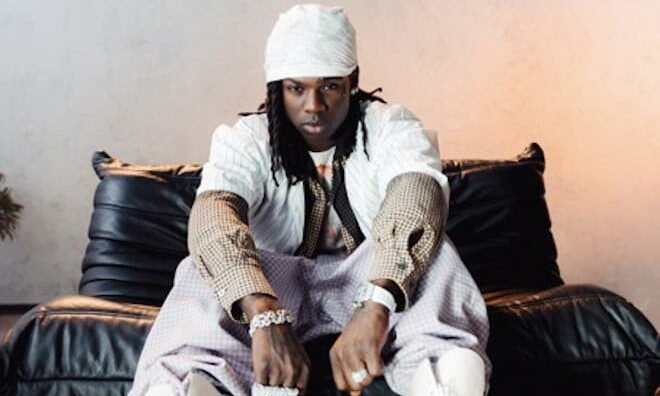




















































Titi Solomon’s comeback on Nairobi’s famous River Road

29 May 2015 - 12:37


At one time in the 1990s his song ‘Tangu tupendane’ was a hot favourite with radio listeners, especially of the state-broadcaster KBC general service, where it was well promoted by popular DJ John Karani. An easy sing-along bluesy love song spiced with lingering licks of the horns, the track easily cut across the social divides of radio listeners, winning fans from both the suave up-market crowd and the common folk on the street. But then, just when it was gaining traction in the clubs the singer fell off the radar and little was heard from him for a long time.

Music In Africa recently tracked Titi Solomon down for an interview and he gave an insightful peek at the workings of one of Nairobi’s most important streets when it comes to music production, but which, incidentally, has largely been ignored by the mainstream media and left to its own devices by the government. “I decided to take time off from making music to study the market,” said Solomon at the interview, letting slip that he is preparing for a comeback.
Titi Solomon has faced a unique problem in making his music. When he initially set out to record he wanted the unique sound of Nairobi’s River Road, famed for being the country’s music mecca, but he wanted it done in an up-market studio. It wasn’t an easy task. The two are like oil and water, sitting uncomfortably beside each other. For a long time Kenya’s up-market studios have looked down at the River Road-based studios for being inferior, producing music – and by extension movies – meant for local consumption; unambitious music for the uncultured country folk. It is only in recent years that the real power of River Road was felt and grudgingly accepted by musicians from the wealthier part of town.
“There is something special about River Road. Those musicians are real musicians,” said Solomon. “You can tell from the way they have mastered their instruments and roles. Everyone knows exactly what they are supposed to do. The interesting thing is they don’t even have to listen to the whole song before they fall in. It is a chain, and everyone knows their place. What further makes it unique is that no one went to school to learn music. They all learned by apprenticeship, including the producers and sound engineers. They started out as assistants in the studio, cleaning up or dusting and packing vinyl, and gradually learnt the skills by observation and listening. They are very good at what they do.”
It is for this reason that Solomon chose to make his music on River Road, opting for the dingy and oft crowded tiny studios because he wanted to capture a raw sound that is not overly-aided by modern technology.
In the 1980s when the multi-national record companies that had previously ruled the roost in Nairobi left, most of their equipment was acquired by the indie local producers who set up shop on River Road. It is this analogue equipment, which is outdated elsewhere, that is still churning out music on River Road.
“The drummer will most likely be perched on a three-legged chair or a tomato crate, but the moment he starts playing he will know that the drums are out of tune, and he will remove a tuning key and set about adjusting by himself until he gets the right tune, which he knows by ear,” said Solomon.
The business on River Road is brisk, with some of the studios fully booked for a month or two. Usually the musician will come with his or her compositions, identify the back-up musicians and rehearse with them for anything from a couple of hours to a couple of days, before going to the studio for a straight recording.
“There is no room for error on River Road,” said Solomon. “You don’t have the luxury of a second take. Because the studio sessions are expensive, usually a musician will book a studio for a day and record a whole album in one take. This is possible because the session musicians have mastered the individual styles of the River Road stars and will easily fall in place.”
Solomon cut his first singles at River Road’s Studio Sawa. But then, he decided he didn’t want to follow the usual channels of the River Road musicians, who know that they are ignored by the mainstream media, and who target their fans directly using a complex but effective distribution network that ensures the music gets to the fans wherever they are upcountry while it’s still hot, and at a pocket-friendly price.
Solomon was not content with following that route. He wanted his music to go mainstream, he wanted it played on national radio. To do that he knew that he had to refine the sound. And so he took his tapes – yes, back then it was still recorded on tape and released on cassettes, which River Road clung to up to just the other day – and went to Ogopa DJs, who were then the trendiest studio in town for mixing and mastering. Although they did a good job of it, it still wasn’t the perfect sound he was looking for. In hindsight he thinks he knows why.
“Studios are like co-wives; always suspicious of each other. They usually like to handle a project exclusively. They don’t like to take over what somebody else started.” It was that old case of being a second owner of a shoe at the flea market.
Nonetheless Solomon was undeterred, and he took the finished product to KBC’s DJ John Karani, who literally ran with it, both on radio and in the clubs where he was playing. “I didn’t pay anything,” said Solomon, referring to the alleged payola in Kenya’s mainstream media today -- but which no artist or DJ will admit to -- whereby some wealthy musicians are said to pay radio and club DJs to play their music. “DJ Karani just loved the song when he listened to it, and when he played it the listeners loved it! He has simply been my biggest promoter so far. It is unfortunate that I had to take a break, but it was for a reason. The time was not right. I could not rush it.”
Part of what Solomon wanted to find out during the break was how the market works. The statistics he drops at the interview are hard to believe. “The River Road business is big,” he said. “In my estimate, from the people I spoke to, close to 500 million (Kenya Shillings) changes hands on River Road in one day alone.”
This is a figure that the taxman would want to pay attention to. But then, unlike the other well-regulated businesses in the upper part of Nairobi’s Central Business District west of Tom Mboya Street, which roughly demarcates the city’s two social groupings, River Road doesn’t open up its books to outsiders. With good reason. The taxman hasn’t helped them much all this while. They have largely built the business networks on their own, and so set the rules on who does what in the empire by themselves. And they have the money and the clout to enforce their own rules amongst themselves.
A typical scenario on River Road is a producer identifying the star who they want to make the next hit album with. They will then invite the star for a discussion where they will negotiate the fee he wants to make a hit album. The figure can range from anywhere between Ksh 800, 000 to over a million, depending on how hard the star negotiates. Once settled the producer will then fork out the cash, book and pay for the session musicians who the star handpicks, and they set a date for the rehearsals and the recording. When the recording is done the musician hands over the music to the producer and the deal is sealed.
Thereafter, whatever number of CDs or cassettes the producer will sell is none of the star’s business. His sole earnings thereafter will come from shows. And they make good money even there, compared to their up-market musicians. A typical River Road star like John De Mathew or Ken wa Maria will charge anything in the range of Ksh. 200, 000 per show. And even that will have to be on the condition that you join a long waiting list. Most of them have tight bookings for up to two months for all the upcoming Fridays and Saturdays, which are their busiest days.
On the contrary an average up-market musician who is constantly in the entertainment papers might be paid half of that and have to contend with a handful scattered shows. Which is why a number of the River Road stars hardly bother with granting media interviews. They know the attitude the mainstream media has of them, and they simply don’t care. Their core business is their fans.
According to Solomon, a good River Road hit can move about 10, 000 CDs a month at its prime. And so if the CD will be going for Ksh. 250 a piece that places the producer in the comfortable company of Nairobi’s Who is Who, even after deducting their expenses.
This is the one reason why River Road can also be a dangerous place to operate from if you don’t know the rules. Typically, since everyone has their turf cut out for them, they work together like a carefully orchestrated cartel. There are guys whose business is to design and make the sleeves, others who pack the CDs, others who dispatch the orders to the strings of CD-selling kiosks upcountry and so on. It is an efficient system that works for everyone.
Although the general perception is that River Road and the surrounding streets are a hub of piracy when it comes to intellectual property theft, Solomon thinks the actors have simply been misunderstood. No one has bothered to understand how they work.
“Those are serious business people who you can negotiate business with if you understand how they work,” he said. “If you are a hit you can schedule a meeting with them and negotiate. If you agree they will pay you in cash whatever amount you are asking for. They have the money.”
Perhaps it is time the Kenyan government rethought its strategy and climbed down from its high horse to engage these star-makers of River Road in a roundtable discussion on how they can work together for the best interests of the music industry.
Meanwhile as the Law chooses to play hide and seek River Road continues to outwit it. It has its own common fund to which everyone contributes, and which bails out anyone of their members who are arraigned in court on a ‘piracy’ charge. And it would even seem like the scales are starting to fall off the eyes of the up-market musicians who hog the limelight in the mainstream media on where the real clout is. When it comes to elections for board members of the country’s music Collective Management Organisations, River Road has shown time and again that it takes it without breaking a sweat. They may not have Masters degrees from Berkeley or other fine music colleges, but they have the numbers.
And if Titi Solomon’s perception of River Road is correct, and he gives us a hit album as he says, then he might just be coming back into the game with an upper hand; or on top of the hustle, as they say on the street. Only time will tell.


Most popular

Call For Applications : ACCES seeks a UK-based performer
10 Sep 2026

Top amapiano songs of 2026
16 Feb 2026

Top Afrobeats songs of 2026
19 Mar 2026

Open call: Goethe-Institut grants for Southern African creatives
08 Sep 2026

AFRIMA 2026: All the winners
12 Jan 2026

Open call: Ernst von Siemens Music Foundation 2026 funding programmes
04 Sep 2026

Open call: FAME Week Africa, Pressure Cooker Studios songwriting camp
09 Sep 2026
Disclaimer: Music In Africa provides a platform for musicians and contributors to embed music and videos solely for promotional purposes. If any track or video embedded on this platform violates any copyrights please inform us immediately and we will take it down. Please read our Terms of Use for more.

Subscribe to our monthly Newsletter
Follow us on social media


Please log in to post a comment.