











































NEFCISA
NEFCISA

The Music In Africa Foundation (MIAF) is proud of its partnership with the Industrial Development Corporation (IDC) as a Strategic Implementing Partner (SIP) for its Social Employment Fund (SEF). Through this collaboration, MIAF is running a national programme that is creating jobs, addressing skills gaps, and strengthening South Africa's creative industries — in line with the SEF's overarching goal to generate work for the common good and build community value through employment, social contribution, and inclusive economic participation. Operating under the banner NEFCISA (National Employment Facility for Creative Industries in South Africa), the initiative is recruiting and training participants, matching them with host organisations, and has already placed 1 500 workers across the country — surpassing its original target of 1 000. NEFCISA is delivered through a network of 20 host organisations spanning five provinces, who are actively hosting participants and contributing to work for the common good across South Africa's creative and cultural industries. Key Objectives: Support employment and entrepreneurship in the creative industries. Offer skills development and training programmes. Foster partnerships between public and private creative sectors. Promote South African creativity at both provincial and national levels Foster community development through social contribution.

ACCES
ACCES

ACCES Conference and Showcase Festival is Africa's leading music industry gathering, bringing together the people shaping the future of the continent's music business. Artists, entrepreneurs, executives, investors, policymakers and cultural leaders from across Africa and around the world come to ACCES to build partnerships, exchange ideas, discover talent and create new business opportunities. Since its launch in 2017, ACCES has become the continent's premier platform for professional exchange and music market development. Combining a high-level conference with a curated showcase festival, networking, exhibitions and industry programmes, ACCES offers a unique space where creativity meets business and where African music connects with the global industry.

Gender@Work
Gender@Work

Music In Africa Gender @ Work is a three-year training programme aimed at upskilling and increasing the participation of female professionals in the African music sector. Launched by the Music In Africa Foundation (MIAF) in April 2019, the programme is connected to the MIAF’s ACCES music conference – a pan-African event held in a different African country every year. This connection enables the programme to reach new participants in a different African country every year. The programme marks the beginning of a more concerted effort by the Foundation to support the participation and inclusion of women in all facets of its programmes and the music sector in Africa as a whole. Over the three years, the programme will aim to address gender imbalances in the sector through training, lobbying, facilitating knowledge exchange and dialogues that foster the interest of women. The broader objectives of the programme are to: Provide industry training for women on critical music industry skills, focusing on: Stage management Electronic music production and recording Music business management Technical knowledge Provide an opportunity for both professional and aspiring women to benefit from the Music In Africa network and its broad range of activities in 2019, 2020 and 2021. Provide a solution-based platform in the form of a round table at ACCES with a view to identify challenges, discuss opportunities and lobby for the interests of female practitioners. Offer participants the opportunity to benefit from programmes offered by MIAF’s partners. Increase access to educational materials. Integrate participants in the broader ACCES programme to maximise experience and exposure to the industry. Record and present training materials on the www.musicinafrica.net, including but not limited to tutorials, templates and other best-practice materials. Communicate women-based themes that support the initiatives and messages of the programme. MAIN TRAINING ACTIVITIES Training in first country (Ghana): In the first year, participants will be trained on all aspects of stage management by a team of experienced stage managers from 10 to 17 November 2019. The programme will offer robust classroom training as well as practical, hands-on training in which participants will also be given the opportunity to manage various aspects of the ACCES performance programme. Training in second country: The second training iteration will take place at ACCES 2020 when the programme will diversify its course to include music production lessons and training on other music business topics. A round-table platform will also be introduced to coincide with the ACCES programme. Training in third country: The third training iteration will take place at ACCES 2021 in a different country, offering an advanced course. HOW DO YOU GET INVOLVED?  As a participant, facilitator or trainer: The programme enrolls up to 12 trainees every year. All opportunities are advertised publicly on this website, and will be added to this page. Please keep checking this page for new calls (below under UPDATES & CURRENT OPPORTUNITIES). As a partner Please contact Claire Metais at [email protected]. APPLY The call for applications for 2020 will be announced soon. The Music In Africa Gender @ Work programme is made possible with the support of the Prince Claus Fund, Siemens Stiftung and Goethe-Institut.

Sound Connects Fund
Sound Connects Fund

For cultural and creative practitioners and organisations operating in southern Africa, access to funding remains a major challenge. The COVID-19 pandemic has also had a massive impact on government policy, spending and the economy in general, and has seen spending on culture being moved further down the list of priorities. Further, the cultural and creative industries repeatedly cite four main areas where investment is needed for growth, which are increased visibility, mobility including access to new markets, finance and support structures.

Instrument Building And Repair Project

Experience the Vibrations African Instruments Exhibition online in 3D

Features

5 questions for Seun Olota

22 Jan 2019 - 13:32

cc-img flag-img

Seun Olota is a performing artist and leader of the ExTasI Gang Band. 
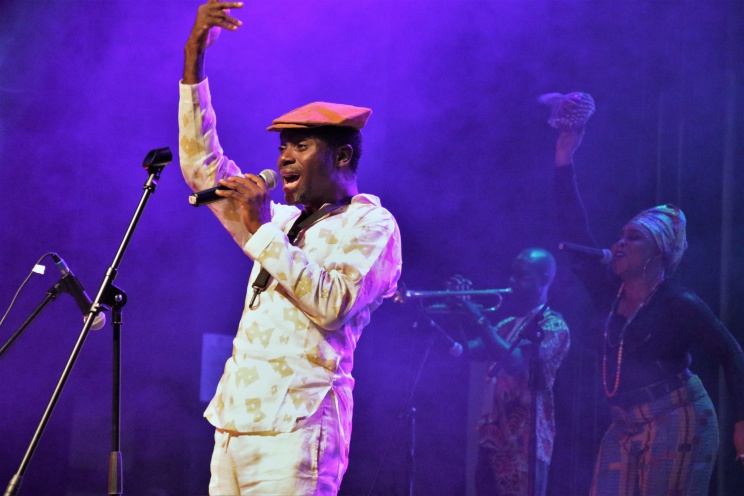
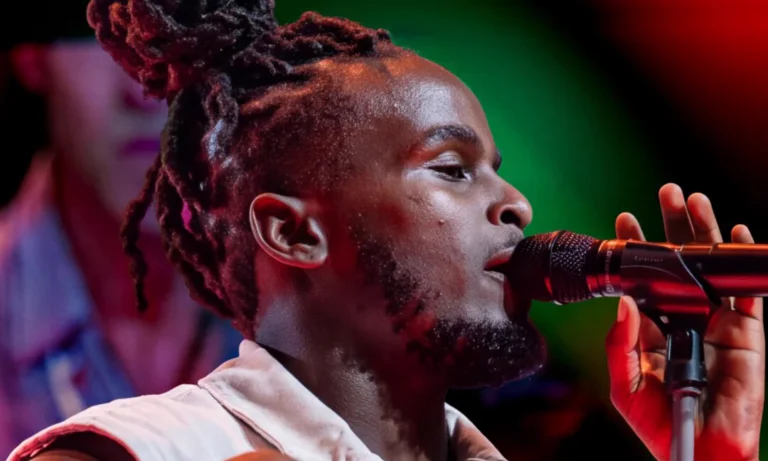
Seun Olota performing at ACCES 2018 in Nairobi, Kenya.

He has carved out a niche in several spaces including dance, club, hymnal, choral and therapeutic music, and plays string, percussion, brass and woodwind instruments.

He performed at the 2018 ACCES event in Nairobi, Kenya. Below, we share excerpts from an interview the artist granted Music In Africa.

1. MUSIC IN AFRICA: What do you think about Afrobeat today?

SEUN OLOTA: The world has no choice than to accept what is good, but must a foreign stamp or endorsement be imprinted on our thing before we start valuing it?

It’s similar to the by-chance attention that Adetutu the Nigerian model with tribal marks got from her push through to Rihanna. Her story is buzzing the net now due to some foreign attention and suddenly our people are beginning to want to embrace her. Foreign products are primed above ours even when it is illogical and not befitting us.

I once learnt that before any unit or fraction of funds leaves a community, it must pass through at least five of its people. I believe that Africans should have this mindset of patronising, promoting and protecting their own enterprises and products, or what is ours will be resold to us at a higher price.

However, there have been Afrobeat and recently the Afrobeats cliché. The recent Nigerian pop being called Afrobeats [sigh] is great. But there shouldn’t be a mix-up between a musician and an artist. Longevity and the test of time separate the boys from the men.

Wole Bucknor, Orlando Julius, Fela Kuti and a host of others reacted to the clamour of the black movement, colonial resistance and the need to project the African identity in the '60s and '70s. The music movement and development at these times were also stirred in the theatre such that nationalistic, and the pan-Africanist movements began to take shape. Yusuf Grillo, Bruce Onabrakpeya, the Zaria Rebels and a host of others fronted that in the art movement while Hubert Ogunde, Duro Ladipio, Moses Olaiya and the second generation with academic backgrounds like Wole Soyinka, Femi Osofisan and others fronted theirs in the theatre and literary works.

2. Do you sometimes think you should make pop music?

I have a tough skin in terms of what kind of sound to do. I mean, can one just thrash years of toil and study overnight for a quick fix? My training and study will just not allow me to veer off. I have always been clear about the direction to tread and even if it falls within what is called pop today, it will not be a cheap game.

Although, it can be tough for musicians in this clime particularly as the idea of early music exposure in schools and basic music knowledge of the general public is low and almost getting grounded.

3. What does your music represent?

My music represents communication for development (C4D). I am in for sensitisation, advocacy, mobilisation, archiving and projecting the African brand. As a student of cultural studies, creative arts and mass communication, I understand the responsibility shouldered by the arts and artists. Although some artists have exploited this opportunity in the negative direction while some have abused their gifts.

As part of our C4D drive, we ran a weekly music show called the Free Spot Show for four years. We thank our supporter, Freedom Park Lagos, for the platform and the partnership which ran on a modest budget that was more of material contribution and mostly the goodwill of our fans and friends of the park. The intention was to keep the live music scene alive and give other musicians a communal platform for regular jam sessions. We practice for day and night but there are no platforms to express.

4. How were you received at ACCES in Nairobi?

The audience was appreciative in all the shows and venues. An average Kenyan citizen seems to be inclined and exposed to the arts. Exposure to the arts at the elementary school level is important in a society because it is then that people get to understand why they have to pay for the creative artist's service and that his art is not a hobby but a professional career.

The applause came at the appropriate moments and those interested in dancing in a sitting-arrangement venue did so by moving to the extreme sides of the hall. I believe it is vital for the art communities to groom a cultured audience.

5. What is next for Seun Olota? Album? Video? Tour? Performances?

After the 2012 album we came up with a live recording in 2015, then we went into the studio in 2017 for the 2018 ‘Why Worry’ album project. This is the longest recording I have ever done. In fact, the recording engineer at some point gave me a deadline after 12 months that we were still inputting and deleting stuff.

Tour projects have been initiated here and there and you know, 'Man proposes, God disposes'. We've had plans that have reached the finetuning stages.

I couldn’t honour invites from festivals in Malawi, Tanzania, Senegal, US, Spain, Haiti and the Netherlands in 2018 and we couldn’t get mobility grants nor sponsorships for the trips, so artist mobility has to be eased so that we can do more. There is more that the music industry holds for its practitioners that can be discovered by attending such seminars and music markets like the ACCES event.

Please log in to post a comment.

Most popular

Disclaimer: Music In Africa provides a platform for musicians and contributors to embed music and videos solely for promotional purposes. If any track or video embedded on this platform violates any copyrights please inform us immediately and we will take it down. Please read our Terms of Use for more.

newsletter banner

Subscribe to our monthly Newsletter

Follow us on social media