
























































Being in another country drove Lorraine Klaasen back to her roots
03 May 2016 - 11:21


When singer Lorraine Klaasen received a grand piano as a gift, she had no space for it in her Montreal home. So she donated the prized instrument to the municipality, which placed it in one of the city’s parks for the public to play at their leisure.
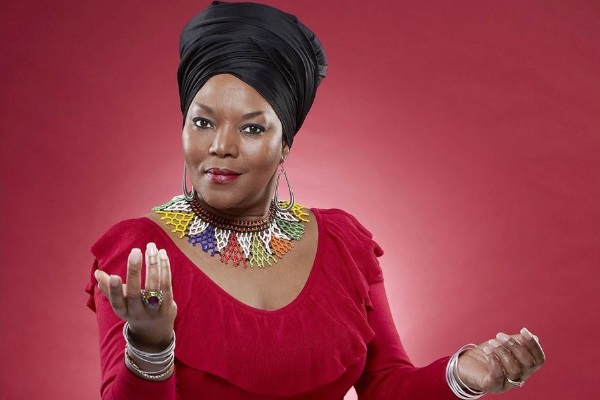
It’s an ideal space for both young and old, rank amateurs and professionals to put music in the air as they test their abilities in an open atmosphere of camaraderie.
Jazz and piano hold a special place in the hearts of residents of Montreal, the birthplace of Oscar Petersen. “A lot of people would love to play piano but they don’t have them in their living rooms,” she told me during her recent visit to her mother in Eden Park, Alberton, in Ekurhuleni. “The smiles on their faces when they sit down to play are just priceless.”
Lorraine is the daughter of Thandi Klaasen, 84, one of the key figures in the Sophiatown jazz renaissance of the 1950s who made a name for herself in showbiz as a blues singer of note. Her singing abilities have inspired comparisons with the great Ella Fitzgerald. Thandi’s contemporaries – Miriam Makeba, Dolly Rathebe, Dorothy Masuka, Sophie Mgcina and Abigail Kubheka – are artists known to the Soweto-born singer; she was raised in their shadow.
“I was a fortunate child because music was part of my daily life, of my heritage,” she recalls. She started performing as a singer and dancer from an early age, accompanying her mother to shows across the country and in neighbouring states. Her big break came in 1975 at the age of 19 when she was cast in the supporting role in a musical with her mother in the lead. It was a Des and Dawn Lindberg production called The Black Mikado. Thandi’s performance in the show won her a Count Pushkin Award for best female vocalist of the year.
Lorraine’s first international outing was in May 1976 when she performed in Israel with a 30-member group of singers and dancers in a show called Sola Sola. “When the student uprisings started, we were horrified to see images of schoolchildren being killed by the police and soldiers,” she recalls. “Unfortunately, we were not allowed to return home because the government assumed we were away singing political songs, but we were only doing musical theatre.”
After the Israeli shows, the cast toured Greece and its islands. “At Rhodes Island, the show was seriously in demand. Audiences were friendly and very appreciative of our performances,” she recalls.
The cast included well-known actors such as Sol Rachilo (Muvhango) and Connie Chiume (Rhythm City). But a disagreement with management over payments brought the show to a halt. “One evening, I was relaxing with other cast members at a club which was a favourite of Aristotle Onassis when I saw this young man from the Congo,” says Lorraine.
His name was Ignace Lumumba, a student and nephew of the assassinated Congolese leader Patrice Emery Lumumba. Their friendship soon blossomed into love on the romantic Greek island. Ignace’s mother lived in Montreal, Canada. Before long the couple were on their way to North America as newly-weds. Lorraine says she was initially taken by Montreal’s cosmopolitan character, but her first winter was a shock. “It was my first experience of snow, of extreme cold. I had no family or friends. My husband spent many hours away at work. I was very lonely and longing for home.”
She had grown up listening to American music, but her loneliness and nostalgia awakened her African musical identity. “I replaced my Diana Ross-style sequins with African clothing and turbans. “I had realised that whenever I performed jazz songs, audiences were not particularly moved. I decided to introduce the African songbook from home – especially click songs that were made popular by singers like Miriam Makeba and Dorothy Masuka. I was returning to my roots.”
Working with artists from countries such as Jamaica and Haiti and local Quebecois gave her repertoire a global flavour while retaining its South African essence. Travelling extensively and learning musical traditions from other parts of the world enriched her performances and endeared her to a broad spectrum of audiences.
In 1989, she launched Klaasen Connections, a company that teaches amateur and professional artists traditional songs and dances from South Africa.
Relatively unknown in her homeland, she is a household name in Canada; a celebrated artist whose musical exploits won her a Juno Award for Best World Music Album in 2013 for her third release, A Tribute to Miriam Makeba. “The music of Miriam Makeba has been a part of my life since I was a very young girl,” she recalls. “In fact, my mother and Mama Miriam travelled to London in 1961 to perform in the jazz opera, King Kong.
“In 1987, I was thrilled to find myself sharing the bill with Miriam Makeba at the Mama Africa Festival in Holland. This CD is a tribute to her, to honour her and to share with music lovers my own compositions as well as South African classic songs, folk ballads and upbeat mbaqanga.”
Lorraine covers songs made popular by Mama Africa such as 'Jol’inkomo', 'Pata Pata' and 'The Click Song'. She sings in several African languages including Sotho, Xhosa, Swahili and Lingala. Performing with homeboys like Mongezi Ntaka on guitar and Bakithi Kumalo on bass, alongside giants of West Indies music, like drummer Tony Albino and Samito Matsinhe on keyboards, has ensured that her music retains strong South African roots but with a sweet Caribbean flavour.
The Juno Awards are Canada’s premier musical honours – an equivalent of the Grammys. “Being nominated was an honour. Winning it was a bonus,” Lorraine reflects. “This is special indeed. It’s big because I was nominated against the best.”
Lorraine is also a recipient of a string of esteemed accolades including Woman of Merit Award (2010) for her generous support of welfare organisations. She is also a two-time winner of the Dr Martin Luther King Jr. Award – bestowed for her music and inspirational life.
What is her philosophy of life? “You have to stand for something or you will fall for anything,” she points out. A staunch member of the Jehovah’s Witnesses, she says her faith has always guided her on the straight and narrow path.
She has always enjoyed a special bond with her mother, but was also brought up by a grandmother who gave her valuable advice on life. “My grandmother always said: ‘You set your own standards. Never let anyone tell you that you are raising the bar too high. Set goals for yourself, and work towards them. When you don’t succeed in reaching them, you tell yourself before you go to bed: ‘Lorraine, I tried’. Then you lay your head on the pillow and you sleep because you have a clear conscience’.”
Originally published on 28 January 2016 in the African Independent.


Most popular

Top Naija songs of 2026
31 Mar 2026

Top Afrobeats songs of 2026
19 Mar 2026

Ghana: Mr Eazi and MOLIY’s ‘Comfort’ earns Urban Music Awards nomination
21 Oct 2026

Top amapiano songs of 2026
16 Feb 2026
Open call: CANEX Music Business Lab and Songwriting Camp
15 Oct 2026
Nigeria: CANEX WKND unveils 2026 programme
21 Oct 2026
Disclaimer: Music In Africa provides a platform for musicians and contributors to embed music and videos solely for promotional purposes. If any track or video embedded on this platform violates any copyrights please inform us immediately and we will take it down. Please read our Terms of Use for more.

Subscribe to our monthly Newsletter
Follow us on social media


Please log in to post a comment.