





















































By Onassis Mutombo
Acknowledged primarily for its rhythms, African music contains nuances that are unique and often surprising. Always willing to open up culturally, Africa has not closed its doors to classical music. This text provides an overview of classical music in the Democratic Republic of Congo (DRC).
Origins
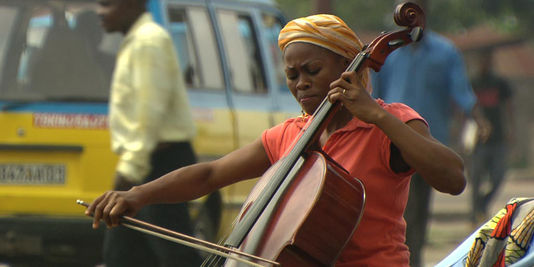
In the DRC in particular, classical music does not have a very long history. However, some reliable sources acknowledge its beginnings and its introduction in Catholic churches during colonial times. According to music columnist Kikim Kingunza Afri, Belgian priests resorted to the ‘softness’ of this kind of music to bring the Congolese into God's presence. Therefore singers added their voices to instrumentals such as ‘La Cappella Sixtina’, as well as various tunes by Johann Sebastian Bach and Handel, performed in Latin or French. For the sexagenarian music columnist, songs in Congolese languages such as Lingala, Tshiluba and Kikongo were introduced in rituals in a classic rhythm following the indigenisation policy established by the late President Mobutu Sese Seko’s regime.
It was only by late 1980s that different tunes were made available, which didn’t stick to the prevailing trends – for example, gospel singers such as Brother Menté. Outside the walls of churches, the so-called ‘serious’ or ‘learned’ music was not enjoyed by many music lovers in Congo (then known as Zaire). However, there was a place called Jambo Jambo in Kinshasa during the 1960s, where many foreigners, particularly from Western Europe, came together to listen to classical music, often performed by local artists.
Key classical groups
Known for its hectic rhythm, Kinshasa considers classical music as a ‘black sheep’. In a megapolis where local music overshadowed by Ndombolo and Rumba, three classical bands are trying to make their way up, let alone the Kinshasa Opéra Association.
According to Agathe Sakina Ilunga in her 2014 research paper, “The mere fact of exclusively interpreting Western classical works led some Congolese people to compare the music studied at the National Institute of Arts (INA) to that of Mozart, Beethoven and Chopin”. To stand out from the idea that this school was created to learn ‘white people’s music’, in 2010, the current version of the music group called Chambre de l’ INA (OC-INA) was adopted, under maestro Lutangamo Michel, who tried to continue the work initiated by his predecessors by favoring modern transcription techniques of harmonization of orchestration and interpretation which belong to the western current at the Western few works of Congolese rumba.
With about 30 young university students who are intent on becoming a fully-fledged band, the OC-INA has no records of Beethoven’s ‘German Dance’ or ‘The land of hope and glory’ by Edward Elgar. This master confirms that it changes his records during the ceremonies to which he and his group are invited. It is known, however, that this orchestra has made its way up from performing old songs with classical instruments to playing hit rumba songs such as ‘Independence cha cha’ and ‘Table ronde’ of Grand Kallé and even ‘Attente’ by Fally Ipupa.
Existing since 1977 as a liturgical choir that performs during Eucharistic celebrations at the parish of Our Lady of Wisdom of the University of Kinshasa (UNIKIN), the Luc Guillon Choir has enhanced its records of classical works and that of performing musical genre, which enabled it to be on the most prestigious stages at both the national and international level. It is in the Classical Music section that this choir won the gold medal in a singing contest in Ivory Coast in August 2012. The choir performs famous opera tunes such as Verdi's ‘La Traviata’ and the work of Carl Orff, among others.
Kimbanguist Symphony Orchestra (OSK)
The orchestra of the Kimbanguist Church began as a vision of the prophet Simon Kimbangu. Today the exploits achieved by the Kimbanguist Symphony Orchestra (OSK) have far gone beyond the borders of the Congo. The OSK has performed in many countries, including the UK, France, Belgium, Germany and Monaco, as well as numerous African countries.
The OSK is made up of about 100 instrumentalists and singers. Bringing together designers and shopkeepers, pupils and students, hairdressers and managers in public administration within the same orchestra, this group perfectly performs some of the Western classical masterpieces and is currently considered the first classical music group made up of black Africans. They specialise in classical tunes by Carl Orff, Mozart, Brandon, Johann Pachelbel, Dvorak and traditional songs such as ‘Kongo’.
Maestro Armand Diangienda, a pioneer of classical music in Africa and founder of the OSK in 1994, surprises many music lovers with his orchestra’s sound quality, which is often compared to those of celebrated opera orchestras in France. After more than 20 years of existence, he now aims to create a music school to fill up the gaps identified so far in the local classic scene.
To highlight the sacrifices made by these Congolese classical musicians, German filmmakers Martin Baer and Claus Wichman developed a documentary about the OSK entitled Kinshasa Symphony. Very few African music films are widely available, and this is arguably the only one about a symphonic orchestra. In a nutshell, the documentary is about self-taught and resourceless African musicians who perfectly interpret works of the classical repertoire. Among the challenges the documentary refers to are frequent power cuts as well as faulty instruments. Despite these and other challenges, solidarity within the group always prevails.
Kinshasa Opera and its project Afrika Opera
Created in 2002 by maestro Clovis Makabu, a counter-tenor opera singer, Kinshasa Opera is an association that evolved into a musical platform in 2004, named ‘Cantores Operatorum’ (opera singers). Performing concerts at Café Mozart restaurant since 2010, Kinshasa Opera soon became the voice of Baroque opera music in DR Congo.
In 2014, Clovis Makabu announced a new festival called Afrika Opera - Congo Choeur (Congo Choir) with the ambition of presenting to music lovers some classical works interpreted with xylophone, tam-tam or drum, while also creating new operatic interpretations of songs by the likes of Luambo, Abeti, Grand Kalle and Papa Wemba. Sponsored by Serge Kakudji , a respected Congolese counter-tenor singer who lives abroad, Afrika Opera also aimed to organise a workshop on vocal technique and musical notations, while travelling to outlying areas to interact with and play for people from all walks, all to allow other people to enjoy this ‘elitist’ music. Unfortunately this major event dedicated to classical music did not take place in Kinshasa – with little explanation from the organisers.
Conclusion
Classical music, as a unique type of music, could have a bright future in the Congolese context, provided that young people adopt it. One needs to give the taste of this music to children by inserting it into the school curriculum and also by organising conferences, seminars and concerts of classical music. While the music may remain elitist, it needs to be made available so that everyone can enjoy it.
References:
- Agathe Sakina Ilunga. 2014. “Les enjeux de l’interprétation de la musique congolaise moderne par l’Orchestre de Chambre de l’INA” (The issues of interpretation of modern Congolese music by INA Chamber Orchestra). Memory, INA
- ‘L’Orchestre symphonique Kimbanguiste lancera bientôt un conservatoire de la musique à Kinshasa ’ (Soon a conservatory of music in Kinshasa) http://kinshasa-ca-bouge.net/L-Orchestre-symphonique
- ‘Sixième art : projet de création d’une école moderne de musique classique à Kinshasa’ (Sixth art project to create a modern school of classical music in Kinshasa) http://adiac-congo.com/content/sixieme-art-projet-de-creation-dune-ecole-moderne-de-musique-classique-kinshasa
- ‘Une symphonie héroïque’ (A heroic symphony): http://www.lefigaro.fr/lefigaromagazine/2009/07/25/01006-20090725ARTFIG00147--une-symphonie-heroque-.php
- Interview with Kikim Kinguza, journalist
- Interview with Papy George Boyimisi, journalist
- Interview with Michel Lutangamo, Professor at the INA and conductor of the OC-INA


Most popular

Top Naija songs of 2026
31 Mar 2026

Top Afrobeats songs of 2026
19 Mar 2026

Ghana: Mr Eazi and MOLIY’s ‘Comfort’ earns Urban Music Awards nomination
21 Oct 2026

Top amapiano songs of 2026
16 Feb 2026
Open call: CANEX Music Business Lab and Songwriting Camp
15 Oct 2026
Nigeria: CANEX WKND unveils 2026 programme
21 Oct 2026
Disclaimer: Music In Africa provides a platform for musicians and contributors to embed music and videos solely for promotional purposes. If any track or video embedded on this platform violates any copyrights please inform us immediately and we will take it down. Please read our Terms of Use for more.

Subscribe to our monthly Newsletter
Follow us on social media


Please log in to post a comment.