NEFCISA
NEFCISA

The Music In Africa Foundation (MIAF) is proud of its partnership with the Industrial Development Corporation (IDC) as a Strategic Implementing Partner (SIP) for its Social Employment Fund (SEF). Through this collaboration, MIAF is running a national programme that is creating jobs, addressing skills gaps, and strengthening South Africa's creative industries — in line with the SEF's overarching goal to generate work for the common good and build community value through employment, social contribution, and inclusive economic participation. Operating under the banner NEFCISA (National Employment Facility for Creative Industries in South Africa), the initiative is recruiting and training participants, matching them with host organisations, and has already placed 1 500 workers across the country — surpassing its original target of 1 000. NEFCISA is delivered through a network of 20 host organisations spanning five provinces, who are actively hosting participants and contributing to work for the common good across South Africa's creative and cultural industries. Key Objectives: Support employment and entrepreneurship in the creative industries. Offer skills development and training programmes. Foster partnerships between public and private creative sectors. Promote South African creativity at both provincial and national levels Foster community development through social contribution.

ACCES
ACCES

ACCES Conference and Showcase Festival is Africa's leading music industry gathering, bringing together the people shaping the future of the continent's music business. Artists, entrepreneurs, executives, investors, policymakers and cultural leaders from across Africa and around the world come to ACCES to build partnerships, exchange ideas, discover talent and create new business opportunities. Since its launch in 2017, ACCES has become the continent's premier platform for professional exchange and music market development. Combining a high-level conference with a curated showcase festival, networking, exhibitions and industry programmes, ACCES offers a unique space where creativity meets business and where African music connects with the global industry.

Gender@Work
Gender@Work

Music In Africa Gender @ Work is a three-year training programme aimed at upskilling and increasing the participation of female professionals in the African music sector. Launched by the Music In Africa Foundation (MIAF) in April 2019, the programme is connected to the MIAF’s ACCES music conference – a pan-African event held in a different African country every year. This connection enables the programme to reach new participants in a different African country every year. The programme marks the beginning of a more concerted effort by the Foundation to support the participation and inclusion of women in all facets of its programmes and the music sector in Africa as a whole. Over the three years, the programme will aim to address gender imbalances in the sector through training, lobbying, facilitating knowledge exchange and dialogues that foster the interest of women. The broader objectives of the programme are to: Provide industry training for women on critical music industry skills, focusing on: Stage management Electronic music production and recording Music business management Technical knowledge Provide an opportunity for both professional and aspiring women to benefit from the Music In Africa network and its broad range of activities in 2019, 2020 and 2021. Provide a solution-based platform in the form of a round table at ACCES with a view to identify challenges, discuss opportunities and lobby for the interests of female practitioners. Offer participants the opportunity to benefit from programmes offered by MIAF’s partners. Increase access to educational materials. Integrate participants in the broader ACCES programme to maximise experience and exposure to the industry. Record and present training materials on the www.musicinafrica.net, including but not limited to tutorials, templates and other best-practice materials. Communicate women-based themes that support the initiatives and messages of the programme. MAIN TRAINING ACTIVITIES Training in first country (Ghana): In the first year, participants will be trained on all aspects of stage management by a team of experienced stage managers from 10 to 17 November 2019. The programme will offer robust classroom training as well as practical, hands-on training in which participants will also be given the opportunity to manage various aspects of the ACCES performance programme. Training in second country: The second training iteration will take place at ACCES 2020 when the programme will diversify its course to include music production lessons and training on other music business topics. A round-table platform will also be introduced to coincide with the ACCES programme. Training in third country: The third training iteration will take place at ACCES 2021 in a different country, offering an advanced course. HOW DO YOU GET INVOLVED?  As a participant, facilitator or trainer: The programme enrolls up to 12 trainees every year. All opportunities are advertised publicly on this website, and will be added to this page. Please keep checking this page for new calls (below under UPDATES & CURRENT OPPORTUNITIES). As a partner Please contact Claire Metais at [email protected]. APPLY The call for applications for 2020 will be announced soon. The Music In Africa Gender @ Work programme is made possible with the support of the Prince Claus Fund, Siemens Stiftung and Goethe-Institut.

Sound Connects Fund
Sound Connects Fund

For cultural and creative practitioners and organisations operating in southern Africa, access to funding remains a major challenge. The COVID-19 pandemic has also had a massive impact on government policy, spending and the economy in general, and has seen spending on culture being moved further down the list of priorities. Further, the cultural and creative industries repeatedly cite four main areas where investment is needed for growth, which are increased visibility, mobility including access to new markets, finance and support structures.

Instrument Building And Repair Project

Experience the Vibrations African Instruments Exhibition online in 3D

Reviews

K.O, Runtown perfect collaborative fad with Call Me

05 Dec 2017 - 09:38

cc-img flag-img

The rate at which artists from different African regions are collaborating has risen to an exciting level. The notion that “two is better than one” has seen legendary artists come together to defy geographic and language barriers to produce epic content.
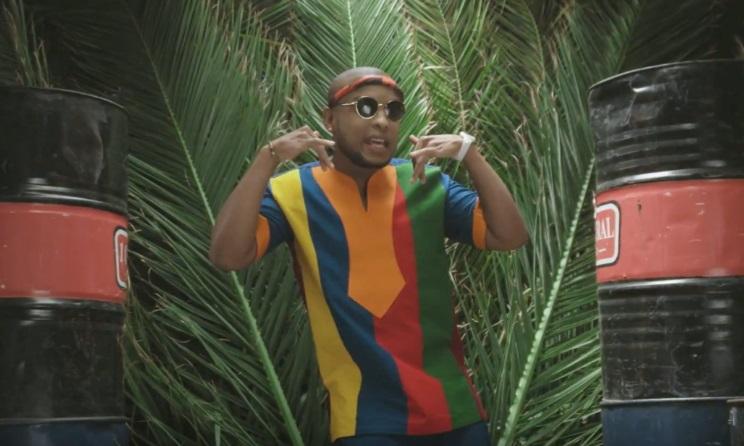
K.O says the video to 'Call Me' is dark because it forms part of the message he is sharing.

It’s a known fact that music creates bonds; no matter who the artists are or where they come from, they listen to and learn from each other’s song. The limitations are gone! Thanks to technology, musicians can make music anywhere and at any time – programme the beat track in Tanzania, lay down the bassline in South Africa and record the vocals Nigeria.

South African hip hop artist K.O and Nigerian singer Runtown now join the long list of African collaborations with ‘Call Me’, a song off the former’s album SR2. The song landed the top spot on the South African iTunes hip hop charts and No 2 on the ranking’s main charts on 23 November, the day of its release.

‘Call Me’ is a romantic, melodious and mellow song that narrates a couple facing relationship issues. Shot by Gorilla Films in downtown Johannesburg, Newtown and Turffontien, the colourful new video begin with a frustrated woman whose husband (K.O) turns down a chance to meet her parents. The atmosphere suddenly turns gloomy when she parades her displeasure by hanging up and switching off her phone.

Since she can’t be reached on the phone, K.O breaks into singing, earnestly begging his partner to call him. He then begs her: “Call me, call me, call me, call me / The sound of your voice sound right now would make a difference.”

Runtown adds flavour

Coupled with harmonious help from Runtown and an R&B feel, K.O uses his gusto to send a message to his lady through his authoritative love lyrics. The world is nothing without her, she is his alpha and omega and he affirms that no man can love her more than him.

“You're the one that I miss / Akekho omunye (nobody) / Who would love you like this /Akekho omunye (nobody).”

Runtown echoes K.O.’s lyrics but in an apologetic manner. He exudes a confident melody that gets stuck in your head; it’s also reminiscent of South African rapper YoungstaCPT’s commanding rap delivery.

The recurring theme of forgiveness through Runtown’s verse parts – “call me, call me” – is also shown in the lyrics, “I been calling your phone all day / Baby girl I swear I'm sorry for all the things I said to you.”

Runtown’s phrasing in a Nigerian accent adds a more cheerful and brighter vibe to the song. The tones and vibrations of different phones accompanied by a faint, blurry and indistinct melody are repeatedly heard in the background. The sounds concurringly synch with the constant trap bass throughout the song. When K.O joins the verses, the song becomes more upbeat, but Runtown’s additions to the verses add quality and help the song achieve its purpose, which is partly about coherence and flow from the two collaborating artists.

Storyline vs visual effects

The visual effects used in the video complement the storyline. Notice how the producers use day and night scenes to describe the varying mood of the altercation. In the night scene, K.O is clad in black while Runtown is wearing a purple-hued shirt and black pants. Feelings about colour are often deeply personal and rooted in one’s own experience or culture, but in this context, black creates a perception of seriousness.

While perceptions of colour are somewhat subjective, most African cultures associate black with lack of hope; the absence of light resembles misery and discontent. In this sense, the two scenes are used to signal contrast in mood. As such, the visual effects used in the video manage to compliment a storyline about conflict amid deep love.

In the end, the dark effects save their purpose. While driving at night, the resentful woman decides to answer the phone and by doing so crashes her car in a scene that reminds one of Justin Timberlake’s ‘What Goes Around…Comes Around'. It’s a lovers’ quarrel that ends in pain.

The video ends tragically with a shaken K.O running in the corridors of a hospital illuminated by a UV light. He ends up in the operating theatre where he finds his lover motionless. Unless you’ve read an interview with K.O about the video, you’d assume she’s dead because the life-support machines surrounding her seem to be turned off. It’s pretty clear that there was a directorial lapse here.

“I chose to have the story dark because it formed part of the message I was sharing,” he said. “It’s a wake-up call to both of them. He has to put her first and she has a right to be mad at him, but she need not lose sight of other things because as you will see, that almost costs her life.”

Artist: K.O. ft Runtown
Song: 'Call Me'
Year: 2017

Please log in to post a comment.

Most popular

Disclaimer: Music In Africa provides a platform for musicians and contributors to embed music and videos solely for promotional purposes. If any track or video embedded on this platform violates any copyrights please inform us immediately and we will take it down. Please read our Terms of Use for more.

newsletter banner

Subscribe to our monthly Newsletter

Follow us on social media