





















































By Achiro P. Olwoch
The music industry in Uganda is one of the most vibrant industries in the arts world and the media has played a big role in its growth. In many ways, the media has greatly influenced the music industry in Uganda.
This form of media is the most common with the growth in the number of newspapers and magazines giving a lot of information on the music industry and the practitioners in the industry. The main newspapers are The New Vision and The Monitor newspapers. The New Vision newspaper is government-owned and was first published by the Vision Group in 1986. It is an English newspaper and it is fairly liberal in whatever they report. They do have a column dedicated to entertainment highlights daily and report extensively over the weekends. The Leisure and Entertainment magazine is a pull out that comes with every Saturday Vision copy. In it comes all the latest in music and entertainment within Uganda and around the world[i]. The Monitor newspaper was first published by the Nation Media Group in 1994 and (like The New Vision) they also have a daily and a weekend edition. Their weekend paper is dedicated to entertainment and it offers the latest on the happenings in the music scene in the country[ii].
The leading tabloid is The Red Pepper and, as is typical of tabloids, this paper reports on virtually everything. In The Red Pepper you will find not only news on the latest music but also read about the inner-most secrets of the musicians behind the music. Still, as the saying goes, ‘even bad publicity is publicity’; this tabloid has brought attention to even the smallest musicians and turned their careers around over night. Still, because of the conservative nature of Ugandans, this newspaper does raise eyebrows with its headlines, but nonetheless, it is one of the fastest selling newspapers in the country. Its popularity draws from the fact that you never know what news to expect[iii].
Uganda has a weekly newspaper, The Weekly Observer that rounds up the news of the week. This paper also has an entertainment segment that offers in-depth coverage of the events of the week in the entertainment industry, and which the daily newspapers may have missed[iv].
All the major Ugandan newspapers follow the local music industry and frequently update on the music charts and cover album launches of the different musicians in and around Uganda. This way, the public is kept abreast of the happenings around town even if one is not a party fanatic. They also keep up-to-date information on foreign musicians and their music and lifestyles.
Two lifestyle magazines that give mention to the music industry are Flair and African Woman magazines. Flair magazine is a product of the Vision Group while The African Woman magazine is privately owned and run by designer Sylvia Owori. The City Beat magazine is a bigger version of the leisure and entertainment pullout by the Vision Group. They feature musicians and explore their lives beyond music. Other magazines like the Bride and Groom magazine give mention to music and entertainment from the perspective of a wedding ceremony. They let their readers know what bands and musicians are available for hire during weddings and traditional ceremonies.
Television
The first radio station was government-owned and it remained that way for the longest time, thus the information that was relayed in this medium was censored. It was called Uganda Television (UTV), established in 1963, and which has since transformed to the Uganda Broadcasting Corporation (UBC). There was no room for the music industry to excel at the time because UTV was not allowed to relay any messages in that art form. UBC is a state company created by a 2004 Act of Parliament, which merged UTV and Radio Uganda operations. The corporation became fully functional as UBC on November 16, 2005.
Today a number of other television stations have risen and each has allotted much time to promote local music and musicians. They include; WBS, NBS, NTV, Record TV and the latest Urban TV. The top stations, Urban TV and Bukedde TV, are both government-owned under the Vision Group, while NTV is under the private Nation Media Group.
Like their print counterparts, they are the visual representation of what is in print form. There are other stations that are dedicated to vernacular speakers and all the music they play is in the local languages. These include Bukedde TV and Star TV and they reach far into the rural areas. Christian channels include Light House TV and Top TV. All the TV stations acknowledge that music video programmes are the most watched on local TV. Thus, each of them has allotted specific slots to both local and international music.
Almost all Ugandan music together with the accompanying videos are produced in Uganda. Steve Jean is probably the most experienced producer who has many hit tracks under his sleeve. Steve has worked with the top musicians in Uganda like Juliana and Blu3. Ngoni of Good Enuff Productions comes in a close second, with others like Doug B also emerging on Uganda’s music scene. Ngoni is predominantly a gospel producer. He is the force behind new group Thug Squad.
Pay TV channels like DStv, Go TV, Star Times and Zuku TV are not easily affordable by many Ugandans. Still, a number of people have acquired their services and enjoy international music that is aired on the different channels. The most popular channels are Channel O and MTV. Occasionally, the local TV stations will air clips of the music channels for the general population to enjoy.
Radio
Like with television, the first radio station was owned by the State. Radio Uganda was the first radio station to be established in 1954, and it remained the sole operator until the establishment of the other radio stations in 1986. Just like TV, they were not allowed to air any message-oriented music. Today there are so many radio stations that it’s difficult to keep track of all of them. There are almost 28 radio stations registered in Uganda today.
The biggest radio stations include Sanyu FM, Capital FM, KFM, Super FM, Beat FM, X-FM and Radio West that was opened to serve western Uganda. The other parts of the country have smaller radio stations in their regions that serve them in their local languages. As remote as they are, they are still able to raise the signal of some of the major stations in the city.
The Christian stations include Power FM, Suubi FM, Radio Maria, Impact FM and Alpha FM. All the radio stations play music by both international and local musicians. There are particular shows that are dedicated to African music and Ugandan music. It is in these shows that the presenters will inform the public on the latest music shows and concerts upcoming by the same musician. Most radio stations are now streaming online, and one can have a pick of what they want to tune into at http://RadioUganda.Net
Because radio reaches all the corners of the country, it is the more preferred media by even the most rural Ugandans. The rural folks often know more about music and music personalities in Uganda than urban Ugandans because they are constantly glued to their radios.
Internet
This is a more recent form of media and musicians around Uganda use it mostly for advertising. More and more sites feature Ugandan music and provide worldwide access to Ugandan music, musicians’ profiles, lyrics, news and events. Examples of such sites include; www.ugandaonline.net/mp3, www.ugandamusic.me, www.music-uganda.com, www.ugandavideos.com, www.aboutUganda.com/music-videos, www.hipopo.com and www.bigeye.ug
Facebook, Twitter and You tube have dominated the music industry with many musicians using this medium to advertise their art. Most musicians started their career online before they became known locally. The social media craze has not left Uganda behind and most telecom companies allow free use of face book on their mobile networks. This has allowed the owners of even the most basic phones with Internet access a chance to be in the know on what’s happening on the music scene.
Media Freedom
When it comes to medium, the Luganda language has dominated the music industry with most musicians choosing to use it to relay their messages. This is because Luganda is widely spoken and understood in many parts of the country as compared to any other language apart from English. Also, musicians realized that Ugandans will identify more with songs that are sung in a local language because it gives them a feeling of belonging. It identifies the musician as one of their own, singing about their issues in their language.
Lately, more and more musicians have been going against the grain, performing in English and/or mixing English with Luganda or English with Kiswahili alongside Luganda. They do this because they want to break into the East African market as well as take their music global.
Before and after independence the media had their hands tied with the state dictating what content was acceptable on air. All available forms of media at the time were all state-owned. The present government introduced freedom of speech and expression in whatever art form, starting in 1986. This resulted in the establishment of different media houses around the country. Thus, over the last 25 years, the media has played a big role in showcasing the talent that comes from Uganda in the music industry because it reaches far and wide. The Uganda Communication Commission (UCC)[v], the industry’s regulatory board, will from time to time censor the content but in general, it is a lot easier now than it was 30 years ago[vi].
[vi] To read more about the media in Uganda, see www.freedomhouse.org and www.freedomoncensorship.org.


Most popular
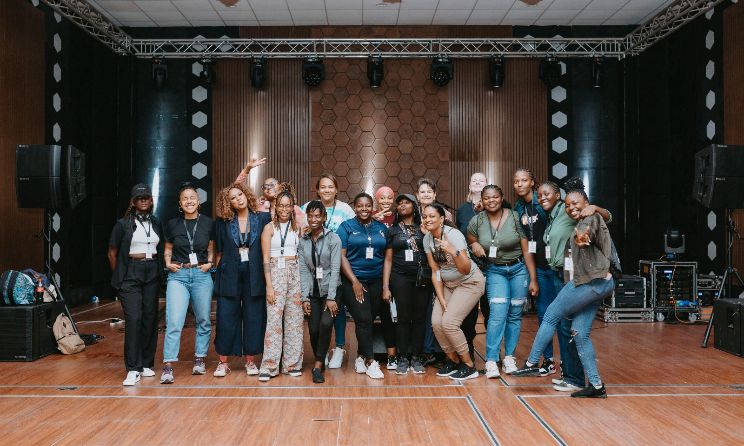
Open call: 2026 Gender@Work music industry training in Johannesburg
03 Oct 2026

Top amapiano songs of 2026
16 Feb 2026

Call for applications: ACCES 2026 Emerging Artist Spotlight Competition
01 Oct 2026

Top Naija songs of 2026
31 Mar 2026

Top Afrobeats songs of 2026
19 Mar 2026

AFRIMA 2026: All the winners
12 Jan 2026
Disclaimer: Music In Africa provides a platform for musicians and contributors to embed music and videos solely for promotional purposes. If any track or video embedded on this platform violates any copyrights please inform us immediately and we will take it down. Please read our Terms of Use for more.

Subscribe to our monthly Newsletter
Follow us on social media


Please log in to post a comment.