







































NEFCISA
NEFCISA

The Music In Africa Foundation (MIAF) is proud of its partnership with the Industrial Development Corporation (IDC) as a Strategic Implementing Partner (SIP) for its Social Employment Fund (SEF). Through this collaboration, MIAF is running a national programme that is creating jobs, addressing skills gaps, and strengthening South Africa's creative industries — in line with the SEF's overarching goal to generate work for the common good and build community value through employment, social contribution, and inclusive economic participation. Operating under the banner NEFCISA (National Employment Facility for Creative Industries in South Africa), the initiative is recruiting and training participants, matching them with host organisations, and has already placed 1 500 workers across the country — surpassing its original target of 1 000. NEFCISA is delivered through a network of 20 host organisations spanning five provinces, who are actively hosting participants and contributing to work for the common good across South Africa's creative and cultural industries. Key Objectives: Support employment and entrepreneurship in the creative industries. Offer skills development and training programmes. Foster partnerships between public and private creative sectors. Promote South African creativity at both provincial and national levels Foster community development through social contribution.

ACCES
ACCES

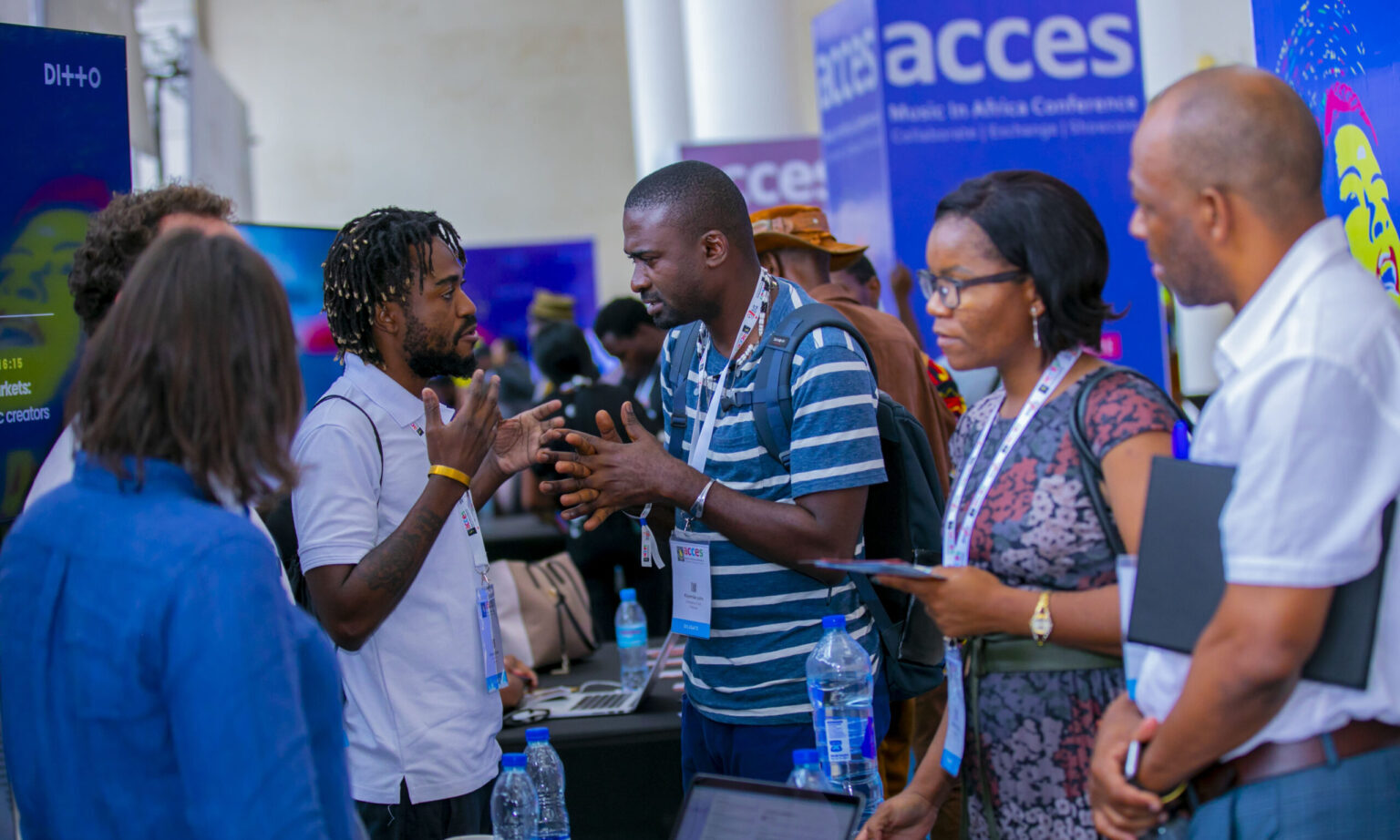
ACCES Conference and Showcase Festival is Africa's leading music industry gathering, bringing together the people shaping the future of the continent's music business. Artists, entrepreneurs, executives, investors, policymakers and cultural leaders from across Africa and around the world come to ACCES to build partnerships, exchange ideas, discover talent and create new business opportunities. Since its launch in 2017, ACCES has become the continent's premier platform for professional exchange and music market development. Combining a high-level conference with a curated showcase festival, networking, exhibitions and industry programmes, ACCES offers a unique space where creativity meets business and where African music connects with the global industry.

Gender@Work
Gender@Work

Music In Africa Gender @ Work is a three-year training programme aimed at upskilling and increasing the participation of female professionals in the African music sector. Launched by the Music In Africa Foundation (MIAF) in April 2019, the programme is connected to the MIAF’s ACCES music conference – a pan-African event held in a different African country every year. This connection enables the programme to reach new participants in a different African country every year. The programme marks the beginning of a more concerted effort by the Foundation to support the participation and inclusion of women in all facets of its programmes and the music sector in Africa as a whole. Over the three years, the programme will aim to address gender imbalances in the sector through training, lobbying, facilitating knowledge exchange and dialogues that foster the interest of women. The broader objectives of the programme are to: Provide industry training for women on critical music industry skills, focusing on: Stage management Electronic music production and recording Music business management Technical knowledge Provide an opportunity for both professional and aspiring women to benefit from the Music In Africa network and its broad range of activities in 2019, 2020 and 2021. Provide a solution-based platform in the form of a round table at ACCES with a view to identify challenges, discuss opportunities and lobby for the interests of female practitioners. Offer participants the opportunity to benefit from programmes offered by MIAF’s partners. Increase access to educational materials. Integrate participants in the broader ACCES programme to maximise experience and exposure to the industry. Record and present training materials on the www.musicinafrica.net, including but not limited to tutorials, templates and other best-practice materials. Communicate women-based themes that support the initiatives and messages of the programme. MAIN TRAINING ACTIVITIES Training in first country (Ghana): In the first year, participants will be trained on all aspects of stage management by a team of experienced stage managers from 10 to 17 November 2019. The programme will offer robust classroom training as well as practical, hands-on training in which participants will also be given the opportunity to manage various aspects of the ACCES performance programme. Training in second country: The second training iteration will take place at ACCES 2020 when the programme will diversify its course to include music production lessons and training on other music business topics. A round-table platform will also be introduced to coincide with the ACCES programme. Training in third country: The third training iteration will take place at ACCES 2021 in a different country, offering an advanced course. HOW DO YOU GET INVOLVED?  As a participant, facilitator or trainer: The programme enrolls up to 12 trainees every year. All opportunities are advertised publicly on this website, and will be added to this page. Please keep checking this page for new calls (below under UPDATES & CURRENT OPPORTUNITIES). As a partner Please contact Claire Metais at [email protected]. APPLY The call for applications for 2020 will be announced soon. The Music In Africa Gender @ Work programme is made possible with the support of the Prince Claus Fund, Siemens Stiftung and Goethe-Institut.

Sound Connects Fund
Sound Connects Fund

For cultural and creative practitioners and organisations operating in southern Africa, access to funding remains a major challenge. The COVID-19 pandemic has also had a massive impact on government policy, spending and the economy in general, and has seen spending on culture being moved further down the list of priorities. Further, the cultural and creative industries repeatedly cite four main areas where investment is needed for growth, which are increased visibility, mobility including access to new markets, finance and support structures.

Instrument Building And Repair Project

Experience the Vibrations African Instruments Exhibition online in 3D

Features

Omawumi sings new songs at Trace Live

03 Jul 2017 - 12:51

cc-img flag-img

At the start of the first edition of Trace Live on 22 June, Omawumi sang a song in the style of Frank Sinatra.
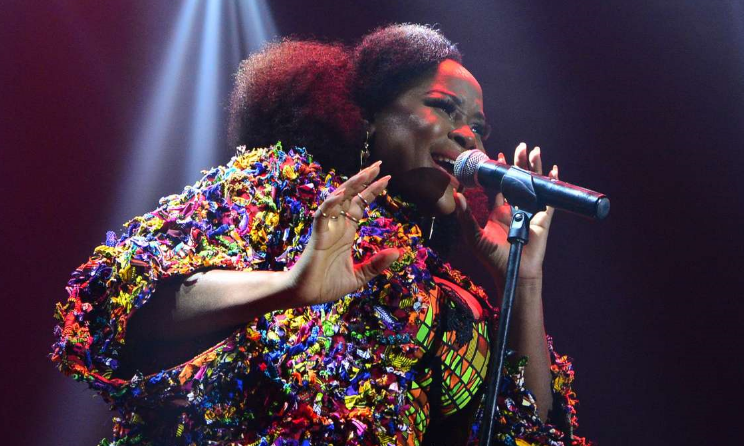
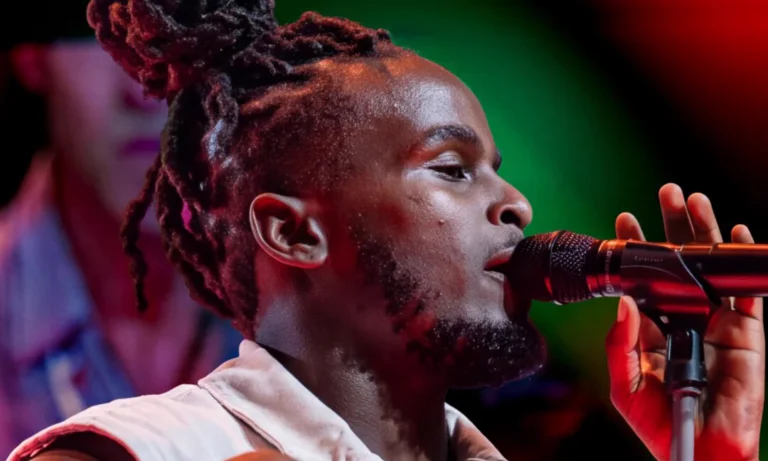
Omawumi premiered new songs at the first Trace Live concert, which took place at Terra Kulture.

The time was 8.30pm and though she was within the Terra Kulture building in Victoria Island, Lagos, the singer initially sang and spoke to her audience via a projected video in the arena.

"Now I'm tilting toward the direction of what I really really want to do," she said. "I'm convinced you'll like it." It was a mini-documentary and her producer, industry folk and record label heads, most of whom were seated watching themselves, came on screen to speak about her talent.

The lady finally appeared onstage, supplanting her image. Her live rendition of the song 'Megbele', a tribute to her father, was good but inevitably recalled the propellent power of the studio original.

Stripped of its traditional music elements, the song sounded like a great copy, but a copy nonetheless.

As she said, she is opening up a new path, a move, clearly caused, in part, by a contract with a new record deal and a distribution deal by Roc Nation. But as with most things new, the change might be a little alarming, if only because Omawumi is often thought of as different from her pop colleagues. Where they are frivolous, she's meaningful. Where they are unidirectional, she's eclectic. What might this new direction bring?

It turns out it will yield more of the same multifarious Omawumi and a fresh strain of artistry, as though she seeks to be a Nigerian artist and yet one able to transcend the category's limits. Her Trace Live session combined her earthy personality with a background of her new music. "This is going to be a very intimate affair," she said. Her accomplices included two guitarists, an inspired horn section and, on more than one occasion, a dancer named Bernard.

"Everybody has a story," she said before singing a song from "the point of view of the side-chick". Bernard twirled, stretched, jumped.

As she gave the story behind each of the songs performed, so did she flash glimpses of her famed realness. At one point, she asked, "Do you like my jacket? This is by Ituen Basi. I go lay am down quietly," easing into the pidgin of Warri, the town she grew up in before becoming a runner-up at a singing competition and from there to the limelight.

At another point, she announced: "This song is a heartbreak song." The song though sounded a little too joyful, evidence that the artist was on the side of the heartbreaker, not the heartbreakee.

Love, its pleasures and its taboos have long been a major part of Omawumi's music. It formed the most revealing of the backstories on the night. While informing her audience that her partner was seated watching her, Omawumi announced that the next song "was inspired by my husband's ex". Apparently, the 'Bottom Belle' singer was the usurper... until she wasn't.

Here she was being conciliatory towards her vanquished rival. "Let's give her a happy ending," she said. Titled 'Dolapo', a stand-in titular character based on Omawumi herself, the song was less of a happy ending for the ex than it was a veiled triumph tune for the winning intruder. As always, the person telling the story decides who wins. Had the real-life story gone the other way, it was easy to imagine Omawumi writing a soaring aria of love and revenge.

Sounds from the concert, as from the Omawumi catalogue, were diverse: big band, traditional, pop. Omawumi's music is multitudinous.

"I'm not really a mainstream artist," she told her audience, but she has had to do some songs "because of the extra..." She rubbed a thumb against her fingers in the well-known gesture for money.

Clearly looking to go beyond trending music, Omawumi has named the new album Timeless. To that end, the project pays homage to some of the artists who have attained that status. Two artists she mentioned during the Trace Live session were Fela and Angelique Kidjo.

For the first, she couldn't quite find an appropriate song so she covered what she called "Fela's only love song", 'Ololufe', from his time with the Koola Lobitos band. For the second artist, she gave an account of how much pursuing she had to do to get the Beninese diva on 'Play na Play'. Then she performed the song.

"How many people don buy the album?" Omawumi asked towards the end. And then she yelled in a recognisably Warri style when she deemed the number of hands raised insufficient, adding somewhat solemnly, "I hope I did the right thing with this album."

She would know that no real answers could be given on the night. But the audience at Terra Kulture waited on more songs an hour after she walked onstage. If this wait was a sign that she had done the right thing, Omawumi didn't notice.

"Everybody still sidown dey wait," she said half-mockingly, signalling the end of the show, and then she thundered: "Go buy the album!"

Omawumi's Timeless is available on iTunes

Please log in to post a comment.

Most popular

Disclaimer: Music In Africa provides a platform for musicians and contributors to embed music and videos solely for promotional purposes. If any track or video embedded on this platform violates any copyrights please inform us immediately and we will take it down. Please read our Terms of Use for more.

newsletter banner

Subscribe to our monthly Newsletter

Follow us on social media