














































The other side of the late Tongai ‘Dhewa’ Moyo
26 Oct 2018 - 10:50


By Godwin Muzari
Most tales about the late Zimbabwean sungura artist Tongai Moyo are colourful. What else can they be when the musician was affectionately known as Father Flower? Although his life and career had dark spots, Dhewa was colourful in many ways.
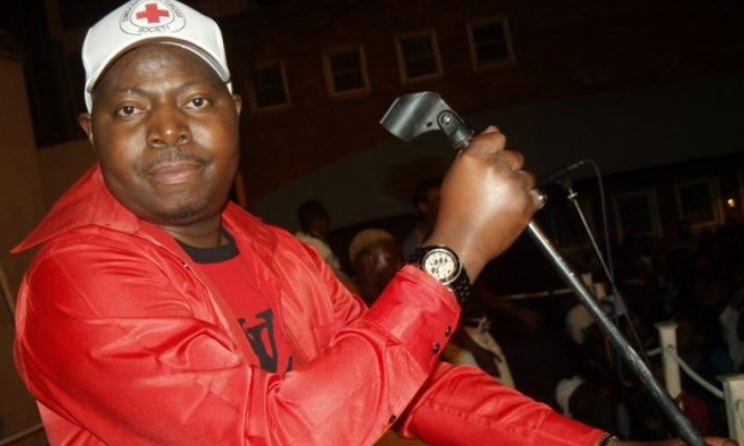
His style, brand and stage work were amazing. He was ever-smiling on stage, making statements that enticed female fans. He called his band “vakomana vemucheno” (smart boys) and he enforced that tradition in his team.
He adorned himself with many imaginary labels to decorate his brand. Muchina Muhombe, Igwe, Father Flower, Mopao Mkonzi – the ornamental titles were coined willy-nilly.
As people commemorated Dhewa’s death this week, many shared sweet memories of the late musician who passed away on 15 October 2011. Memory Lane had a chat with long-serving Utakataka Express band member Spencer Khumulani who revisited experiences with his late boss.
Among many memories about Dhewa, Khumulani revealed that the musician’s popular smile concealed another side that many of his fans did not know. The late musician was short-tempered and tough.
“Most people do not know that Dhewa was short-tempered. There are many backstage incidents that people never got to know. He would be angry backstage, but his smile concealed everything when he went on stage,” recalled Khumulani.
“He hated indiscipline in the band and talked tough when he was upset. At one time he actually beat up our drummer when he misbehaved during our tour in South Africa.
“The drummer, Guyson Sixpence got drunk before the show and failed to perform. We had left another drummer back home to cut costs and Guyson had promised to be a good guy.
“He disappeared just before the show and returned sloshed. He failed to lead the tempo of the first song and Dhewa signaled that he goes off the stage, but the young drummer was resistant. Our bouncer had to force him off the stage.
“We stopped the performance as Dhewa followed him backstage. The boss was shaking with anger and he heavily slapped Guyson several times.”
Khumulani said Dhewa had to use the physical remedy because Guyson’s parents had given him the green light to discipline their son in any way.
“Guyson had been previously fired on several occasions over indiscipline until both his parents approached Dhewa and told him to treat the drummer like his son. They suggested he should punish him even physically. They were also having a hard time to control him.
“After that incident Guyson changed his behaviour, but he later went back to his old ways after Dhewa’s death and he was fired from the band for good.”
Khumulani also remembers another incident when Dhewa let his anger off his “smile mask” in Mt Darwin.
“That time I was still taking turns to play the bass guitar with Ronnie Mundindo. Ronnie was a bully and he refused to go on stage that night. He did not know I was at the venue because I had not travelled with the rest of the band. There was a serious altercation backstage when Ronnie refused to go on stage saying he wanted an advance payment for the performance.
“Dhewa got angry and told Ronnie to immediately go away. Ronnie was surprised to see me going on stage. He was told to leave the band for good. That was how I permanently replaced him as bass guitarist in the band.”
There are many incidents in Khumulani’s tale that revealed Dhewa’s tough side including a narration of how the musician went off stage to save one of his tour organisers in Mozambique. The incident involved the late MC Esau Ganizani who was popularly known as Dhiziri or DJ December.
“Dhiziri was assisting us in marketing the show in Mozambique. During the show, he had an argument with some security details from that country and the situation turned nasty. Dhewa had to drop off his guitar. He ran off the stage to save Dhiziri when the guys started physically assaulting him.”
It is that resilience and tough character that made Dhewa a fighter in the face of stiff competition in the industry. He was a fighter even in the face of nature’s misfortunes.
When he became frail due to ill health in his last days, the musician did not easily give up. He would sneak out of hospital to go for shows against doctors’ instructions.
Khumulani remembers one incident when his late boss forced himself to the stage but failed to perform.
“We were in Mbare at a venue called The Place. We all knew he was not well, but he insisted he would come for the show. He pulled himself up the stage. It was evident that he was in pain. He tried to use the microphone stand for balance. He tried to sing, but his voice failed him. He had to apologise to his fans. He needed a rest. He walked off the stage bitter and dejected. He was extremely disappointed that he had failed to serve his fans.
“We did the rest of the show with fellow musician First Farai. Dhewa was bitter about his failure to perform at the show. That was his character. He was a fighter. I believe he was not even prepared to let off his last breath despite evident pain. I know he died fighting,” Spencer said.
This article first appeared in The Herald on 20 October 2018.


Most popular
Call For Applications : ACCES seeks a UK-based performer
10 Sep 2026

Top amapiano songs of 2026
16 Feb 2026

Top Afrobeats songs of 2026
19 Mar 2026
Open call: Goethe-Institut grants for Southern African creatives
08 Sep 2026
AFRIMA 2026: All the winners
12 Jan 2026
Open call: Ernst von Siemens Music Foundation 2026 funding programmes
04 Sep 2026
Open call: FAME Week Africa, Pressure Cooker Studios songwriting camp
09 Sep 2026
Disclaimer: Music In Africa provides a platform for musicians and contributors to embed music and videos solely for promotional purposes. If any track or video embedded on this platform violates any copyrights please inform us immediately and we will take it down. Please read our Terms of Use for more.

Subscribe to our monthly Newsletter
Follow us on social media


Please log in to post a comment.