






































NEFCISA
NEFCISA

The Music In Africa Foundation (MIAF) is proud of its partnership with the Industrial Development Corporation (IDC) as a Strategic Implementing Partner (SIP) for its Social Employment Fund (SEF). Through this collaboration, MIAF is running a national programme that is creating jobs, addressing skills gaps, and strengthening South Africa's creative industries — in line with the SEF's overarching goal to generate work for the common good and build community value through employment, social contribution, and inclusive economic participation. Operating under the banner NEFCISA (National Employment Facility for Creative Industries in South Africa), the initiative is recruiting and training participants, matching them with host organisations, and has already placed 1 500 workers across the country — surpassing its original target of 1 000. NEFCISA is delivered through a network of 20 host organisations spanning five provinces, who are actively hosting participants and contributing to work for the common good across South Africa's creative and cultural industries. Key Objectives: Support employment and entrepreneurship in the creative industries. Offer skills development and training programmes. Foster partnerships between public and private creative sectors. Promote South African creativity at both provincial and national levels Foster community development through social contribution.

ACCES
ACCES

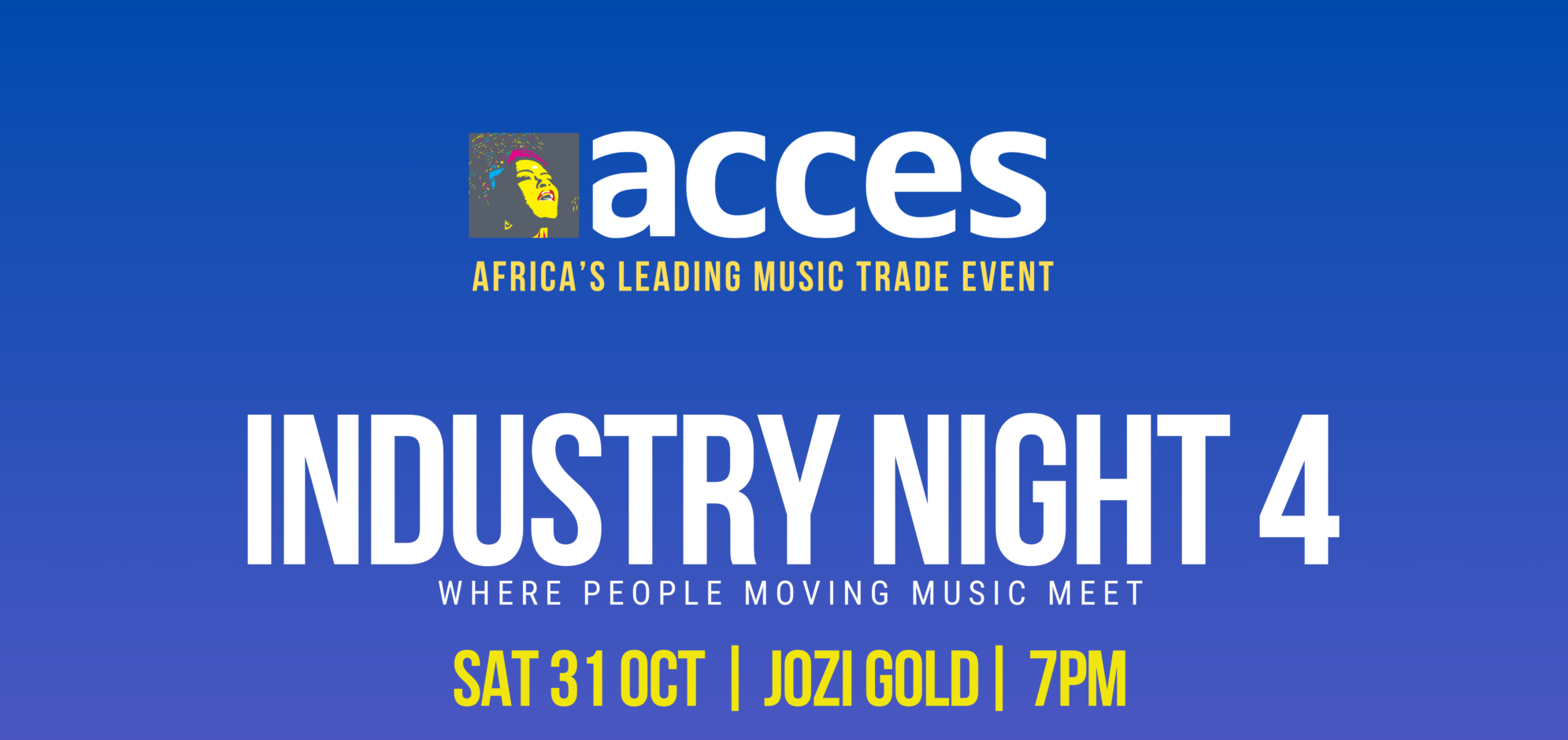
ACCES Conference and Showcase Festival is Africa's leading music industry gathering, bringing together the people shaping the future of the continent's music business. Artists, entrepreneurs, executives, investors, policymakers and cultural leaders from across Africa and around the world come to ACCES to build partnerships, exchange ideas, discover talent and create new business opportunities. Since its launch in 2017, ACCES has become the continent's premier platform for professional exchange and music market development. Combining a high-level conference with a curated showcase festival, networking, exhibitions and industry programmes, ACCES offers a unique space where creativity meets business and where African music connects with the global industry.

Gender@Work
Gender@Work

Music In Africa Gender @ Work is a three-year training programme aimed at upskilling and increasing the participation of female professionals in the African music sector. Launched by the Music In Africa Foundation (MIAF) in April 2019, the programme is connected to the MIAF’s ACCES music conference – a pan-African event held in a different African country every year. This connection enables the programme to reach new participants in a different African country every year. The programme marks the beginning of a more concerted effort by the Foundation to support the participation and inclusion of women in all facets of its programmes and the music sector in Africa as a whole. Over the three years, the programme will aim to address gender imbalances in the sector through training, lobbying, facilitating knowledge exchange and dialogues that foster the interest of women. The broader objectives of the programme are to: Provide industry training for women on critical music industry skills, focusing on: Stage management Electronic music production and recording Music business management Technical knowledge Provide an opportunity for both professional and aspiring women to benefit from the Music In Africa network and its broad range of activities in 2019, 2020 and 2021. Provide a solution-based platform in the form of a round table at ACCES with a view to identify challenges, discuss opportunities and lobby for the interests of female practitioners. Offer participants the opportunity to benefit from programmes offered by MIAF’s partners. Increase access to educational materials. Integrate participants in the broader ACCES programme to maximise experience and exposure to the industry. Record and present training materials on the www.musicinafrica.net, including but not limited to tutorials, templates and other best-practice materials. Communicate women-based themes that support the initiatives and messages of the programme. MAIN TRAINING ACTIVITIES Training in first country (Ghana): In the first year, participants will be trained on all aspects of stage management by a team of experienced stage managers from 10 to 17 November 2019. The programme will offer robust classroom training as well as practical, hands-on training in which participants will also be given the opportunity to manage various aspects of the ACCES performance programme. Training in second country: The second training iteration will take place at ACCES 2020 when the programme will diversify its course to include music production lessons and training on other music business topics. A round-table platform will also be introduced to coincide with the ACCES programme. Training in third country: The third training iteration will take place at ACCES 2021 in a different country, offering an advanced course. HOW DO YOU GET INVOLVED?  As a participant, facilitator or trainer: The programme enrolls up to 12 trainees every year. All opportunities are advertised publicly on this website, and will be added to this page. Please keep checking this page for new calls (below under UPDATES & CURRENT OPPORTUNITIES). As a partner Please contact Claire Metais at [email protected]. APPLY The call for applications for 2020 will be announced soon. The Music In Africa Gender @ Work programme is made possible with the support of the Prince Claus Fund, Siemens Stiftung and Goethe-Institut.

Sound Connects Fund
Sound Connects Fund

For cultural and creative practitioners and organisations operating in southern Africa, access to funding remains a major challenge. The COVID-19 pandemic has also had a massive impact on government policy, spending and the economy in general, and has seen spending on culture being moved further down the list of priorities. Further, the cultural and creative industries repeatedly cite four main areas where investment is needed for growth, which are increased visibility, mobility including access to new markets, finance and support structures.

Instrument Building And Repair Project

Experience the Vibrations African Instruments Exhibition online in 3D

banner image

Grammy Awards : Et de trois pour Angélique Kidjo !

Home/Non classé/Grammy Awards : Et de trois pour Angélique Kidjo !

Kidjo avait remporté son premier Grammy avec le meilleur album dans la catégorie “Contemporary World Music Album” en 2008 pour son huitième album studio, Djin Djin, qui comprenait une liste de stars invités dont Branford Marsalis, Ziggy Marley, Alicia Keys, Carlos Santana et Peter Gabriel. Son deuxième Grammy, elle l’avait remporté en 2015 pour son album de 2014 intitulé EVE dans la catégorie “Best World Music”. Cette victoire avait été dédiée aux femmes d’Afrique, avec ce discours mémorable qu’elle avait prononcé en recevant son prix : “Pour moi, la musique est une arme de la paix et aujourd’hui plus que jamais, en tant qu’artistes, nous avons un rôle à jouer dans la stabilité de ce monde.”

A 55 ans la diva, née à  Cotonou au Bénin vient de gagner son troisième Grammy, encore une fois pour le Meilleur album dans la catégorie “World Music”, pour son dernier album Sings, une collaboration avec l’Orchestre Philharmonique du Luxembourg.

En recevant cette dernière récompense Kidjo a dansé sur la scène au son de James Brown, avant d’annoncer : “Je veux dédier ce Grammy à tous les musiciens traditionnels au Bénin et en Afrique, et à toute la jeune génération, la musique africaine est vibrante, la musique joyeuse qui vient de mon continent que vous devez vous découvrir. L’Afrique est en marche. L’Afrique est positive. L’Afrique est joyeuse. Mettons-nous ensemble, soyons unis, à travers la musique et disons non à la haine et à la violence à travers la musique. Merci !”

Kidjo était en compétiton dans cette catégorie contre deux autres candidats africains, les légendes de la musique sud africaine Ladysmith Black Mambazo et Projet de la prison de Zomba au Malawi.

Dans les autres catégories où les artistes africains ont été nommés, le reggae man ghannéen Rocky Dawuni a perdu dans la catégorie “Best Reggae” face aux jamaïcains de Morgan Heritage. Le flûtiste sud-africain Wouter Kellerman a échoué dans sa tentative de décrocher un deuxième Grammy consécutif, dans la catégorie “Best Contemporary Instrumental Album” sur sa collaboration avec le Dutch Metropole Orkest. Une autre qui représentait l’Afrique du Sud, la chanteuse de gospel Neville D qui était en lice dans la catégorie “Gospel Performance/Song” avec sa chanson “God is Awesome”, enregistrée par le groupe américain Israël and Newbreed, mais, là auss,  le prix est allé à la star américaine Kirk Franklin.

Le producteur zimbabwéen Brian Soko, qui fait partie de la production trio the Order, a été nominé dans la catégorie “Meilleur album rap” pour trois chansons sur Pink Print l’album de Nicki Minaj. Soko et trio the Order avaient raflé deux Grammys en 2015 (Meilleur chanson R & B et Meilleure performance R & B) pour leur travail sur le disque double platine de Beyoncé Drunk In Love après avoir été nominé dans cinq catégories. Mais cette fois ci Soko a perdu face au rappeur américain Kendrick Lamar, qui a été le grand gagnant de la soirée, avec cinq Grammies remportés, tandis que ses compatriotes Taylor Swift et l’Alabama Shakes remportent trois trophées chacun.

Le chanteur nigérian-américain Jidenna, nominé dans la catégorie “Meilleur Rap /Sung Collaboration” pour son hit “Classic Man”, a également perdu face à Kendrick Lamar.

Une petite consolation pour les fans de musique africaine, Kendrick Lamar a récemment révélé que son album To Pimp A Butterfly a été largement inspiré par son voyage en 2014 en Afrique du Sud,  voyage au cours duquel il a visité le pays, et des sites historiques tels que l’ancien cellule de prison de Nelson Mandela à Robben Island. Dans l’accumulation des récompenses Lamar a récemment révélé dans une interview avec le site Grammy : “J’avais le sentiment de faire partie de l’Afrique. J’ai vu toutes ces choses qu’on ne nous enseigne pas ici. Probablement l’une des choses les plus difficiles à faire est de mettre un concept sur la beauté d’un lieu, et le montrer à une personne qui vit dans les ghettos de Compton. Je voulais mettre cette expérience en musique”.

“L’idée était de faire un album qui reflète toutes les carnations des femmes noires. Il y a toujours une séparation qui est faite entre la peau plus claire et la peau foncée, on le fait naturellement sans s’en rendre compte pourtant nous sommes tous noirs “, a ajouté Lamar. “Ce concept est venu d’Afrique du Sud et j’ai vu toutes ces différentes couleurs qui parlent une belle langue “.

newsletter banner

Subscribe to our monthly Newsletter

Follow us on social media