


















NEFCISA
NEFCISA

The Music In Africa Foundation (MIAF) is proud to announce its partnership with the Industrial Development Corporation (IDC) as a Strategic Implementing Partner (SIP) for its Social Employment Fund (SEF). Through this collaboration, MIAF is launching a new national programme designed to create jobs, address skills gaps, and strengthen South Africa’s creative industries — in line with the SEF’s overarching goal to generate work for the common good and build community value through employment, social contribution, and inclusive economic participation. Operating under the banner NEFCISA (National Employment Facility for Creative Industries in South Africa), the initiative will recruit and train participants, match them with host organisations, and place a minimum of 1 000 workers across the country. Key Objectives: Support employment and entrepreneurship in the creative industries. Offer skills development and training programmes. Foster partnerships between public and private creative sectors. Promote South African creativity at both provincial and national levels Foster community development through social contribution.

ACCES
ACCES

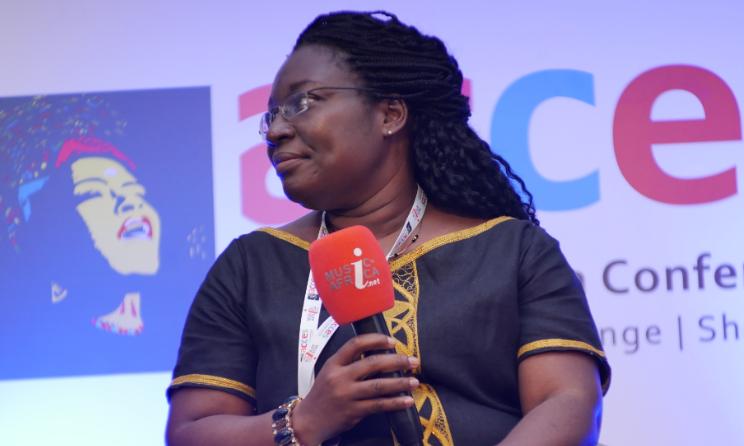
Chaque année, nous fournissons des informations générales afin de guider les participants dans la préparation de leur voyage. En plus de ce site, des mises à jour importantes seront envoyées par e-mail à tous les délégués inscrits. Assurez-vous de vous inscrire dès que possible. Pour plus d'informations, veuillez contacter [email protected] Continuez à consulter cette page pour plus d'information.  

Gender@Work
Gender@Work

Music In Africa Gender @ Work is a three-year training programme aimed at upskilling and increasing the participation of female professionals in the African music sector. Launched by the Music In Africa Foundation (MIAF) in April 2019, the programme is connected to the MIAF’s ACCES music conference – a pan-African event held in a different African country every year. This connection enables the programme to reach new participants in a different African country every year. The programme marks the beginning of a more concerted effort by the Foundation to support the participation and inclusion of women in all facets of its programmes and the music sector in Africa as a whole. Over the three years, the programme will aim to address gender imbalances in the sector through training, lobbying, facilitating knowledge exchange and dialogues that foster the interest of women. The broader objectives of the programme are to: Provide industry training for women on critical music industry skills, focusing on: Stage management Electronic music production and recording Music business management Technical knowledge Provide an opportunity for both professional and aspiring women to benefit from the Music In Africa network and its broad range of activities in 2019, 2020 and 2021. Provide a solution-based platform in the form of a round table at ACCES with a view to identify challenges, discuss opportunities and lobby for the interests of female practitioners. Offer participants the opportunity to benefit from programmes offered by MIAF’s partners. Increase access to educational materials. Integrate participants in the broader ACCES programme to maximise experience and exposure to the industry. Record and present training materials on the www.musicinafrica.net, including but not limited to tutorials, templates and other best-practice materials. Communicate women-based themes that support the initiatives and messages of the programme. MAIN TRAINING ACTIVITIES Training in first country (Ghana): In the first year, participants will be trained on all aspects of stage management by a team of experienced stage managers from 10 to 17 November 2019. The programme will offer robust classroom training as well as practical, hands-on training in which participants will also be given the opportunity to manage various aspects of the ACCES performance programme. Training in second country: The second training iteration will take place at ACCES 2020 when the programme will diversify its course to include music production lessons and training on other music business topics. A round-table platform will also be introduced to coincide with the ACCES programme. Training in third country: The third training iteration will take place at ACCES 2021 in a different country, offering an advanced course. HOW DO YOU GET INVOLVED?  As a participant, facilitator or trainer: The programme enrolls up to 12 trainees every year. All opportunities are advertised publicly on this website, and will be added to this page. Please keep checking this page for new calls (below under UPDATES & CURRENT OPPORTUNITIES). As a partner Please contact Claire Metais at [email protected]. APPLY The call for applications for 2020 will be announced soon. The Music In Africa Gender @ Work programme is made possible with the support of the Prince Claus Fund, Siemens Stiftung and Goethe-Institut.

Sound Connects Fund
Sound Connects Fund

Pour les praticiens et les organisations culturels et créatifs opérant en Afrique australe, l’accès au financement reste un défi majeur. La pandémie de COVID-19 a également eu un impact massif sur les politiques gouvernementales, les dépenses et l’économie en général, et a vu les dépenses consacrées à la culture reléguées plus bas dans la liste des priorités. De plus, les industries culturelles et créatives citent régulièrement quatre domaines principaux où l’investissement est nécessaire pour la croissance : une visibilité accrue, la mobilité incluant l’accès à de nouveaux marchés, le financement et les structures de soutien.

Music In Africa Live

MUSIC IN AFRICA LIVE Lancé en 2020 pour une durée de 3 ans, Music In Africa Live est une initiative visant à soutenir l'écosystème de la musique africaine face aux contraintes imposées par la pandémie de COVID-19 ; le projet a été lancé par la Fondation Music In Africa (MIAF) en partenariat avec le ministère fédéral allemand des Affaires étrangères, Siemens Stiftung et le Goethe Institut. Plus de 30 aides sont disponibles dans le cadre de la troisième édition de Music In Africa Live, dans 3 catégories :  showcases, renforcement des compétences et plaidoyer, en conformité avec les modalités énoncées.

Instrument Building And Repair Project

The overarching objective of Music In Africa Foundation’s Instrument Building and Repair (IBR) project is to encourage the formalisation and professionalisation of instrument-making and repair in Africa, especially in relation to indigenous African instruments. Background In 2014, the Music In Africa Foundation (MIAF) identified as one of its focus areas for development the need to encourage young people from music and music-related sectors to consider instrument-making as a career. This need extended itself from the recognition that the making of traditional African instruments is not a widely practiced skill and seems to be limited to the older generation. Traditional African instrument makers are also few and far between, making communication and logistics between teachers and learners an obstacle. When instrument building workshops take place, budgetary constraints do not allow teachers or learners the time to explore the finer details of an instrument. Based on these observations, the MIAF designed and piloted the first IBR workshop at the Dhow Countries Music Academy (DCMA) in Zanzibar in February 2015. In 2016, the foundation received funding from the South African National Lotteries Commission to implement a much bigger version of the project in Johannesburg. The project drew participants from five African countries. 25 students from South Africa, Ghana, Senegal, Kenya and Ethiopia were trained on how to build and repair musical instruments. The instruments that they made were: Traditional Instruments: Umakhweyana and Marimba Conventional Instrument: Dulcimer guitar The workshop culminated in a traditional instruments concert at the Wits Theatre in Johannesburg. It is the MIAF’s aim to roll out similar workshops in as many African countries as possible over the next few years. Objectives Developing awareness of musical instrument makers in Africa with a view to promote their work to a wider global audience. Facilitating the sharing and transfer of skills in indigenous instruments between countries on the continent. Encouraging the formalisation and professionalisation of instrument-making and repair in Africa, especially in relation to indigenous instruments. Helping instrument makers develop their careers. Fostering the rapid monetisation and sustainable development of instrument-making and repair in Africa. Promoting constant exchange of ideas, expertise, experiences and know-how among instrument makers in Africa. Facilitating the identification of existing gaps in the field with a view to contribute new solutions. Facilitating the transfer of knowledge and skills of indigenous instruments between younger and older generations. 2020 edition The MIAF has also announced that multi-instrumentalist and instrument maker Joe Makhanza will facilitate one of the workshops on the building of the kamale ngoni instrument. Kamale ngoni is a kora-like, stringed instrument that originated in West Africa. The instrument contributed to the rise of Wassoulou music in the 1970s and 1990s. Makhanza was born in Giyani in South Africa's Limpopo province. He completed a bachelor of music degree and a post-graduate diploma in arts marketing from Wits University. He is currently completing his masters in ethnomusicology and is a part-time lecturer in African music studies at Rhodes University. He plays the kora, mbira, valiha, masenqo, xiwewe, ngoni ba and xizambi, among others. He also manufactures the aforementioned instruments. The MIAF will confirm more trainers who will join the workshops as well as the other instruments that will be featured in the 2020 IBR programme.  Apply to participate here. Connect with us on Twitter, Instagram and Facebook, and subscribe to our monthly newsletter. The Music In Africa Instrument Building and Repair project is funded by the National Lotteries Commission. It is implemented in partnership with Siemens Stiftung, Goethe-Institut, Wits Theatre and Kaya FM.

banner image

Making a living singing in DRC

Accueil/Non classé/Making a living singing in DRC

A Congolese artist’s dream: success, wealth and production contracts

In Kinshasa, the heartland of African music, the profession of musician is very ubiquitous. Popular discourse about artists is full of speculation. Music is king; its wide audience is constantly discussing and spreading news and gossip obtained from music columnists. When it comes to music, everyone seems to be informed. The lives of artists are a matter of public interest and nothing escapes the public scrutiny. On the streets of Kinshasa, one can hear all types of conversations about the assets and bank accounts of music stars, their production and advertising contracts, their international tours and popularity, their relationships and networks, the brands of luxury cars they own…

The lifestyle of Congolese musicians is a paradox. The revenues from the sales of albums, videos and concert tickets are inadequate and are often a source of conflicts between band leaders and their bandmates. Nonetheless, musicians have learned to make a living from their art by using artifices and seizing the opportunities available to them. The music stars in Kinshasa drive luxury cars, build mansions, and are almost always dressed in designer clothing. It seems they don’t have much to complain about and have learned how to « settle disputes amicably” with those who sabotage their work. One can’t help but wonder about the contrast between the expensive lifestyle of musicians and their sources of income. It is therefore logical to think that they have invented a new way of earning money from their art.

The “Libanga”, a reliable source of income for musicians

This article discusses the alternative sources of income for Congolese musicians and offers an in-depth analysis of the phenomenon of libanga, also called « libangitude« , i.e. the practice of paying for a dedication. The libanga is an original practice invented by the Congolese music industry that has now spread to the musical culture of other countries.
For two decades, the group leaders have found it easier to appeal to private donors who tacitly or openly seek personal publicity. Artists still earn money through the sales of discs, local concerts and media appearances. Those opportunities help the musician to strengthen his relationship with his fan base which includes rich businessmen, politicians, and the average person; they are all engaged in a win-win exchange process and are brought together around a common passion: music.

Production contracts in Europe and other survival tricks

Truth be told, live concerts in Kinshasa are not profitable anymore. Many artists make more money by doing concerts in Europe. This has created a very complex lifestyle for local artists who are constantly travelling. Several of them have their wife and children living abroad. The lucky ones have obtained a residence permit in those countries. As a result, those artists often lead a double life: one in the West – which enables the children’s schooling and the mobility of the musician parents – and another one in their home country. This explains why touring abroad is such a major event in the Congolese music industry. Also, gathering people around music facilitates « cooperation”, helps discuss business, and more importantly brings together people seeking some kind of recognition and those who wish to re-brand themselves [Translator’s note: cooperation is a term often used in DRC that means hustling].
At the height of the rivalry between the two leaders of the group Wenge Musica, the “Ngulu phenomenon” (illegal immigration network) turned out to be a reliable source of income. For a long time, band leaders sustained the hope of an entire generation of young followers dreaming to « see Europe one day and die. » Unfortunately, it is a dream that has become difficult to achieve since the dismantling of the network. In 2004, Papa Wemba was arrested in France for aiding illegal immigration. Since then, it is very difficult for most Congolese artists to obtain a visa for the European-Schengen area.

In Kinshasa, there is the widespread belief among the public that the strength and success of an orchestra is measured by its ability to travel overseas. Europe -and more specifically Paris, Brussels and London- has a large number of Congolese immigrants, and is often seen as the hub that determines the success of musicians’ groups. Artists have long been promoting these cities to the public. Going to Europe implies that one is able to afford to live there and to acquire luxury goods and accessories associated with modern Congolese music. The libangitude pays more than one would think, but it’s difficult to say exactly how much an artist makes. Prices often vary according to clients. Libanga is so addictive that some clients are ready to pay throughout their lives.

Earning money by singing for beer manufacturers and other brands

Alcohol is very visible in Kinshasa. Beer manufacturers push people to drink. The two leading beer brands Primus and Skol are the main sponsors of artists alongside cell phone operators such as Vodacom, Airtel, Tigo, Africell and Orange. Beer companies such as Bralima and Bracongo have taken the lead in sponsoring music to the point of determining the rules of the game. They organize popular concerts and make sure the music advertises their products. Their marketing departments choose the artists that are going to represent the brands using criteria such as the popularity of the artist or their own ratings. This choice can be arbitrary. Sometimes the brands sign artists considered as has been and who will accept any contractual terms. The result is often a great concert which attracts big crowds, but the group is underpaid with most of the money going to the group’s leader. Artists compensate the little pay by mentioning a string of names during their stage performance.

Businessmen and politicians sponsor artists.

 Artists thank businessmen and politicians in more specific terms. By singing the praises of their sponsors, the artists make them more visible and celebrate their status. The songs often combine the sponsors’ names with nicknames conveying their ambitions. In return, the artist gets money -unsolicited or upon request- or services.  A lot of people in the Democratic Republic of Congo sponsor musicians, sometimes unknowingly and expecting nothing in return because they love the music and the artists. During a concert, one might give a 100 dollar bill to a group that will provide them with transportation [Translator’s note: in Congo, concerts’ audiences show their appreciation to the artists by laying money on their forehead while they are performing]. A fan may support the musicians by helping them pay for equipment rental. Politicians often use this type of small scale sponsoring. Franco was sponsored by Mobutu. Former Congolese Prime Minister Adolphe Muzito is remembered by artists as one of the most generous politicians; he was particularly fond of the singer Evoloko Joker (also known as Emeneya King). In DR Congo, musicians and politicians support each other and work very closely. In times of political turmoil and when conflicts arise between opposition and government, the artists and musicians who take a position in favor of one side or the other pay a high price.

Most Congolese who choose to do music ultimately stay in the field. Those who decide to change careers by obligation or desperation are rare. Many artists and musicians started by working in other fields. Some of the greatest leaders in the history of Congolese music tried politics to help and make a difference. Kabasele Tshiamala also called Kalle Jeef was a Chief of Staff under Patrice Lumumba. “Le Seigneur” Tabu Ley ran for the office of vice-governor of Kinshasa and did not limit himself to being only a musician.

A musician trained in the endurance school that is Kinshasa tries to make a living by finding alternative sources of revenues. The “libangitude” is one way to gain social status and a new identity; it also constitutes one of the most reliable sources of income for the musicians of Congo-Kinshasa. Making a living from music is a mystery in Congo which adds to the power of music.

By Serge Makobo

newsletter banner

Abonnez-vous à notre newsletter

Retrouvez-nous sur les réseaux sociaux