









NEFCISA
NEFCISA

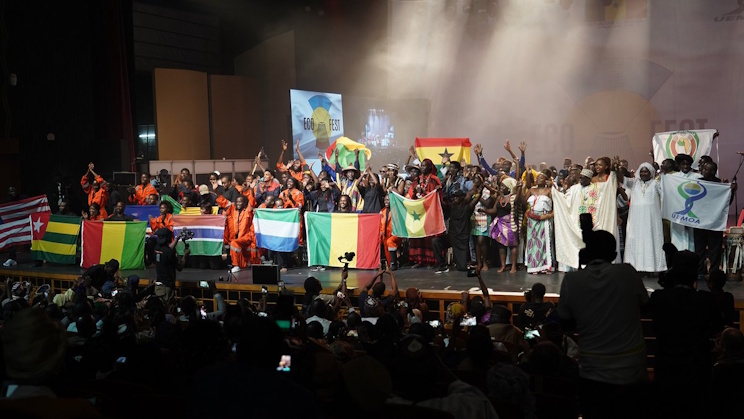
The Music In Africa Foundation (MIAF) is proud to announce its partnership with the Industrial Development Corporation (IDC) as a Strategic Implementing Partner (SIP) for its Social Employment Fund (SEF). Through this collaboration, MIAF is launching a new national programme designed to create jobs, address skills gaps, and strengthen South Africa’s creative industries — in line with the SEF’s overarching goal to generate work for the common good and build community value through employment, social contribution, and inclusive economic participation. Operating under the banner NEFCISA (National Employment Facility for Creative Industries in South Africa), the initiative will recruit and train participants, match them with host organisations, and place a minimum of 1 000 workers across the country. Key Objectives: Support employment and entrepreneurship in the creative industries. Offer skills development and training programmes. Foster partnerships between public and private creative sectors. Promote South African creativity at both provincial and national levels Foster community development through social contribution.

ACCES
ACCES

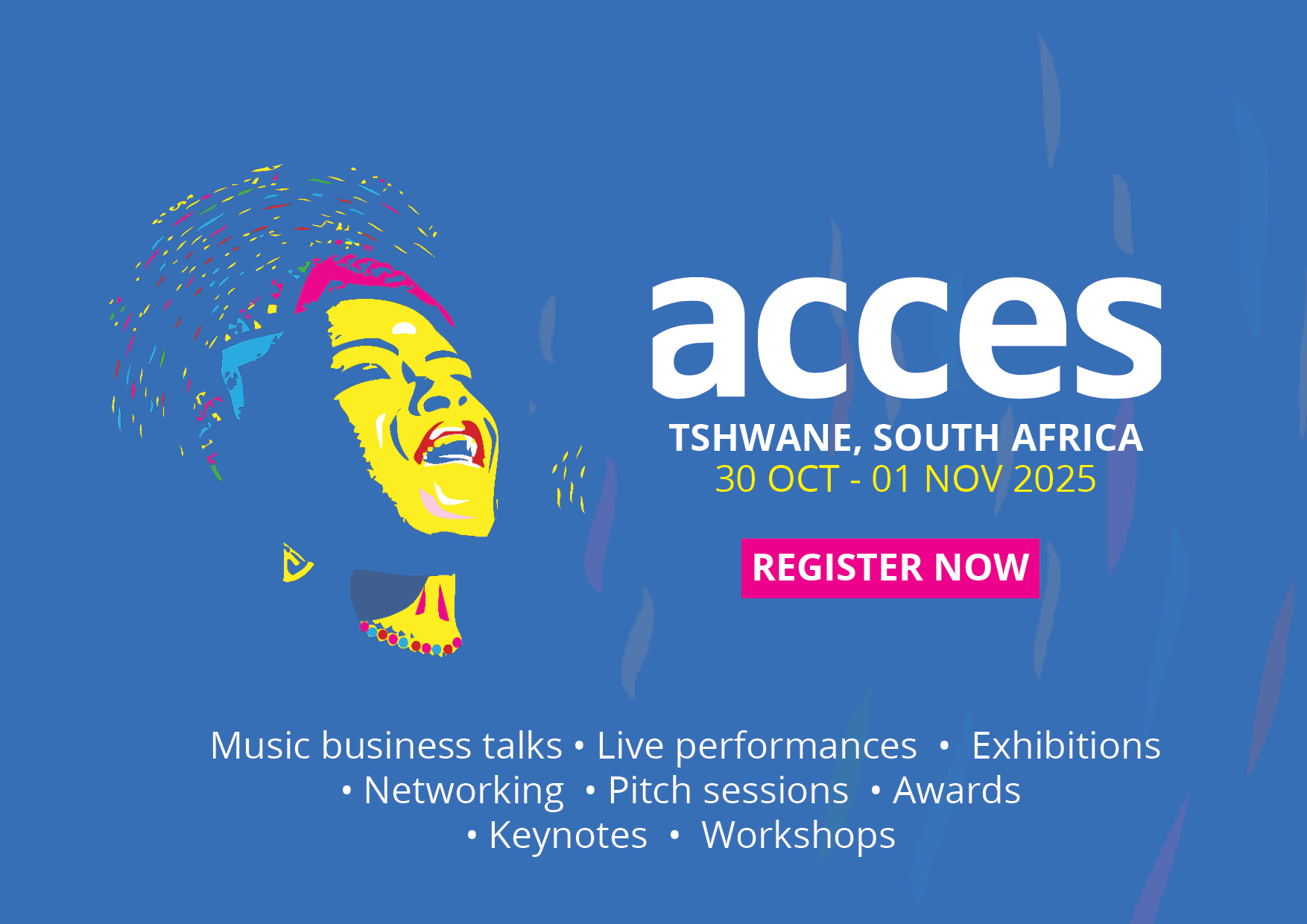
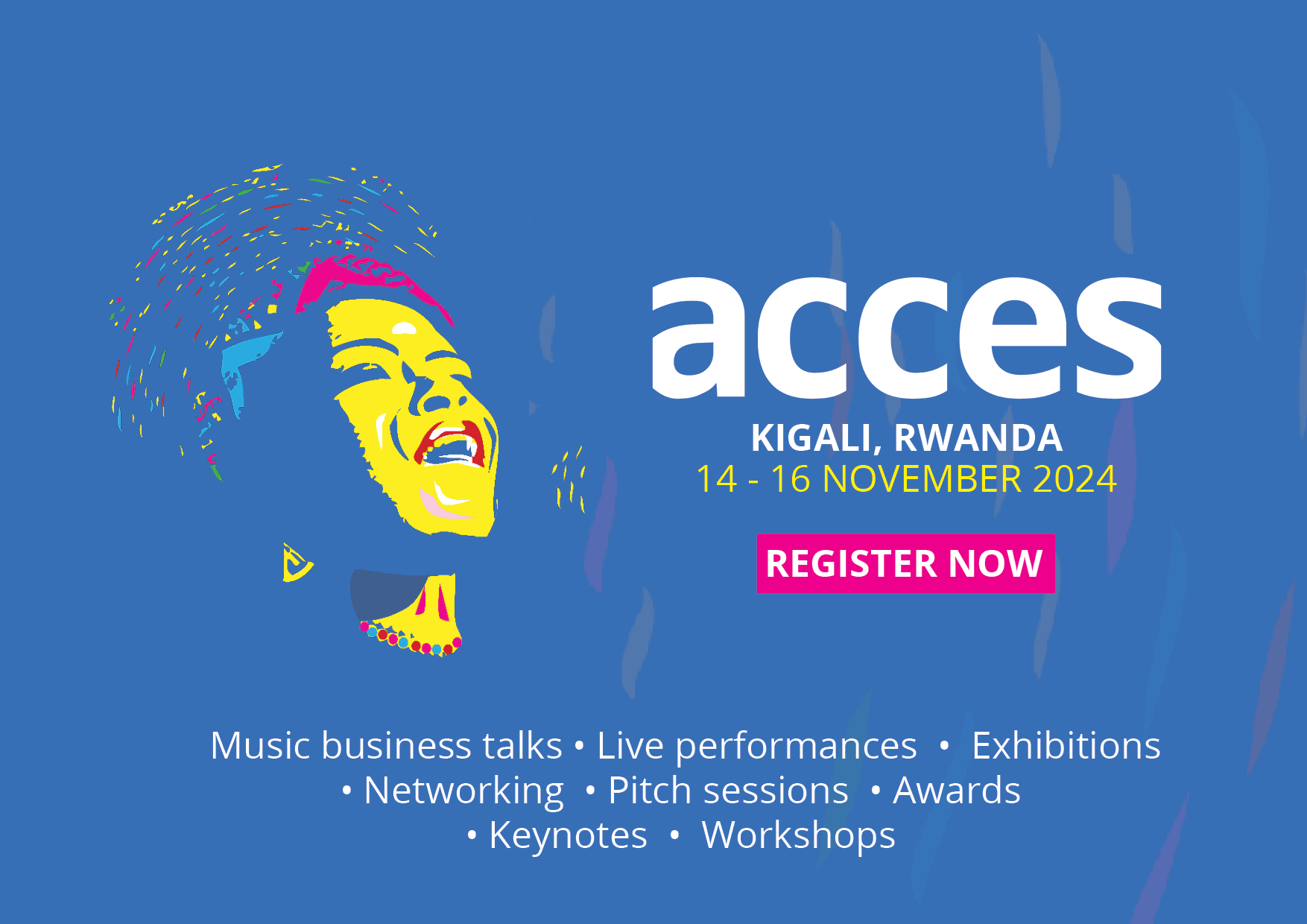
Chaque année, nous fournissons des informations générales afin de guider les participants dans la préparation de leur voyage. En plus de ce site, des mises à jour importantes seront envoyées par e-mail à tous les délégués inscrits. Assurez-vous de vous inscrire dès que possible. Pour plus d'informations, veuillez contacter [email protected] Continuez à consulter cette page pour plus d'information.  

Gender@Work
Gender@Work

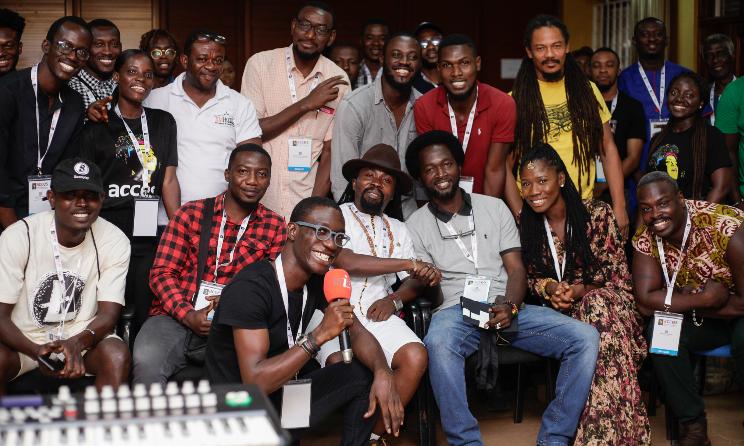
Music In Africa Gender @ Work is a three-year training programme aimed at upskilling and increasing the participation of female professionals in the African music sector. Launched by the Music In Africa Foundation (MIAF) in April 2019, the programme is connected to the MIAF’s ACCES music conference – a pan-African event held in a different African country every year. This connection enables the programme to reach new participants in a different African country every year. The programme marks the beginning of a more concerted effort by the Foundation to support the participation and inclusion of women in all facets of its programmes and the music sector in Africa as a whole. Over the three years, the programme will aim to address gender imbalances in the sector through training, lobbying, facilitating knowledge exchange and dialogues that foster the interest of women. The broader objectives of the programme are to: Provide industry training for women on critical music industry skills, focusing on: Stage management Electronic music production and recording Music business management Technical knowledge Provide an opportunity for both professional and aspiring women to benefit from the Music In Africa network and its broad range of activities in 2019, 2020 and 2021. Provide a solution-based platform in the form of a round table at ACCES with a view to identify challenges, discuss opportunities and lobby for the interests of female practitioners. Offer participants the opportunity to benefit from programmes offered by MIAF’s partners. Increase access to educational materials. Integrate participants in the broader ACCES programme to maximise experience and exposure to the industry. Record and present training materials on the www.musicinafrica.net, including but not limited to tutorials, templates and other best-practice materials. Communicate women-based themes that support the initiatives and messages of the programme. MAIN TRAINING ACTIVITIES Training in first country (Ghana): In the first year, participants will be trained on all aspects of stage management by a team of experienced stage managers from 10 to 17 November 2019. The programme will offer robust classroom training as well as practical, hands-on training in which participants will also be given the opportunity to manage various aspects of the ACCES performance programme. Training in second country: The second training iteration will take place at ACCES 2020 when the programme will diversify its course to include music production lessons and training on other music business topics. A round-table platform will also be introduced to coincide with the ACCES programme. Training in third country: The third training iteration will take place at ACCES 2021 in a different country, offering an advanced course. HOW DO YOU GET INVOLVED?  As a participant, facilitator or trainer: The programme enrolls up to 12 trainees every year. All opportunities are advertised publicly on this website, and will be added to this page. Please keep checking this page for new calls (below under UPDATES & CURRENT OPPORTUNITIES). As a partner Please contact Claire Metais at [email protected]. APPLY The call for applications for 2020 will be announced soon. The Music In Africa Gender @ Work programme is made possible with the support of the Prince Claus Fund, Siemens Stiftung and Goethe-Institut.

Sound Connects Fund
Sound Connects Fund

Pour les praticiens et les organisations culturels et créatifs opérant en Afrique australe, l’accès au financement reste un défi majeur. La pandémie de COVID-19 a également eu un impact massif sur les politiques gouvernementales, les dépenses et l’économie en général, et a vu les dépenses consacrées à la culture reléguées plus bas dans la liste des priorités. De plus, les industries culturelles et créatives citent régulièrement quatre domaines principaux où l’investissement est nécessaire pour la croissance : une visibilité accrue, la mobilité incluant l’accès à de nouveaux marchés, le financement et les structures de soutien.

Music In Africa Live

MUSIC IN AFRICA LIVE Lancé en 2020 pour une durée de 3 ans, Music In Africa Live est une initiative visant à soutenir l'écosystème de la musique africaine face aux contraintes imposées par la pandémie de COVID-19 ; le projet a été lancé par la Fondation Music In Africa (MIAF) en partenariat avec le ministère fédéral allemand des Affaires étrangères, Siemens Stiftung et le Goethe Institut. Plus de 30 aides sont disponibles dans le cadre de la troisième édition de Music In Africa Live, dans 3 catégories :  showcases, renforcement des compétences et plaidoyer, en conformité avec les modalités énoncées.

Instrument Building And Repair Project

The overarching objective of Music In Africa Foundation’s Instrument Building and Repair (IBR) project is to encourage the formalisation and professionalisation of instrument-making and repair in Africa, especially in relation to indigenous African instruments. Background In 2014, the Music In Africa Foundation (MIAF) identified as one of its focus areas for development the need to encourage young people from music and music-related sectors to consider instrument-making as a career. This need extended itself from the recognition that the making of traditional African instruments is not a widely practiced skill and seems to be limited to the older generation. Traditional African instrument makers are also few and far between, making communication and logistics between teachers and learners an obstacle. When instrument building workshops take place, budgetary constraints do not allow teachers or learners the time to explore the finer details of an instrument. Based on these observations, the MIAF designed and piloted the first IBR workshop at the Dhow Countries Music Academy (DCMA) in Zanzibar in February 2015. In 2016, the foundation received funding from the South African National Lotteries Commission to implement a much bigger version of the project in Johannesburg. The project drew participants from five African countries. 25 students from South Africa, Ghana, Senegal, Kenya and Ethiopia were trained on how to build and repair musical instruments. The instruments that they made were: Traditional Instruments: Umakhweyana and Marimba Conventional Instrument: Dulcimer guitar The workshop culminated in a traditional instruments concert at the Wits Theatre in Johannesburg. It is the MIAF’s aim to roll out similar workshops in as many African countries as possible over the next few years. Objectives Developing awareness of musical instrument makers in Africa with a view to promote their work to a wider global audience. Facilitating the sharing and transfer of skills in indigenous instruments between countries on the continent. Encouraging the formalisation and professionalisation of instrument-making and repair in Africa, especially in relation to indigenous instruments. Helping instrument makers develop their careers. Fostering the rapid monetisation and sustainable development of instrument-making and repair in Africa. Promoting constant exchange of ideas, expertise, experiences and know-how among instrument makers in Africa. Facilitating the identification of existing gaps in the field with a view to contribute new solutions. Facilitating the transfer of knowledge and skills of indigenous instruments between younger and older generations. 2020 edition The MIAF has also announced that multi-instrumentalist and instrument maker Joe Makhanza will facilitate one of the workshops on the building of the kamale ngoni instrument. Kamale ngoni is a kora-like, stringed instrument that originated in West Africa. The instrument contributed to the rise of Wassoulou music in the 1970s and 1990s. Makhanza was born in Giyani in South Africa's Limpopo province. He completed a bachelor of music degree and a post-graduate diploma in arts marketing from Wits University. He is currently completing his masters in ethnomusicology and is a part-time lecturer in African music studies at Rhodes University. He plays the kora, mbira, valiha, masenqo, xiwewe, ngoni ba and xizambi, among others. He also manufactures the aforementioned instruments. The MIAF will confirm more trainers who will join the workshops as well as the other instruments that will be featured in the 2020 IBR programme.  Apply to participate here. Connect with us on Twitter, Instagram and Facebook, and subscribe to our monthly newsletter. The Music In Africa Instrument Building and Repair project is funded by the National Lotteries Commission. It is implemented in partnership with Siemens Stiftung, Goethe-Institut, Wits Theatre and Kaya FM.

banner image

Salegy in Madagascar

Accueil/Non classé/Salegy in Madagascar

Origins

The birth of salegy dates back to the 15th century, at the time of the first settlement in Madagascar. Originally the music was entirely linked to Madagascan customs. The Tsimihety and Sakalava (northern region) ethnic groups used salegy for rites of possession and ceremonies related to ancestor worship such as joro (a local sacrifice) to seek favours from God and ancestors.

“If salegy is based on the antsa or a cappella, instruments now accompany it,” says Charles MaurinPoty, a local songwriter. Salegy was then played with flutes, a diatonic accordion and valiha(tube zither).

The word ‘salegy’dates back to the 1960s. It denotes a new, electricmusic conceived by some guitarists, rendered as a fusion of variety and tradition. Salegy thus appeared as the first national urban music in Madagascar.Itis played at different speeds, according to the various musical traditions of the regions. While salegyis typically slower in the highlands, in coastal areas the tempois more accelerated.

Pioneer artists

In the 1960s, salegy triggered a musical revolution with the arrival of electric instruments. Elisabeth Raliza and the folk association of the east coast launched the modern salegy sound with the hit ‘Viavy Rose’. One sees the emergence of salegy integrating electric instruments and chromatic accordion while mixing local (basesa, tsapiky, sega) and imported (sega from Mauritiussega and Reunion, Congolese rumba, South African mbaqanga and benga from Kenya) styles. This merger soon enjoyed considerable success.

Salegy was then popularized by the late Freddy Ranarison and Los Matadores, an orchestra from the town of Diego-Suarez (now known as Antsiranana). “A pioneer of the electric guitar in the 1960s, Freddy Ranarison propelled salegy to international success. The rhythm was not slow to be adopted in Africa,”says Serge Henri Rodin, a local researcher and teacher.

One of the veterans of this famous genre remains Eusèbe Jaojoby, considered the king of salegy. Jaojoby was a member of a series of bands that performed salegy from 1972, namely Los Matadores, Valoalo of Tamatave and Vikings of Nosy Be. “I was one of the first to sing salegy, which was previously limited to a few instrumental recordings,” says Jaojoby. Two 45rpm EPs were released. The group Jaojoby continued to get the people of Antananarivo, the capital, on the dancefloor in the 1970s and gained international recognition in the 1990s. Today Jaojoby owns and manages Jao’s Pub, one of the leading venues for salegy. Since the forming of Jaojoby and similar acts such as Tianjama and Dr. JB, salegy has become the iconic music of the Big Island.

The new generation

After the success of the pioneer artists, Rotsaka Din launched a new trend in salgey in the 2000s. “If previously melody was most emphasized, today rhythmic speed is explored. Salegy has become more energetic,”says Nelson Rafandroana, a local producer. Since 2004, national stars like Wawa, Vaiavy Chila, Fandrama, Tence Mena and Ali Murad have risen and remain on the scene until today. These artists contribute to the evolution of salegy in Madagascar.

[video:https://www.youtube.com/watch?v=JV-Jvwbrkks autoplay:0]

While keeping to its original tempo of 6/8, modern salegy has evolved with current musical trends. Artists like Tence Mena and Vaiavy Chilla dare to perform salegy combined with contemporary high-tech sounds of Africa, such as the coupé-decalé of Ivory Coast and ndombolo of the DR Congo. As for Ali Murad and Wawa, they prefer to reduce the guitar sound and increase the tempo to get a more catchy sound for the youth.

Many artists from Diego-Suarez (Antsiranana) -such as Gino, Zandry Amed, Sofia Gouma, Flavienand others – are popular in their city, but remain relatively unknown on the rest of the island. “Today we are witnessing the emergence of a whole new generation of artists who should gain popularity as a result of their creativity,” says songwriter Charles Maurin Poty. These young artists such from Diego-Suarez, among others, launched a sound they call ‘salegy gouma’: a quick and exciting rhythm that offers great interaction with the audience. For her part, Stella Affro is trying out another new form, ‘salegy rock’.

Exporting salegy

Salegy is sung and played in concerts, bars, cabarets and party evenings throughout the Big Island; and in some countries outside Madagascar. “Jaojoby is undoubtedly the leading ambassador of salegy music on the international stage even till today,” says Prisca Rananjarison, a cultural journalist. Hisgroup’s international toursinclude New Year’s Eve in 1990 with the Madagascan diaspora in Paris. Since then the group has participated in many festivals on all five continents,including in Canada, the USA, Europe, Africa, Asia and Oceania. “With salegy’s ecstatic furious tempo and varied rhythms, our music was appreciated wherever we performed,”says Jaojoby. On the production side, Jaojoby counts seven international albums to his credit.

As for artists of the new generation, they try to distinguish themselves through performances abroad. Today, singer Wawa is known throughout the Indian Ocean. “Our aim is to showcase modern salegy on the international stage,”says Wawa. Another popular artist, Tence Mena, has participated in regionalevents such as FestivalInter Mizik (FIM) in Mayotte in 2011, ZIN’CK Festivalin Anjouan in 2012, the Crowzes des Suds Festival of Reunion in 2014 and a string of tours in France that same year. Furthermore, top salegy artists perform and broadcast their music abroad, like Roseliane and Eusebia, the daughters of Jaojoby.

Promotion

Salegy holds an important place in the music industry of Madagascar. According to SoiliBoiareAboud, head of Super Music, one of the few stores selling albums from the island, “Here at Super Music, one can say that albums of the artists in vogue such as Wawa and Tence Mena have the most success.”

Salegy artists are constantly looking for fame and exposure. “Given the expectations of their fans, popular artists need to select an excerpt from their album to be featured on television and radio,”says producer Nelson Rafandroana. To support this struggle, they also broadcast their music on the internet via YouTube. However, given the scourge of piracy, album sales are not very profitable to artists in Madagascar. “We can say that artists earn more by embarking on national and international tours,” adds Rafandroana.“If we take for instance the example of Wawa, he is on tour from March to December, working 20 days out of 30”. In this way, Madagascan artists continue to work hard to proudly fly the colours of salegy throughout the world.


Further reading (in French):
Au cœur du Salegy, la musique dominante à Madagascar’ – http://fr.globalvoicesonline.org
Le salegy de Madagascar’- http://voyage.e-monsite.com
Le Salegy Une Musique Traditionnelle De Madagascar’ –http://lamusiquemalgache.blogspot.com
Jaojoby Eusèbe : le roi du Salegy à Madagascar’ – www.musique-madagascar.com
Le salegymondialisé de Jaojoby’ – www.rfimusique.com
Tournée Jaojoby : Plus qu’unroi du salegy, un ambassadeur de la musiquemalgache’ – www.midi-madagasikara.mg
Le roi du salegy règne sur les savanes africaines’ – www.lexpressmada.com
fiche artiste Jaojoby – www.craam.mg/cms/artiste/musique/69
Portrait : Wawa, « toujours en marche pourporter le « salegy » à l’échelleinternational’ –  www.midi-madagasikara.mg
Biographie de Tence Mena –www.tencemena.com


newsletter banner

Abonnez-vous à notre newsletter

Retrouvez-nous sur les réseaux sociaux