















NEFCISA
NEFCISA

The Music In Africa Foundation (MIAF) is proud to announce its partnership with the Industrial Development Corporation (IDC) as a Strategic Implementing Partner (SIP) for its Social Employment Fund (SEF). Through this collaboration, MIAF is launching a new national programme designed to create jobs, address skills gaps, and strengthen South Africa’s creative industries — in line with the SEF’s overarching goal to generate work for the common good and build community value through employment, social contribution, and inclusive economic participation. Operating under the banner NEFCISA (National Employment Facility for Creative Industries in South Africa), the initiative will recruit and train participants, match them with host organisations, and place a minimum of 1 000 workers across the country. Key Objectives: Support employment and entrepreneurship in the creative industries. Offer skills development and training programmes. Foster partnerships between public and private creative sectors. Promote South African creativity at both provincial and national levels Foster community development through social contribution.

ACCES
ACCES

Chaque année, nous fournissons des informations générales afin de guider les participants dans la préparation de leur voyage. En plus de ce site, des mises à jour importantes seront envoyées par e-mail à tous les délégués inscrits. Assurez-vous de vous inscrire dès que possible. Pour plus d'informations, veuillez contacter [email protected] Continuez à consulter cette page pour plus d'information.  

Gender@Work
Gender@Work

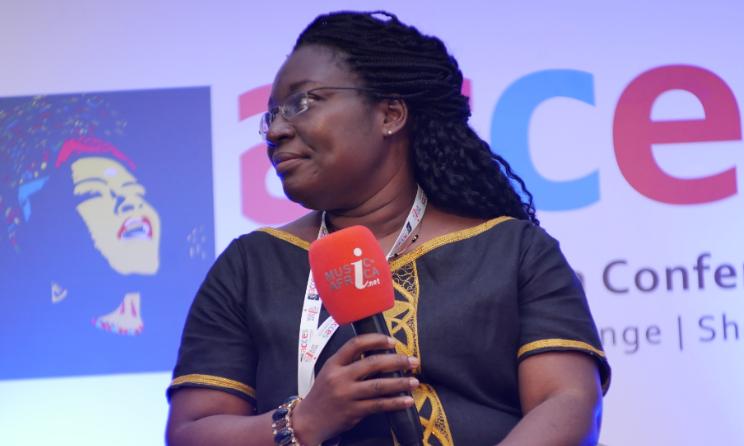
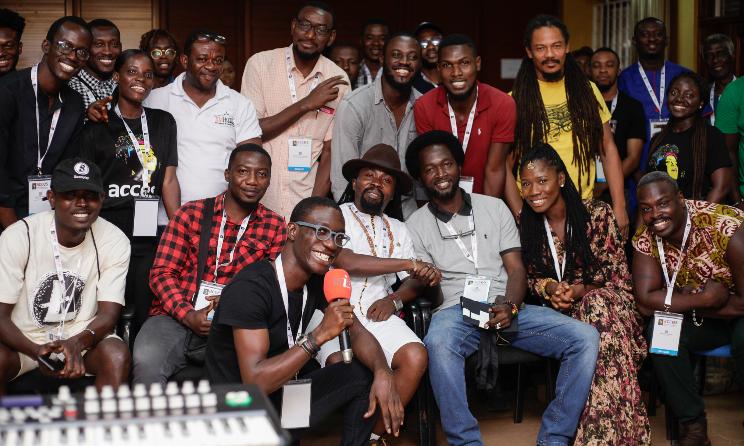
Music In Africa Gender @ Work is a three-year training programme aimed at upskilling and increasing the participation of female professionals in the African music sector. Launched by the Music In Africa Foundation (MIAF) in April 2019, the programme is connected to the MIAF’s ACCES music conference – a pan-African event held in a different African country every year. This connection enables the programme to reach new participants in a different African country every year. The programme marks the beginning of a more concerted effort by the Foundation to support the participation and inclusion of women in all facets of its programmes and the music sector in Africa as a whole. Over the three years, the programme will aim to address gender imbalances in the sector through training, lobbying, facilitating knowledge exchange and dialogues that foster the interest of women. The broader objectives of the programme are to: Provide industry training for women on critical music industry skills, focusing on: Stage management Electronic music production and recording Music business management Technical knowledge Provide an opportunity for both professional and aspiring women to benefit from the Music In Africa network and its broad range of activities in 2019, 2020 and 2021. Provide a solution-based platform in the form of a round table at ACCES with a view to identify challenges, discuss opportunities and lobby for the interests of female practitioners. Offer participants the opportunity to benefit from programmes offered by MIAF’s partners. Increase access to educational materials. Integrate participants in the broader ACCES programme to maximise experience and exposure to the industry. Record and present training materials on the www.musicinafrica.net, including but not limited to tutorials, templates and other best-practice materials. Communicate women-based themes that support the initiatives and messages of the programme. MAIN TRAINING ACTIVITIES Training in first country (Ghana): In the first year, participants will be trained on all aspects of stage management by a team of experienced stage managers from 10 to 17 November 2019. The programme will offer robust classroom training as well as practical, hands-on training in which participants will also be given the opportunity to manage various aspects of the ACCES performance programme. Training in second country: The second training iteration will take place at ACCES 2020 when the programme will diversify its course to include music production lessons and training on other music business topics. A round-table platform will also be introduced to coincide with the ACCES programme. Training in third country: The third training iteration will take place at ACCES 2021 in a different country, offering an advanced course. HOW DO YOU GET INVOLVED?  As a participant, facilitator or trainer: The programme enrolls up to 12 trainees every year. All opportunities are advertised publicly on this website, and will be added to this page. Please keep checking this page for new calls (below under UPDATES & CURRENT OPPORTUNITIES). As a partner Please contact Claire Metais at [email protected]. APPLY The call for applications for 2020 will be announced soon. The Music In Africa Gender @ Work programme is made possible with the support of the Prince Claus Fund, Siemens Stiftung and Goethe-Institut.

Sound Connects Fund
Sound Connects Fund

Pour les praticiens et les organisations culturels et créatifs opérant en Afrique australe, l’accès au financement reste un défi majeur. La pandémie de COVID-19 a également eu un impact massif sur les politiques gouvernementales, les dépenses et l’économie en général, et a vu les dépenses consacrées à la culture reléguées plus bas dans la liste des priorités. De plus, les industries culturelles et créatives citent régulièrement quatre domaines principaux où l’investissement est nécessaire pour la croissance : une visibilité accrue, la mobilité incluant l’accès à de nouveaux marchés, le financement et les structures de soutien.

Music In Africa Live

MUSIC IN AFRICA LIVE Lancé en 2020 pour une durée de 3 ans, Music In Africa Live est une initiative visant à soutenir l'écosystème de la musique africaine face aux contraintes imposées par la pandémie de COVID-19 ; le projet a été lancé par la Fondation Music In Africa (MIAF) en partenariat avec le ministère fédéral allemand des Affaires étrangères, Siemens Stiftung et le Goethe Institut. Plus de 30 aides sont disponibles dans le cadre de la troisième édition de Music In Africa Live, dans 3 catégories :  showcases, renforcement des compétences et plaidoyer, en conformité avec les modalités énoncées.

Instrument Building And Repair Project

The overarching objective of Music In Africa Foundation’s Instrument Building and Repair (IBR) project is to encourage the formalisation and professionalisation of instrument-making and repair in Africa, especially in relation to indigenous African instruments. Background In 2014, the Music In Africa Foundation (MIAF) identified as one of its focus areas for development the need to encourage young people from music and music-related sectors to consider instrument-making as a career. This need extended itself from the recognition that the making of traditional African instruments is not a widely practiced skill and seems to be limited to the older generation. Traditional African instrument makers are also few and far between, making communication and logistics between teachers and learners an obstacle. When instrument building workshops take place, budgetary constraints do not allow teachers or learners the time to explore the finer details of an instrument. Based on these observations, the MIAF designed and piloted the first IBR workshop at the Dhow Countries Music Academy (DCMA) in Zanzibar in February 2015. In 2016, the foundation received funding from the South African National Lotteries Commission to implement a much bigger version of the project in Johannesburg. The project drew participants from five African countries. 25 students from South Africa, Ghana, Senegal, Kenya and Ethiopia were trained on how to build and repair musical instruments. The instruments that they made were: Traditional Instruments: Umakhweyana and Marimba Conventional Instrument: Dulcimer guitar The workshop culminated in a traditional instruments concert at the Wits Theatre in Johannesburg. It is the MIAF’s aim to roll out similar workshops in as many African countries as possible over the next few years. Objectives Developing awareness of musical instrument makers in Africa with a view to promote their work to a wider global audience. Facilitating the sharing and transfer of skills in indigenous instruments between countries on the continent. Encouraging the formalisation and professionalisation of instrument-making and repair in Africa, especially in relation to indigenous instruments. Helping instrument makers develop their careers. Fostering the rapid monetisation and sustainable development of instrument-making and repair in Africa. Promoting constant exchange of ideas, expertise, experiences and know-how among instrument makers in Africa. Facilitating the identification of existing gaps in the field with a view to contribute new solutions. Facilitating the transfer of knowledge and skills of indigenous instruments between younger and older generations. 2020 edition The MIAF has also announced that multi-instrumentalist and instrument maker Joe Makhanza will facilitate one of the workshops on the building of the kamale ngoni instrument. Kamale ngoni is a kora-like, stringed instrument that originated in West Africa. The instrument contributed to the rise of Wassoulou music in the 1970s and 1990s. Makhanza was born in Giyani in South Africa's Limpopo province. He completed a bachelor of music degree and a post-graduate diploma in arts marketing from Wits University. He is currently completing his masters in ethnomusicology and is a part-time lecturer in African music studies at Rhodes University. He plays the kora, mbira, valiha, masenqo, xiwewe, ngoni ba and xizambi, among others. He also manufactures the aforementioned instruments. The MIAF will confirm more trainers who will join the workshops as well as the other instruments that will be featured in the 2020 IBR programme.  Apply to participate here. Connect with us on Twitter, Instagram and Facebook, and subscribe to our monthly newsletter. The Music In Africa Instrument Building and Repair project is funded by the National Lotteries Commission. It is implemented in partnership with Siemens Stiftung, Goethe-Institut, Wits Theatre and Kaya FM.

banner image

South Africa's legendary Jazz Epistles to reunite for Youth Day

Accueil/Non classé/South Africa’s legendary Jazz Epistles to reunite for Youth Day

In 1995, three of its most famous surviving members Hugh Masekela, Jonas Gwangwa and Abdullah Ibrahim performed together on home ground for the first time since 1960. That was at the State Theatre in Pretoria during the country’s first Freedom Day celebrations. It was a virtuoso performance but they didn’t perform any of the Jazz Epistles pieces that had made them a household name in the 1950s.

Twenty-one years later, the trio is set to reunite this month to commemorate the 40th anniversary of the June 16 student uprisings in 1976. And this time their extensive repertoire will include compositions from their seminal Jazz Epistles recording.

The all-star ensemble came into existence after The Dollar Brand Trio from Cape Town and alto king Kippie Moeketsi from Joburg and his two protégés, trumpeter Masekela and trombonist Gwangwa, combined their talents. The Dollar Brand Trio consisted of pianist Abdullah Ibrahim, drummer Makhaya Ntshoko and bassist Johnny Gertze. They started performing in the late 1950s at the Ambassadors nightclub in Woodstock, Cape Town.

“We got in touch with Abdullah and he told us to come down as soon as we could,” Masekela remembers in his biography Still Grazing: The Musical Journey of Hugh Masekela. “We took the train to Cape Town and began rehearsing with the trio the very morning we arrived, not even having made any arrangements for accommodation. For the first few nights the three of us slept on mattresses on the floor in the back of the club.”

Under those spartan conditions, South Africa’s first bohemian bebop ensemble was born. They played to full houses at the Ambassadors seven nights a week, with a repertoire which ranged from big band swing standards in the Duke Ellington tradition to bebop favourites by visionary stylists such as Charlie Parker, Thelonious Monk, Dizzy Gillespie and Miles Davis. But they also performed their own compositions based on carnival music, tribal chants, hymns, marabi, kwela, mbaqanga and other African influences.

Kippie was the band’s musical luminary and, alongside Ibrahim, he was its most prolific composer.

“There had never been a group like the Jazz Epistles in South Africa,” observed Masekela. “Our tireless energy, complex arrangements, tight ensemble play, languid slow ballads and the heart-melting, hymn-like dirges won us a following and soon we were breaking all attendance records in Cape Town. People would sit on the floor and around the edge of the bandstand at the Ambassadors when all the seats were filled.”

During 1959, the Jazz Epistles’s popularity reached fever pitch and they were the mainstay of the Cape Town jazz scene. Music lovers included all race groups. In January 1960, they relocated to Joburg.

Their first, and unfortunately last, album The Jazz Epistles Verse 1, was released by Gallo. It was the first jazz LP to be released in the country. It was a once-off project with the company and no contract was signed. The benefit, however, was the sextet’s fame shot up.

The performed at Selborne Hall, Joburg, for six weeks to packed houses. The gate takings were far better than the pittance they had received for the album.

On 21 March 1960, the show promoters and artists were discussing the itinerary for the outfit’s national tour when news of the Sharpeville massacre hit them. Sixty-nine anti-pass demonstrators were killed by the police in the Vaal Triangle township, and about 250 hurt. The apartheid government declared a state of emergency, outlawing gatherings of more than 10 people. The draconian measures forced the indefinite cancellation of the tour.

After a long struggle to get his passport from apartheid authorities, Masekela left the country in May 1960 as an exile. His first stop was London. Gwangwa followed in 1961, during the King Kong jazz opera’s UK tour. He returned in the early 1990s.

Ibrahim and Gertze left in 1962 making Switzerland their new home. They were joined by Ntshoko and started performing again. Gertze returned to Cape Town in 1968, where he continued to play until his death in 1983.

Ibrahim’s short-lived return to South Africa in 1973 resulted in a reunion with Kippie and the recording of Dollar Brand + 3 with Kippie Moeketsi.

Kippie was the only one of the group who stayed in South Africa. After two impressive albums in 1976 with pianist Pat Matshikiza, he retired disillusioned. He died in 1983.


The Jazz Epistles play at Emperors Palace in Johannesburg on 15 and 16 June. Tickets cost between R400 and R1500 and are available from Ticketpro.


Originally published on 3 June 2016 in the African Independent.

newsletter banner

Abonnez-vous à notre newsletter

Retrouvez-nous sur les réseaux sociaux