










NEFCISA
NEFCISA

The Music In Africa Foundation (MIAF) is proud to announce its partnership with the Industrial Development Corporation (IDC) as a Strategic Implementing Partner (SIP) for its Social Employment Fund (SEF). Through this collaboration, MIAF is launching a new national programme designed to create jobs, address skills gaps, and strengthen South Africa’s creative industries — in line with the SEF’s overarching goal to generate work for the common good and build community value through employment, social contribution, and inclusive economic participation. Operating under the banner NEFCISA (National Employment Facility for Creative Industries in South Africa), the initiative will recruit and train participants, match them with host organisations, and place a minimum of 1 000 workers across the country. Key Objectives: Support employment and entrepreneurship in the creative industries. Offer skills development and training programmes. Foster partnerships between public and private creative sectors. Promote South African creativity at both provincial and national levels Foster community development through social contribution.

ACCES
ACCES

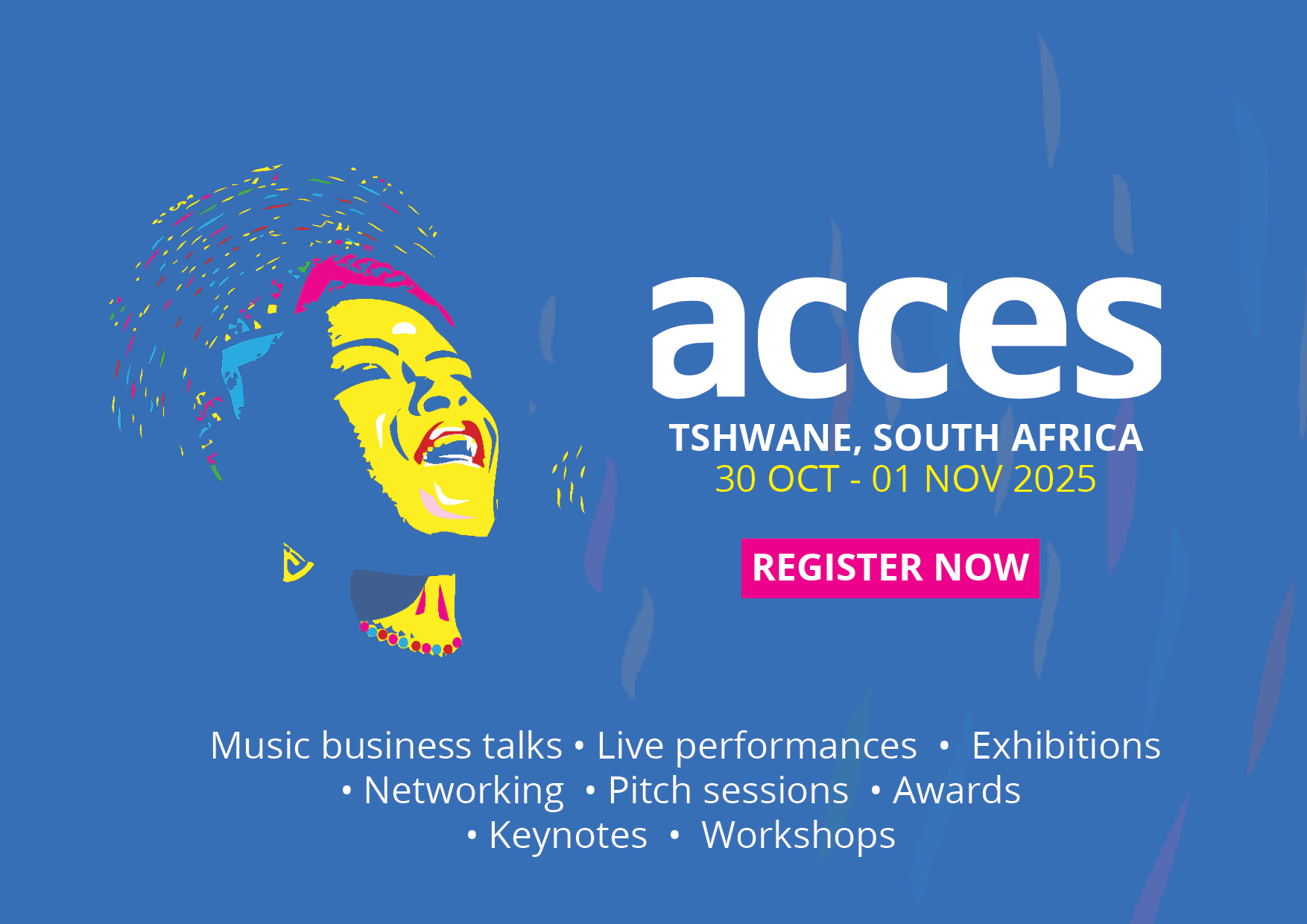
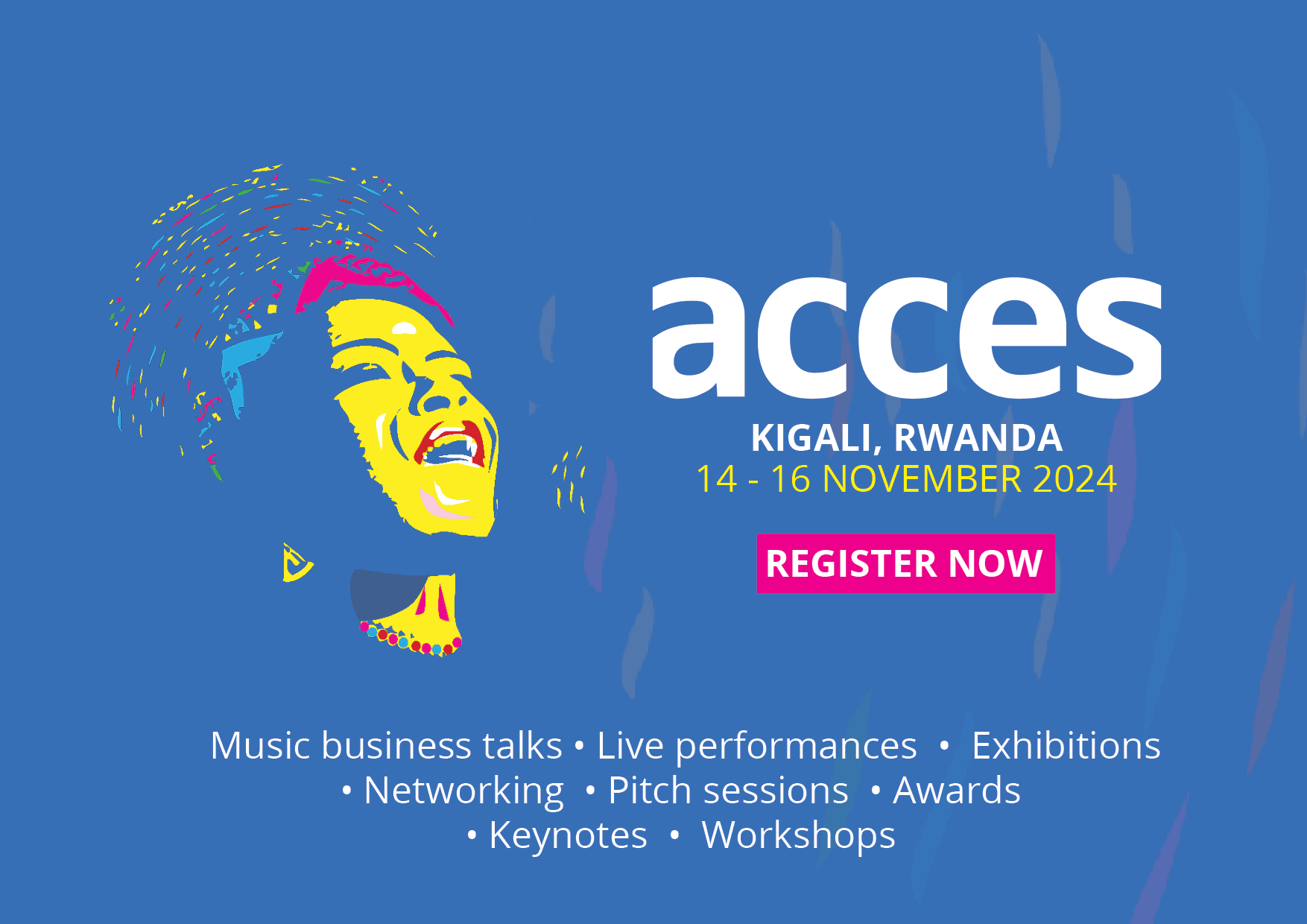
Chaque année, nous fournissons des informations générales afin de guider les participants dans la préparation de leur voyage. En plus de ce site, des mises à jour importantes seront envoyées par e-mail à tous les délégués inscrits. Assurez-vous de vous inscrire dès que possible. Pour plus d'informations, veuillez contacter [email protected] Continuez à consulter cette page pour plus d'information.  

Gender@Work
Gender@Work

Music In Africa Gender @ Work is a three-year training programme aimed at upskilling and increasing the participation of female professionals in the African music sector. Launched by the Music In Africa Foundation (MIAF) in April 2019, the programme is connected to the MIAF’s ACCES music conference – a pan-African event held in a different African country every year. This connection enables the programme to reach new participants in a different African country every year. The programme marks the beginning of a more concerted effort by the Foundation to support the participation and inclusion of women in all facets of its programmes and the music sector in Africa as a whole. Over the three years, the programme will aim to address gender imbalances in the sector through training, lobbying, facilitating knowledge exchange and dialogues that foster the interest of women. The broader objectives of the programme are to: Provide industry training for women on critical music industry skills, focusing on: Stage management Electronic music production and recording Music business management Technical knowledge Provide an opportunity for both professional and aspiring women to benefit from the Music In Africa network and its broad range of activities in 2019, 2020 and 2021. Provide a solution-based platform in the form of a round table at ACCES with a view to identify challenges, discuss opportunities and lobby for the interests of female practitioners. Offer participants the opportunity to benefit from programmes offered by MIAF’s partners. Increase access to educational materials. Integrate participants in the broader ACCES programme to maximise experience and exposure to the industry. Record and present training materials on the www.musicinafrica.net, including but not limited to tutorials, templates and other best-practice materials. Communicate women-based themes that support the initiatives and messages of the programme. MAIN TRAINING ACTIVITIES Training in first country (Ghana): In the first year, participants will be trained on all aspects of stage management by a team of experienced stage managers from 10 to 17 November 2019. The programme will offer robust classroom training as well as practical, hands-on training in which participants will also be given the opportunity to manage various aspects of the ACCES performance programme. Training in second country: The second training iteration will take place at ACCES 2020 when the programme will diversify its course to include music production lessons and training on other music business topics. A round-table platform will also be introduced to coincide with the ACCES programme. Training in third country: The third training iteration will take place at ACCES 2021 in a different country, offering an advanced course. HOW DO YOU GET INVOLVED?  As a participant, facilitator or trainer: The programme enrolls up to 12 trainees every year. All opportunities are advertised publicly on this website, and will be added to this page. Please keep checking this page for new calls (below under UPDATES & CURRENT OPPORTUNITIES). As a partner Please contact Claire Metais at [email protected]. APPLY The call for applications for 2020 will be announced soon. The Music In Africa Gender @ Work programme is made possible with the support of the Prince Claus Fund, Siemens Stiftung and Goethe-Institut.

Sound Connects Fund
Sound Connects Fund

Pour les praticiens et les organisations culturels et créatifs opérant en Afrique australe, l’accès au financement reste un défi majeur. La pandémie de COVID-19 a également eu un impact massif sur les politiques gouvernementales, les dépenses et l’économie en général, et a vu les dépenses consacrées à la culture reléguées plus bas dans la liste des priorités. De plus, les industries culturelles et créatives citent régulièrement quatre domaines principaux où l’investissement est nécessaire pour la croissance : une visibilité accrue, la mobilité incluant l’accès à de nouveaux marchés, le financement et les structures de soutien.

Music In Africa Live

MUSIC IN AFRICA LIVE Lancé en 2020 pour une durée de 3 ans, Music In Africa Live est une initiative visant à soutenir l'écosystème de la musique africaine face aux contraintes imposées par la pandémie de COVID-19 ; le projet a été lancé par la Fondation Music In Africa (MIAF) en partenariat avec le ministère fédéral allemand des Affaires étrangères, Siemens Stiftung et le Goethe Institut. Plus de 30 aides sont disponibles dans le cadre de la troisième édition de Music In Africa Live, dans 3 catégories :  showcases, renforcement des compétences et plaidoyer, en conformité avec les modalités énoncées.

Instrument Building And Repair Project

The overarching objective of Music In Africa Foundation’s Instrument Building and Repair (IBR) project is to encourage the formalisation and professionalisation of instrument-making and repair in Africa, especially in relation to indigenous African instruments. Background In 2014, the Music In Africa Foundation (MIAF) identified as one of its focus areas for development the need to encourage young people from music and music-related sectors to consider instrument-making as a career. This need extended itself from the recognition that the making of traditional African instruments is not a widely practiced skill and seems to be limited to the older generation. Traditional African instrument makers are also few and far between, making communication and logistics between teachers and learners an obstacle. When instrument building workshops take place, budgetary constraints do not allow teachers or learners the time to explore the finer details of an instrument. Based on these observations, the MIAF designed and piloted the first IBR workshop at the Dhow Countries Music Academy (DCMA) in Zanzibar in February 2015. In 2016, the foundation received funding from the South African National Lotteries Commission to implement a much bigger version of the project in Johannesburg. The project drew participants from five African countries. 25 students from South Africa, Ghana, Senegal, Kenya and Ethiopia were trained on how to build and repair musical instruments. The instruments that they made were: Traditional Instruments: Umakhweyana and Marimba Conventional Instrument: Dulcimer guitar The workshop culminated in a traditional instruments concert at the Wits Theatre in Johannesburg. It is the MIAF’s aim to roll out similar workshops in as many African countries as possible over the next few years. Objectives Developing awareness of musical instrument makers in Africa with a view to promote their work to a wider global audience. Facilitating the sharing and transfer of skills in indigenous instruments between countries on the continent. Encouraging the formalisation and professionalisation of instrument-making and repair in Africa, especially in relation to indigenous instruments. Helping instrument makers develop their careers. Fostering the rapid monetisation and sustainable development of instrument-making and repair in Africa. Promoting constant exchange of ideas, expertise, experiences and know-how among instrument makers in Africa. Facilitating the identification of existing gaps in the field with a view to contribute new solutions. Facilitating the transfer of knowledge and skills of indigenous instruments between younger and older generations. 2020 edition The MIAF has also announced that multi-instrumentalist and instrument maker Joe Makhanza will facilitate one of the workshops on the building of the kamale ngoni instrument. Kamale ngoni is a kora-like, stringed instrument that originated in West Africa. The instrument contributed to the rise of Wassoulou music in the 1970s and 1990s. Makhanza was born in Giyani in South Africa's Limpopo province. He completed a bachelor of music degree and a post-graduate diploma in arts marketing from Wits University. He is currently completing his masters in ethnomusicology and is a part-time lecturer in African music studies at Rhodes University. He plays the kora, mbira, valiha, masenqo, xiwewe, ngoni ba and xizambi, among others. He also manufactures the aforementioned instruments. The MIAF will confirm more trainers who will join the workshops as well as the other instruments that will be featured in the 2020 IBR programme.  Apply to participate here. Connect with us on Twitter, Instagram and Facebook, and subscribe to our monthly newsletter. The Music In Africa Instrument Building and Repair project is funded by the National Lotteries Commission. It is implemented in partnership with Siemens Stiftung, Goethe-Institut, Wits Theatre and Kaya FM.

banner image

High Court orders SA arts council to pay National Arts Festival R3.4m

Accueil/Non classé/High Court orders SA arts council to pay National Arts Festival R3.4m

A revised grant notification letter sent to the NAF reducing their funding has also been suspended with immediate effect. Additionally, the Minister of Sport, Arts, Culture and Recreation Nathi Mthethwa has been given until 19 April to respond to an earlier NAF appeal, and the costs were reserved.

The order follows legal action taken by the NAF, South Africa’s biggest cultural festival, against the NAC for backtracking on its initial grant offer of R8m.

Speaking to Music In Africa, NAF CEO Monica Newton said the festival had expected the NAC to pay R5.6m within three weeks after the grant was awarded on 28 January. She said the agreement stated that all NAF projects had to be implemented by 31 March and that the NAC had not paid the NAF anything to date despite the NAF immediately commencing with its work.

“They [the NAC] have been talking to the press and in industry briefings, not directly to us other than through the revised grant letter, and there’s never been an indication of double allocation,” Newton said. “We got revised offers on 5 March. This was the first time we heard of the grant reduction. On 9 March we put a settlement on the table, which was declined. We also appealed to the minister to revise it, but that was not done. We felt that the only way for us to get relief was through the courts.”

Arts organisation ASSITEJ SA has also taken the NAC to the Western Cape High Court over the council’s intention to unilaterally reduce funding. The NAC had threatened a number of organisations and individual beneficiaries that failure to sign the revised contracts would lead to forfeiture of their grants. The NAC confirmed this with Music In Africa.

News of the reduced grant publicly broke at a virtual meeting between the NAC and the arts sector in late February, when industry players were told that there was not enough money for the 1 215 approved applicants under the R300m Presidential Employment Stimulus Package (PESP). As a result, the arts council was forced to renege on its contracts with about 600 beneficiaries who had signed agreements with the body, the NAC said.

The PESP was launched as a much-needed injection into the creative economy to create and maintain jobs in the sector and support companies that suffered losses during the COVID-19 lockdown. In October last year, the Department of Sports, Arts and Culture tasked the NAC with administering the fund after it had received more than R660m from the government. Last week, it was reported that the R300m package had gone “missing“.

On Monday, 29 March, Mthethwa held a press conference to update the public and offer clarity on the funding, which is currently in its third phase. During his media briefing, Mthethwa said the budget was mismanaged and denied that there was money missing. He said the NAC had “overcommitted” the funds and that a forensic investigation had been instated to provide clarity.

“For instance, the NAC overcommitted the funds that were allocated to artists by over double the allocated amount in their possession,” he said. About R4.8m was erroneously paid out, according to Mthethwa’s department. He added that it would be unfair to ask artists to pay back the money. “I have instructed the department, working with the council, to start a process of forensic investigation,” he said.

“In the past few weeks, we have been trying to see where we can get additional funds to cover the shortfall created by the mismanagement of funds,” he said, adding that he had asked the National Treasury to “fill the gap” but that request had been rejected.

From the total grant issued to the NAC, about R84m had been paid to 639 beneficiaries by 31 March, according to the council, which has also extended the deadline for the completion of projects to the end of May. No intention to readjust the incorrect grant allocations has been communicated.

The question that many are asking now is, if there is no missing money and R84m has been paid out to date, why isn’t the council using up the remaining R216m to fulfil its obligations during a time when artists are in dire need? In late February, the NAC announced that it had suspended CEO Rosemary Mangope and CFO Clifton Changfoot pending an investigation into the mismanagement of the PESP, without clarifying whether money was allocated beyond the council’s terms of reference or if the suspended officers had directly benefitted from the funds.

Mismanagement of funds

After Mthethwa’s press briefing, NAC acting CEO Julie Diphofa indicated two levels of mismanagement that led to the revised grant notification letters: overcommitted funds by paying out more than what was requested or something approximating a system error that assigned double the funds to the beneficiaries.

NAC spokesperson Tshepo Mashiane elaborated on the usage of “overcommitted”. “When you look at all the applications that were approved by the panel, that amount in total went to R600m-plus. However, the NAC had been allocated R300m, but the reason why the amount went to R600m is that they were applicants that were allocated or awarded money over and above what they had applied for,” Mashiane said.

Forensic audit and lack of transparency

Transparency into the administration of the fund has been questioned from the onset of the process. Immediately upon receipt of a letter confirming the PESP funding, the NAC issued an open call to arts organisations and practitioners on 30 October. The NAC said it was not responsible for the adjudication process of the R300m it had received, despite the suspension of its CEO and CFO.

“We don’t sit and adjudicate anything, it’s adjudicated by an independent panel of experts,” Mashiane said. However, the adjudicators have pointed the finger back at the NAC. “Subsequent to this process, a group of adjudicators complained about how the process was handled,” Mthethwa said. “And this then landed with the new council for their further attention.”

Mthethwa said his department would also focus on the adjudicators throughout the investigation and further actions would depend on the forensic report. It is unclear whether the investigation will be done internally or if a third-party auditor will be contracted to get to the bottom of the scandal. It is also unclear how long the investigation will take. 

Sit-in protest at the NAC offices

The NAC-NAF court judgement coincides with an ongoing sit-in protest by creatives led by local opera singer Sibongile Mngoma, who have been camping at the NAC offices in Johannesburg for more than a month. The artists argue that there is lack of transparency in the allocation of the R300m PESP. 

“I believe they have to come clean about what happened to the money, » Mngoma told Music In Africa on Tuesday. “I don’t know if it‘s missing or not, what I do know is that they need to come clean because so far they have only managed to pay R75m out of R300m, so why are they not just able to pay all this money if it’s there?“

Journalist Struan Douglas, who has reported extensively on corruption within the South African music industry over the years, said: “The problem that has been ongoing for about 10 years at the National Arts Council is that a small group of connected individuals are getting the contracts. You see that with Arthur Mafokate, who had six different companies that were awarded roughly R11m.”

Similar protests are taking place across South Africa, including in Cape Town and Bloemfontein.

“There are still a lot of questions including how the recipients [of the PESP] were decided, who has actually been allocated the funding and how the funding has been apportioned,” independent arts producer and manager Nikki Froneman said. “This is just one more issue in a long and problematic DSAC [Department of Sports, Arts and Culture] and NAC history, and potentially it’s the straw that broke the camel’s back and has made artists rise up. For a long time, there have been many issues around how artists are treated and funded, and the policies around arts and culture in South Africa.” 

Additional reporting by Ano Shumba.

newsletter banner

Abonnez-vous à notre newsletter

Retrouvez-nous sur les réseaux sociaux