















NEFCISA
NEFCISA

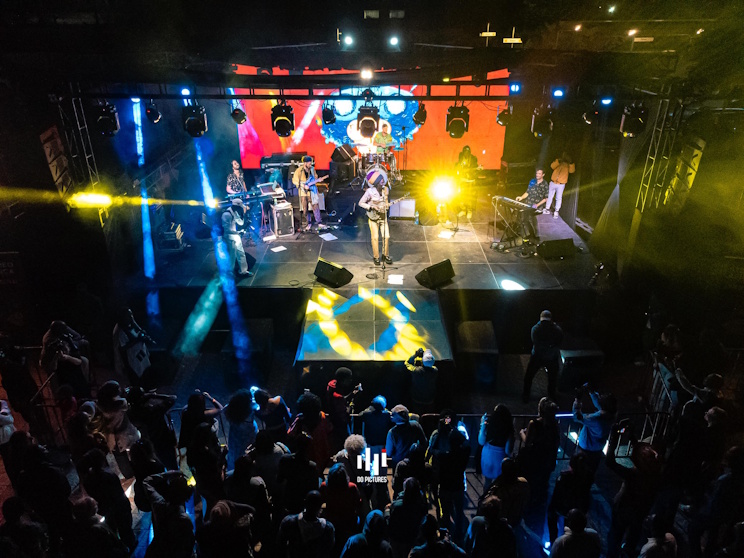
The Music In Africa Foundation (MIAF) is proud to announce its partnership with the Industrial Development Corporation (IDC) as a Strategic Implementing Partner (SIP) for its Social Employment Fund (SEF). Through this collaboration, MIAF is launching a new national programme designed to create jobs, address skills gaps, and strengthen South Africa’s creative industries — in line with the SEF’s overarching goal to generate work for the common good and build community value through employment, social contribution, and inclusive economic participation. Operating under the banner NEFCISA (National Employment Facility for Creative Industries in South Africa), the initiative will recruit and train participants, match them with host organisations, and place a minimum of 1 000 workers across the country. Key Objectives: Support employment and entrepreneurship in the creative industries. Offer skills development and training programmes. Foster partnerships between public and private creative sectors. Promote South African creativity at both provincial and national levels Foster community development through social contribution.

ACCES
ACCES

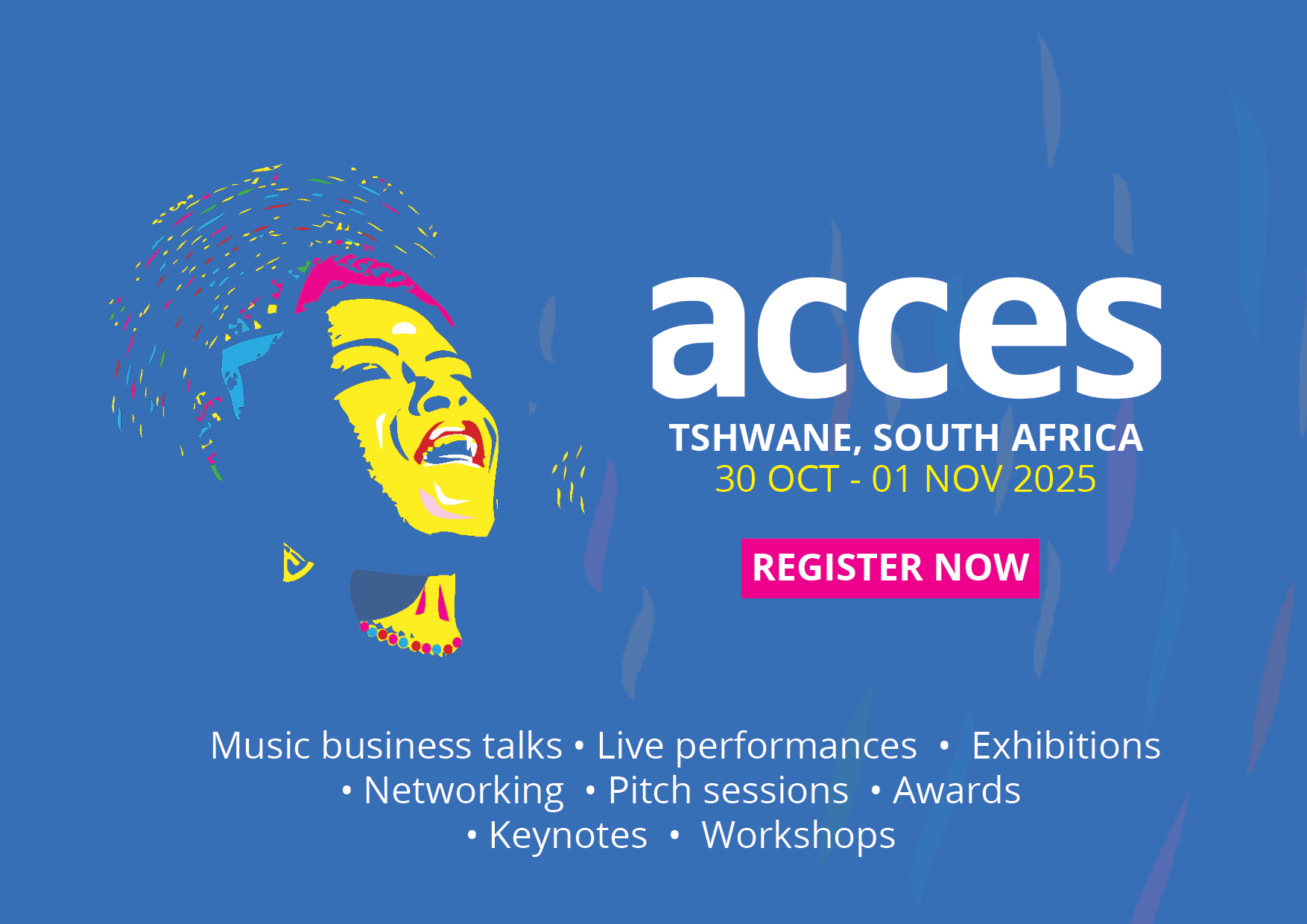
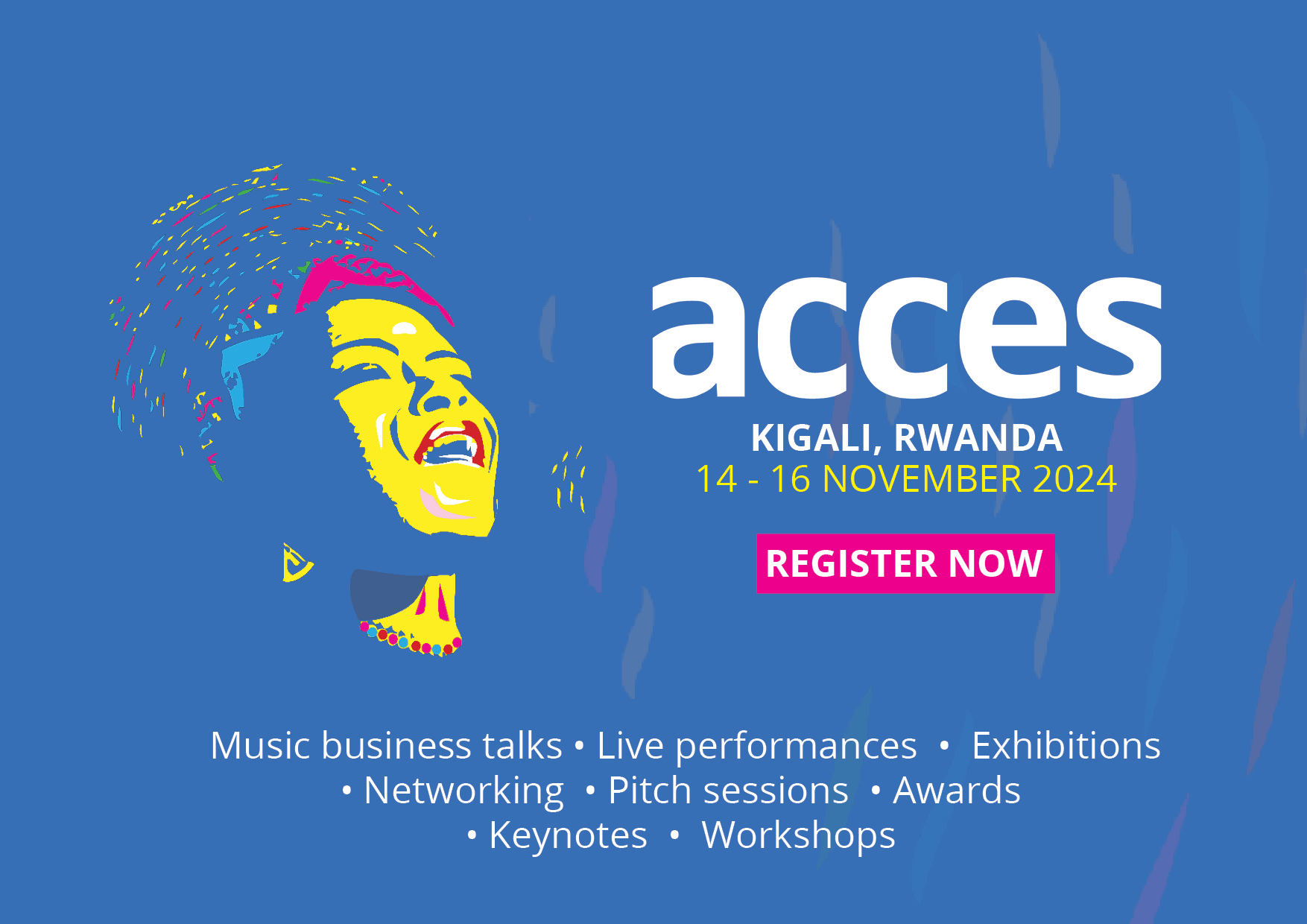
Chaque année, nous fournissons des informations générales afin de guider les participants dans la préparation de leur voyage. En plus de ce site, des mises à jour importantes seront envoyées par e-mail à tous les délégués inscrits. Assurez-vous de vous inscrire dès que possible. Pour plus d'informations, veuillez contacter [email protected] Continuez à consulter cette page pour plus d'information.  

Gender@Work
Gender@Work

Music In Africa Gender @ Work is a three-year training programme aimed at upskilling and increasing the participation of female professionals in the African music sector. Launched by the Music In Africa Foundation (MIAF) in April 2019, the programme is connected to the MIAF’s ACCES music conference – a pan-African event held in a different African country every year. This connection enables the programme to reach new participants in a different African country every year. The programme marks the beginning of a more concerted effort by the Foundation to support the participation and inclusion of women in all facets of its programmes and the music sector in Africa as a whole. Over the three years, the programme will aim to address gender imbalances in the sector through training, lobbying, facilitating knowledge exchange and dialogues that foster the interest of women. The broader objectives of the programme are to: Provide industry training for women on critical music industry skills, focusing on: Stage management Electronic music production and recording Music business management Technical knowledge Provide an opportunity for both professional and aspiring women to benefit from the Music In Africa network and its broad range of activities in 2019, 2020 and 2021. Provide a solution-based platform in the form of a round table at ACCES with a view to identify challenges, discuss opportunities and lobby for the interests of female practitioners. Offer participants the opportunity to benefit from programmes offered by MIAF’s partners. Increase access to educational materials. Integrate participants in the broader ACCES programme to maximise experience and exposure to the industry. Record and present training materials on the www.musicinafrica.net, including but not limited to tutorials, templates and other best-practice materials. Communicate women-based themes that support the initiatives and messages of the programme. MAIN TRAINING ACTIVITIES Training in first country (Ghana): In the first year, participants will be trained on all aspects of stage management by a team of experienced stage managers from 10 to 17 November 2019. The programme will offer robust classroom training as well as practical, hands-on training in which participants will also be given the opportunity to manage various aspects of the ACCES performance programme. Training in second country: The second training iteration will take place at ACCES 2020 when the programme will diversify its course to include music production lessons and training on other music business topics. A round-table platform will also be introduced to coincide with the ACCES programme. Training in third country: The third training iteration will take place at ACCES 2021 in a different country, offering an advanced course. HOW DO YOU GET INVOLVED?  As a participant, facilitator or trainer: The programme enrolls up to 12 trainees every year. All opportunities are advertised publicly on this website, and will be added to this page. Please keep checking this page for new calls (below under UPDATES & CURRENT OPPORTUNITIES). As a partner Please contact Claire Metais at [email protected]. APPLY The call for applications for 2020 will be announced soon. The Music In Africa Gender @ Work programme is made possible with the support of the Prince Claus Fund, Siemens Stiftung and Goethe-Institut.

Sound Connects Fund
Sound Connects Fund

Pour les praticiens et les organisations culturels et créatifs opérant en Afrique australe, l’accès au financement reste un défi majeur. La pandémie de COVID-19 a également eu un impact massif sur les politiques gouvernementales, les dépenses et l’économie en général, et a vu les dépenses consacrées à la culture reléguées plus bas dans la liste des priorités. De plus, les industries culturelles et créatives citent régulièrement quatre domaines principaux où l’investissement est nécessaire pour la croissance : une visibilité accrue, la mobilité incluant l’accès à de nouveaux marchés, le financement et les structures de soutien.

Music In Africa Live

MUSIC IN AFRICA LIVE Lancé en 2020 pour une durée de 3 ans, Music In Africa Live est une initiative visant à soutenir l'écosystème de la musique africaine face aux contraintes imposées par la pandémie de COVID-19 ; le projet a été lancé par la Fondation Music In Africa (MIAF) en partenariat avec le ministère fédéral allemand des Affaires étrangères, Siemens Stiftung et le Goethe Institut. Plus de 30 aides sont disponibles dans le cadre de la troisième édition de Music In Africa Live, dans 3 catégories :  showcases, renforcement des compétences et plaidoyer, en conformité avec les modalités énoncées.

Instrument Building And Repair Project

The overarching objective of Music In Africa Foundation’s Instrument Building and Repair (IBR) project is to encourage the formalisation and professionalisation of instrument-making and repair in Africa, especially in relation to indigenous African instruments. Background In 2014, the Music In Africa Foundation (MIAF) identified as one of its focus areas for development the need to encourage young people from music and music-related sectors to consider instrument-making as a career. This need extended itself from the recognition that the making of traditional African instruments is not a widely practiced skill and seems to be limited to the older generation. Traditional African instrument makers are also few and far between, making communication and logistics between teachers and learners an obstacle. When instrument building workshops take place, budgetary constraints do not allow teachers or learners the time to explore the finer details of an instrument. Based on these observations, the MIAF designed and piloted the first IBR workshop at the Dhow Countries Music Academy (DCMA) in Zanzibar in February 2015. In 2016, the foundation received funding from the South African National Lotteries Commission to implement a much bigger version of the project in Johannesburg. The project drew participants from five African countries. 25 students from South Africa, Ghana, Senegal, Kenya and Ethiopia were trained on how to build and repair musical instruments. The instruments that they made were: Traditional Instruments: Umakhweyana and Marimba Conventional Instrument: Dulcimer guitar The workshop culminated in a traditional instruments concert at the Wits Theatre in Johannesburg. It is the MIAF’s aim to roll out similar workshops in as many African countries as possible over the next few years. Objectives Developing awareness of musical instrument makers in Africa with a view to promote their work to a wider global audience. Facilitating the sharing and transfer of skills in indigenous instruments between countries on the continent. Encouraging the formalisation and professionalisation of instrument-making and repair in Africa, especially in relation to indigenous instruments. Helping instrument makers develop their careers. Fostering the rapid monetisation and sustainable development of instrument-making and repair in Africa. Promoting constant exchange of ideas, expertise, experiences and know-how among instrument makers in Africa. Facilitating the identification of existing gaps in the field with a view to contribute new solutions. Facilitating the transfer of knowledge and skills of indigenous instruments between younger and older generations. 2020 edition The MIAF has also announced that multi-instrumentalist and instrument maker Joe Makhanza will facilitate one of the workshops on the building of the kamale ngoni instrument. Kamale ngoni is a kora-like, stringed instrument that originated in West Africa. The instrument contributed to the rise of Wassoulou music in the 1970s and 1990s. Makhanza was born in Giyani in South Africa's Limpopo province. He completed a bachelor of music degree and a post-graduate diploma in arts marketing from Wits University. He is currently completing his masters in ethnomusicology and is a part-time lecturer in African music studies at Rhodes University. He plays the kora, mbira, valiha, masenqo, xiwewe, ngoni ba and xizambi, among others. He also manufactures the aforementioned instruments. The MIAF will confirm more trainers who will join the workshops as well as the other instruments that will be featured in the 2020 IBR programme.  Apply to participate here. Connect with us on Twitter, Instagram and Facebook, and subscribe to our monthly newsletter. The Music In Africa Instrument Building and Repair project is funded by the National Lotteries Commission. It is implemented in partnership with Siemens Stiftung, Goethe-Institut, Wits Theatre and Kaya FM.

banner image

Fragile : Lydol brise son mur de glace

Accueil/Non classé/Fragile : Lydol brise son mur de glace

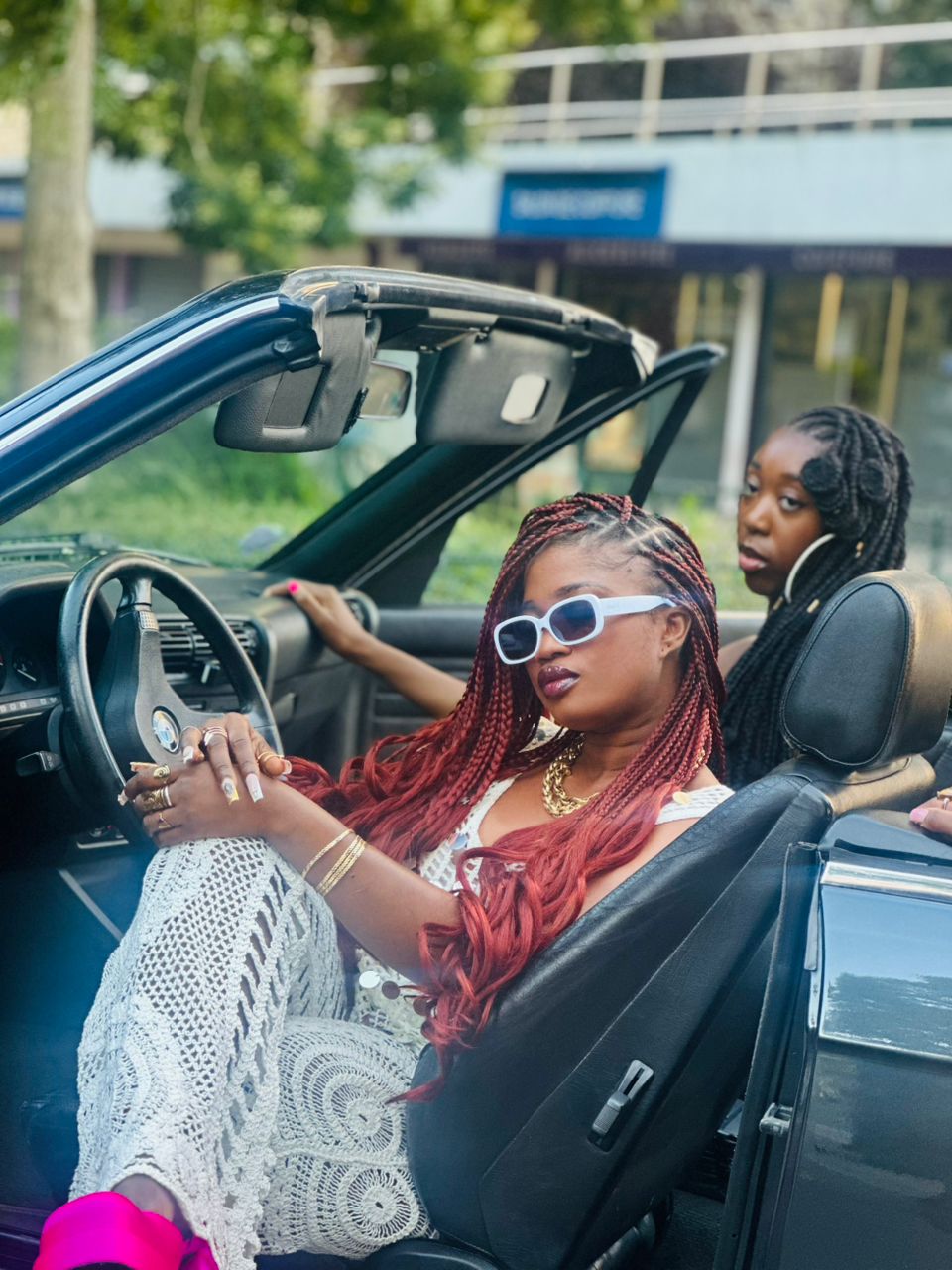
Nwafo Dolly Sorel de son vrai nom, ne sait pas faire les choses à moitié. Nous sommes le 6 février 2024, à 7h23 minutes, lorsque Lydol s’avance innocemment sur une ruelle canadienne, et fait une annonce qui marque le naturel, et la spontanéité, et ce, en une minute et dix secondes. Dans sa poche, elle présente ses deux précédents disques (Slamthérapie et Hybride) avant de poser les mots tels qu’elle sait le faire. En marge de ce moment unique, ce qui attire mon attention, ce n’est pas son traditionnel look en dreadlocks, non. C’est le fond sonore qui l’accompagne, qui d’ailleurs est le morceau qui porte le mini-album, la piste Une.

Du Ying et du Yang

Sur la pochette duochromique, en noir et blanc, j’aperçois la meilleure artiste féminine de musique Afro urbain aux Canal d’Or Acte 14, les yeux fermés, en mouvement de chute. Si l’on regarde la prise de face, on voit l’artiste entrain de tomber, par contre, si l’on regarde de profil, on voit la chanteuse comme adossée sur un tablier invisible. L’effet recherché par l’équipe photographique est nette, car cette pochette suscitera des interrogations plus ou moins légitimes sur les réseaux sociaux. La couleur noire symbolise ici la puissance, mais c’est aussi l’obscurité, l’absence de lumière, crainte ultime d’être vulnérable au regard de ses émotions. Le blanc choisi également signifie une forme d’’innocence, la simplicité, de l’inexistant et de l’immatériel. Ces deux couleurs ne sont donc pas prises au hasard car leur symbolique pour l’EP épouse une forme d’équilibre émotionnel, une opposition nécessaire un peu comme le bien et le mal.

Le disque s’ouvre par « Lionne Louve et Lièvre », chanson produite par Teddybeatz, un talentueux arrangeur camerounais connu (Il a notamment fait des tips auprès de Krys M et de nombreux autres artistes). Le titre démarre par 7 secondes de guitare ultra bass en arrangement, puis 7 secondes de batterie, avant une entrée en matière vocale agrémentée de rifts étranges, sous un air sahélien, de griot à la Djeli Moussa Condé ou Bamba Groove. Lydol est allée péchée de ces influences aux confins de son séjour malien, burkinabè et sénégalais en 2022. Sur cette track première, elle célèbre la femme multi facette, qui sait se dresser face aux contingences du monde. D’ailleurs, la symbolique du titre est un profond miroir entre le rôle protecteur de la louve, la force d’une lionne, et la discrétion du lièvre.

Le clip lui, qui cumule à plus d’un million de vues, est une production visuelle à part entière, qui mêle interprétation théâtrale, et performances chorégraphiques, je dirai même scénographiques. Dans cette case, plusieurs créatifs se sont impliqués notamment Lecris Mila à la réalisation, Ekie Bozeur au mastering, Afrokrema aux accessoires, ou encore David Fanaged pour les costumes.

Le voyage immersif

« Liè Wòn Ñgyê » est la deuxième piste, plus dansante, me conforte à l’idée que la chanteuse et slameuse mise sur le parallélisme musical à travers l’usage en arrangements de la guitare, pour une mélodie qui y mêle les sombreros du Mexique, la pop, et l’afrobeat. Entre ruptures amoureuses, douleurs psychologique, « goumin » comme on dit en local, le message est que chaque humain a un cœur, et qu’il est nocif de jouer avec les sentiments. « Katerina » lève le voile sur la dépression et la pression sociale exercée sur les femmes, en rapport avec le mariage, l’hypothèque parfois de son avenir, une liberté limitée ou dissimulée sous des prétextes supra sociales néfastes. Alors, elle fait appel au « Temps » pour être l’ultime guérisseur des blessures, des plaies profondes. Un titre particulièrement personnel pour l’artiste, quand on réalise une extrême solitude face aux souffrances.

De cette quatrième chanson, Lydol étonne par le choix non linéaire signé d’Andjamy à la production, avec des ingrédients de variété française, de mélo-pop via les changements phonographiques. Une magie qui peut être sublimée en live, par du violon, et du piano, et Lydol à la voix en toute simplicité. « Is She Me » le cinquième titre rentre dans ce couloir à la fois moderniste et traditionnaliste par l’usage de l’anglais, du pidgin, pour une teinte très Folk, avec des artifices hérités du Njang de la région du Nord-Ouest Cameroun, magnifié par de belles notes de piano. « Ecstasy » me rassure sur le respect d’une direction artistique assumée par Lydol. A l’écoute sur cette dernière chanson, je croirais entendre un mélange de Simi, Foxy Brown, et de Lil Kim en miniature.

En conclusion, les sonorités de ce mini-album, sont plus audacieuses que sur Hybride et le ton est à l’introspection. Lydol a su entretenir la magie à travers plusieurs spectacles Live dans les villes de Douala, Yaoundé et Garoua en Mars 2024. Le disque alterne des ballades torturées et des morceaux plus pop, afrobeat et pleines de couleurs, on y ressent de la recherche, et de la perspective.

Lydol ouvre ainsi le disque avec une guitare acoustique, et un chant murmuré, presque pleuré avec les cœurs Cindy Vox, Evina, ou encore César Baboule. Si la fragilité se conjugue ainsi en musique, c’est parce que l’artiste regarde plus loin, et expérimente des formules qui sortent de l’ordinaire. La force du slam transforme une voix et une vie, pour mettre de l’encre dans une existence qui ne nous apparient plus complètement. L’être humain, longtemps catalogué par ses émotions, doit comprendre que parfois les imperfections cachent une forme de beauté : L’humanisme. Car que serions-nous si nous étions dénués de tous sentiments ? La fragilité en force et faiblesse, il est plus qu’urgent de percer le mystère quand des mains sont tendues : C’est exactement ce que Lydol essaie de conter en africanités. Et si « Fragile » cachait une fleur sonore plus belle ? L’aventure se poursuit pour un EP digeste et immersif, pour qui je donne une note de 10/10.

[video:https://www.youtube.com/watch?v=IXLKMAKAoMc width:853 height:480 autoplay:0]

Année : 2024
Artiste : Lydol
Label / Organismes : Cité Internationale des arts de Paris/ Institut Français

newsletter banner

Abonnez-vous à notre newsletter

Retrouvez-nous sur les réseaux sociaux