










NEFCISA
NEFCISA

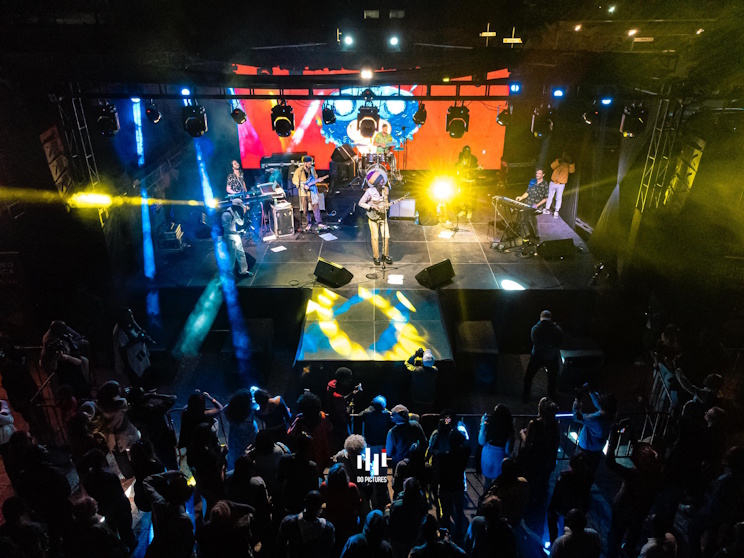
The Music In Africa Foundation (MIAF) is proud to announce its partnership with the Industrial Development Corporation (IDC) as a Strategic Implementing Partner (SIP) for its Social Employment Fund (SEF). Through this collaboration, MIAF is launching a new national programme designed to create jobs, address skills gaps, and strengthen South Africa’s creative industries — in line with the SEF’s overarching goal to generate work for the common good and build community value through employment, social contribution, and inclusive economic participation. Operating under the banner NEFCISA (National Employment Facility for Creative Industries in South Africa), the initiative will recruit and train participants, match them with host organisations, and place a minimum of 1 000 workers across the country. Key Objectives: Support employment and entrepreneurship in the creative industries. Offer skills development and training programmes. Foster partnerships between public and private creative sectors. Promote South African creativity at both provincial and national levels Foster community development through social contribution.

ACCES
ACCES

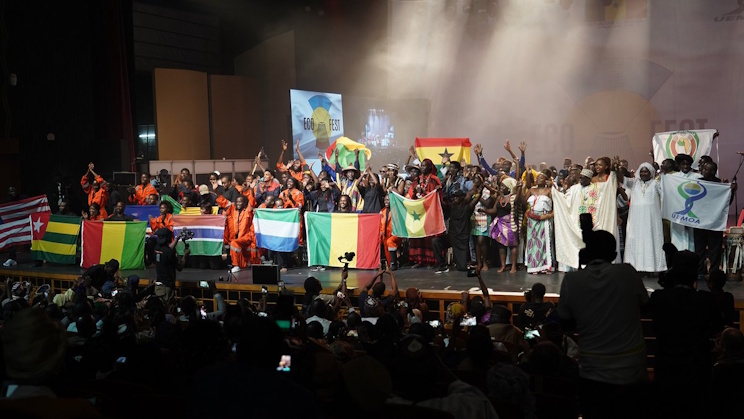
Chaque année, nous fournissons des informations générales afin de guider les participants dans la préparation de leur voyage. En plus de ce site, des mises à jour importantes seront envoyées par e-mail à tous les délégués inscrits. Assurez-vous de vous inscrire dès que possible. Pour plus d'informations, veuillez contacter [email protected] Continuez à consulter cette page pour plus d'information.  

Gender@Work
Gender@Work

Music In Africa Gender @ Work is a three-year training programme aimed at upskilling and increasing the participation of female professionals in the African music sector. Launched by the Music In Africa Foundation (MIAF) in April 2019, the programme is connected to the MIAF’s ACCES music conference – a pan-African event held in a different African country every year. This connection enables the programme to reach new participants in a different African country every year. The programme marks the beginning of a more concerted effort by the Foundation to support the participation and inclusion of women in all facets of its programmes and the music sector in Africa as a whole. Over the three years, the programme will aim to address gender imbalances in the sector through training, lobbying, facilitating knowledge exchange and dialogues that foster the interest of women. The broader objectives of the programme are to: Provide industry training for women on critical music industry skills, focusing on: Stage management Electronic music production and recording Music business management Technical knowledge Provide an opportunity for both professional and aspiring women to benefit from the Music In Africa network and its broad range of activities in 2019, 2020 and 2021. Provide a solution-based platform in the form of a round table at ACCES with a view to identify challenges, discuss opportunities and lobby for the interests of female practitioners. Offer participants the opportunity to benefit from programmes offered by MIAF’s partners. Increase access to educational materials. Integrate participants in the broader ACCES programme to maximise experience and exposure to the industry. Record and present training materials on the www.musicinafrica.net, including but not limited to tutorials, templates and other best-practice materials. Communicate women-based themes that support the initiatives and messages of the programme. MAIN TRAINING ACTIVITIES Training in first country (Ghana): In the first year, participants will be trained on all aspects of stage management by a team of experienced stage managers from 10 to 17 November 2019. The programme will offer robust classroom training as well as practical, hands-on training in which participants will also be given the opportunity to manage various aspects of the ACCES performance programme. Training in second country: The second training iteration will take place at ACCES 2020 when the programme will diversify its course to include music production lessons and training on other music business topics. A round-table platform will also be introduced to coincide with the ACCES programme. Training in third country: The third training iteration will take place at ACCES 2021 in a different country, offering an advanced course. HOW DO YOU GET INVOLVED?  As a participant, facilitator or trainer: The programme enrolls up to 12 trainees every year. All opportunities are advertised publicly on this website, and will be added to this page. Please keep checking this page for new calls (below under UPDATES & CURRENT OPPORTUNITIES). As a partner Please contact Claire Metais at [email protected]. APPLY The call for applications for 2020 will be announced soon. The Music In Africa Gender @ Work programme is made possible with the support of the Prince Claus Fund, Siemens Stiftung and Goethe-Institut.

Sound Connects Fund
Sound Connects Fund

Pour les praticiens et les organisations culturels et créatifs opérant en Afrique australe, l’accès au financement reste un défi majeur. La pandémie de COVID-19 a également eu un impact massif sur les politiques gouvernementales, les dépenses et l’économie en général, et a vu les dépenses consacrées à la culture reléguées plus bas dans la liste des priorités. De plus, les industries culturelles et créatives citent régulièrement quatre domaines principaux où l’investissement est nécessaire pour la croissance : une visibilité accrue, la mobilité incluant l’accès à de nouveaux marchés, le financement et les structures de soutien.

Music In Africa Live

MUSIC IN AFRICA LIVE Lancé en 2020 pour une durée de 3 ans, Music In Africa Live est une initiative visant à soutenir l'écosystème de la musique africaine face aux contraintes imposées par la pandémie de COVID-19 ; le projet a été lancé par la Fondation Music In Africa (MIAF) en partenariat avec le ministère fédéral allemand des Affaires étrangères, Siemens Stiftung et le Goethe Institut. Plus de 30 aides sont disponibles dans le cadre de la troisième édition de Music In Africa Live, dans 3 catégories :  showcases, renforcement des compétences et plaidoyer, en conformité avec les modalités énoncées.

Instrument Building And Repair Project

The overarching objective of Music In Africa Foundation’s Instrument Building and Repair (IBR) project is to encourage the formalisation and professionalisation of instrument-making and repair in Africa, especially in relation to indigenous African instruments. Background In 2014, the Music In Africa Foundation (MIAF) identified as one of its focus areas for development the need to encourage young people from music and music-related sectors to consider instrument-making as a career. This need extended itself from the recognition that the making of traditional African instruments is not a widely practiced skill and seems to be limited to the older generation. Traditional African instrument makers are also few and far between, making communication and logistics between teachers and learners an obstacle. When instrument building workshops take place, budgetary constraints do not allow teachers or learners the time to explore the finer details of an instrument. Based on these observations, the MIAF designed and piloted the first IBR workshop at the Dhow Countries Music Academy (DCMA) in Zanzibar in February 2015. In 2016, the foundation received funding from the South African National Lotteries Commission to implement a much bigger version of the project in Johannesburg. The project drew participants from five African countries. 25 students from South Africa, Ghana, Senegal, Kenya and Ethiopia were trained on how to build and repair musical instruments. The instruments that they made were: Traditional Instruments: Umakhweyana and Marimba Conventional Instrument: Dulcimer guitar The workshop culminated in a traditional instruments concert at the Wits Theatre in Johannesburg. It is the MIAF’s aim to roll out similar workshops in as many African countries as possible over the next few years. Objectives Developing awareness of musical instrument makers in Africa with a view to promote their work to a wider global audience. Facilitating the sharing and transfer of skills in indigenous instruments between countries on the continent. Encouraging the formalisation and professionalisation of instrument-making and repair in Africa, especially in relation to indigenous instruments. Helping instrument makers develop their careers. Fostering the rapid monetisation and sustainable development of instrument-making and repair in Africa. Promoting constant exchange of ideas, expertise, experiences and know-how among instrument makers in Africa. Facilitating the identification of existing gaps in the field with a view to contribute new solutions. Facilitating the transfer of knowledge and skills of indigenous instruments between younger and older generations. 2020 edition The MIAF has also announced that multi-instrumentalist and instrument maker Joe Makhanza will facilitate one of the workshops on the building of the kamale ngoni instrument. Kamale ngoni is a kora-like, stringed instrument that originated in West Africa. The instrument contributed to the rise of Wassoulou music in the 1970s and 1990s. Makhanza was born in Giyani in South Africa's Limpopo province. He completed a bachelor of music degree and a post-graduate diploma in arts marketing from Wits University. He is currently completing his masters in ethnomusicology and is a part-time lecturer in African music studies at Rhodes University. He plays the kora, mbira, valiha, masenqo, xiwewe, ngoni ba and xizambi, among others. He also manufactures the aforementioned instruments. The MIAF will confirm more trainers who will join the workshops as well as the other instruments that will be featured in the 2020 IBR programme.  Apply to participate here. Connect with us on Twitter, Instagram and Facebook, and subscribe to our monthly newsletter. The Music In Africa Instrument Building and Repair project is funded by the National Lotteries Commission. It is implemented in partnership with Siemens Stiftung, Goethe-Institut, Wits Theatre and Kaya FM.

banner image

Harare marks two years of Sofar Sounds

Accueil/Non classé/Harare marks two years of Sofar Sounds

The global music platform was founded in London, the United Kingdom, in 2009. It comprises curators and artists who create intimate live music events through secret performances in unique spaces such as galleries, living rooms, backyard gardens and other non-traditional venues.

In Harare, it has become a platform for artist discovery and a space for multicultural audiences who appreciate the unique concept and come together to discover and explore different locations around the city.

It has also become a platform that fosters collaboration. Recently, Sofar Sounds Harare and Sofar Kigali Sounds collaborated to showcase the talents of Sofar Harare alumni Bantu Spaceship and soon-to-be alumnus Jordan Moozy. The artists were part of the seventh edition of the Music In Africa’s ACCES Showcase festival in Kigali, Rwanda, from 14 to 16 November.

“I have never experienced something so incredible,” Moozy told Music In Africa. “To connect with artists from across Africa who share my passion and love for music was truly exhilarating. ACCES provided several tools and knowledge that we need to navigate through the music business. Performing at Sofar was a great experience too. I loved the energy of the crowd and the unique format. The lineup was incredibly talented and it was an honour to be a part of it.”

Sofar Sounds Harare has featured more than 50 artists, including such as Prudence Katomeni, Tru Bantu Tribe, Nasibo, Kudzie Kayz, Zowa, Filbert Marova, Deuteronomy, Soulful Leah, and Raven Duchess, among others.

In March this year, the platform collaborated with Scripts and Bars, a Zimbabwean creative economy project, to curate an all-women concert to celebrate International Women’s Month. The concert featured Kim Makumbe, Eden Lang, Lalla Martin and Cinginkosi. Scripts & Bars also featured standout performances by Banshee and Indigo Saint at ACCES.

Last year, multi-faceted artist Kyla Blac and Afro-acoustic band Gwevedzi were featured on Sofar Sounds’ esteemed online segment the Listening Room. In 2022, Gwevedzi performed at Sofar Harare’s debut show and was shortlisted for an artist residency programme in London.

Recently, Sofar Harare hosted its 15th edition at Bridgenorth Studios, a new world-class music recording facility in Chisipite. The concert featured songbird Mary Anibal, Afro-fusion sensation Masa Caroleen, alternative rock group Mann Friday and emerging Afro-fusion outfit Rudzi The First.

Hosted by award-winning broadcaster and media practitioner Candice Mwakalyelye, the show started with a 25-minute set by Masa Caroleen, whose performance of ‘Umasa’, ‘Rainbow’, ‘Ndega’ and ‘Tochema’ showcased her beautiful voice and creative flair, notably when her keyboardist T Blawu skillfully mimicked her vocals on the song ‘Nzelo’, much to the delight of the audience, who marvelled at the sight of watching a live exhibition of pure musicianship.

Next was the Afro-fusion duo Rudzi The First, backed by their band Wekutanga and led by Dr Greyy, who plays the acoustic guitar, and Dionne Tanaka Maregedze, whose voice type can be described as coloratura soprano.

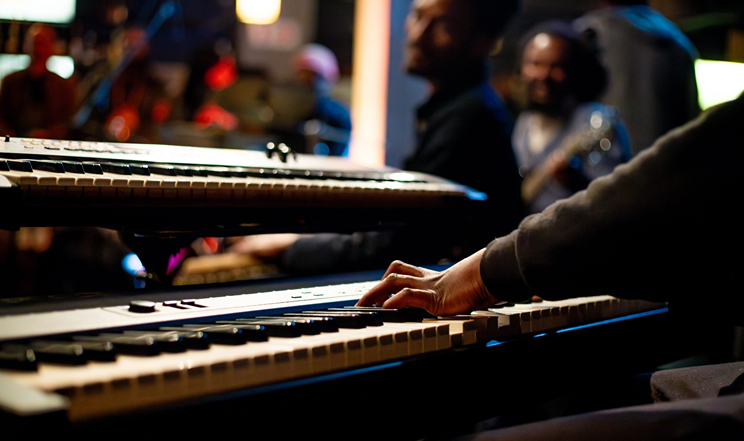
Mann Friday, led by Zimbabwean-born musician Rob Burell, appeared on the Sofar platform for the first time and featured the legendary keyboardist Keith Farquharson, who left the audience spellbound by his masterful piano playing skills. Farquharson also doubled as the concert sound engineer. The band’s skilled drummer, Maor, switched between drumsticks and brushes and gently swept and thumped the drums and cymbals. Throughout their set, Basil Mahachi, a solid bassist, expertly controlled his playing volume and tone, making the bass sound like a pulsating heartbeat, while Lukas Knaup, an economic and restrained guitarist, used space effectively, allowing notes to breathe, complementing Rob’s acoustic strings and soaring vocals, as witnessed when they performed ‘Heal’, ‘To Me’, ‘Compass’ and ‘First Rains’.

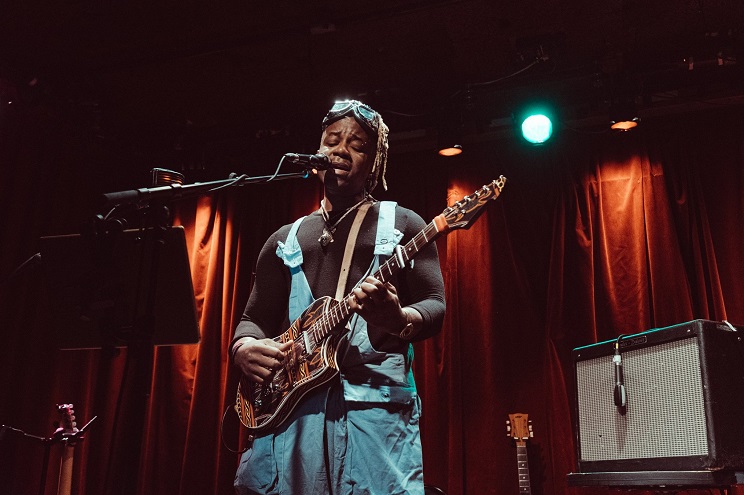
Mary Anibal, a recent participant in this year’s Music In Africa’s Gender@Work programme, closed the show with a memorable performance. Backed by her band, the vocal gymnast incorporated a whistle and maracas. She enthusiastically plucked and clicked on her 18-key nyunganyunga mbira instrument, hypnotising the audience and leaving them entranced. Her set included songs like ‘Bhonzo’, ‘Gogoride’, ‘Paya’ and ‘Mvura’, with her song choices shifting from serene to high-energy rhythms as she hopped, skipped and jumped, prompting the crowd to rise and dance.

On the same day, Eskisehir (Turkey), Kigali (Rwanda), Patna (India), Taipei (Taiwan), and Baku (Azerbaijan) also hosted Sofar shows.

To date, Sofar Harare has hosted shows in spaces such as First Floor Gallery Harare, Chapungu Sculpture Park, Alliance Française de Harare, National Gallery of Zimbabwe, Vanilla Moon, Old Rock Space, Borrowdale Racecourse, Chez Zandi, Puttery Barn, Prince Edward High School, as well as in gardens at private residences around the city.

In May, Sofar Global honoured the National Gallery of Zimbabwe by naming it among their top 10 most historic venues globally, alongside other iconic locations in Portugal, the US and the UK.

newsletter banner

Abonnez-vous à notre newsletter

Retrouvez-nous sur les réseaux sociaux