













































Legendary SA musical returns to a fragmented country
11 Oct 2017 - 14:21


by Gavin Robert Walker
After an absence of more than half a century, the courageous musical King Kong has smashed its way back into the collective South African consciousness. On tour in South Africa, King Kong is one of the most successful and controversial musicals ever to have been produced in the country.
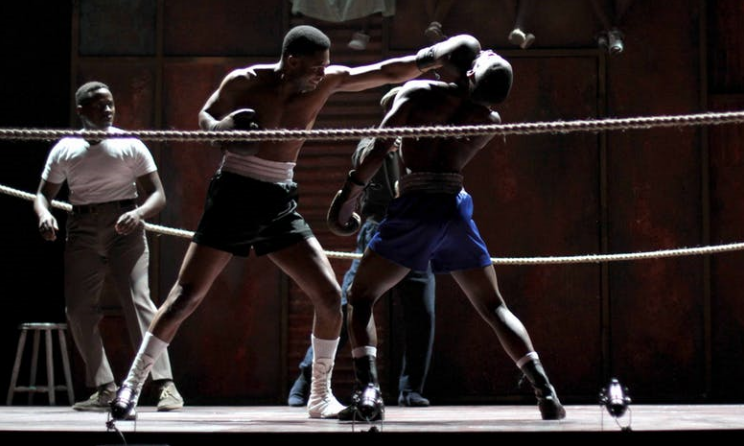
Back in 1959 the jazz musical toured the country’s major cities to, at times, sold out venues. It was seen by roughly 200 000 people before moving to London’s West End. Set to music of composer Todd Matshikiza, it launched the international careers of musical greats Miriam Makeba and Hugh Masekela, among many others.
The narrative, which does not involve any giant apes (as in the film with the same name), follows the life story of 1950s heavyweight boxer Ezekiel Dlamini, who was better known by his ring name King Kong. Briefly stated, Dlamini becomes something of a township hero in the darkening days of apartheid by rising to boxing superstardom.
The story follows the highs and lows of his life, his fall from grace, and eventual suicide in a hard labour camp. Presenting the harsh realities of life in South Africa’s townships, gangsterism and the belligerent indifference of the apartheid state, the production quickly rose to notoriety. It was a collaborative effort that ignored the racial boundaries so vehemently enforced by the apartheid government. It also drew critical acclaim from multiracial audiences.
Kong in the era of fallism
The timing of this latest production is interesting. Aside from a failed revival attempt in 1979, King Kong has been absent for almost 60 years. The musical was originally performed within the historical backdrop of the construction of so-called grand apartheid under then prime minister Hendrik Verwoerd.
The 1950s saw a flurry of legislative activity on the part of the apartheid government, affecting everything from education to land, labour and love. The decade also saw 156 people, including Nelson Mandela, put on trial in 1956 and charged with high treason for their alleged actions against the state. The proceedings, which culminated in charges being dropped in 1961, would become engraved into South Africa’s history and known simply as the Treason Trial.
With the fall of minority rule, Kong showed no signs of returning throughout the Rainbow Nation years of the late 1990s under the moral, political and spiritual leadership of figures like Nelson Mandela and Archbishop Desmond Tutu. No, Kong has returned at a historical moment of unprecedented social strife in the post-liberation era.
Despite more than two decades of democracy, over the past two years South Africa has witnessed protests against colonial and apartheid monuments. Demands for decolonisation across the country’s education system and student protests have been seen unlike anything in recent memory. In the digital age of hashtag student movements and demands for radical transformation, King Kong’s themes of harsh living conditions, socio-economic immobility, corruption and gangsterism are unsettlingly familiar and contemporary for many South Africans.
The country’s relatively peaceful transition from institutionalised racism and disenfranchisement to a fully democratic state is often held in high esteem, and rightly so. It was indeed a remarkable achievement, given that many other post-colonial African nations suffered immense turmoil during the colonial withdrawals of the 1960s and 70s.
But South Africans must be careful. In the haste to celebrate the atmosphere of reconciliation, truth and amnesty that largely characterised the transition, the troubling lack of social and economic mobility that the country has experienced since then is often overlooked. Unemployment remains startlingly high, with young black South Africans bearing the largest burden.
Despite a drop in relative poverty in recent years, the country continues to display some of the highest levels of economic and social inequality in the world. What these issues illustrate are the enduring legacies of white minority rule and the lack of socio-economic transformation in the post-liberation era. King Kong has come home after an almost 60 year absence to find that the country does not look so different.
A tale of two South Africas
King Kong embodies the germinating seeds of two potential and mutually exclusive South Africas. Writing about the opening night in Johannesburg, one columnist for the city’s The Star newspaper mused: “All I know is that by the end of the evening every one of us in the audience could have leapt up and danced and sang with the cast, such was the magic of the evening.”
This column was not written about the 2017 opening night. It was written in 1959. It shows the extraordinary capacity of the arts to transcend the toxic racial politics of the time.
During its long absence, the production became emblematic of what could be achieved through collaboration across racial lines. In the post-liberation and post-Truth and Reconciliation Commission age, King Kong has the potential to help resuscitate debate around the now fatigued rainbow optimism of the late 1990s.
The moral tale of King Kong still resonates in contemporary South Africa. As such, the production can just as easily be considered as a poignant reminder that South Africa is still socially and politically fragmented.
Gavin Robert Walker is postdoctoral research fellow in ethnomusicology at Stellenbosch University. This article first appeared on The Conversation.


Most popular
Call For Applications : ACCES seeks a UK-based performer
10 Sep 2026

Top amapiano songs of 2026
16 Feb 2026

Top Afrobeats songs of 2026
19 Mar 2026
AFRIMA 2026: All the winners
12 Jan 2026
Open call: Goethe-Institut grants for Southern African creatives
08 Sep 2026

Top Naija songs of 2026
31 Mar 2026
Open call: Ernst von Siemens Music Foundation 2026 funding programmes
04 Sep 2026
Disclaimer: Music In Africa provides a platform for musicians and contributors to embed music and videos solely for promotional purposes. If any track or video embedded on this platform violates any copyrights please inform us immediately and we will take it down. Please read our Terms of Use for more.

Subscribe to our monthly Newsletter
Follow us on social media


Please log in to post a comment.