















































NEFCISA
NEFCISA

The Music In Africa Foundation (MIAF) is proud of its partnership with the Industrial Development Corporation (IDC) as a Strategic Implementing Partner (SIP) for its Social Employment Fund (SEF). Through this collaboration, MIAF is running a national programme that is creating jobs, addressing skills gaps, and strengthening South Africa's creative industries — in line with the SEF's overarching goal to generate work for the common good and build community value through employment, social contribution, and inclusive economic participation. Operating under the banner NEFCISA (National Employment Facility for Creative Industries in South Africa), the initiative is recruiting and training participants, matching them with host organisations, and has already placed 1 500 workers across the country — surpassing its original target of 1 000. NEFCISA is delivered through a network of 20 host organisations spanning five provinces, who are actively hosting participants and contributing to work for the common good across South Africa's creative and cultural industries. Key Objectives: Support employment and entrepreneurship in the creative industries. Offer skills development and training programmes. Foster partnerships between public and private creative sectors. Promote South African creativity at both provincial and national levels Foster community development through social contribution.

ACCES
ACCES

ACCES Conference and Showcase Festival is Africa's leading music industry gathering, bringing together the people shaping the future of the continent's music business. Artists, entrepreneurs, executives, investors, policymakers and cultural leaders from across Africa and around the world come to ACCES to build partnerships, exchange ideas, discover talent and create new business opportunities. Since its launch in 2017, ACCES has become the continent's premier platform for professional exchange and music market development. Combining a high-level conference with a curated showcase festival, networking, exhibitions and industry programmes, ACCES offers a unique space where creativity meets business and where African music connects with the global industry.

Gender@Work
Gender@Work

Music In Africa Gender @ Work is a three-year training programme aimed at upskilling and increasing the participation of female professionals in the African music sector. Launched by the Music In Africa Foundation (MIAF) in April 2019, the programme is connected to the MIAF’s ACCES music conference – a pan-African event held in a different African country every year. This connection enables the programme to reach new participants in a different African country every year. The programme marks the beginning of a more concerted effort by the Foundation to support the participation and inclusion of women in all facets of its programmes and the music sector in Africa as a whole. Over the three years, the programme will aim to address gender imbalances in the sector through training, lobbying, facilitating knowledge exchange and dialogues that foster the interest of women. The broader objectives of the programme are to: Provide industry training for women on critical music industry skills, focusing on: Stage management Electronic music production and recording Music business management Technical knowledge Provide an opportunity for both professional and aspiring women to benefit from the Music In Africa network and its broad range of activities in 2019, 2020 and 2021. Provide a solution-based platform in the form of a round table at ACCES with a view to identify challenges, discuss opportunities and lobby for the interests of female practitioners. Offer participants the opportunity to benefit from programmes offered by MIAF’s partners. Increase access to educational materials. Integrate participants in the broader ACCES programme to maximise experience and exposure to the industry. Record and present training materials on the www.musicinafrica.net, including but not limited to tutorials, templates and other best-practice materials. Communicate women-based themes that support the initiatives and messages of the programme. MAIN TRAINING ACTIVITIES Training in first country (Ghana): In the first year, participants will be trained on all aspects of stage management by a team of experienced stage managers from 10 to 17 November 2019. The programme will offer robust classroom training as well as practical, hands-on training in which participants will also be given the opportunity to manage various aspects of the ACCES performance programme. Training in second country: The second training iteration will take place at ACCES 2020 when the programme will diversify its course to include music production lessons and training on other music business topics. A round-table platform will also be introduced to coincide with the ACCES programme. Training in third country: The third training iteration will take place at ACCES 2021 in a different country, offering an advanced course. HOW DO YOU GET INVOLVED?  As a participant, facilitator or trainer: The programme enrolls up to 12 trainees every year. All opportunities are advertised publicly on this website, and will be added to this page. Please keep checking this page for new calls (below under UPDATES & CURRENT OPPORTUNITIES). As a partner Please contact Claire Metais at [email protected]. APPLY The call for applications for 2020 will be announced soon. The Music In Africa Gender @ Work programme is made possible with the support of the Prince Claus Fund, Siemens Stiftung and Goethe-Institut.

Sound Connects Fund
Sound Connects Fund

For cultural and creative practitioners and organisations operating in southern Africa, access to funding remains a major challenge. The COVID-19 pandemic has also had a massive impact on government policy, spending and the economy in general, and has seen spending on culture being moved further down the list of priorities. Further, the cultural and creative industries repeatedly cite four main areas where investment is needed for growth, which are increased visibility, mobility including access to new markets, finance and support structures.

Instrument Building And Repair Project

Experience the Vibrations African Instruments Exhibition online in 3D

Features

Mi Casablanca es su Casablanca: Boulevard Fest welcomes all [part 1]
29 Sep 2018 - 09:03

cc-img flag-img

Septicflesh is not the kind of band you'd expect to headline a Moroccan music festival. Wearing costumes that resemble Giger-esque exoskeletons and flaunting unnerving projections of demons and devil-like humanoids onstage, the Greek death metal band isn’t exactly the first brand that comes to mind if you're an African festival booker thinking about the next big crowd-puller.
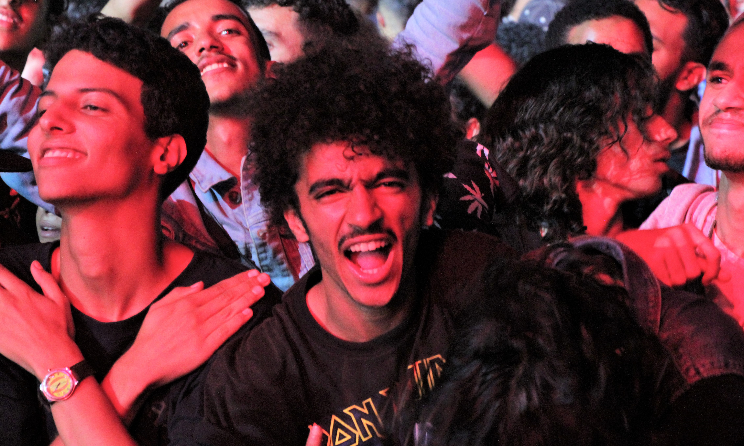
A metal fan during Boulevard Festival's metal night. Pictures: Music In Africa

But the organisers of Casablanca's Boulevard Festival aren’t too fazed about what other festivals do or how they do it. As far as they're concerned, Boulevard stands for unapologetic inclusivity of all genres and fans who don't get the time of day in a country where irrepressible commercialism wins all the time.

In the middle of it all is festival organisers and cultural operator Hicham Bahou who started the festival in 1999. At that time Moroccan alternative music was severely marginalised and Bahou saw a dire need for a platform where bands could develop their talent. He identified the FOL Theatre in Casablanca where he and his partner, Mohammed 'Momo' Merhari, began providing rehearsal space for young bands. The two friends organised weekly gigs, competitions and jam sessions and Boulevard Festival was born soon after.

"The festival became a point of connection for all these bands, the audience and their friends," Bahou tells Music In Africa on the sidelines of the festival's recently concluded 2018 edition. "But the most decisive call that we made was to work all year round at FOL, and the festival became the synthesis of all our efforts. In 2003, we left the venue and organised the festival at a big rugby stadium near here because the FOL was too small with a capacity of just 400 people. At one point there were 1 000 people in the venue and 2 000 outside destroying the facade of the place, so we had to find a bigger venue."

Boulevard Festival has been growing ever since the FOL was bursting at the seams 15 years ago. This year the festival featured seven action-packed days of hip hop, metal and fusion/world – the first three dedicated to the Tremplin battle of the bands competition where three winners and three runners-up got a chance to perform alongside their idols a week later during the final stretch of the festival. In the interim, the bands attended workshops where they were taught about copyright, royalties, stagecraft, multimedia and marketing. The workshops took place at the Boultek, a music centre and arts space in Casablanca equipped with rehearsal studios, a live venue, web radio and training rooms.

Even though Bahou is proud of the work the Boultek is doing, he loathes the dearth of venues willing to accommodate original bands.

"Behind the festival is the Boultek, which is quite invisible to most people," Bahou says. "Boultek is the driving force behind the festival, because it operates 365 days in the year. Many metal bands, for example, get to play only at the Boultek or Boulevard Festival. The same goes for hip hop crews. That's because there are no live venues in Casablanca. People seem to enjoy mainstream bands that play covers; they don't seem to be interested in hearing new creations. And although Casablanca is known for its many theatres, we don't have a live concert hall, and the theatres don't open their doors to young creatives. What Morocco needs is a cultural policy. Like many other places in the world, you'll see tourism policies and projects of monumental scale, which are commercial and basically constitute bells and whistles without investing in culture, education or arts spaces and venues."

Cultural policy or not, Morocco's young creatives are doing pretty well in producing decent music that with a little more effort could be seen playing on touring circuits across Europe and even in the US. The winner of the Tremplin metal competition, Casablanca-based prog band Kawn, was arguably one of the best-received acts at last Saturday’s metal/rock night. The band employs various prog rock approaches as well as smidgeons of power metal and djent. The main songwriter of the band, guitarist Tarik Heddoun, verges on the virtuosic while vocalist Said El Harrami's phrasing and timbre often remind the listener of Blind Guardian's Hansi Kürsch. Much like the German power metal band, Kawn also dabbles in concept and theatrical compositions, with Heddoun telling Music In Africa that he's planning to write a number of pieces based on the adventures of Moroccan explorer Ibn Battuta.

Other bands that played on the night included Tremplin metal runner-up Cyn, an instrumental progressive metalcore outfit hailing from the city of Meknes, last year's metal competition winners Thrillogy, punk rockers ZWM and headliner Septicflesh, whose stage show blew the Casablanca crowd to smithereens.

In part 2: Hip hop and fusion at Boulevard Festival and Hicham Bahou talks about the late Moroccan journalist Amale Samie.

Please log in to post a comment.

Most popular

Disclaimer: Music In Africa provides a platform for musicians and contributors to embed music and videos solely for promotional purposes. If any track or video embedded on this platform violates any copyrights please inform us immediately and we will take it down. Please read our Terms of Use for more.

newsletter banner

Subscribe to our monthly Newsletter

Follow us on social media



