















































By Anthony Mouyoungui
The text provides an overview of traditional music in the Rebublic of the Congo, also known as Congo-Brazzaville.
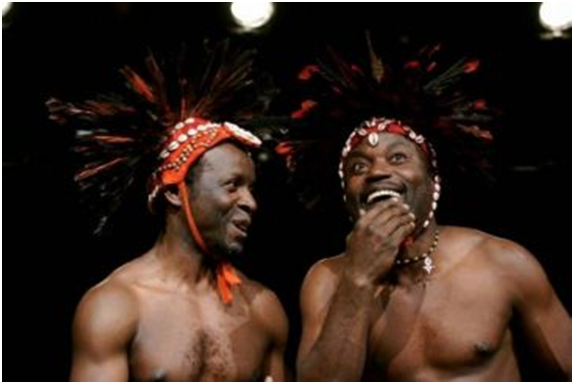
Traditional music covers all music associated with national, regional culture or geographical area. It is the first form of music. It has been around for ages and is associated with community life. In the case of Congo-Brazzaville, there are many forms of traditional music as several ethnic groups make up the country and each group has its music and dance. Music and dance are closely related in the Congolese tradition. Traditional music is passed on by ear, although some current bands and musicians prefer to compose the melodies for a performance or cataloguing. In recent years a new genre emerged from traditional music: modern traditional music.
Traditional music and social life
In every ethnic group, music and dance permeate daily life: birth, initiation rite, marriage, farm work, housework, death... It is therefore quite difficult to date the origin of traditional music. What is certain is that traditional music was passed on from generation to generation and still exists today. Several music groups are listed in Congo namely Moukoukoulou National, Ndzobi Okoa, Elélé Ndzoro, Kongo Butiélé, Mvitsié, Okouakassa, Kingoli Akwa, Groupe traditionnel les Makandas, Ndima, Vocal Bantou, or la compagnie Punta Negra who perform through dancing, singing and laughter.
Each represents an ethnic group; the rhythm, repertoire and heritage are unique to each particular ethnic group. It is true that through the years they have evolved and undergone some changes but, the fundamentals remain the same. When we listen to these groups sing, we can easily identify their ethnicity. During its evolution, Congolese traditional music used almost the same instruments: the ngoma or mbonda (drums), the ngonfi, the string guitar, the gong, the maracas made of gourds or dried spherical balls cored in and filled with hard and dry grain producing specific sounds when shaken, the balafon, the long, short, thick or thin drums.
Besides the Bantu people, there are also indigenous people called pygmies. Their music is different from the Bantu music. The pygmies make what we call contrapuntal polyphony (or counterpoint) meaning “note against note”. They also use yodelling, a vocal technique which involves rapid changes of pitch between the chest voice and the head register. This is not the case among the Bantus. The pygmies use the harp-zither, the single-stringed musical bow, the two-stringed musical bow, the flute and whistles.
The natural and the supernatural
In Congolese society, the natural and supernatural are closely linked and it is quite normal for music to permeate everyday life through songs and dances. Some music is intended to build bridges between the natural and the supernatural world particularly in initiation, healing or harvesting rituals. "Congolese traditional music has had an esoteric, mystical and sacred character since the dawn of time, having two closely interlinked dimensions and permanent dialectical interaction; two dimensions relating to the visible and invisible worlds, that is to the matter-spirit which is the basis of the mystery of the human being, "declares Jean - Oba Bouya.
One sings and dances to seek the intervention of the gods. There are warrior, hunter and women dances, (for example the vilis have the Tchikumbi and the tékés have the Nkira). This typically feminine music was played during rituals in which pubescent girls became responsible women, wives or priestesses. They were also used for therapeutic purposes such as treating infertility.
Modern traditional music
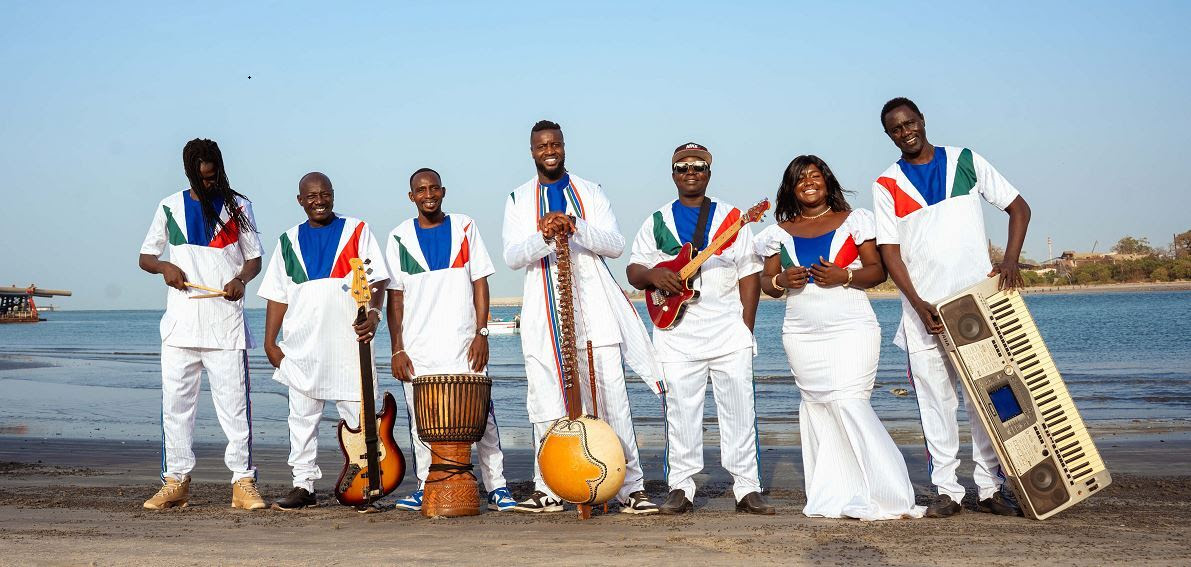
Congolese traditional music has not evolved in isolation. It is enriched with external contributions, merging with other cultures while introducing different instruments creating a new musical genre called traditional modern. This genre, which began to emerge in the 90s, with groups such as BBGM and Bane B'Siane in Pointe -Noire, boomed in the early 2000s with TH Musica who sang in bembé. Whether in Brazzaville or Pointe-Noire, traditional modern music groups flourished: Kingoli Authentique, Kibur’Kiri, Otswéré, Lang’i, and N’Kota...
The success of these groups has revived traditional music which, in some respects, had become monotonous. The contribution of modern instruments gave the genre a fresh sound without being distorted! Purists considered the new genre to be problematic. However, like other kinds of music, traditional music had a hard time existing and asserting itself on the record market. Production is low-scale and often of poor quality making it impossible to ever make an impact on the small national market.
In this far from perfect background, TV Congo through its shows Mbonda elela, Feux de Brazza and the Festival Populaire et International des Musiques Traditionnelles which as its name suggests takes place in Brazzaville twice a year since 2005, supports traditional music.
- Jean-Oba Bouya, 2001. http://www.lajauneetlarouge.com/article/la-musique-de-lafrique-centrale-le-festival-panafricain-de-musique-fespam-au-congo
- Chrysogone Diangouaya. 'Documentaire sur les instruments de musique traditionnelle d’Afrique'.
- http://www.adiac-congo.com


Most popular

Top amapiano songs of 2026
16 Feb 2026

Top Afrobeats songs of 2026
19 Mar 2026

Top Naija songs of 2026
31 Mar 2026
Open call: 2026 Gender@Work music industry training in Johannesburg
09 Oct 2026
Open call: AFRIMA 2027 in Nigeria
12 Oct 2026
ACCES unveils stellar programme for 2026 edition
17 Oct 2026
Disclaimer: Music In Africa provides a platform for musicians and contributors to embed music and videos solely for promotional purposes. If any track or video embedded on this platform violates any copyrights please inform us immediately and we will take it down. Please read our Terms of Use for more.

Subscribe to our monthly Newsletter
Follow us on social media


Please log in to post a comment.