



































NEFCISA
NEFCISA

The Music In Africa Foundation (MIAF) is proud of its partnership with the Industrial Development Corporation (IDC) as a Strategic Implementing Partner (SIP) for its Social Employment Fund (SEF). Through this collaboration, MIAF is running a national programme that is creating jobs, addressing skills gaps, and strengthening South Africa's creative industries — in line with the SEF's overarching goal to generate work for the common good and build community value through employment, social contribution, and inclusive economic participation. Operating under the banner NEFCISA (National Employment Facility for Creative Industries in South Africa), the initiative is recruiting and training participants, matching them with host organisations, and has already placed 1 500 workers across the country — surpassing its original target of 1 000. NEFCISA is delivered through a network of 20 host organisations spanning five provinces, who are actively hosting participants and contributing to work for the common good across South Africa's creative and cultural industries. Key Objectives: Support employment and entrepreneurship in the creative industries. Offer skills development and training programmes. Foster partnerships between public and private creative sectors. Promote South African creativity at both provincial and national levels Foster community development through social contribution.

ACCES
ACCES

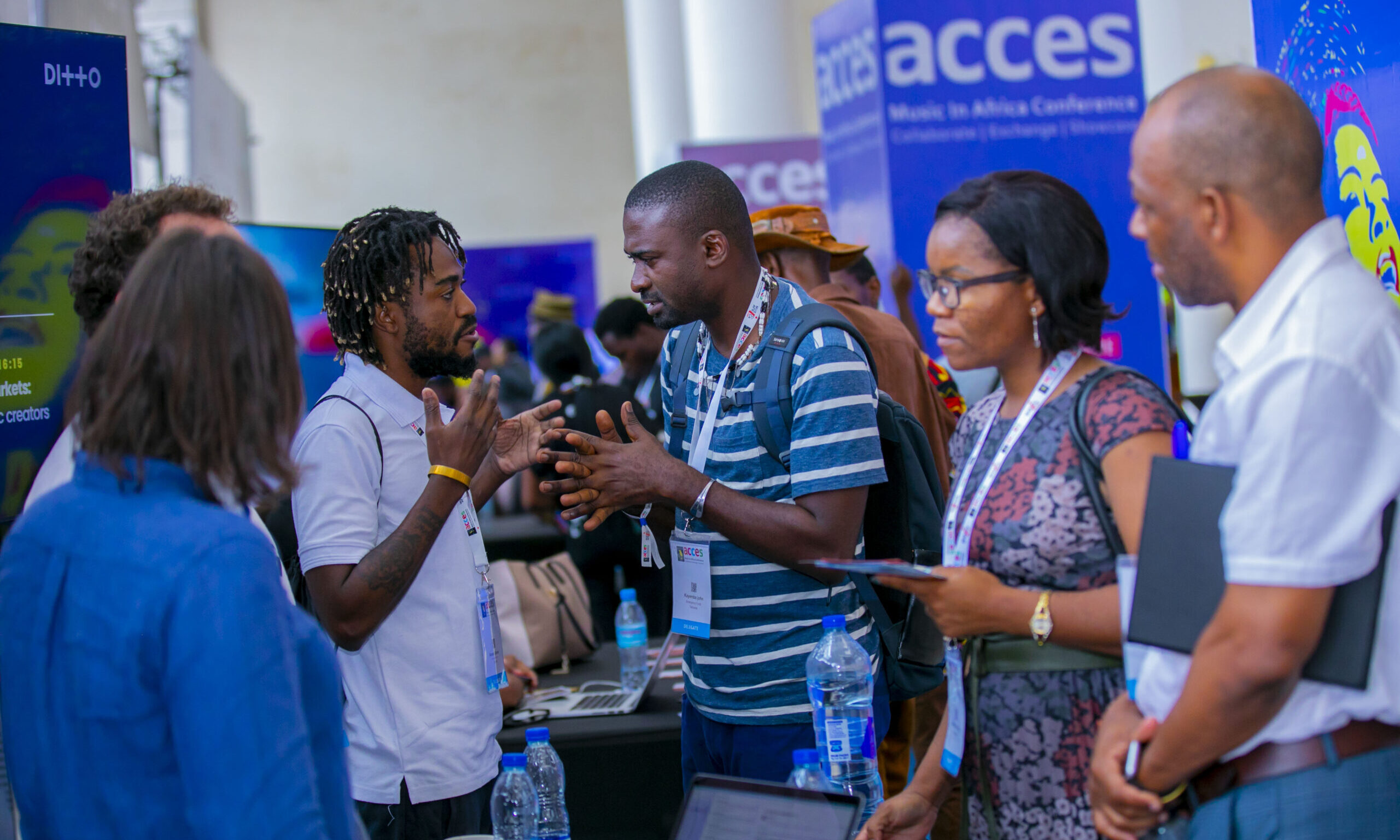
ACCES Conference and Showcase Festival is Africa's leading music industry gathering, bringing together the people shaping the future of the continent's music business. Artists, entrepreneurs, executives, investors, policymakers and cultural leaders from across Africa and around the world come to ACCES to build partnerships, exchange ideas, discover talent and create new business opportunities. Since its launch in 2017, ACCES has become the continent's premier platform for professional exchange and music market development. Combining a high-level conference with a curated showcase festival, networking, exhibitions and industry programmes, ACCES offers a unique space where creativity meets business and where African music connects with the global industry.

Gender@Work
Gender@Work

Music In Africa Gender @ Work is a three-year training programme aimed at upskilling and increasing the participation of female professionals in the African music sector. Launched by the Music In Africa Foundation (MIAF) in April 2019, the programme is connected to the MIAF’s ACCES music conference – a pan-African event held in a different African country every year. This connection enables the programme to reach new participants in a different African country every year. The programme marks the beginning of a more concerted effort by the Foundation to support the participation and inclusion of women in all facets of its programmes and the music sector in Africa as a whole. Over the three years, the programme will aim to address gender imbalances in the sector through training, lobbying, facilitating knowledge exchange and dialogues that foster the interest of women. The broader objectives of the programme are to: Provide industry training for women on critical music industry skills, focusing on: Stage management Electronic music production and recording Music business management Technical knowledge Provide an opportunity for both professional and aspiring women to benefit from the Music In Africa network and its broad range of activities in 2019, 2020 and 2021. Provide a solution-based platform in the form of a round table at ACCES with a view to identify challenges, discuss opportunities and lobby for the interests of female practitioners. Offer participants the opportunity to benefit from programmes offered by MIAF’s partners. Increase access to educational materials. Integrate participants in the broader ACCES programme to maximise experience and exposure to the industry. Record and present training materials on the www.musicinafrica.net, including but not limited to tutorials, templates and other best-practice materials. Communicate women-based themes that support the initiatives and messages of the programme. MAIN TRAINING ACTIVITIES Training in first country (Ghana): In the first year, participants will be trained on all aspects of stage management by a team of experienced stage managers from 10 to 17 November 2019. The programme will offer robust classroom training as well as practical, hands-on training in which participants will also be given the opportunity to manage various aspects of the ACCES performance programme. Training in second country: The second training iteration will take place at ACCES 2020 when the programme will diversify its course to include music production lessons and training on other music business topics. A round-table platform will also be introduced to coincide with the ACCES programme. Training in third country: The third training iteration will take place at ACCES 2021 in a different country, offering an advanced course. HOW DO YOU GET INVOLVED?  As a participant, facilitator or trainer: The programme enrolls up to 12 trainees every year. All opportunities are advertised publicly on this website, and will be added to this page. Please keep checking this page for new calls (below under UPDATES & CURRENT OPPORTUNITIES). As a partner Please contact Claire Metais at [email protected]. APPLY The call for applications for 2020 will be announced soon. The Music In Africa Gender @ Work programme is made possible with the support of the Prince Claus Fund, Siemens Stiftung and Goethe-Institut.

Sound Connects Fund
Sound Connects Fund

For cultural and creative practitioners and organisations operating in southern Africa, access to funding remains a major challenge. The COVID-19 pandemic has also had a massive impact on government policy, spending and the economy in general, and has seen spending on culture being moved further down the list of priorities. Further, the cultural and creative industries repeatedly cite four main areas where investment is needed for growth, which are increased visibility, mobility including access to new markets, finance and support structures.

Instrument Building And Repair Project

Experience the Vibrations African Instruments Exhibition online in 3D

banner image

The Voice Afrique Francophone : que deviennent les gagnants ?

Home/Non classé/The Voice Afrique Francophone : que deviennent les gagnants ?

Des chanteuses du continent comme Mula, Shan’L, Creol se sont développées ces dernières années, sans forcément passer par un concours qui leur garantisse une cagnotte de 10 millions et des contrats de production chez Universal Music. 

Pour étayer ma curiosité sur le cas de la première lauréate de The Voice Afrique Francophone, je suis allé faire un tour sur YouTube ; j’ai bien trouvé une chaîne baptisée « Pamela Baketana » (751 abonnés) avec en description « gagnante de The Voice Afrique Francophone saison 1 ». Le média, créé depuis décembre 2013, ne comporte qu’une seule vidéo titrée « Kazi Yako » (décembre 2019), avec à son compteur, un chiffre bien modeste : 25.500 vues.

De février 2017 à décembre 2019, il a fallu, pour un seul single jusque-là, 2 ans aux producteurs de Pamela pour la lancer. Pour quel résultat ?

Je me suis ensuite souvenu de Victoire Biaku, gagnante de la saison 2 du télécrochet en janvier 2018, face à Fulbert, René et Dadiposlim ; elle était coachée par la Camerounaise Charlotte Dipanda, remplacée dans la suite de l’émission par sa collègue Ivoirienne Josey. 

Je suis allé sur YouTube et j’ai constaté que la pépite togolaise a deux chaînes : « VB Label » (1019 abonnés) créée en février 2020, qui propose un clip vidéo titré « Somebody great » (32 413 vues), avec à côté le teaser et la version audio du single. Il y a aussi « Victoire Biaku VEVO » (1000 abonnés), un média ouvert en octobre 2018, qui ne contient qu’une seule vidéo (un visualizer) titré « Bandit », avec 24.488 vues au compteur.

On pourrait déjà se demander si le fait de tenir 2 comptes est judicieux. Ne serait-il pas plus logique de fusionner les deux pour rassembler son public et s’assurer une meilleure visibilité.

[video:https://www.youtube.com/watch?v=HrEO3-zacSY width:850 height:480 autoplay:0]

Dans tous les cas, les constats que j’ai fait sur la plateforme américaine ont soulevé en moi de nombreuses interrogations.

La compétition The Voice Afrique Francophone est-elle simplement un show télévisé destiné à divertir le grand public ou représente-t-elle un vrai tremplin pour les talents qui y participent ?

Les 2 précédentes gagnantes sont toujours dans l’underground, pourtant, elles auraient décroché des contrats de production chez la major Universal Music, qui est un des leaders mondiaux de la distribution musicale. 

Les organisateurs de The Voice s’arrangent-ils pour ne faire gagner que des femmes afin de les maintenir silencieuses puisqu’elles sont considérées comme faibles et sans voix ? La discrimination sexuelle est une réalité sur les scènes musicales en Afrique. Et elle peut parfois prendre des aspects insidieux et bien souvent, les femmes en sont les victimes. Même quand elles paraissent gagnantes, c’est le contraire qui est constaté à l’arrivée.

Je me pose ces questions et je les adresse aussi à toute l’Afrique francophone : à quoi sert réellement The Voice ? Quelle est l’impact de cette compétition dans la construction des talents ?

Aujourd’hui, nous pouvons dire avec fierté que Tiken Jah Fakoly a été lauréat du Prix Découvertes RFI, on voit bien que la récompense a été d’un apport significatif dans sa carrière. Qu’en est-il des gagnant(e)s de The Voice ? 

Nous savons que The Voice est à la base, une compétition nationale. Dans d’autres parties du monde, chaque nation à sa propre édition ; mais en Afrique francophone, ils ont regroupé 15 pays sous un même programme, et n’arrivent visiblement pas à contrôler sa portée. 

En France par exemple, le chanteur Slimane est sorti vainqueur du télécrochet en 2016 et il s’est très bien inséré sur la scène nationale aux côtés des plus grands interprètes de musiques actuelles dans l’Hexagone. On voit bien que The Voice France porte ses fruits…

Une fois de plus, que peut-on réellement dire de The Voice Afrique Francophone ? Que font-ils exactement ? 

[video:https://www.youtube.com/watch?v=1a6oHD3bdQI width:850 height:480 autoplay:0]

newsletter banner

Subscribe to our monthly Newsletter

Follow us on social media