

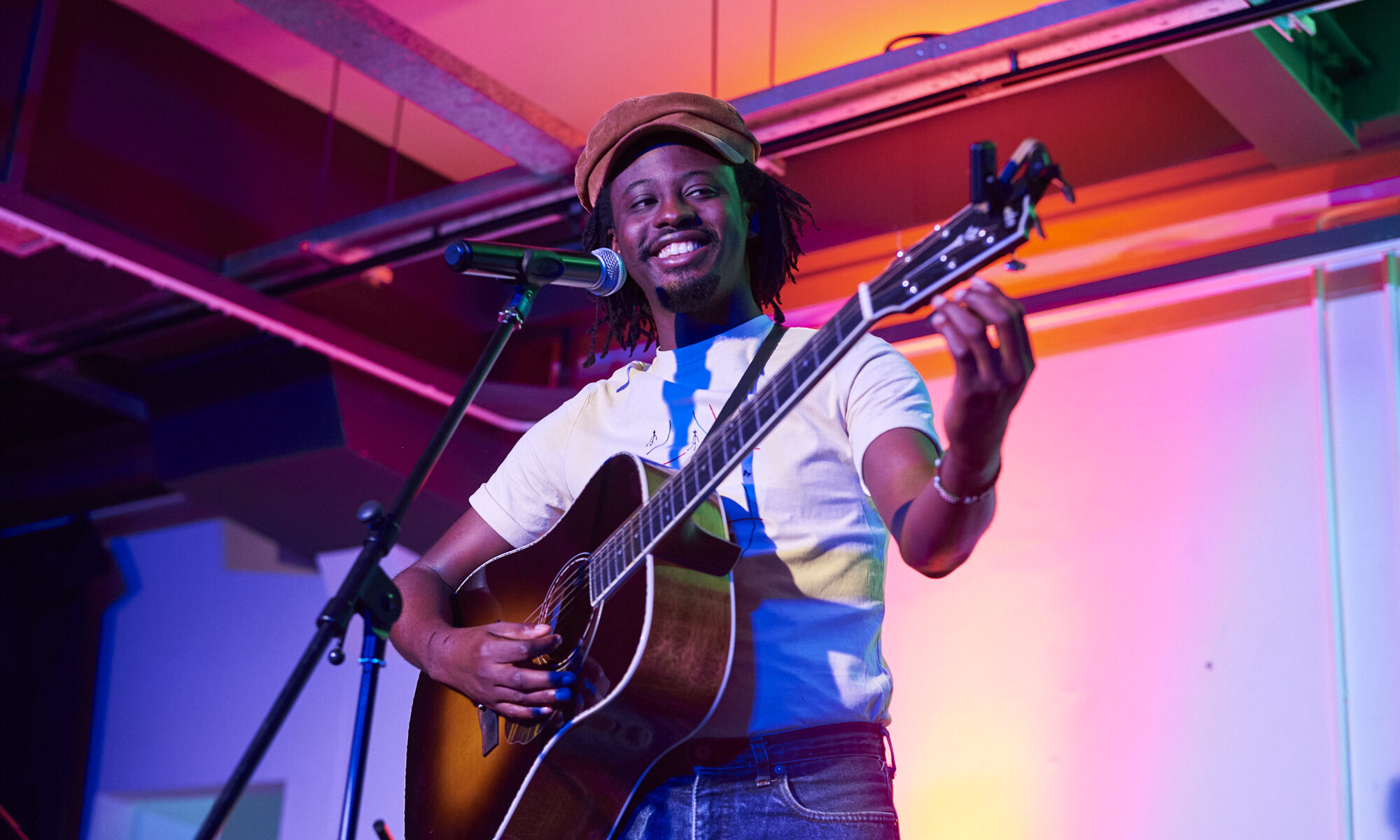
















































Yoro Ndiaye : « C'est la musique qui est venue à moi »
Bonjour Yoro, nous sommes ravis de t’accueillir. Pourrais-tu te présenter à nos lecteurs ?
Bonjour Je suis Yoro Ndiaye, auteur, compositeur et interprète, mais aussi directeur d’Afrik Melo, une maison de production, entre guillemets, que j’ai fondée en 2013. La structure organise de nombreuses activités.
Tout récemment, nous avons lancé un projet baptisé Sunu Folk, qui a consisté dans un premier temps à l’enregistrement d’une compilation, puis à l’organisation d’un festival.
Tu viens de Diourbel (Sénégal) qui est une ville très religieuse. Comment as-tu réussi à faire de la musique dans ce contexte?
Je suis originaire de Mbacké plus précisément, et les influences religieuses du mouridisme sont encore plus présentes dans cette ville qu’à Diourbel, où j’ai passé un moment de ma vie. Pour tout dire, rien ne me prédestinait vraiment à être musicien. Ce n’est pas moi qui suis allé vers la musique, c’est elle qui est venue à moi.
Dès l’enfance, je fabriquais moi-même des tam-tams et petites guitares traditionnelles, et je n’hésitais jamais à chanter lors séances de Kassak (veillées nocturnes). C’est ainsi que j’ai entretenu ma passion, sans même savoir que je devais un jour vivre de cet art.
En 1992, j’ai fait la rencontre du défunt Babou Benda Gueye, musicien professionnel qui m’a appris mes tous premiers accords de guitare. Après mon Brevet de Fin d’Études Moyennes (BFEM), j’ai rejoint Diourbel dont le centre culturel venait de recevoir un don d’instruments de musique. J’y ai été admis et j’ai davantage appris sur la guitare.
Plus tard, je me suis rendu à Dakar pour des raisons professionnelles. Je travaillais pour le Club Med et un jour, je me suis proposé pour y faire des prestations live. L’idée a été admise par mon patron et c’est ainsi que j’ai fait mes débuts dans la musique en tant que professionnel. Ma première apparition sur un support a été sur la compilation Sénégal Folk, initiée par les frères Guissé. De nombreuses oeuvres ont suivi.
En 2004, j’ai sorti mon tout premier album Begg Dem.
Vous avez qualifié Afrik Melo de maison de production, entre guillemets. Pourquoi ?
Afrik Melo repose sur des moyens modestes. Je ne propose pas l’intégralité des services offerts par une maison de production classique. Nous avons un studio denregistrement certes, mais le staff est très limité. Il n’y a pratiquement personne pour s’occuper de la paperasse comme dans d’autres grandes structures de production et nous n’avons pas de service d’accompagnement pour les artistes dans leur carrière.
Qu’à cela ne tienne, avec ce dont nous disposons, nous tentons d’oeuvrer pour la promotion de quelques artistes que nous recevons.
[video:https://www.youtube.com/watch?v=ofAOIJhFp6k width:850 height:480 autoplay:0]
Sur la compilation Sunu Folk que vous avez enregistrée récemment, plusieurs jeunes artistes sont apparus. Comment avez-vous procédé à leur sélection ?
Je me suis essentiellement référé à leurs aptitudes à chanter tout en jouant d’un instrument. J’ai voulu permettre à ces jeunes de monter sur la scène d’un festival dans des conditions professionnelles et de faire découvrir leur musique, qui est d’un style peu commun, à un large public.
Pour moi, une pépite n’est pas seulement quelqu’un qui a une belle voix, mais surtout une histoire séduisante, une singularité. Des belles voix, il en existe des millions à travers le monde, mais il en faut plus pour briller. L’authenticité, c’est ce que je recherchais.
Au final, je suis fier de ma sélection. Les jeunes ont été très applaudis à l’occasion du festival Sunu Folk. Obree Daman par exemple, qui fait partie du projet, a forcé l’admiration du manager d’Ismaël Lô, parrain du festival.
Pour la réalisation de Sunu Folk, vous avez été soutenus par l’Organisation Internationale de la Francophonie. Comment cela s’est passé ?
À Afrik Melo, nous avons eu vent d’un appel à projets de l’Organisation Internationale de la Francophonie (OIF). Nous avons postulé et avons été retenus. L’organisation nous a octroyé un financement pour équiper notre studio et travailler dans des conditions optimales.
L’enregistrement de la compilation Sunu Folk a été pour nous, une façon de montrer à l’OIF l’usage que nous avons fait de son investissement, qui a profité à ces jeunes artistes que nous avons accueillis dans nos locaux. Le festival n’a été que la suite logique de notre démarche.
Le festival Sunu Folk a eu un parrain de choix, une icône africaine voire mondiale du folk, Ismaël Lô. A-t-il été facile de le solliciter ?
Il n’a pas été difficile pour moi d’entrer en contact avec Ismaël Lô. Nous nous connaissons depuis un moment déjà. Je l’ai souvent invité à mes événements et j’ai même réalisé des reprises de ses oeuvres. Ce grand artiste a toujours manifesté de la sympathie à mon égard.
Une initiative visant à préparer la relève sénégalaise du folk, son style musical de prédilection, ne pouvait que l’intéresser.
Après l’enregistrement de la compil’ et la tenue du festival, quelle est la phase 3 du projet Sunu Folk ?
La phase 3 est de pérenniser le festival. Pour cela, nous avons un important travail à abattre. Il faudrait procéder à une évaluation critique de cette première édition, afin de noter les points positifs et négatifs. Sur la base de ce bilan, nous pourrons proposer une nouvelle formule du spectacle, de sorte qu’il séduise davantage le public sénégalais auquel il est adressé.
Les chanteurs de folk sont populaires au Sénégal, mais leur style musical lui est peu écouté. Comment expliquez-vous ce paradoxe ?
Nous sommes contraints de jongler entre le folk et le mbalakh pour nous assurer une certaine popularité. Le folk que nous proposons, n’atteint qu’un public très restreint. Pour élargir un peu notre audience, nous nous voyons souvent obligés d’ajouter des accents mbalakh à nos oeuvres, afin qu’elles soient écoutées jusqu’ aux confins du Sénégal.
Par le mbalakh nous attirons le public avant de leur fait découvrir l’autre volet de notre musique.
Parlez-nous de votre actualité musicale ?
Je prépare un album international que j’envisage de sortir avant la fin de cette année. Je n’ai pas encore trouvé de titre pour l’opus, mais il abordera des questions multiples liées à la société, à l’actualité et à des faits divers. Il faut dire que quand on vit dans un pays comme le Sénégal, avec tout ce qui s’y passe, on ne manque jamais d’inspiration.
Il est possible que je sorte un second album, toujours cette année. Ce dernier sera un peu plus local, avec des titres chantés en wolof (langue nationale du pays) et adaptés au public sénégalais.
Un mot pour finir ?
Je lance un appel à tous à aider les artistes. Il ne s’agit pas de leur verser de l’argent, nous ne quémandons pas. Ce que nous voulons, c’est une organisation de notre secteur, de sorte que les créateurs puissent vivre décemment de leurs activités. Ce serait bien que les organes de l’État soient les premiers à verser les droits à la société nationale de gestion collective des droits d’auteur (Sodav), afin que cela serve d’exemple à tous.
[video:https://www.youtube.com/watch?v=4Vff0wYZsp4 width:850 height:480 autoplay:0]
Propos reccueillis par Lamine BA et Jean de Dieu Boukanga



