









































- Par Françoise Ramel
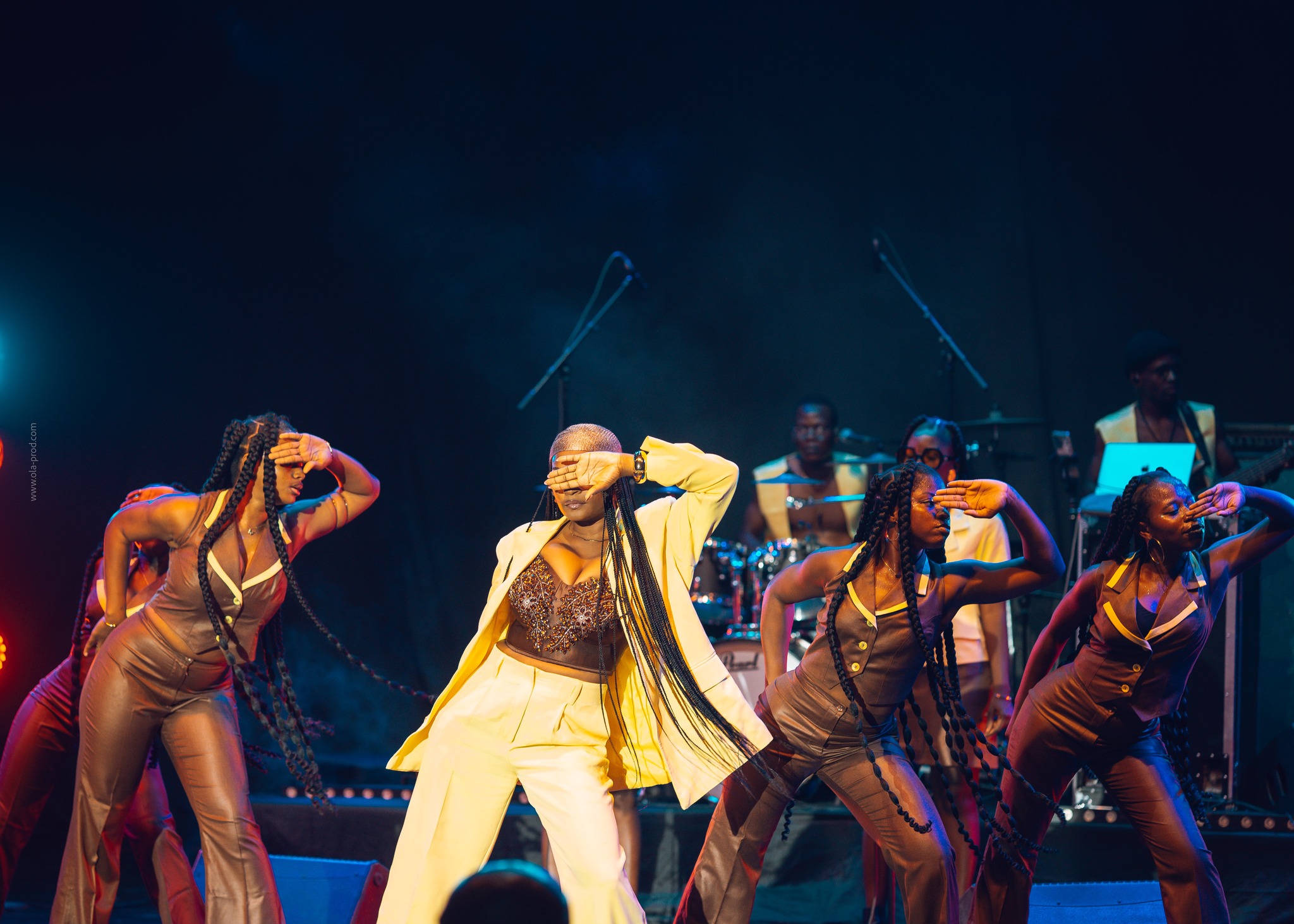
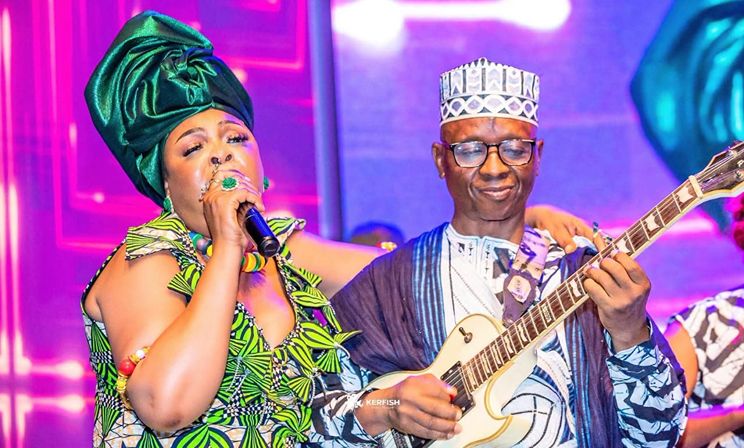
La musique classique au Niger est très riche. Quelques symboles forts peuvent être mis en exergue : d’une part les cantatrices appelées zabaya, d’autre part plus de 170 instruments traditionnels conservés au Centre de Formation et de Promotion Musicale El Hadj Tayya créé en 1991 à Niamey, la capitale. Ce patrimoine musical s’exprime également lors du festival « Paroles de Femmes » et lors la « cure salée » ou fête des éleveurs où est jouée la musique touarègue.
Cantatrices
Zabaya c’est le nom que l’on donne aux cantatrices traditionnelles au Niger. Ce mot exprime l’importance du chant et le rôle social des griottes dont les performances vocales ont été immortalisées dans le documentaire Kankou Kourcia, le cri de la tourterelle du réalisateur Sany Elhadj Magory, primé au Fespaco en 2011.
Le chant tel que pratiqué par les Zabaya est d’une grande puissance et d’une grande pureté. Au Niger, les zabaya ont leur prix national : le prix de la chanson féminine censé se dérouler chaque année dans une région différente. Faute de moyens, ce concours national ne se déroule pas fréquemment.
D’autres compétitions valorisent ce chant féminin du Niger. C’est le cas du festival de la chanson féminine Dalweyzé dont la 2e édition a eu lieu en novembre 2010 à la Maison des Jeunes et de la Culture Tinguizi Mabo de Tillabéry.
Toutes ces initiatives témoignent d’une volonté de sauvegarde du patrimoine oral et surtout d’une capacité commune aux dix ethnies dépositaires, ensemble, de cette riche diversité culturelle, de faire vivre des traditions dont le devenir est confronté à l’évolution des modes de vie et à la propagation d’autres expressions culturelles.
Les zabaya du Niger ont même leur album éponyme, enregistré grâce au festival « Paroles de Femmes », sous l’impulsion d’Aminatou Issaka.
L’opus de 14 titres immortalise les voix de huit cantatrices dont Zara Dibissu, Hagaye ou la Zabaya Kandé, originaire de la région de Diffa et détentrice d’un 1er prix de la chanson féminine qui a permis de la révéler au public.
Dans l’esprit de la directrice du festival « Paroles de femmes », l’objectif était de produire individuellement toutes ces cantatrices et d’inciter d’autres à entrer au studio pour encourager la diffusion de ces répertoires et de cette forme de chant si particulière, aux paroles chargées de symboles, d’images.
« L’album s’appelait aussi Voix célèbres d’hier, source d’inspiration d’aujourd’hui. À l’occasion d’un colloque, nous avons invité la jeune génération pour expliquer que c’est important qu’elle s’inspire des chansons de ces femmes » explique Aminatou Issaka, la directrice du festival « Paroles de femmes » qui a tenu sa 5e édition le 11 octobre 2014 au théâtre de plein air du Centre Culturel Franco Nigérien Jean Rouch (CCFN-JR) de Niamey.
Sôgha et les Filles de Illighadad : des évolutions du chant classique féminin nigérien
Le succès de Sôgha l’un des groupes les plus populaires au Niger témoigne également de l’attachement de toute une population à cette musique traditionnelle. Formé en 2004, le groupe fait sa première sortie officielle en 2005 à l’occasion des jeux de la Francophonie organisés par le Niger.
Sôgha signifie « beau » en langue zarma-songhaï. Cela exprime un rapport simple et sobre, sans fioritures inutiles, à ce qui lie l’humanité dans ce qu’elle a d’essentiel : l’art et sa dignité.
Trois chanteuses, une choriste et cinq instrumentistes composent la formation musicale. Fati Hallidou, Aichatou Ali Soumaila, Nana Mallan Garba et Ramatou Hassane, accompagnées de leurs cinq musiciens, subliment le patrimoine traditionnel musical nigérien.
Sôgha chante dans toutes les langues et décline tous les styles musicaux que connaît le pays. Leur album Aïr ténéré est sorti en 2008.
Les réserves naturelles de l'Aïr et du Ténéré sont une région du Niger inscrite au patrimoine mondial de l'UNESCO. L’album de Sôgha vante ce mode de vie dans « le silence du désert »
Le patrimoine musical féminin du Niger est également connu hors des frontières de ce pays grâce au groupe les Filles de Illighadad qui ont entamé en 2018 une tournée européenne.
L’imzad, un des instruments accompagnant la chanson féminine classique
Au nord du Niger les femmes transmettent le répertoire traditionnel. Les nomades de cette région du monde ont conservé une société matriarcale. Tout tourne autour d’elles et de leur chant accompagné du célèbre tendé.
La beauté de cet héritage réside dans des répertoires ancestraux qui s’inscrivent dans le code social et culturel nigérien. Il est appris dès le plus jeune âge à travers les jeux d’enfants, mais aussi par la danse, la coiffure, le maquillage, l’art d’enrouler un turban, de harnacher un dromadaire.
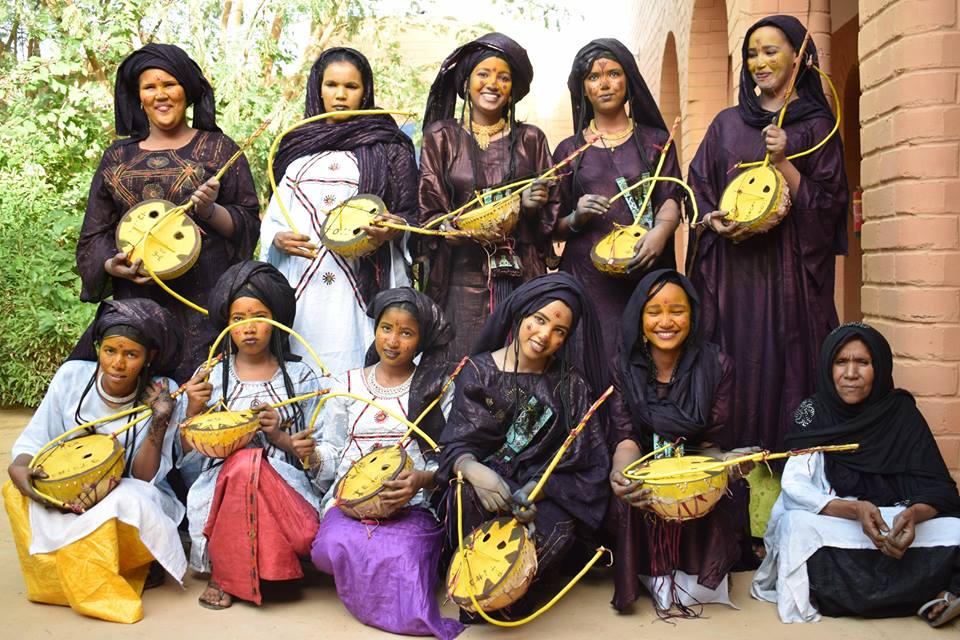
Dans le dénuement d’un campement nomade, l’instrument doit permettre de voyager léger et de jouer à toute occasion. L’ustensile de cuisine devient percussion et est accompagné par le takamba (petite guitare) et l’imzad, violon monocorde, dont les Kel tamasheqs raffolent. L’imzad a été inscrit par l’UNESCO en décembre 2013 au patrimoine immatériel de l’humanité.
Les femmes fabriquent cet instrument à partir d’une demi-calebasse séchée et évidée. Celle-ci est tendue d’une peau percée de deux ouïes en forme de rosace et munie d’un chevalet en bois en forme de V.
Le savoir musical de l’imzad est transmis oralement selon des méthodes traditionnelles qui favorisent l’observation et l’assimilation. Au Niger, il existe deux écoles, à Agadez et à Arlit, qui permettent aux jeunes filles de perpétuer cet héritage, à l’initiative de l’association Takrist N’Tada créée par une figure emblématique du blues touareg, Abdallah Oumbadougou.
Les rythmes sont troublants. Selon le moment, la circonstance, ils invitent à la transe. Autour du cercle de femmes, les hommes font danser leur monture dans une même euphorie collective.
Festival et musée d’instruments traditionnels
Malgré l’insécurité causée par des bandes armées le nord du Niger, des événements culturels tels que la « cure salée » d’Ingall continuent d’attirer des touristes et des mélomanes. En 2017, cette fête des éleveurs a eu lieu le 16 septembre.
Le film de Souleymane Ag Anara intitulé Les enfants du Sahara, donne un aperçu de cette ambiance survoltée qui s’invite au cœur des dunes, le temps de retrouvailles entre familles nomades.
Pour faire un tour d’horizon plus exhaustif des instruments traditionnels du Niger, c’est dans un petit musée de Niamey qu’il faut se rendre. Créé dans les années 90 à l’initiative du docteur Mahaman Garba, ethno-musicologue, la collection se situe dans les locaux du Centre de Formation et de Promotion Musicale El Hadj Tayya.
Plus de 170 instruments collectés dans tout le Niger y sont exposés et permettent de transmettre ce savoir traditionnel grâce à des ateliers pédagogiques. Certains artistes contemporains apprécient également ces sonorités traditionnelles et n’hésitent pas à les utiliser dans leur création.
Le regain d’intérêt pour la musique traditionnelle au Niger remonte à 1998. Festif et récréatif, ce répertoire véhicule également des messages de sensibilisation.
L’instauration du Prix Dan Gourmou marque l’âge d’or de cette époque. Plus d’un talent doit son succès à cette initiative : Ali Djibo, Elh Taya, Moussa Poussy Sadou Bori deviennent des icônes populaires.
Dans la même veine, on trouve aussi feu Sani Aboussa, Ali Atchibili, Mali Yaro et son orchestre Goumbé Star, Almeida et son groupe Tal National, Yacouba Moumouni, dit Denké Denké.
Ce dernier remporte alors une médaille d’argent de la chanson lors des jeux de la francophonie au Canada en 2001. Il est le chanteur et le fondateur du groupe Mamar Kassey qui reçoit de belles invitations dans de grands festivals internationaux de Hertme Festival aux Pays-Bas au Festival du Bout du Monde en Bretagne.
C’est en Bretagne d’ailleurs qu’il crée en 2006, avec le grand flûtiste Jean-Luc Thomas, le groupe Serendou, qui comprend également un autre musicien de Mamar Kassey, Boubacar Souleymane.
Après un premier album publié en 2011 et intitulé Avel an douar (le vent de la Terre), Zinder, le 2e album est sorti le 11 mars 2017 après un travail d’enregistrement qui s’est fait à Zinder.
Le projet artistique ayant abouti à l’album Zinder a fait l’objet d’un documentaire en trois parties qui peut être vu ici, ici et ici. Dans l’album Zinder, le kuntigi, instrument nigérien à une corde, apporte sa touche particulière au projet de création.
Références
http://www.film-documentaire.fr/4DACTION/w_fiche_film/33117_1
http://journals.openedition.org/etudesafricaines/17742
https://nigerdiaspora.net/index.php/societe-archives/item/45017-cl%C3%B4ture-mardi-soir-%C3%A0-tillab%C3%A9ry-de-la-2%C3%A8me-%C3%A9dition-du-festival-de-la-chanson-f%C3%A9minine-dalweyz%C3%A9--la-cantatrice-zabbia-kand%C3%A9-de-la-r%C3%A9gion-de-diffa-laur%C3%A9ate-du-grand-prix-2010
http://fofomag.com/index.asp?affiche=News_Display.asp&ArticleID=1699
http://data.bnf.fr/14436613/centre_de_formation_et_de_promotion_musicale_el_hadji_taya_niamey/
http://news.aniamey.com/h/22571.html
http://www.afrik.com/article13264.html
https://www.voaafrique.com/a/la-curee-salee-celebre-les-eleveurs-du-niger/4035069.html


Most popular

Top 10 des artistes africains les plus populaires sur YouTube
08 Fév 2023

Top 10 des artistes congolais les plus streamés en France en 2026
05 Mai 2026
ACCES dévoile une programmation exceptionnelle pour son édition 2026
14 Oct 2026
Afrique du Sud: Angélique Kidjo, Ibrahim Maalouf et Anaïs Rosso font vibrer le Joy of Jazz
12 Oct 2026
Appel à accréditation : ACCES 2026 à Johannesburg
12 Oct 2026
Appel à candidatures : formation Gender@Work 2026 aux métiers de l’industrie musicale à Johannesburg
06 Oct 2026
Disclaimer: Music In Africa provides a platform for musicians and contributors to embed music and videos solely for promotional purposes. If any track or video embedded on this platform violates any copyrights please inform us immediately and we will take it down. Please read our Terms of Use for more.

Abonnez-vous à notre newsletter
Retrouvez-nous sur les réseaux sociaux


Please se connecter to post a comment.