






















NEFCISA
NEFCISA

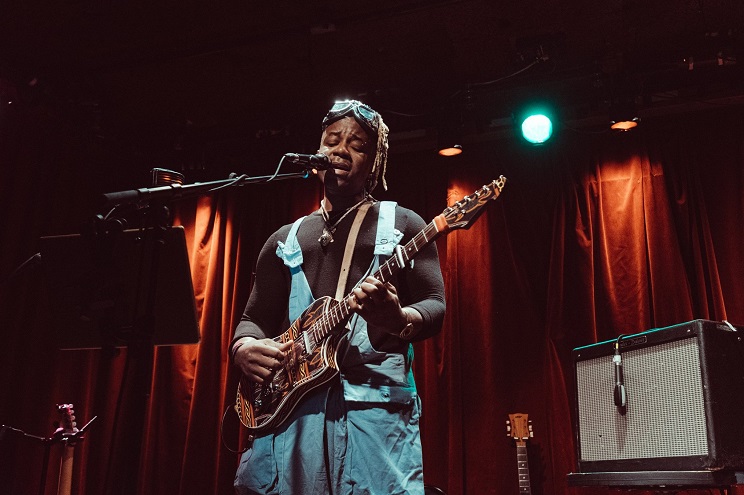
The Music In Africa Foundation (MIAF) is proud to announce its partnership with the Industrial Development Corporation (IDC) as a Strategic Implementing Partner (SIP) for its Social Employment Fund (SEF). Through this collaboration, MIAF is launching a new national programme designed to create jobs, address skills gaps, and strengthen South Africa’s creative industries — in line with the SEF’s overarching goal to generate work for the common good and build community value through employment, social contribution, and inclusive economic participation. Operating under the banner NEFCISA (National Employment Facility for Creative Industries in South Africa), the initiative will recruit and train participants, match them with host organisations, and place a minimum of 1 000 workers across the country. Key Objectives: Support employment and entrepreneurship in the creative industries. Offer skills development and training programmes. Foster partnerships between public and private creative sectors. Promote South African creativity at both provincial and national levels Foster community development through social contribution.

ACCES
ACCES

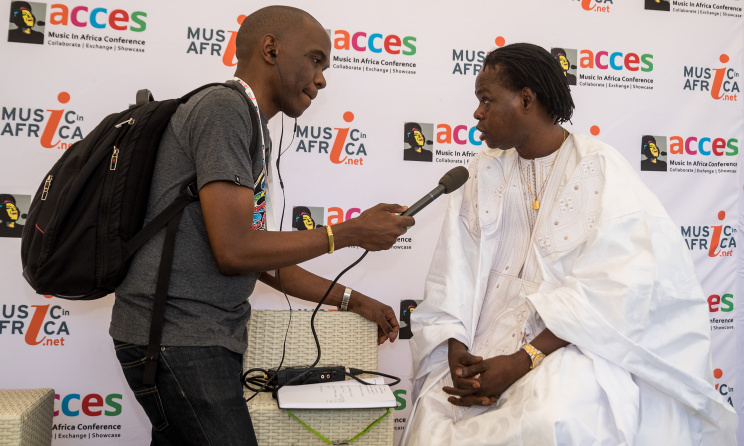
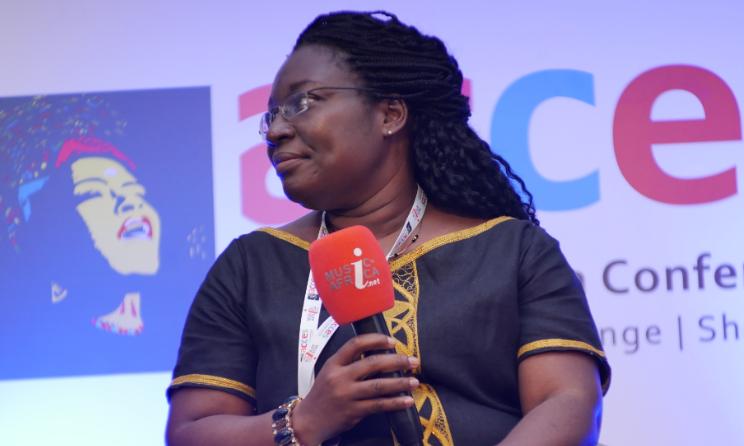
Chaque année, nous fournissons des informations générales afin de guider les participants dans la préparation de leur voyage. En plus de ce site, des mises à jour importantes seront envoyées par e-mail à tous les délégués inscrits. Assurez-vous de vous inscrire dès que possible. Pour plus d'informations, veuillez contacter [email protected] Continuez à consulter cette page pour plus d'information.  

Gender@Work
Gender@Work

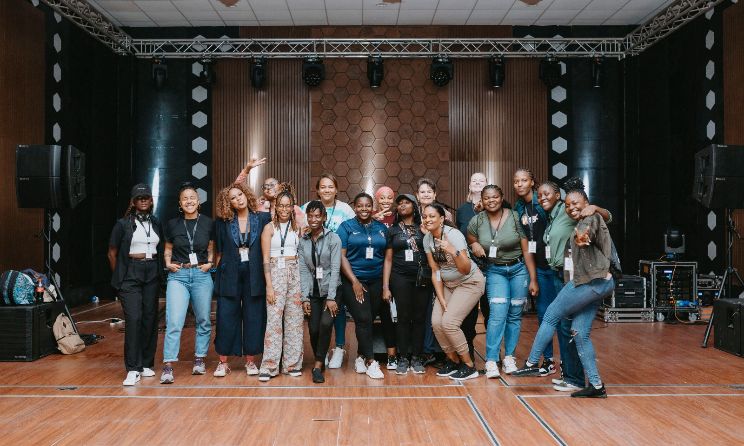
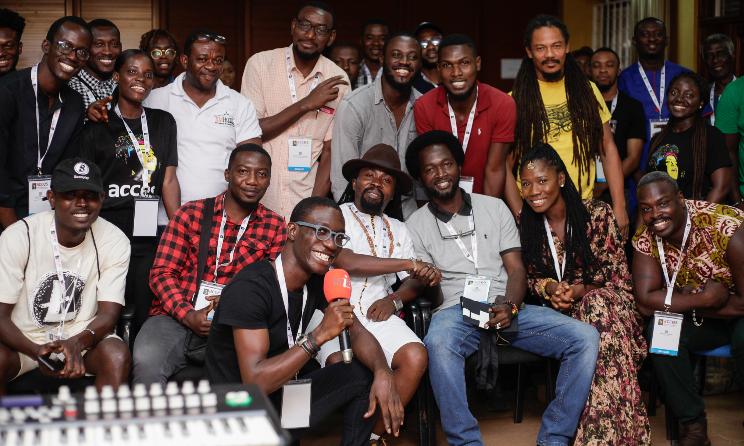
Music In Africa Gender @ Work is a three-year training programme aimed at upskilling and increasing the participation of female professionals in the African music sector. Launched by the Music In Africa Foundation (MIAF) in April 2019, the programme is connected to the MIAF’s ACCES music conference – a pan-African event held in a different African country every year. This connection enables the programme to reach new participants in a different African country every year. The programme marks the beginning of a more concerted effort by the Foundation to support the participation and inclusion of women in all facets of its programmes and the music sector in Africa as a whole. Over the three years, the programme will aim to address gender imbalances in the sector through training, lobbying, facilitating knowledge exchange and dialogues that foster the interest of women. The broader objectives of the programme are to: Provide industry training for women on critical music industry skills, focusing on: Stage management Electronic music production and recording Music business management Technical knowledge Provide an opportunity for both professional and aspiring women to benefit from the Music In Africa network and its broad range of activities in 2019, 2020 and 2021. Provide a solution-based platform in the form of a round table at ACCES with a view to identify challenges, discuss opportunities and lobby for the interests of female practitioners. Offer participants the opportunity to benefit from programmes offered by MIAF’s partners. Increase access to educational materials. Integrate participants in the broader ACCES programme to maximise experience and exposure to the industry. Record and present training materials on the www.musicinafrica.net, including but not limited to tutorials, templates and other best-practice materials. Communicate women-based themes that support the initiatives and messages of the programme. MAIN TRAINING ACTIVITIES Training in first country (Ghana): In the first year, participants will be trained on all aspects of stage management by a team of experienced stage managers from 10 to 17 November 2019. The programme will offer robust classroom training as well as practical, hands-on training in which participants will also be given the opportunity to manage various aspects of the ACCES performance programme. Training in second country: The second training iteration will take place at ACCES 2020 when the programme will diversify its course to include music production lessons and training on other music business topics. A round-table platform will also be introduced to coincide with the ACCES programme. Training in third country: The third training iteration will take place at ACCES 2021 in a different country, offering an advanced course. HOW DO YOU GET INVOLVED?  As a participant, facilitator or trainer: The programme enrolls up to 12 trainees every year. All opportunities are advertised publicly on this website, and will be added to this page. Please keep checking this page for new calls (below under UPDATES & CURRENT OPPORTUNITIES). As a partner Please contact Claire Metais at [email protected]. APPLY The call for applications for 2020 will be announced soon. The Music In Africa Gender @ Work programme is made possible with the support of the Prince Claus Fund, Siemens Stiftung and Goethe-Institut.

Sound Connects Fund
Sound Connects Fund

Pour les praticiens et les organisations culturels et créatifs opérant en Afrique australe, l’accès au financement reste un défi majeur. La pandémie de COVID-19 a également eu un impact massif sur les politiques gouvernementales, les dépenses et l’économie en général, et a vu les dépenses consacrées à la culture reléguées plus bas dans la liste des priorités. De plus, les industries culturelles et créatives citent régulièrement quatre domaines principaux où l’investissement est nécessaire pour la croissance : une visibilité accrue, la mobilité incluant l’accès à de nouveaux marchés, le financement et les structures de soutien.

Music In Africa Live

MUSIC IN AFRICA LIVE Lancé en 2020 pour une durée de 3 ans, Music In Africa Live est une initiative visant à soutenir l'écosystème de la musique africaine face aux contraintes imposées par la pandémie de COVID-19 ; le projet a été lancé par la Fondation Music In Africa (MIAF) en partenariat avec le ministère fédéral allemand des Affaires étrangères, Siemens Stiftung et le Goethe Institut. Plus de 30 aides sont disponibles dans le cadre de la troisième édition de Music In Africa Live, dans 3 catégories :  showcases, renforcement des compétences et plaidoyer, en conformité avec les modalités énoncées.

Instrument Building And Repair Project

The overarching objective of Music In Africa Foundation’s Instrument Building and Repair (IBR) project is to encourage the formalisation and professionalisation of instrument-making and repair in Africa, especially in relation to indigenous African instruments. Background In 2014, the Music In Africa Foundation (MIAF) identified as one of its focus areas for development the need to encourage young people from music and music-related sectors to consider instrument-making as a career. This need extended itself from the recognition that the making of traditional African instruments is not a widely practiced skill and seems to be limited to the older generation. Traditional African instrument makers are also few and far between, making communication and logistics between teachers and learners an obstacle. When instrument building workshops take place, budgetary constraints do not allow teachers or learners the time to explore the finer details of an instrument. Based on these observations, the MIAF designed and piloted the first IBR workshop at the Dhow Countries Music Academy (DCMA) in Zanzibar in February 2015. In 2016, the foundation received funding from the South African National Lotteries Commission to implement a much bigger version of the project in Johannesburg. The project drew participants from five African countries. 25 students from South Africa, Ghana, Senegal, Kenya and Ethiopia were trained on how to build and repair musical instruments. The instruments that they made were: Traditional Instruments: Umakhweyana and Marimba Conventional Instrument: Dulcimer guitar The workshop culminated in a traditional instruments concert at the Wits Theatre in Johannesburg. It is the MIAF’s aim to roll out similar workshops in as many African countries as possible over the next few years. Objectives Developing awareness of musical instrument makers in Africa with a view to promote their work to a wider global audience. Facilitating the sharing and transfer of skills in indigenous instruments between countries on the continent. Encouraging the formalisation and professionalisation of instrument-making and repair in Africa, especially in relation to indigenous instruments. Helping instrument makers develop their careers. Fostering the rapid monetisation and sustainable development of instrument-making and repair in Africa. Promoting constant exchange of ideas, expertise, experiences and know-how among instrument makers in Africa. Facilitating the identification of existing gaps in the field with a view to contribute new solutions. Facilitating the transfer of knowledge and skills of indigenous instruments between younger and older generations. 2020 edition The MIAF has also announced that multi-instrumentalist and instrument maker Joe Makhanza will facilitate one of the workshops on the building of the kamale ngoni instrument. Kamale ngoni is a kora-like, stringed instrument that originated in West Africa. The instrument contributed to the rise of Wassoulou music in the 1970s and 1990s. Makhanza was born in Giyani in South Africa's Limpopo province. He completed a bachelor of music degree and a post-graduate diploma in arts marketing from Wits University. He is currently completing his masters in ethnomusicology and is a part-time lecturer in African music studies at Rhodes University. He plays the kora, mbira, valiha, masenqo, xiwewe, ngoni ba and xizambi, among others. He also manufactures the aforementioned instruments. The MIAF will confirm more trainers who will join the workshops as well as the other instruments that will be featured in the 2020 IBR programme.  Apply to participate here. Connect with us on Twitter, Instagram and Facebook, and subscribe to our monthly newsletter. The Music In Africa Instrument Building and Repair project is funded by the National Lotteries Commission. It is implemented in partnership with Siemens Stiftung, Goethe-Institut, Wits Theatre and Kaya FM.

Features

Top 10 des meilleurs albums de Baaba Maal

14 Sep 2021 - 10:58

cc-img flag-img

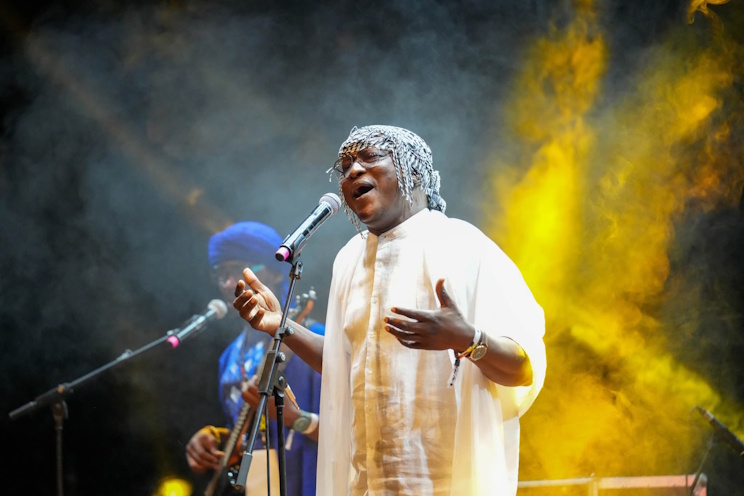
Star mondialement reconnue, Baaba Maal est l’une des plus belles voix du continent africain. Sa discographie riche, laisse à voir des œuvres majeures chantées principalement en Poular, sa langue natale. Sa musique, grâce à une parfaite fusion de mélodies traditionnelles et de sonorités modernes, rehaussées par une voix aérienne, touche les publics du monde entier.

D’abord avec Lasly Fouta, ensemble constitué de 70 personnes, puis Yeli Taaré Fouta (1977) avec Mbassou Niang et Mansour Seck, en passant par Wandama (1982), avant finalement de mettre sur pied le Dande Lenol (1984), l’artiste sénégalais a toujours été le chantre et l’ambassadeur de la culture peule à travers des productions de grande qualité louées de partout. Voici le top 10 de ses meilleurs albums.

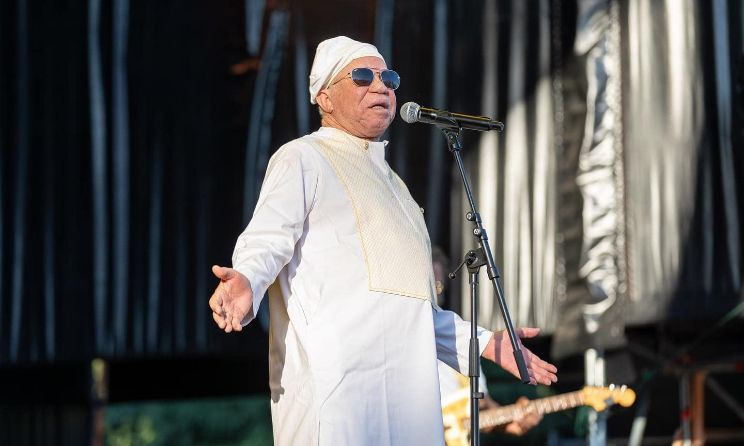
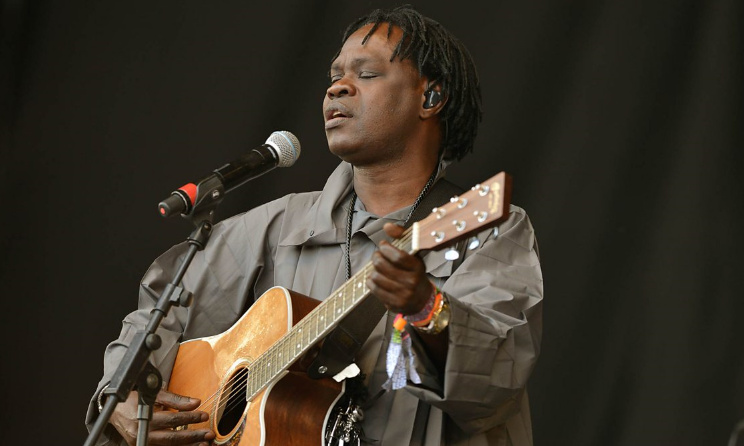
Baaba Maal (Photo) : R. O'Connor

Wango

Le Wango est une danse traditionnelle peule exécutée à l’aide du tama (percussion), c’est aussi le nom de l’album de Baaba Maal sorti chez Syllart en 1988.

Avec ses titres irrésistibles, l’album mêle reggae, funk et rythmes traditionnels peuls.

6 titres le composent et donnent dans l’ensemble un album afropop plutôt réussi, avec la participation notable de musiciens de renom ; Manu Lima et Hilaire FJ Charby sur les titres « Wango », « Demgalam », ou encore « Yiiri Yalla » aux keyboards, et un magistral Massama Diop au tama.

Djam Leeli

Djam Leeli, estampillé Baaba Maal et Mansour Seck, a été enregistré la première fois à Bruxelles (Belgique). Les bandes perdues seront retrouvées avant d’être publiées de nouveau en 1989 chez Mango, le label de Chris Blackwell.

Plutôt folk, acoustique, l’album repose sur la combinaison voix, guitares acoustiques, guitare électrique (Aziz Dieng), balafon et percussions, ce qui donne des chansons épurées et agréables. Parmi les titres les plus appréciés, « Djam Leeli », « Loodo » et « Bibbe Leydy ».

On retrouve d’autres versions de Djam Leeli sortis sous d’autres labels comme Yoff Productions en 1998.

L'Américain Robert Dimery classe Djam Leeli parmi Les 1001 albums qu'il faut avoir écoutés dans sa vie, son livre référence sur la musique publié en 2006.

Taara

Sorti chez Syllart en 1990, Taara est dans la même veine que Wango qui a introduit Baaba Maal sur la scène internationale.

C'est un album funky qui renforce encore plus la reconnaissance internationale de l’artiste sénégalais.

Sur cet opus, le lauréat 2018 du Music In Africa Honorary Award reprend des titres comme « Loodo » contenu dans Djam Leeli ou encore « Yiiri Yalla » inclus dans Wango. « Sawaly » est certainement l’un des morceaux les plus connus de Taara.

Baayo

Qui n’écoute pas encore, en 2019, Baayo avec le même plaisir, la même émotion ? C’est assurément l’un des plus beaux albums de l'artiste sénégalais.

La réédition de Baayo sort chez Palm Pictures en 1991. On dit que l’album est un prolongement de Djam Leeli avec Mansour Seck, sorti quelques années plutôt. C’est vrai, dans l’élaboration et l’esprit qui sous-tend la production, mais ici, c’est Baaba qui est en vedette.

Rien n’est excessif dans cet opus, mélodies folkloriques traditionnelles fascinantes, guitares, koras et xalam y ajoutent profondeur et dimension harmonique.

Baayo est un CD pur et tranquille qui fait voir à quel point la voix de Baaba Maal est magnifique. Sur dix titres, l’opus présente différents tableaux du Fouta ; la bravoure de ses hommes, la beauté de ses femmes, la foi de son peuple, l’amour et l'hospitalité de ses habitants etc... Impressionnant et majestueux, Baayo est un chef-d'œuvre !

Fir in Fouta

Avec Fir in Fouta, Baaba Maal accède au rang de star mondiale. Publié en 1994 chez Mango, l’opus inclut des titres célèbres comme « Sidiki », « Swing Yela », en featuring avec Didier Awadi et Duggy Tee, « Salimoun » etc…

Le hit de l’album est « Afican woman », qui sur fond de salsa, en anglais et en français, célébre la femme sénégalaise et africaine.

Fir in Fouta vaudra à Baaba Maal une nomination aux Grammy Awards en 1996, une consécration pour celui que l’on surnomme le roi du Yéla.

Nomad Soul

D’origine peule, Baaba Maal va consacrer un album à tous les peuples d’essence voyageur à travers son opus Nomad Soul, marqué par des collaborations prestigieuses.

Le disque s’ouvre sur le magnifique single « Souko Naya » chanté avec le quator vocal celte, the Screaming Orphans ; on y entend également la star jamaïcaine Luciano sur « Africans Unite » .

Nomad Soul est sorti en 1998 sur Palm Pictures, c’est un album cross over aux sonorités électroniques, folk et world, un astucieux cocktail d’influences et d’instruments.

Jombaajo

Jombaajo est publié en 2000 chez Syllart mais les chansons presentées sur ce disque ont été enregistrés en 1986. Il inclut la premiere version de « Suka Nayo » présent sur Nomad Soul, ou le morceau « Dem galam » présent sur Wango.

Jombaajo mêle mbalakh sur le titre « Thiaroye », ainsi que de nombreux styles africains populaires comme le soukous du Congo, sur le très réussi « Baydikacce ».

Jombaajo fait entendre le Baaba Maal des premières heures, et à l’instar des premiers enregistrements de Youssou N’Dour, on sent tout le talent et le potentiel de l'artiste qui ne demande qu’à exploser.

Mi Yeewni

Produit par Palm Pictures en 2001, Mi Yeewni ou Missing You a été enregistré dans un petit village du Sénégal ; il sonne comme un retour aux sources pour Baaba Maal.

C'est un album aux mélodies intimes et pures, renforcées uniquement par des instruments traditionnels et la voix aérienne de Baaba de Maal.

Composées à la guitare acoustique, les chansons vont de la percussion nerveuse de « Leydi Ma », au dépouillement limpide de « Miyaabele »

Televison

Televison sort en 2009 sur le label Palm Pictures. Si Mi Yeewni est un retour à la source, Televison lui est avant-gardiste, mais il est aussi convaincant que Mi Yeewni.

Co-écrit avec le producteur Barry Reynolds, Sabina Sciubba et Didi Gutman du groupe Brazilian Girls, l'opus dégage une vraie fraîcheur.

« Televison », le titre éponyme avec son groove hypnotique, « A song for women » , avec ses sabars en soutient à la voix de Baaba Maal plus les chœurs chuchotants de Sabina, ainsi que le poétique « Dakar Moon » et ses accents latinos, marchent parfaitement bien.

The Traveller

The Traveller, le dernier album en date de Baaba Maal est sorti en 2016 chez Knitting Factory Records, un label de musique new-yorkais (États-Unis) spécialisé dans les musiques avant-gardistes.

C'est un album aux accents électro-pop, Baaba Maal parvient habilement à insuffler une âme dans toute cette machinerie.

Les titres « Fulani rock », « Gili Men » qui fusionnent électro acoustique et folk aux accents de blues malien, sont idéalement calibrés pour une audience internationale.

Le chanteur sénégalais délivre ici un album moderne, qui dans un sens, sonne comme la suite de Televison. La fusion des genres est comme presque toujours réussie.

Please se connecter to post a comment.

Most popular

Disclaimer: Music In Africa provides a platform for musicians and contributors to embed music and videos solely for promotional purposes. If any track or video embedded on this platform violates any copyrights please inform us immediately and we will take it down. Please read our Terms of Use for more.

newsletter banner

Abonnez-vous à notre newsletter

Retrouvez-nous sur les réseaux sociaux