
























NEFCISA
NEFCISA

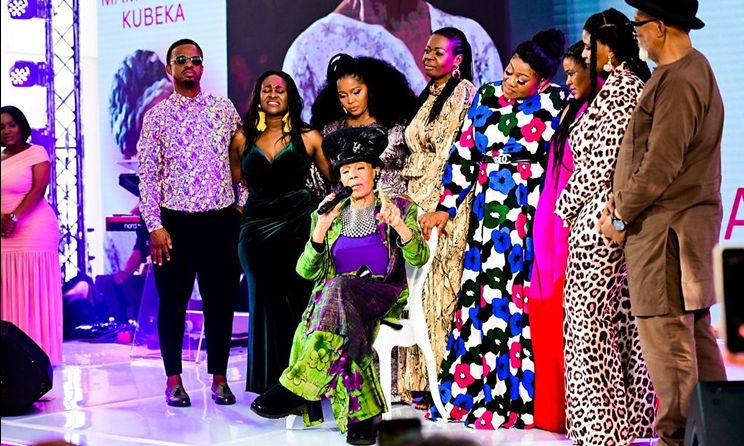
The Music In Africa Foundation (MIAF) is proud to announce its partnership with the Industrial Development Corporation (IDC) as a Strategic Implementing Partner (SIP) for its Social Employment Fund (SEF). Through this collaboration, MIAF is launching a new national programme designed to create jobs, address skills gaps, and strengthen South Africa’s creative industries — in line with the SEF’s overarching goal to generate work for the common good and build community value through employment, social contribution, and inclusive economic participation. Operating under the banner NEFCISA (National Employment Facility for Creative Industries in South Africa), the initiative will recruit and train participants, match them with host organisations, and place a minimum of 1 000 workers across the country. Key Objectives: Support employment and entrepreneurship in the creative industries. Offer skills development and training programmes. Foster partnerships between public and private creative sectors. Promote South African creativity at both provincial and national levels Foster community development through social contribution.

ACCES
ACCES

Chaque année, nous fournissons des informations générales afin de guider les participants dans la préparation de leur voyage. En plus de ce site, des mises à jour importantes seront envoyées par e-mail à tous les délégués inscrits. Assurez-vous de vous inscrire dès que possible. Pour plus d'informations, veuillez contacter [email protected] Continuez à consulter cette page pour plus d'information.  

Gender@Work
Gender@Work

Music In Africa Gender @ Work is a three-year training programme aimed at upskilling and increasing the participation of female professionals in the African music sector. Launched by the Music In Africa Foundation (MIAF) in April 2019, the programme is connected to the MIAF’s ACCES music conference – a pan-African event held in a different African country every year. This connection enables the programme to reach new participants in a different African country every year. The programme marks the beginning of a more concerted effort by the Foundation to support the participation and inclusion of women in all facets of its programmes and the music sector in Africa as a whole. Over the three years, the programme will aim to address gender imbalances in the sector through training, lobbying, facilitating knowledge exchange and dialogues that foster the interest of women. The broader objectives of the programme are to: Provide industry training for women on critical music industry skills, focusing on: Stage management Electronic music production and recording Music business management Technical knowledge Provide an opportunity for both professional and aspiring women to benefit from the Music In Africa network and its broad range of activities in 2019, 2020 and 2021. Provide a solution-based platform in the form of a round table at ACCES with a view to identify challenges, discuss opportunities and lobby for the interests of female practitioners. Offer participants the opportunity to benefit from programmes offered by MIAF’s partners. Increase access to educational materials. Integrate participants in the broader ACCES programme to maximise experience and exposure to the industry. Record and present training materials on the www.musicinafrica.net, including but not limited to tutorials, templates and other best-practice materials. Communicate women-based themes that support the initiatives and messages of the programme. MAIN TRAINING ACTIVITIES Training in first country (Ghana): In the first year, participants will be trained on all aspects of stage management by a team of experienced stage managers from 10 to 17 November 2019. The programme will offer robust classroom training as well as practical, hands-on training in which participants will also be given the opportunity to manage various aspects of the ACCES performance programme. Training in second country: The second training iteration will take place at ACCES 2020 when the programme will diversify its course to include music production lessons and training on other music business topics. A round-table platform will also be introduced to coincide with the ACCES programme. Training in third country: The third training iteration will take place at ACCES 2021 in a different country, offering an advanced course. HOW DO YOU GET INVOLVED?  As a participant, facilitator or trainer: The programme enrolls up to 12 trainees every year. All opportunities are advertised publicly on this website, and will be added to this page. Please keep checking this page for new calls (below under UPDATES & CURRENT OPPORTUNITIES). As a partner Please contact Claire Metais at [email protected]. APPLY The call for applications for 2020 will be announced soon. The Music In Africa Gender @ Work programme is made possible with the support of the Prince Claus Fund, Siemens Stiftung and Goethe-Institut.

Sound Connects Fund
Sound Connects Fund

Pour les praticiens et les organisations culturels et créatifs opérant en Afrique australe, l’accès au financement reste un défi majeur. La pandémie de COVID-19 a également eu un impact massif sur les politiques gouvernementales, les dépenses et l’économie en général, et a vu les dépenses consacrées à la culture reléguées plus bas dans la liste des priorités. De plus, les industries culturelles et créatives citent régulièrement quatre domaines principaux où l’investissement est nécessaire pour la croissance : une visibilité accrue, la mobilité incluant l’accès à de nouveaux marchés, le financement et les structures de soutien.

Music In Africa Live

MUSIC IN AFRICA LIVE Lancé en 2020 pour une durée de 3 ans, Music In Africa Live est une initiative visant à soutenir l'écosystème de la musique africaine face aux contraintes imposées par la pandémie de COVID-19 ; le projet a été lancé par la Fondation Music In Africa (MIAF) en partenariat avec le ministère fédéral allemand des Affaires étrangères, Siemens Stiftung et le Goethe Institut. Plus de 30 aides sont disponibles dans le cadre de la troisième édition de Music In Africa Live, dans 3 catégories :  showcases, renforcement des compétences et plaidoyer, en conformité avec les modalités énoncées.

Instrument Building And Repair Project

The overarching objective of Music In Africa Foundation’s Instrument Building and Repair (IBR) project is to encourage the formalisation and professionalisation of instrument-making and repair in Africa, especially in relation to indigenous African instruments. Background In 2014, the Music In Africa Foundation (MIAF) identified as one of its focus areas for development the need to encourage young people from music and music-related sectors to consider instrument-making as a career. This need extended itself from the recognition that the making of traditional African instruments is not a widely practiced skill and seems to be limited to the older generation. Traditional African instrument makers are also few and far between, making communication and logistics between teachers and learners an obstacle. When instrument building workshops take place, budgetary constraints do not allow teachers or learners the time to explore the finer details of an instrument. Based on these observations, the MIAF designed and piloted the first IBR workshop at the Dhow Countries Music Academy (DCMA) in Zanzibar in February 2015. In 2016, the foundation received funding from the South African National Lotteries Commission to implement a much bigger version of the project in Johannesburg. The project drew participants from five African countries. 25 students from South Africa, Ghana, Senegal, Kenya and Ethiopia were trained on how to build and repair musical instruments. The instruments that they made were: Traditional Instruments: Umakhweyana and Marimba Conventional Instrument: Dulcimer guitar The workshop culminated in a traditional instruments concert at the Wits Theatre in Johannesburg. It is the MIAF’s aim to roll out similar workshops in as many African countries as possible over the next few years. Objectives Developing awareness of musical instrument makers in Africa with a view to promote their work to a wider global audience. Facilitating the sharing and transfer of skills in indigenous instruments between countries on the continent. Encouraging the formalisation and professionalisation of instrument-making and repair in Africa, especially in relation to indigenous instruments. Helping instrument makers develop their careers. Fostering the rapid monetisation and sustainable development of instrument-making and repair in Africa. Promoting constant exchange of ideas, expertise, experiences and know-how among instrument makers in Africa. Facilitating the identification of existing gaps in the field with a view to contribute new solutions. Facilitating the transfer of knowledge and skills of indigenous instruments between younger and older generations. 2020 edition The MIAF has also announced that multi-instrumentalist and instrument maker Joe Makhanza will facilitate one of the workshops on the building of the kamale ngoni instrument. Kamale ngoni is a kora-like, stringed instrument that originated in West Africa. The instrument contributed to the rise of Wassoulou music in the 1970s and 1990s. Makhanza was born in Giyani in South Africa's Limpopo province. He completed a bachelor of music degree and a post-graduate diploma in arts marketing from Wits University. He is currently completing his masters in ethnomusicology and is a part-time lecturer in African music studies at Rhodes University. He plays the kora, mbira, valiha, masenqo, xiwewe, ngoni ba and xizambi, among others. He also manufactures the aforementioned instruments. The MIAF will confirm more trainers who will join the workshops as well as the other instruments that will be featured in the 2020 IBR programme.  Apply to participate here. Connect with us on Twitter, Instagram and Facebook, and subscribe to our monthly newsletter. The Music In Africa Instrument Building and Repair project is funded by the National Lotteries Commission. It is implemented in partnership with Siemens Stiftung, Goethe-Institut, Wits Theatre and Kaya FM.

banner image

The history of Zimbabwe's recording industry

Accueil/Non classé/The history of Zimbabwe’s recording industry

1950s and 60s

In the early 1950s, as the cities of Salisbury (now Harare) and Bulawayo became industrialised, an influx of Zimbabweans came from the rural areas to look for jobs in these cities. Among these people was a new generation – the first Zimbabwean musicians to record their music. Since there were no established recording studios at the time, early recordings were done by a mobile van from the Rhodesian Broadcasting Corporation (RBC), which used a one-track tape recorder and a microphone. The recorded music was used mainly for the African Service radio broadcasts in a bid to entertain the black majority. The RBC van went round the country to record talented musicians, who were paid one cent each time their song was played on radio.

As there were no record pressing plants at the time in Zimbabwe (then known as Rhodesia), most people could only afford to either listen to the radio or buy records from South Africa or other countries to play on their gramophones. Around 1956, the tide of South African records as well as records from Europe and the USA began to rise in Zimbabwe.  Zimbabwean musicians began to emulate the sounds from these records and were frustrated that they could not record their own music.

Before the 1960s, most of the music recorded in Zimbabwe was for archival purposes rather than commercial. In the late 1960s, several companies began to record commercial radio jingles, television programme themes and pieces of popular music. A company called Commercial Radio and Television (CRT) saw the need to have recording equipment in the country and soon acquired the country’s first disc-cutting machine. This gave them the impetus to start recording local pop bands. Later, in the early 1970s, CRT folded and another company, Music Recording Services (MRS) brought in the first 4-track studio, which recorded an all-white group called Holly Black (Zindi, 1985).

At the same time, contact was made with Brunswick Gramophone House in South Africa, which had been set up by Eric Gallo to distribute records from the US-based Brunswick Records in South Africa. However, noticing the lack of recording facilities in Zimbabwe, Gallo decided to extend his recording facility to Bulawayo – first by providing a cheap studio that would only record demo tapes, which would later be completed and mixed in South Africa.  Around the same time, Teal Record Company, a subsidiary label of EMI Records, was also established in Salisbury.

The early recordings of these companies were not very successful because the market was dominated by South African and Western records. Zimbabweans had been conditioned to like music coming from outside the country.  Bands that did record within the country, such as the King Messengers’ Quartet, received a poor reception as the ‘now-westernized’ Zimbabweans were not interested in buying them.

1970s

In the late 1960s, Gallo decided to send West Nkosi, a leading South African producer, to record some Zimbabwean musicians. Success began to knock on Gallo’s Zimbabwe door.

Soon another company, Advertising Promotions Limited (APL), imported an 8-track recording system, which was used extensively by Teal and Gallo, the two recording companies now established in the country, for their local recording artists. The cutting of lacquers still had to be done in South Africa until 1975, when CRT sold its disc-cutting machine to Teal Records. In the same year, a further eight-track recording and mixing console was imported into the country. This was installed at Blackberry Studios, which concentrated mainly on radio programmes. This equipment was later moved to Shed Studios, which started recording local musicians on behalf of Teal Records.

By the late 1970s, hits from local musicians began to trickle in. Gallo scored its major success with a band that had been around for quite some time, The Green Arrows. The album Chipo Chiroorwa sold in large quantities. Other groups such as The Great Sounds also sold large quantities with hits such as ‘Anopenga Ane Waya’.

Teal Record Company, Gallo’s rival, wanted the same commercial success. They found it inevitable (against the then government’s wishes) to put revolutionary songs on record. They took a chance with the album “Hokoyo” by  Thomas Mapfumo in 1979. It paid off.

1980s and 90s

In 1980, Teal bought shares in Shed Studios and changed its name from Teal to Gramma Records. More equipment was bought and the studio became a 16-track facility. Two years later, it was transformed to a 24-track facility using two-inch tape spools for recording. The studio was later re-named Mosi-Oa-Tunya after some of the directors, including Steve Roskilly, pulled out of Gramma Records. Roskilly kept the original name. When they became overwhelmed by musicians, the two companies headed by John Grant and Tony Rivett decided to merge. Thus Gallo became Zimbabwe Music Corporation and Teal became Gramma Records. Later, in the late 1990s, another player, Metro Studios, entered the recording scene.

As the industry became more organized, and with the merger of Gramma Records and Zimbabwe Music Corporation, studio engineers and producers became necessary.  These were recruited among musicians of the time.  Most of those who became producers started off as studio engineers. That was designed to give them ample time to study and understand the recording equipment they were using. Engineers who eventually became producers included Henry Peters, Peter Muparutsa, David Scobie, Hilton Mambo, Brian Rusike and Alois Muyaruka. At Shed Studios the main producer was Steve Roskilly, while at Gramma Records  and Zimbabwe Music Corporation, Chrispen Matema, A.K. Mapfumo, Tymon Mabaleka and Bothwell Nyamhondera became the main producers. Metro Studios employed ex-Harare Mambo bassist, Clancy Mbirimi, as its producer.

Current Challenges

With the arrival of compact discs (CDs) to replace vinyl records, this new technology brought with it many challenges for established record companies. Internet ubiquity allowed music fans to download and share music freely. This changed the game drastically. This reality spawned a new danger as new players came onto the scene since it was now easy to set up a recording studio that could burn CDs. This led to the establishment of independent labels, which saw many musicians deserting their record companies at the expiry of their contracts. The record companies saw this as an encroachment by other industry players onto their turf. This situation was made worse by the economic meltdown in the country between 2004 and 2008. Anthony Hagelthorn, who had acted as managing director of the merged Zimbabwe Music Corporation (ZMC) and Gramma Records, threw the towel in and left the industry altogether. Elias Musakwa, a musician-cum-businessman and politician, took over and merged the two companies with his own Ngaavongwe Records.

New players that came on the scene as a result of this new technological development included Corner Studios, Diamond Studios, Gospel Train Studios, Monolio Studios, Mac Dee’s Studio and several others.

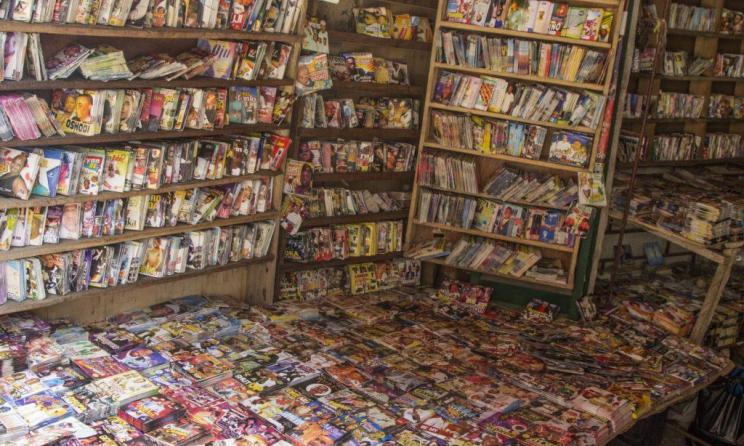
Although the technology had made it easier for musicians to become independent, there was another threat, brought about by piracy.  The pirates found it easier to reproduce and sell recorded music that did not belong to them. Musicians who were accustomed to receiving royalties for their recordings could not stomach the advent of music piracy that came with the digital revolution since this affected their income. Gondo (2012) describes this phenomenon as follows: “The ubiquity of low priced pirated CDs and DVDs on the Zimbabwean streets is the new gorilla that is eating the artist’s lunch.”  

As a response to these technological developments, in October 2011 the Zimbabwe Association of Recording Industries (ZARI) introduced a “budget CD and DVD” (Vhori, 2012). The music industry touts the product’s authenticity and high quality for the same price of the pirated products, which are of variable quality. When it comes to distribution, ZARI contends the budget CDs and DVDs will be available to all music retailers and market traders, as well as main Zimpost offices. However, Gondo (2012) argues that while these outlets certainly make sense, they are not sufficient because the pervasiveness of pirated CD/DVD vendors on every pavement and intersection surely is far more convenient for consumers. ZARI is essentially trying to replace the pirate. As great as this move to embrace digital is, it will not solve the revenue loss from CD/DVDs. Historically, the prices of original CDs have been much higher than the standard $1/unit pirate price.

The migration to a standard/fixed price model in the music business is not unique to Zimbabwe. It is also found in East Africa, the United Kingdom and the USA. Apple pioneered the model through its iTunes store. iTunes introduced a 99c/song price for any and every song in its store. Gondo (2012) contends that though this price was agreed to by the music industry (basically the major US labels: Warner Music, Universal, Sony and EMI), it represented more of a ceasefire than a truce in the digital music wars.

Looking ahead, one can safely say that performing, touring, merchandising, sponsorship, royalties and other commercial tie-ins are the new reality in the music business. The heavy reliance on recorded music through CD sales is over.


References

  • Gondo, B. 2012. “The Death of The Zimbabwean Music Record Company: The Rise of The Independent Artist”. Technology Zimbabwe, 17 May.
  • Sibanda, M. 2012. “Zimbabwe’s Music Industry Is Dying Slowly”. Daily News, 4 April.
  • Vhori, E. 2012. Record Companies Battle Piracy. ZARI General Meeting Held in Msasa, Harare, 12 April.
  • Zindi, F. 1985. Roots Rocking In Zimbabwe. Gweru: Mambo Press
  • Zindi, F. 2013. ‘No Easy Road to the Studio’. The Herald, 19 November. <http://www.herald.co.zw/no-easy-road-to-the-studio>

newsletter banner

Abonnez-vous à notre newsletter

Retrouvez-nous sur les réseaux sociaux