



























Nothando Migogo: Why I'm leaving SAMRO
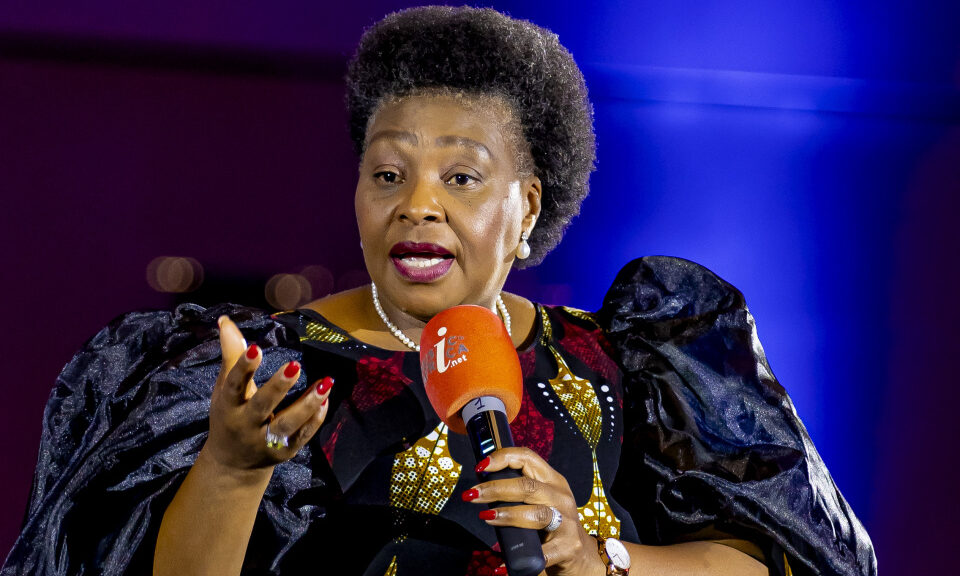
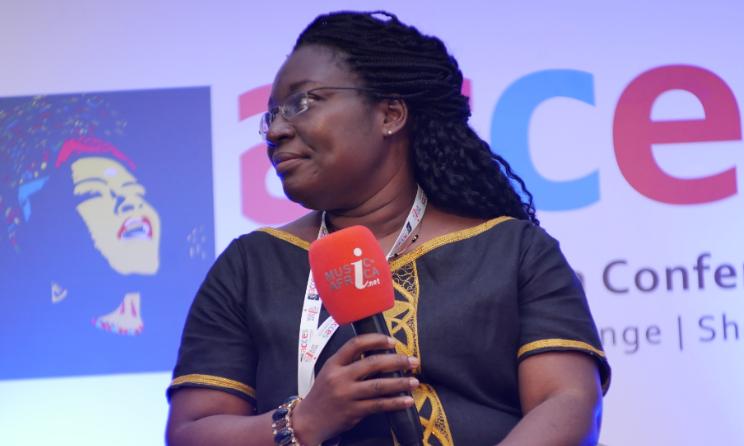
When Migogo, 36, joined SAMRO in 2017, there was hope that the young intellectual property law practitioner would impel a turnaround at an organisation that has been on the receiving end of a fair share of criticism and negative media coverage.
During her tenure at SAMRO, Migogo was faced with a number of obstacles long seen as incorrigible at the CMO, which was founded in 1961 under the then apartheid regime. SAMRO has been discreet about Migogo’s resignation, circulating a note to this effect only among its members in early February.
“It’s difficult to articulate why I’ve resigned, because the reasons are so layered. But it’s time for me to do this and I think one would look at my time at SAMRO and think that it’s been quite short. By the time I leave on 1 May, it will be a month short of two years, » Migogo told Music In Africa.
« When I came to SAMRO, I had in mind what my role in the organisation was going to be. One usually thinks, ‘It’s going to be long and this is what I’m going to be doing’, but once you are in there, you have to deal with certain strategic and imperative challenges. Even though I initially thought that my job was going to be a long-term strategic journey, I have come to realise that my job at SAMRO was to manage turbulent waters. »
Dubai deal and SABC’s millions
When Migogo was appointed CEO, SAMRO was already involved in a 2014 investment deal meant to establish a CMO in the United Arab Emirates. SAMRO had invested R40m ($2.8m) to set up the ‘Arab Emirates Music Rights Organisation’, a first in the Middle Eastern nation, under Dlamini’s leadership. In what SAMRO admits to have been an ill-conceived decision, the money was lost and Dlamini resigned as SAMRO CEO two years after the investment deal had been initiated. In 2017, SAMRO officially withdrew from the deal, plunging the organisation in a scandal that earned the ire of its members. SAMRO was then pressured to instate an inquiry into how it had lost such a substantial amount of money.
“We commissioned two reports, an initial investigative report with PricewaterhouseCoopers and a forensic report with [auditing firm] SekelaXabiso, which was presented and submitted to SAMRO members and was handed over to the police, » Migogo says. « It’s no longer an issue of SAMRO; we literally opened a case and there is nothing more we can do. It was a tough engagement but that in itself was something that SAMRO can look back and say, ‘At least we have established real engagement with our members’. I am comfortable with the fact that we have navigated those waters. »
SAMRO’s explanation for pursuing the UAE deal is that its mission statement « clearly states that the organisation should invest funds to generate more revenue for its Southern African members » and that the CMO had been losing money around the time of the investment due to the South African Broadcasting Corporation‘s (SABC’s) failure to pay out millions in royalties. In 2015-16, the SABC reported a loss of R411m, for which former chief operating officer Hlaudi Motsoeneng has been largely blamed. Motsoeneng had said on a number of occasions that the SABC’s directive was not to turn a profit but provide a service to South Africans. The SABC’s current debt is about R700m, and by extension a thorn in Migogo’s side.
“The SABC still owes us, » she says. « Our chief financial officer [CFO] and their CFO have been working very well. I would actually like to thank the SABC for coming to the party because they are going through tough times, but it obviously affects our business and members. It’s highly regrettable and very problematic for us but it was apparently the first time the SABC CFO came to SAMRO in the history of the two organisations. They are sticking to the payment plan they committed to and so far they haven’t defaulted on that. I don’t have the exact figure at hand for the previous financial year, but they were about R30m short of what they owe us. In total, including the current financial year, we are looking at a figure of over R100m. »
It was reported in Parliament on 13 March 2019 that the SABC owed R250m in royalties, of which R126m was meant to be paid out to SAMRO. SAMRO stakeholder relations officer advocate Nkateko Maluleke told IOL: “There are other streams of revenue for our clients, but the SABC represents a bigger portion of our income so we had to give them prior warning to expect a little less this month.”
Lip service and the ‘change CEO’
But Migogo says dealing with SABC pay-outs and missing money in Dubai are not her biggest challenges at SAMRO.
“It’s very difficult when you have your closest stakeholders being your members, who for many reasons – be it patriarchy, ageism, intolerance to see the status quo shaken – resist and refuse to see the value that is being brought into their own lives. It’s very unfortunate. There is a lot of lip service and talk about ‘we want young, black, female leadership’, but when you get young, black, female leadership, which is dynamic, honest and hardworking, you are challenged and threatened, so you then have to destroy that. I think that has been one of the biggest challenges for me and it’s a great pity.
« But I am proud of myself. A lot of work has happened here, even from a membership perspective. I’ve had numerous members who come to me and say, ‘Before you came, our ability to get regular communication to find out what’s happening at SAMRO was not the same.’ We’ve become an engaging organisation, which is necessary for us to move forward.
“We ushered a new dawn at SAMRO: new people, a new vision and a very distinct culture of accountability, transparency and engagement with our stakeholders. The transformation we have achieved in 18-plus months is amazing. We’ve reviewed and analysed our financial and governance policies, which is not the sexy stuff we talk about in the media, but it talks to real financial management and ensuring that we are safeguarding the investments that we hold for our members. Not to say that we have won and are perfect at it, but there is a commitment to move towards that.”
Migogo says 10 years experience in the royalty collection space had given her the clout required to tackle the SAMRO job.
« I have always been somewhat of a ‘change CEO’. Before I was at SAMRO, I was at CAPASSO [the Composers, Authors and Publishers Association] and DALRO [the Dramatic, Artistic and Literary Rights Organisation]. CAPASSO is the mechanical rights space, which was largely about phono mechanicals and broadcast mechanicals. When I came in with the team, we bought digital licensing for mechanicals, which was game-changing and ground-breaking. We also came up with a new structure and then I moved on. At DALRO, we came up with some really innovative ideas around the digital delivery of literature.
« Based on this, and as a ‘change CEO’, I was able to elevate the conversations at SAMRO and with SAMRO’s stakeholders. We have put in a lot of frameworks and spotlight on governance in the organisation. We have introduced some really different and sometimes very uncomfortable measures to take SAMRO forward, and I’m happy to hand over to the next person to take over the ship and makes sure it keeps sailing.”
Public domain elucidated
Migogo also shed light on the public-domain issue that has drawn criticism from various sectors recently. In April last year, City Press reported that SAMRO was involved in a “billion-rand scheme” in which it had been illegally deducting royalties from musicians since 1963. According to the weekly newspaper, gospel singer Hlengiwe Mhlaba was one such artist. Mhlaba alleged through City Press that SAMRO had fleeced the singer of millions in royalties. She claimed SAMRO wrongfully paid out R8.5m to her former producer and manager Sipho Makhabane without the singer signing her rights over to him. City Press, which spoke to Mhlaba in what the publication called a “tell-all interview”, said the singer only received a portion of royalties for 24 original song arrangements.
The allegations were raised by Mhlaba’s legal advisor, Graeme Gilfillan, who accused SAMRO of paying artists only 16.7% of their royalties while siphoning the remaining 83.3% through a “mysterious composer” known as DP (which actually stands for ‘public domain’). Gilfillan told City Press that artists should receive 100% of the royalties for rearranged musical works. The City Press article said this had been running for more than five decades and amounted to a total of R1.2bn involving various local and international artists.
« The article talks about contractual issues between Mhlaba and Makhabane, » Migogo says. « City Press conflated those contractual money issues with SAMRO’s rules around public-domain arrangements, which Mhlaba makes, and how SAMRO treats those arrangements. So without getting into the technicalities of those rules, we then engaged our members and we continue to engage them. There is a SAMRO distribution rule that says, when you make an arrangement of a work, there is a presumption on the originality of that song, and so you don’t get 100% copyright because you used a pre-existing work. There is an assumption of how much originality is in a new song because we don’t have musicologists on site listening to every arrangement saying the originality is this much or that much. Basically, if you make an arrangement and if you don’t give us a split sheet, we make a presumption about the originality. Ultimately, the legal argument that was put forward by that article was that there should be no presumption and that there should be 100% copyright when the original song is in the public domain.
“Now we have an opinion from an advocate around the issue to confirm that we’re not on the wrong side of the law. So we are going to our members and we are asking them if they want us to carry on making presumptions about originality. If they do want us to make a presumption, we ask them about what that percentage should be. This is why we’re doing roadshows, because ultimately SAMRO is a member-run, member-owned organisation, so the members must tell us if they want that rule to change.”
The copyright amendment bill – a lost cause
In July 2017, Music In Africa reported that big multinational businesses such as US video and music streaming websites may have lobbied technocrats in the Department of Trade and Industry to amend South Africa’s Copyright Act of 1978 in order to make use of free content from the country. At that time, Migogo was co-leading a group called the South African Copyright Alliance, which challenged a gazetted copyright amendment bill that shifted the goalposts in terms of the basic principles of copyright law. The main area of concern in the bill was that users, such as broadcasters and digital music services of copyright-protected material, should enjoy the same privileges as the creators of that material. The bill also introduces the ‘fair-use’ principle, which is mainly known to American jurisprudence.
“The copyright amendment bill is imminently about to be passed, » Migogo says. « I know that it obviously went through Parliament and then it was passed at the National Council of Provinces and I think we might hear it was signed into law any day from now. The whole problem with the copyright amendment bill is that we’ve been trying to articulate for some time that it doesn’t go far enough to protect composers and rights holders. Even though it gives composers a right of communication to the public, meaning ‘no one can communicate my music publicly such as streaming without my permission’, the bill doesn’t go far enough to say, ‘When someone streams your work without your permission here is a clearly actionable punitive clause that you can invoke to protect that.’
« I must add for the record, the bill is closely linked to the performers’ protection amendment bill but some of the arguments are quite different and particularly as to how the rights holders of creative works perceive the effects of the different bills. The copyright amendment bill has many clauses that ultimately limit the rights of composers and authors. Most importantly, it introduces wide fair-use principles that limit the rights of creators without the case law that allows such principles to work practically, as in the US. But it also fails to implement counter-balancing, pro-creator provisions, such as the highly sought-after private copying levy.”
Royalty defaulters and the power of knowledge
Royalty collection is a major talking point and remains a confusing space for music practitioners. Many musicians lack the knowledge about how copyright licensing and royalty collection works. And although others may understand the processes involved, the payments they receive are minute in comparison to the revenues generated by major labels and streaming services. A central problem, Migogo says, is that many organisations employing music in their business models dodge their responsibility to pay royalties.
“One big challenge is getting adequate value for our rights, » she says. « We have large users of music whose services wouldn’t function that well without music. Sometimes they don’t want to pay an adequate royalty rate for music. So that’s very problematic. Also, member information, member knowledge, member data and the manner in which members come to notify us about their works… that obviously becomes a problem because even if you do collect royalties, how do we match that without adequate data? Matching becomes an issue in a similar way to users reporting what music they’ve played. If you’re not reporting adequately, it becomes very difficult to distribute. Another aspect is the operational efficiencies of the organisations that process royalties. »
Migogo says education on behalf of SAMRO members is imperative. “The way SAMRO relates to its members or the way artists conduct themselves would be at a higher level if they understood certain things – if they understood the contracts they are getting themselves into and the kind of data they receive. Education is a very important part of it, not only for members but for licensees and users as well.”
Nothando Migogo isn’t discouraged by the state of royalty collection in South Africa, and says she’ll fight tooth and claw to assert her ideas and energy in a space that needs urgent attention if artists are to get fair compensation for their efforts.
“I want to continue making an impact in this industry. I am very passionate about the music industry. I haven’t been hired yet and I am keeping my options open for now. I have lot of ideas and I still want to change things. I want to work with brilliant young people in this game. The way our industry is structured has made only certain voices to be heard and it’s a very political environment. I have brilliant colleagues out there in different spaces who I think are going to be part of the new dawn of the South African music industry and I want to be part of that,” Migogo says.



