



































NEFCISA
NEFCISA

The Music In Africa Foundation (MIAF) is proud of its partnership with the Industrial Development Corporation (IDC) as a Strategic Implementing Partner (SIP) for its Social Employment Fund (SEF). Through this collaboration, MIAF is running a national programme that is creating jobs, addressing skills gaps, and strengthening South Africa's creative industries — in line with the SEF's overarching goal to generate work for the common good and build community value through employment, social contribution, and inclusive economic participation. Operating under the banner NEFCISA (National Employment Facility for Creative Industries in South Africa), the initiative is recruiting and training participants, matching them with host organisations, and has already placed 1 500 workers across the country — surpassing its original target of 1 000. NEFCISA is delivered through a network of 20 host organisations spanning five provinces, who are actively hosting participants and contributing to work for the common good across South Africa's creative and cultural industries. Key Objectives: Support employment and entrepreneurship in the creative industries. Offer skills development and training programmes. Foster partnerships between public and private creative sectors. Promote South African creativity at both provincial and national levels Foster community development through social contribution.

ACCES
ACCES

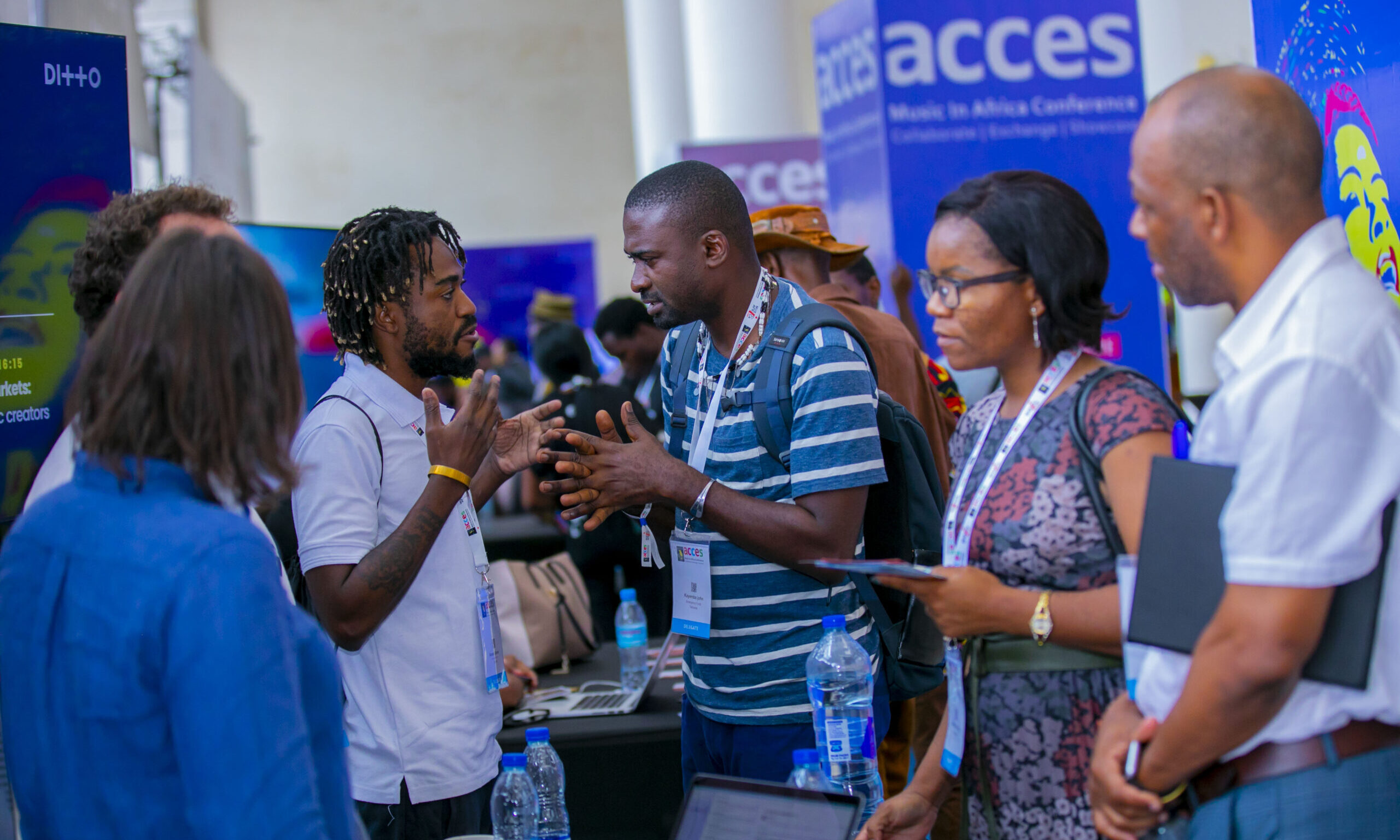
ACCES Conference and Showcase Festival is Africa's leading music industry gathering, bringing together the people shaping the future of the continent's music business. Artists, entrepreneurs, executives, investors, policymakers and cultural leaders from across Africa and around the world come to ACCES to build partnerships, exchange ideas, discover talent and create new business opportunities. Since its launch in 2017, ACCES has become the continent's premier platform for professional exchange and music market development. Combining a high-level conference with a curated showcase festival, networking, exhibitions and industry programmes, ACCES offers a unique space where creativity meets business and where African music connects with the global industry.

Gender@Work
Gender@Work

Music In Africa Gender @ Work is a three-year training programme aimed at upskilling and increasing the participation of female professionals in the African music sector. Launched by the Music In Africa Foundation (MIAF) in April 2019, the programme is connected to the MIAF’s ACCES music conference – a pan-African event held in a different African country every year. This connection enables the programme to reach new participants in a different African country every year. The programme marks the beginning of a more concerted effort by the Foundation to support the participation and inclusion of women in all facets of its programmes and the music sector in Africa as a whole. Over the three years, the programme will aim to address gender imbalances in the sector through training, lobbying, facilitating knowledge exchange and dialogues that foster the interest of women. The broader objectives of the programme are to: Provide industry training for women on critical music industry skills, focusing on: Stage management Electronic music production and recording Music business management Technical knowledge Provide an opportunity for both professional and aspiring women to benefit from the Music In Africa network and its broad range of activities in 2019, 2020 and 2021. Provide a solution-based platform in the form of a round table at ACCES with a view to identify challenges, discuss opportunities and lobby for the interests of female practitioners. Offer participants the opportunity to benefit from programmes offered by MIAF’s partners. Increase access to educational materials. Integrate participants in the broader ACCES programme to maximise experience and exposure to the industry. Record and present training materials on the www.musicinafrica.net, including but not limited to tutorials, templates and other best-practice materials. Communicate women-based themes that support the initiatives and messages of the programme. MAIN TRAINING ACTIVITIES Training in first country (Ghana): In the first year, participants will be trained on all aspects of stage management by a team of experienced stage managers from 10 to 17 November 2019. The programme will offer robust classroom training as well as practical, hands-on training in which participants will also be given the opportunity to manage various aspects of the ACCES performance programme. Training in second country: The second training iteration will take place at ACCES 2020 when the programme will diversify its course to include music production lessons and training on other music business topics. A round-table platform will also be introduced to coincide with the ACCES programme. Training in third country: The third training iteration will take place at ACCES 2021 in a different country, offering an advanced course. HOW DO YOU GET INVOLVED?  As a participant, facilitator or trainer: The programme enrolls up to 12 trainees every year. All opportunities are advertised publicly on this website, and will be added to this page. Please keep checking this page for new calls (below under UPDATES & CURRENT OPPORTUNITIES). As a partner Please contact Claire Metais at [email protected]. APPLY The call for applications for 2020 will be announced soon. The Music In Africa Gender @ Work programme is made possible with the support of the Prince Claus Fund, Siemens Stiftung and Goethe-Institut.

Sound Connects Fund
Sound Connects Fund

For cultural and creative practitioners and organisations operating in southern Africa, access to funding remains a major challenge. The COVID-19 pandemic has also had a massive impact on government policy, spending and the economy in general, and has seen spending on culture being moved further down the list of priorities. Further, the cultural and creative industries repeatedly cite four main areas where investment is needed for growth, which are increased visibility, mobility including access to new markets, finance and support structures.

Instrument Building And Repair Project

Experience the Vibrations African Instruments Exhibition online in 3D

Features

10 of the best: Olamide

10 Aug 2016 - 18:51

cc-img flag-img

Over the past five years, Olamide has become one of the most consistent performing acts in Nigeria. So that by the end of 2015, he was Nigeria's most watched artist on YouTube. 

Olamide is perhaps the most listened-to artist in Nigeria

All of his five albums—Rapsodi (2011), YBNL (2012), Baddest Guy Ever Liveth (2013), Street OT (2014), Eyan Mayweather (2015)—have met with some success. When the last one was released, it knocked off British popstar Adele from the number 1 spot on iTunes Nigeria.

With albums released every year since 2011, part of Olamide's formula for success has been the relentless release of music in mostly rap and pop genres. For the list which follows, only songs in the rap genre have been considered, with the exception of 'Melo Melo,' a unique item in the Bariga-bred rapper's catalogue.

While this list takes into account the indigenous nature of Olamide’s music, it also considers such aspects as lyrics, wordplay, rhyme and delivery, elements common to most songs in the hiphop genre.


10. Jesu O'kola (translation: Jesus has no tribal mark)

Produced by Pheelz, this song off Olamide’s sophomore album YBNL talks about succeeding despite not belonging to any group and sticking to indigenous rap. He even provides an early Nollywood reference: "Olamide ja won l'aya bi Karashika" (Olamide puts fear in them like ‘Karashika’—a horror film also alluded to by Falz.)

Aduke's accompanying vocals provide a mellifluous lift to the painstaking verses and gives it a polish absent on any other song on the album.


9. Sitting on the Throne

This is one of the high points of Olamide’s Baddest Guy Ever Liveth album. ‘Sitting on the Throne’ is a laid back song with almost no punch line or wordplay. Nevertheless, it is a defining song, with its pacific chorus providing a deathblow to people hoping for a beef between Olamide, MI and Reminisce. He says in the chorus: "Fuck what you've heard, everybody na king for him lane."


8. Rayban Abacha

Released as a single intended to be part of a street mixtape that never saw the light of day, ‘Rayban Abacha’ has a seamless thread of punchlines as first verse.

On it, Olamide holds onto the insularity of his Yoruba rap: "l'm running around getting dough...I don't care if you don't hear me though." Elsewhere he says, "I'm chopping chopping rappers, bimpe ewedu Ni m'on to." (rough translation: I'm chopping rappers, like I'm separating leaves from their stalk.)


7. Anifowoshe

A partly biographical song that tells the story of the young rapper's childhood in the slums of Bariga where threats from landlords and extreme poverty forced him into finding himself. The song samples KWAM 1's eponymous song, and the video is enough to water one's eyes especially if one shares a similar rags to riches story.

Olamide captures his childhood suffering in the second verse where he goes: "Sorrows and tears ma fi mi se catwalk, won ma tun se high-five." (sorrows and tears played with me so much and even high-fived me afterwards.)


6. Hustle Loyalty Respect.

With the exception of ‘Local Rappers,’ ‘Hustle Loyalty Respect’, by Olamide and Reminisce make other collaborations between the two sound like child’s play.

Olamide goes first: "Won Ni o je ka ni beef, beef is part of hiphop." (They say we should be rivals, rivalry is part of hiphop). Reminisce replies on the second verse, "O tu wa ninu video, mo ro pe e ni beef ni, attitude e yen da gan, iwa yi, gift ni." (You are appearing in his video. Shouldn't you be rivals? You must have a good attitude. Your character must be a gift."


5. Melo Melo

A melodious song about two lovers, ‘Melo Melo’ is Olamide's attempt at a love ballad, with a violin enveloping the song. This song lured Olamide-neutrals and scorners as much as it beguiled fans.


4. Voice of the Street (V.O.T.S)

This is one of the best songs on the YBNL album. It is more or less a pledge of allegiance to the streets. He addresses those who want him to rap more in English than Yoruba. He asks them "Se Lil Wayne gbo Yoruba?" (Does Lil' Wayne understand Yoruba?)


3. Eni Duro

The street anthem. This song, alongside its jaw-dropping street-themed video is what brought Olamide into prominence. ‘Eni Duro’ is a near five-minute song of completely unconnected yet rightly placed sentences. It is a self-acclamatory song that tries hard not to be bumptious.


2. Ilefo Illuminati (The swagger of an illuminati).

Olamide quotes KWAM1, the fuji artist he samples on 'Anifowoshe', and modifies Julius Caesar's "veni vedi vici", implying that he is going to be in the music scene for a long time, his swift rise notwithstanding. The song employs eerie, semi-occultic sounds similar to Jay Z's Onto the next One.


1. Young Erikina (Young Monster)

Tagged by some as the greatest Olamide song that never made it into an album. Young Erikina was released as a promo single following the success of Rapsodi. The eerie sounds which would become synonymous with some of his other rap songs are used here. There are references to Ishawuru and Ayamatanga, monster-like creatures from '90s Nigeria television. The rhyme on 'Young Erikina' is flawless, and at some point involves the use of three different languages in sequence.

Please log in to post a comment.

Most popular

Disclaimer: Music In Africa provides a platform for musicians and contributors to embed music and videos solely for promotional purposes. If any track or video embedded on this platform violates any copyrights please inform us immediately and we will take it down. Please read our Terms of Use for more.

newsletter banner

Subscribe to our monthly Newsletter

Follow us on social media