




















































By Arnaud Ratafika
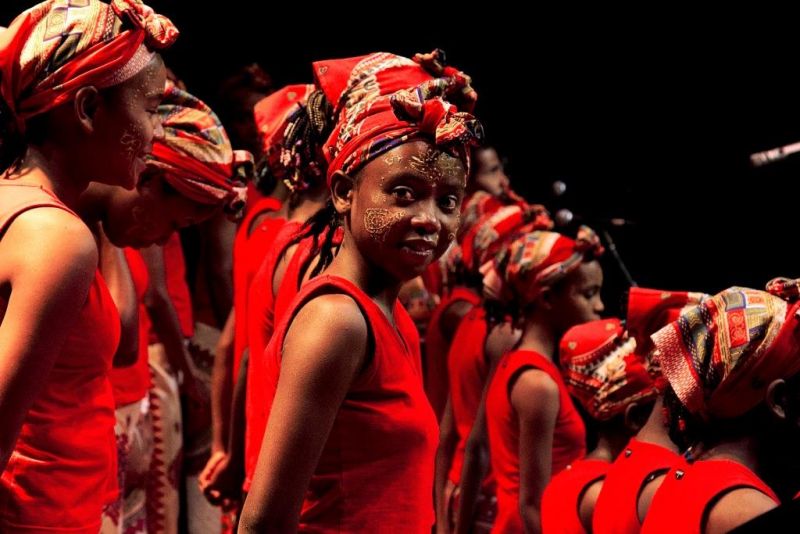
It is said that about 80% of the population of Madagascar is devout, particularly the youth. As a means of expression and as a musical style, gospel has nowbecome a social phenomenon that touches the hearts of the people of Madagascar by the force of its message and energy of its melody. The text provides an overview of the genre.
Origins
The originsof religious music in Madagascar date back to the arrival of Christianity on the Big Island in the 1800s. Queen Ranavalona II promulgated regulations that stipulated religious freedom (among other provisions) after a long period of Christian persecution in the past. According toTsiory Razafinorovelo, a researcher in cultural mediation,“After this painful time, the people of Madagascar readily adopted the Christian religion and liturgical music. Moreover, this religion was already close to the moral rules governing social conduct at the time.”The people of Madagascar were indeed respectful of human values and of nature.
Madagascan gospel finds its roots in the experience of Madagascar. Imbued in its art and history, it has always been the music of a people that believes in obtaining deliverance through songs. “Gospel was a way of getting rid of the sorrows and frustrations of the past by turning to God. It is also a way of returning back to the values of Madagascar,”adds Tsiory.
If at its core Madagascan gospel was a way of preaching the gospel, over time it has become a style rooted in the Madagascan musical landscape. In 2000, gospel was promoted in Madagascar through the AMAM Choir, affiliated with the protestant church FJKM Andrainarivo Fahasoavana. Since then, gospel groups have continued to multiply, either within specific religious denominations or outside them.
Gospel in religious institutions
Gospel music is important in Madagascar,be it in the Catholic, Protestant or Evangelical denominations. Madagascan gospel is primarily a means of preaching the gospel.The music is rooted in the culture of Madagascar and facilitates the immersion of ‘the Word’.“Our choir aims to spread the word and proclaim the glory of God through this musical genre,” says MiarivelontsoaRahaganisainana, a choir member of FJKM Andrainarivo Fahasoavana.
Gospel is also very popular among the youth and is therefore an effective way of attracting and educating young people in Madagascar. “Our choir is a true school of life, where members learn to shape their personalities and develop their human qualities,” says Patrick Andrianarivo of the Evangelical churchShyn.
Moreover, gospel is a way of expression. “With gospel, we sing what we live. It is not fictitious. It is a communication through music of our relationship with God. It’s lively and sincere,”says Yves Randrianalison, leader of the APF choir,affiliated with Catholic church Notre Dame de Lourdes.
Leading gospel bands
Created in 2004, the Tana Gospel Choir (TGC)[i] is among the leading groups inthe local gospelscene. TGC has released three albums and tour nationally, as well as in Europe and Brazil. In 2010, TGC was awarded a prize for best gospel single at the RDJ Music Awards in Antananarivo. “Apart from the spiritual side of this genre, our goal is to produce music of good quality, attracting both the Madagascan and international public. Werelyheavily on the quality of our work,”says Fidy Rabearisoa, the group’sleader.
Another key group, the God’s Messengers Mass Choir (GMMC)[ii], influenced the history of gospel in Madagascar with the success of its first album Ho anao ioin 2008. Througha trend for urban music, the choir attracted the Madagascan youth.
The group Singers of Jesus also occupies an important place on the gospel scene in Madagascar with some 14 years of experience. The group has a repertoire that draws heavily on the American gospel star Kirk Franklin.
These big names have set their ambitions high by embracing the challenge of becoming increasingly professional for the glory of God and the promotion of Madagascan culture throughout the world. This is also the case with the AAMA Gospel d’Ambodiafontsy. In 2015 the group planned to undertake a series of performances abroad, including the Island of Reunion, South Africa, France and Switzerland.
Current trends
In Madagascar gospel has become the musical trend of the moment. According toNambintsoaRazafindralambo, a research student in musicology,“With gospel one has a bit of everything in Madagascar, ranging from Negro spirituals to fusion and standards. Each group tries to stand out.”For example, the TGC draws from the musical heritage of the Big Island, among other sources. The group uses traditional styles such as bahoejy, kidodo, malesa, beko, jijy, salegy and others as a basis for its creations. It then combines its arrangements with modern techniques (like funk and soul) to achieve the unique soundofMadagascan gospel.
Other artists opt for choral music styles along with the dominant trends of the times. For example, the GMMC, among others, has a rather urban influence and uses hip-hop and RnB as the basis of their repertoire. Others opt for adaptation, like the choir of the Evangelical church Shyn,whichseeks inspiration from the works ofAmerican artists such asas Israel Houghton and Don Moen.
In addition,gospel groups also take into account the musical genres that interest their audience. For example, Meva Gospel fromTamatave (on the east coast) chooses music with tropical flavors. Indeed, Meva Gospel sings in regional dialectson most of its tracks.
[video:http://www.dailymotion.com/video/xoc8j1_meva-gospel-zaho-ambilay_people autoplay:0]
While musical trends tend to multiply, some choirs prefer to stick to the original style. For example, the FJKM Ambohitantely[iii] choir, as others, still practiceNegro spirituals.
Beyond gospel
More than just a musical experience, gospel in Madagascar also exploresimportant social issues. For example, Malagasy Gospel is a choir formed in 2008 by about 200 visually impaired youngsters from Tuléar (or Toliara, in the south). The choir is already credited with a dozen European tours.“We hope that disadvantaged children can learn, on the one hand, to work in teams and be part of a community, and on the other, develop their skills through art and music,” said a representative of the NGO Bel Avenir,to which the choir is affiliated.
Apart from its social cause, gospel is also a great incubator of musical talent in Madagascar. For example, D-lain of TGC won the pan-African competition Castel Live Opera in 2012. “Gospel has been a training ground for me, be it on the artistic or spiritual levels,” says D-Lain. Deenyz, another rising star of the Madagascan music, joined the Meva Gospel choir as a founding member in 2006. In 2014 she won the Africa Island Talent contest. Many other popular Madagascan artists have also evolved out of gospel groups.


Most popular
Open call: 2026 Gender@Work music industry training in Johannesburg
09 Oct 2026

Top amapiano songs of 2026
16 Feb 2026

Call for applications: ACCES 2026 Emerging Artist Spotlight Competition
01 Oct 2026

Top Naija songs of 2026
31 Mar 2026

Top Afrobeats songs of 2026
19 Mar 2026
AFRIMA 2026: All the winners
12 Jan 2026
Disclaimer: Music In Africa provides a platform for musicians and contributors to embed music and videos solely for promotional purposes. If any track or video embedded on this platform violates any copyrights please inform us immediately and we will take it down. Please read our Terms of Use for more.

Subscribe to our monthly Newsletter
Follow us on social media


Please log in to post a comment.