









































NEFCISA
NEFCISA

The Music In Africa Foundation (MIAF) is proud of its partnership with the Industrial Development Corporation (IDC) as a Strategic Implementing Partner (SIP) for its Social Employment Fund (SEF). Through this collaboration, MIAF is running a national programme that is creating jobs, addressing skills gaps, and strengthening South Africa's creative industries — in line with the SEF's overarching goal to generate work for the common good and build community value through employment, social contribution, and inclusive economic participation. Operating under the banner NEFCISA (National Employment Facility for Creative Industries in South Africa), the initiative is recruiting and training participants, matching them with host organisations, and has already placed 1 500 workers across the country — surpassing its original target of 1 000. NEFCISA is delivered through a network of 20 host organisations spanning five provinces, who are actively hosting participants and contributing to work for the common good across South Africa's creative and cultural industries. Key Objectives: Support employment and entrepreneurship in the creative industries. Offer skills development and training programmes. Foster partnerships between public and private creative sectors. Promote South African creativity at both provincial and national levels Foster community development through social contribution.

ACCES
ACCES

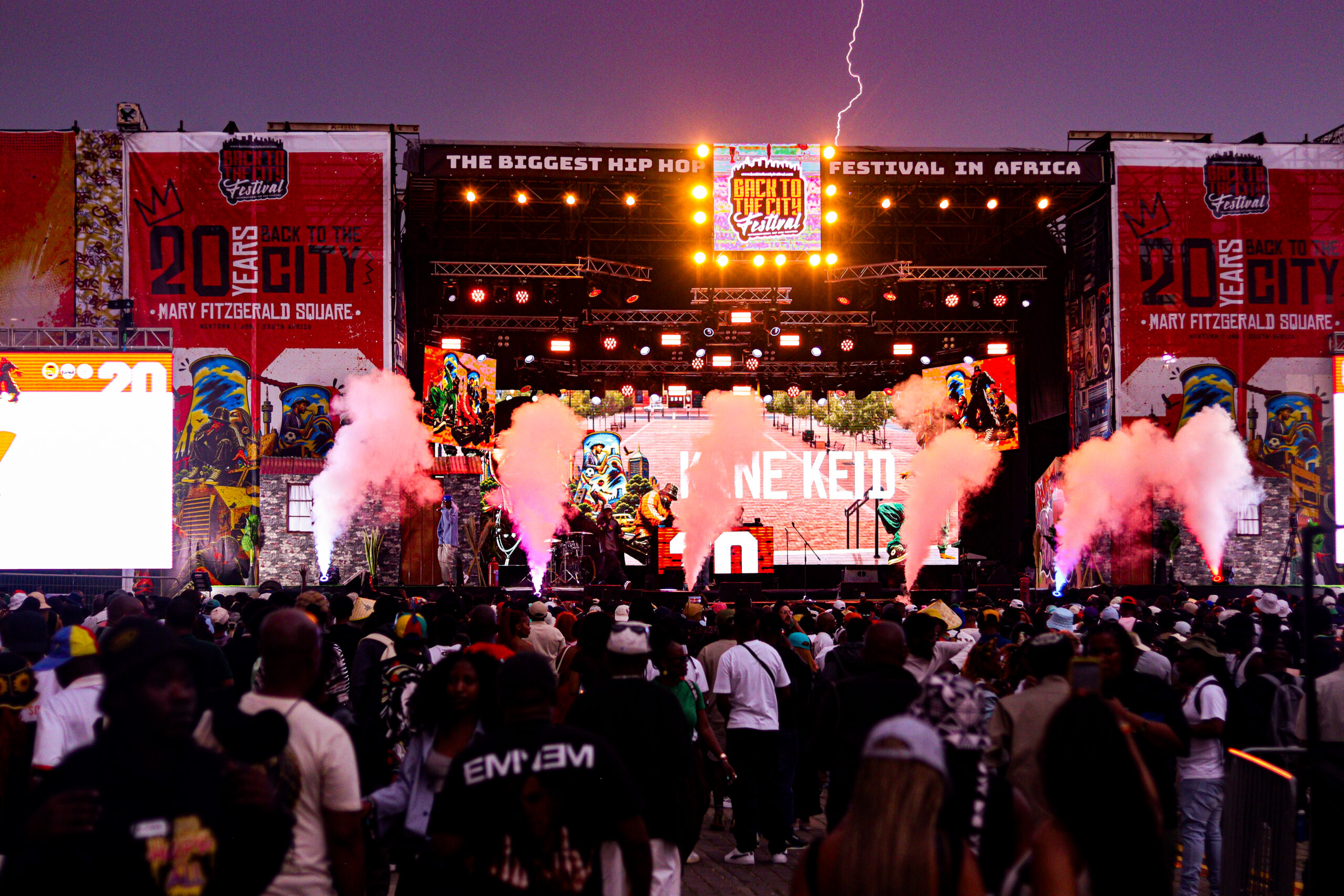
ACCES Conference and Showcase Festival is Africa's leading music industry gathering, bringing together the people shaping the future of the continent's music business. Artists, entrepreneurs, executives, investors, policymakers and cultural leaders from across Africa and around the world come to ACCES to build partnerships, exchange ideas, discover talent and create new business opportunities. Since its launch in 2017, ACCES has become the continent's premier platform for professional exchange and music market development. Combining a high-level conference with a curated showcase festival, networking, exhibitions and industry programmes, ACCES offers a unique space where creativity meets business and where African music connects with the global industry.

Gender@Work
Gender@Work

Music In Africa Gender @ Work is a three-year training programme aimed at upskilling and increasing the participation of female professionals in the African music sector. Launched by the Music In Africa Foundation (MIAF) in April 2019, the programme is connected to the MIAF’s ACCES music conference – a pan-African event held in a different African country every year. This connection enables the programme to reach new participants in a different African country every year. The programme marks the beginning of a more concerted effort by the Foundation to support the participation and inclusion of women in all facets of its programmes and the music sector in Africa as a whole. Over the three years, the programme will aim to address gender imbalances in the sector through training, lobbying, facilitating knowledge exchange and dialogues that foster the interest of women. The broader objectives of the programme are to: Provide industry training for women on critical music industry skills, focusing on: Stage management Electronic music production and recording Music business management Technical knowledge Provide an opportunity for both professional and aspiring women to benefit from the Music In Africa network and its broad range of activities in 2019, 2020 and 2021. Provide a solution-based platform in the form of a round table at ACCES with a view to identify challenges, discuss opportunities and lobby for the interests of female practitioners. Offer participants the opportunity to benefit from programmes offered by MIAF’s partners. Increase access to educational materials. Integrate participants in the broader ACCES programme to maximise experience and exposure to the industry. Record and present training materials on the www.musicinafrica.net, including but not limited to tutorials, templates and other best-practice materials. Communicate women-based themes that support the initiatives and messages of the programme. MAIN TRAINING ACTIVITIES Training in first country (Ghana): In the first year, participants will be trained on all aspects of stage management by a team of experienced stage managers from 10 to 17 November 2019. The programme will offer robust classroom training as well as practical, hands-on training in which participants will also be given the opportunity to manage various aspects of the ACCES performance programme. Training in second country: The second training iteration will take place at ACCES 2020 when the programme will diversify its course to include music production lessons and training on other music business topics. A round-table platform will also be introduced to coincide with the ACCES programme. Training in third country: The third training iteration will take place at ACCES 2021 in a different country, offering an advanced course. HOW DO YOU GET INVOLVED?  As a participant, facilitator or trainer: The programme enrolls up to 12 trainees every year. All opportunities are advertised publicly on this website, and will be added to this page. Please keep checking this page for new calls (below under UPDATES & CURRENT OPPORTUNITIES). As a partner Please contact Claire Metais at [email protected]. APPLY The call for applications for 2020 will be announced soon. The Music In Africa Gender @ Work programme is made possible with the support of the Prince Claus Fund, Siemens Stiftung and Goethe-Institut.

Sound Connects Fund
Sound Connects Fund

For cultural and creative practitioners and organisations operating in southern Africa, access to funding remains a major challenge. The COVID-19 pandemic has also had a massive impact on government policy, spending and the economy in general, and has seen spending on culture being moved further down the list of priorities. Further, the cultural and creative industries repeatedly cite four main areas where investment is needed for growth, which are increased visibility, mobility including access to new markets, finance and support structures.

Instrument Building And Repair Project

Experience the Vibrations African Instruments Exhibition online in 3D

banner image

La musique populaire au Bénin

Home/Non classé/La musique populaire au Bénin

Le Zinli

Autrefois appelé Avi-zinli, le Zinli est un rythme traditionnel béninois généralement exécuté lors des funérailles. Mais, il a évolué et présente aujourd’hui un caractère beaucoup plus festif, sans pour autant perdre son authenticité. Il se danse avec beaucoup de légèreté et de flexibilité par les fils et filles du Danxomè.

L’histoire du Zinli remonte au temps des Rois du Danxomè. Le prince Gbéyin, futur roi Glèlè (1858 – 1889) de Danxomè aurait créé le Zinli au XIXè siècle à l’occasion des funérailles d’un des amis de son père, le roi Guézo.

Depuis lors, ce rythme funéraire du plateau d’Abomey a gardé cette renommée initiale avant de s’inscrire dans le registre des musiques populaires. Mais si le Zinli a pu retrouver toute sa notoriété, c’est grâce à la touche particulière de Michel Loukou, plus connu du public sous le nom « Alèkpéhanhou ».

La touche que l’artiste Alèkpéhanhou a apportée au Zinli à partir des années 1980 l’a fait connaître jusqu’aux extrémités de la terre. Grâce à son travail rénovateur, le roi du Zinli est sollicité sur bon nombre de festivals européens.

Des artistes tels que Sèmèvo, Abido et Alemadjohando du plateau d’Abomey excellent depuis peu dans la pratique de ce rythme. Le Zinli se joue avec les Kpézin qui sont des tam-tams ayant deux formes nuancées par la taille : Kpézinnon et Kpézinvi. On leur associe un vase tambour ayant donné son nom au rythme : Zinli.

Tout cela se fait accompagner des sons de gongs, de hochets et battements de mains soutenus par des chants et danses. Aujourd’hui, des artistes comme Norbèka, Anice Pépé et bien d’autres exécutent aussi ce rythme.

Le Noudjihou

Le Noudjihou est une musique créée par l’arrangeur Willy Mignon un peu avant 2010. Pour le danser, il faut balancer le pied de chaque côté et faire le jeu avec la main aussi, sous forme d’écriture. Ou bien, pour l’autre phase, le Noudjihou classique, il faut garder juste la ceinture, ou bien la hanche, ou bien la robe au niveau de la hanche et balancer aussi les pieds de chaque côté.

Aujourd’hui, plusieurs déclinaisons de cette musique existent. On a le Noudjihou « Chécaro » qui demande de balancer les deux mains de chaque côté et, chaque fois que tu balances le pied d’un côté, les deux mains vont dans le même sens.

Cette musique a été portée au public à travers le titre « Mindédji ». 

Le tchenkumèn

Le tchenkumèn est une musique traditionnelle et populaire. Elle est jouée pendant les cérémonies. Les membres du club assissent sur des bancs formant un cercle autour du griot. Les femmes d’un côté et les hommes de l’autre. Le griot, près des batteurs, entonne des chants.

Pour danser, on se lève deux par deux en mettant tout le corps en mouvement, les bras légèrement ouverts.

Agbadja, pour célébrer l’effort

Agbadja est une danse de réjouissance principalement dansée dans le sud du Bénin (Aire culturelle Adja-Tado).

À l’origine, c’était une danse de pêcheurs du Ghana, qui se retrouvaient après une bonne journée de travail : danse alternativement lente et légère puis brutale énergique, faisant intervenir de fort mouvements d’épaules.

Les ouvriers quittant le Togo et le Bénin et même la côte du Nigeria pour travailler au Ghana, importaient ainsi à leur retour chez eux ce rythme de réjouissance emprunt alors de leur propre culture. Le rythme Agbadja se retrouve jusqu’au nord du Bénin.

L’Agbadja transmet beaucoup de messages : il y a des cadences qui caractérisent la tristesse, la joie et l’amour, ainsi que les faits quotidiens, à travers des instruments tels que Agbahoun (le grand tam-tam), Kpessi (le tam-tam moyen), Kléoun (le petit tam-tam), Gankokoué (Gong), Assogoé et Atcha (Castagnettes).

Pour danser l’Agbadja, il faut un pagne au niveau de la hanche, un tee-shirt, une serviette au cou pour les hommes (notamment à Grand Popo). Pour les femmes un pagne à la hanche, un autre solidement noué à la poitrine.

La danse sollicite surtout les membres supérieurs qui se balancent et s’écartent alternativement. Les deux omoplates doivent se toucher pour un bon danseur. Les pieds martèlent le sol alternativement lentement ou vivement selon que le rythme s’accélère ou non.

Du point de vue national qu’international, de nombreux artistes popo ont porté haut le flambeau du Bénin comme : Marcel Kpade, Adjignon, Africawe, Ebawade et la nouvelle étoile filante du Zouk Richard Flash tous originaires de la commune de Grand-Popo.

Sur le plan traditionnel, on peut citer Gbessi, un artiste qui fait du Agbadja modernisé, du « tradi-moderne ». Ce cocktail de styles lui a valu le trophée de Sun City en Afrique du Sud dans la compétition des meilleurs artistes de diverses catégories : Kora 2002.

Fokpaï

C’est une danse culturelle du Nord-Bénin et qui se produit principalement lors des manifestations populaires. Le Fokpaï se danse dans les régions du nord est du Bénin telles que Parakou, Pèrèrè, N’Dali et Nikki, haut lieu de la civilisation Baatonou.

Les instruments utilisés pour ce rythme sont presque identiques à celui du Tèkè (voir rubrique « éléments immatériels associés »), en l’occurrence un grand tambour et un petit tambour qui l’accompagne appelé tambour « parlant ». À cela s’ajoutent des claquements de mains.

Ce rythme est exécuté aussi bien par les hommes que par les femmes lors de manifestations populaires telles que la Gaani (voir rubrique « éléments immatériels associés »).

Pour danser le Fokpaï, les danseurs font des mouvements de jambes en tapant du pied sur le sol (pointe des pieds). Leurs bras sont souvent tendus, buste figé, le tout accompagné des cris que lancent les femmes. Le personnage principal se tient debout devant les danseurs avec un miroir face à lui.

Une multitude de musiques populaires se créent selon les périodes au Bénin. Et rares sont celles qui se perpétuent.

En général, il faut que ces musiques soient adoptées par une communauté. D’où le nombre de musiques populaires traditionnelles élevé. Par contre, les musiques urbaines durent souvent le temps des vacances. La faute aux tendances musicales étrangères qui gagnent rapidement les cœurs des Béninois.

newsletter banner

Subscribe to our monthly Newsletter

Follow us on social media