










NEFCISA
NEFCISA

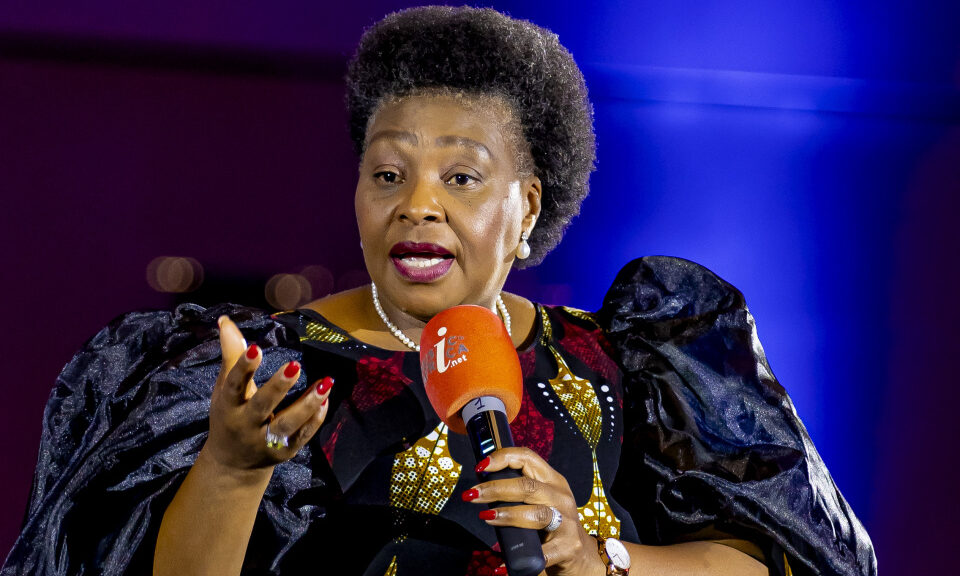
The Music In Africa Foundation (MIAF) is proud to announce its partnership with the Industrial Development Corporation (IDC) as a Strategic Implementing Partner (SIP) for its Social Employment Fund (SEF). Through this collaboration, MIAF is launching a new national programme designed to create jobs, address skills gaps, and strengthen South Africa’s creative industries — in line with the SEF’s overarching goal to generate work for the common good and build community value through employment, social contribution, and inclusive economic participation. Operating under the banner NEFCISA (National Employment Facility for Creative Industries in South Africa), the initiative will recruit and train participants, match them with host organisations, and place a minimum of 1 000 workers across the country. Key Objectives: Support employment and entrepreneurship in the creative industries. Offer skills development and training programmes. Foster partnerships between public and private creative sectors. Promote South African creativity at both provincial and national levels Foster community development through social contribution.

ACCES
ACCES

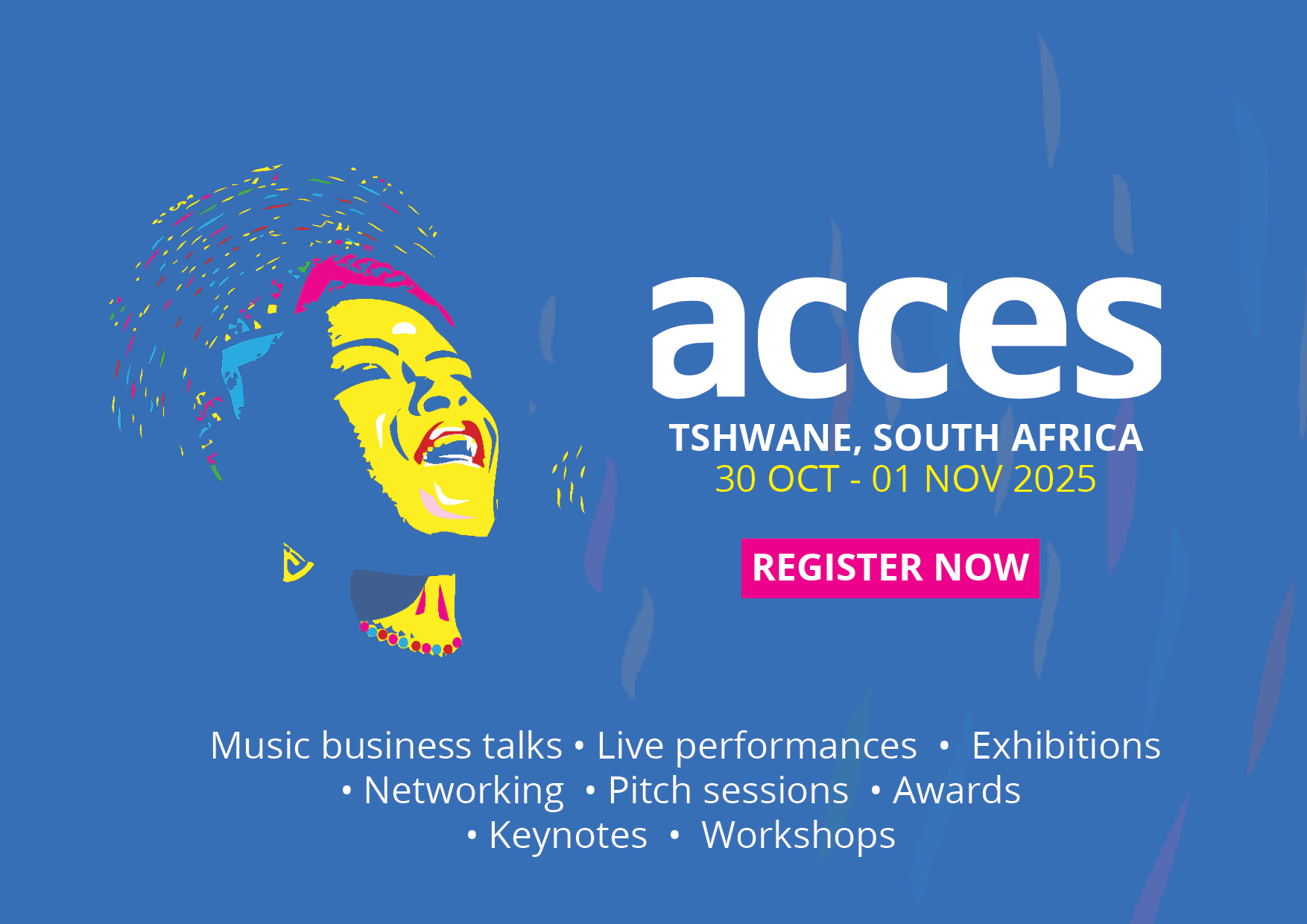
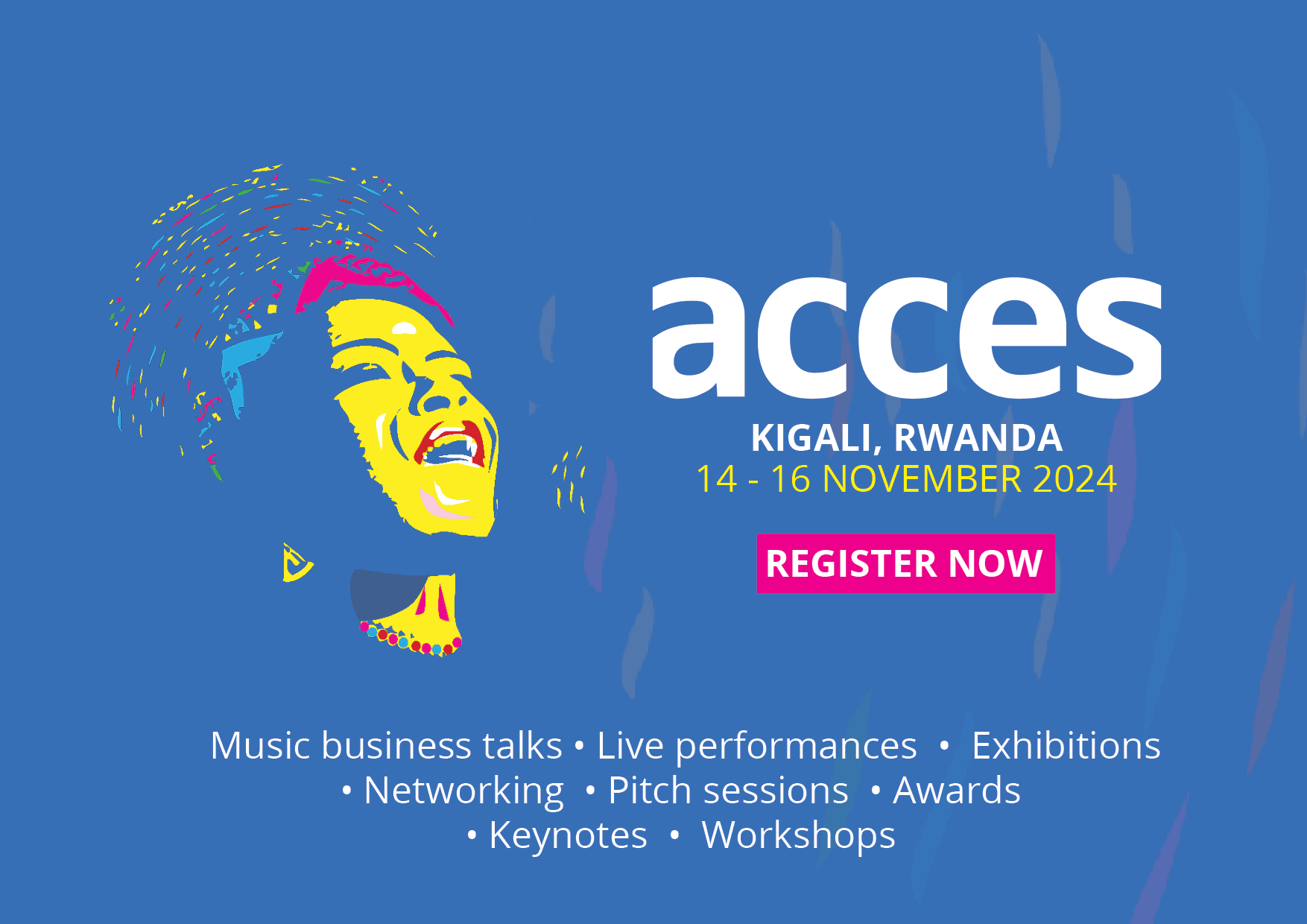
Chaque année, nous fournissons des informations générales afin de guider les participants dans la préparation de leur voyage. En plus de ce site, des mises à jour importantes seront envoyées par e-mail à tous les délégués inscrits. Assurez-vous de vous inscrire dès que possible. Pour plus d'informations, veuillez contacter [email protected] Continuez à consulter cette page pour plus d'information.  

Gender@Work
Gender@Work

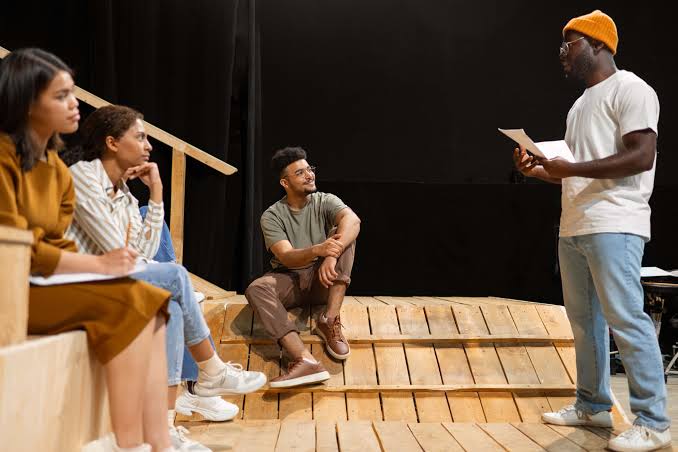
Music In Africa Gender @ Work is a three-year training programme aimed at upskilling and increasing the participation of female professionals in the African music sector. Launched by the Music In Africa Foundation (MIAF) in April 2019, the programme is connected to the MIAF’s ACCES music conference – a pan-African event held in a different African country every year. This connection enables the programme to reach new participants in a different African country every year. The programme marks the beginning of a more concerted effort by the Foundation to support the participation and inclusion of women in all facets of its programmes and the music sector in Africa as a whole. Over the three years, the programme will aim to address gender imbalances in the sector through training, lobbying, facilitating knowledge exchange and dialogues that foster the interest of women. The broader objectives of the programme are to: Provide industry training for women on critical music industry skills, focusing on: Stage management Electronic music production and recording Music business management Technical knowledge Provide an opportunity for both professional and aspiring women to benefit from the Music In Africa network and its broad range of activities in 2019, 2020 and 2021. Provide a solution-based platform in the form of a round table at ACCES with a view to identify challenges, discuss opportunities and lobby for the interests of female practitioners. Offer participants the opportunity to benefit from programmes offered by MIAF’s partners. Increase access to educational materials. Integrate participants in the broader ACCES programme to maximise experience and exposure to the industry. Record and present training materials on the www.musicinafrica.net, including but not limited to tutorials, templates and other best-practice materials. Communicate women-based themes that support the initiatives and messages of the programme. MAIN TRAINING ACTIVITIES Training in first country (Ghana): In the first year, participants will be trained on all aspects of stage management by a team of experienced stage managers from 10 to 17 November 2019. The programme will offer robust classroom training as well as practical, hands-on training in which participants will also be given the opportunity to manage various aspects of the ACCES performance programme. Training in second country: The second training iteration will take place at ACCES 2020 when the programme will diversify its course to include music production lessons and training on other music business topics. A round-table platform will also be introduced to coincide with the ACCES programme. Training in third country: The third training iteration will take place at ACCES 2021 in a different country, offering an advanced course. HOW DO YOU GET INVOLVED?  As a participant, facilitator or trainer: The programme enrolls up to 12 trainees every year. All opportunities are advertised publicly on this website, and will be added to this page. Please keep checking this page for new calls (below under UPDATES & CURRENT OPPORTUNITIES). As a partner Please contact Claire Metais at [email protected]. APPLY The call for applications for 2020 will be announced soon. The Music In Africa Gender @ Work programme is made possible with the support of the Prince Claus Fund, Siemens Stiftung and Goethe-Institut.

Sound Connects Fund
Sound Connects Fund

Pour les praticiens et les organisations culturels et créatifs opérant en Afrique australe, l’accès au financement reste un défi majeur. La pandémie de COVID-19 a également eu un impact massif sur les politiques gouvernementales, les dépenses et l’économie en général, et a vu les dépenses consacrées à la culture reléguées plus bas dans la liste des priorités. De plus, les industries culturelles et créatives citent régulièrement quatre domaines principaux où l’investissement est nécessaire pour la croissance : une visibilité accrue, la mobilité incluant l’accès à de nouveaux marchés, le financement et les structures de soutien.

Music In Africa Live

MUSIC IN AFRICA LIVE Lancé en 2020 pour une durée de 3 ans, Music In Africa Live est une initiative visant à soutenir l'écosystème de la musique africaine face aux contraintes imposées par la pandémie de COVID-19 ; le projet a été lancé par la Fondation Music In Africa (MIAF) en partenariat avec le ministère fédéral allemand des Affaires étrangères, Siemens Stiftung et le Goethe Institut. Plus de 30 aides sont disponibles dans le cadre de la troisième édition de Music In Africa Live, dans 3 catégories :  showcases, renforcement des compétences et plaidoyer, en conformité avec les modalités énoncées.

Instrument Building And Repair Project

The overarching objective of Music In Africa Foundation’s Instrument Building and Repair (IBR) project is to encourage the formalisation and professionalisation of instrument-making and repair in Africa, especially in relation to indigenous African instruments. Background In 2014, the Music In Africa Foundation (MIAF) identified as one of its focus areas for development the need to encourage young people from music and music-related sectors to consider instrument-making as a career. This need extended itself from the recognition that the making of traditional African instruments is not a widely practiced skill and seems to be limited to the older generation. Traditional African instrument makers are also few and far between, making communication and logistics between teachers and learners an obstacle. When instrument building workshops take place, budgetary constraints do not allow teachers or learners the time to explore the finer details of an instrument. Based on these observations, the MIAF designed and piloted the first IBR workshop at the Dhow Countries Music Academy (DCMA) in Zanzibar in February 2015. In 2016, the foundation received funding from the South African National Lotteries Commission to implement a much bigger version of the project in Johannesburg. The project drew participants from five African countries. 25 students from South Africa, Ghana, Senegal, Kenya and Ethiopia were trained on how to build and repair musical instruments. The instruments that they made were: Traditional Instruments: Umakhweyana and Marimba Conventional Instrument: Dulcimer guitar The workshop culminated in a traditional instruments concert at the Wits Theatre in Johannesburg. It is the MIAF’s aim to roll out similar workshops in as many African countries as possible over the next few years. Objectives Developing awareness of musical instrument makers in Africa with a view to promote their work to a wider global audience. Facilitating the sharing and transfer of skills in indigenous instruments between countries on the continent. Encouraging the formalisation and professionalisation of instrument-making and repair in Africa, especially in relation to indigenous instruments. Helping instrument makers develop their careers. Fostering the rapid monetisation and sustainable development of instrument-making and repair in Africa. Promoting constant exchange of ideas, expertise, experiences and know-how among instrument makers in Africa. Facilitating the identification of existing gaps in the field with a view to contribute new solutions. Facilitating the transfer of knowledge and skills of indigenous instruments between younger and older generations. 2020 edition The MIAF has also announced that multi-instrumentalist and instrument maker Joe Makhanza will facilitate one of the workshops on the building of the kamale ngoni instrument. Kamale ngoni is a kora-like, stringed instrument that originated in West Africa. The instrument contributed to the rise of Wassoulou music in the 1970s and 1990s. Makhanza was born in Giyani in South Africa's Limpopo province. He completed a bachelor of music degree and a post-graduate diploma in arts marketing from Wits University. He is currently completing his masters in ethnomusicology and is a part-time lecturer in African music studies at Rhodes University. He plays the kora, mbira, valiha, masenqo, xiwewe, ngoni ba and xizambi, among others. He also manufactures the aforementioned instruments. The MIAF will confirm more trainers who will join the workshops as well as the other instruments that will be featured in the 2020 IBR programme.  Apply to participate here. Connect with us on Twitter, Instagram and Facebook, and subscribe to our monthly newsletter. The Music In Africa Instrument Building and Repair project is funded by the National Lotteries Commission. It is implemented in partnership with Siemens Stiftung, Goethe-Institut, Wits Theatre and Kaya FM.

banner image

Hiplife in Ghana

Accueil/Non classé/Hiplife in Ghana

Origins

Generally, hiplife can be defined as a Ghanaian musical style which fuses highlife and some elements of hip-hop. It is often characterized by simple Twi lyrics (with several other Ghanaian languages used later) over hip-hop beats, with highlife samples and/or palmwine rhythms.

The subject of who is the specific originator of hiplife is a controversial matter, due to improper documentation at the time it first emerged in the 1990s. One cannot discuss hiplife without making mention of Reginald Yaw Osei, aka Reggie Rockstone. Though considered by some as the « Godfather of hiplife », there is much speculation as to whether or not he spawned the genre. The indisputable fact is that he is one of the main icons who facilitated its popularization by inspiring a host of imitators following the success of his 1997 debut album Makaa Maka, particularly the hit single ‘Choo Boi’.

Other pioneers of the genre include Da Multi Krew, a group based in Holland who were rapping in Twi as early as 1992. Talking Drums, consisting of Kwaku-T and Abeiku (now known as Jay Gartey) released the first ever hiplife video in 1994, ‘Aden’, produced by Panji Anoff, experimenting with a chorus in Twi before Reggie’s arrival. In this track, Panji sampled a highlife beat from C.K. Mann’s ‘Asafo Beson’, arranged by the legendary Ebo Taylor.

In the 1990s, musicians and producer/engineer Jay Q (real name Jeff Tennyson Quaye) also pioneered some of the earliest hiplife hits, introducing Jama or kpanlogo influences (traditionally associated with the Ga ethnic group) on songs such as as Buk Bak’s ‘I’m going to come’ and guiding the careers of artists such as Castro, Shilo and Dr. Doh.

Here is the twist, however: Gyedu Blay Ambolley as early as 1973 released ‘Simigwado’, which was dense with fast-spoken rapping portions in Fanti over jazzy highlife sounds, so some might argue that these tracks could also be termed hiplife.

Rise to mainstream

Reggie Rockstone’s first album Makaa Maka (1997) made waves and introduced a new sound to radio and dancefloors nationwide. The early years of Reggie’s music were characterized by sampling of older songs by the likes of Alhaji K. Frimpong and Fela Kuti. Reggie usually worked with engineers like Mike Cooke, Rab Bakari, Zapp Malet and Coal House.

Ace music producer Hammer of The Last Two (real name Edward Nana Poku Osei) brought into the mainstream Ghanaian hiplife acts Obrafuor and Kwaw Kese. Other influential producers of the genre include Kaywa, Killbeatz, Appietus and Mix Master Garzy, while Chicago is considered one of the pioneers of Ewe-language hiplife.

International appeal

In a line from the hit ‘African Rapper No 1’, Nigerian artist M.I raps: “This one na highlife and hip-hop combination”. The intriguing thing about hiplife is that it allows artists to perform and record internationally accessible music in the native tongue. Artists enjoy a relatively broad space for engaging their audience, both locally and globally, with the appeal of the energetic, danceable rhythms – even when listeners have no idea what is being said. It’s for this reason that Sarkodie, Edem, Tinny and other talented hiplife artists stand out.

Though Sarkodie raps in Twi, he has gained recognition on the international scene. His versatility is comparable to Yaa Pono, who also hails from Tema. In 2010 Sarkodie earned a nomination for the MTV Africa Awards (MAMA). In 2012, he became the first Ghanaian rapper to bring home a BET Award for the Best International Act (Africa). His nomination in 2014 at the BET Awards and his performance at the BET Experience’s ‘LA Live’ event on Saturday 28 June deepens his global relevance. As a trend-setting and inventive rapper, Sarkodie took his career international with clean-cut hit songs like ‘Lay Away’ (featuring Sway from the UK) and ‘Internationally Known’ with Blitz the Ambassador. He recently performed his hit track ‘Adonai’, recorded at Vivivi studio in Accra, exclusively for BBC Radio 1 Extra.

Edem (formerly known as Ayigbe Edem) currently writes most of his lyrics in Ewe. Edem rose to fame with the release of his maiden album, The Volta Regime, in 2008, which has songs like the hit ‘U Dey Craze’, ‘Bra Fremi Fremi’, ’ Nyornuviade’, ‘Give It Up’, ‘Emmre Sesa’ and ‘Lorlortor’, executively produced by Hammer of The Last Two. Edem’s 2012 video ‘Heyba’ was premiered to a worldwide audience on the influential American urban music show ‘106&Park’ on BET International.

[video:https://www.youtube.com/watch?v=rrLsW4yzwQI autoplay:0]


Tinny (full name Tinny Nii Addo Quaynorhas) has a phenomenal knack at making the Ga language sound appealing through music. His 2003 debut Makola Kwakwe was released simultaneously in Africa, Europe and North America and included the hit ‘Oofee Dull’, which helped put him in the international limelight. In 2009 he was named African Artist Of the Year at the Hip-Hop World Awards and picked up numerous nominations at the Ghana Music Awards in 2008 to 2010. Tinny used his status to sign lucrative deals with telecom giant Glo Ghana and Cadbury.

[video:https://www.youtube.com/watch?v=TCemR4g4K70 autoplay:0]


Related sub-genres

As hiplife has grown, it has given rise to a number of subgenres. For example, Jay-Q brought Asokpor to the mainstream, just as Sarkodie has popularized Azonto. Twi Pop is promoted by D. Cryme, while contemporary hiplife birthed GH Rap, a hybrid inspired by hiplife but with pidgin English lyrics. More recently, one can hear the influence global genres like dancehall and reggae making their way into hiplife music. Batman Samini is known to have perfected the mix of hiplife and Ragga, known as Raglife, a style that was pioneered by Terry Bonchaka.

Future predictions

In view of the widespread usage in popular music of global languages such as English, one might assume that Ghanaian artists use of local dialects might restrict their target markets, but the above successes shows that several few Ghanaian acts have managed to find international success not by imitating Western artists but by selling local sounds to a global audience. Language as a tool for communication in music cannot be disregarded, and has undoubtedly been a factor that bridges the local and the global and broadens the scope of appreciation for a song. Cultural cosmopolitanism has been the open forum that many creative and courageous Ghanaian hiplife artists have put across to their audiences, due to the fact that they are not afraid to put some ‘Ghana’ in their music.

Given the international success that hiplife artists have enjoyed to date, an optimist might assume that it’s only a matter of time before Ghanaian artists – regardless of the language used in their music – will be taking home Grammys and performing worldwide to enthusiastic fans. The future looks bright for hiplife.

newsletter banner

Abonnez-vous à notre newsletter

Retrouvez-nous sur les réseaux sociaux