















NEFCISA
NEFCISA

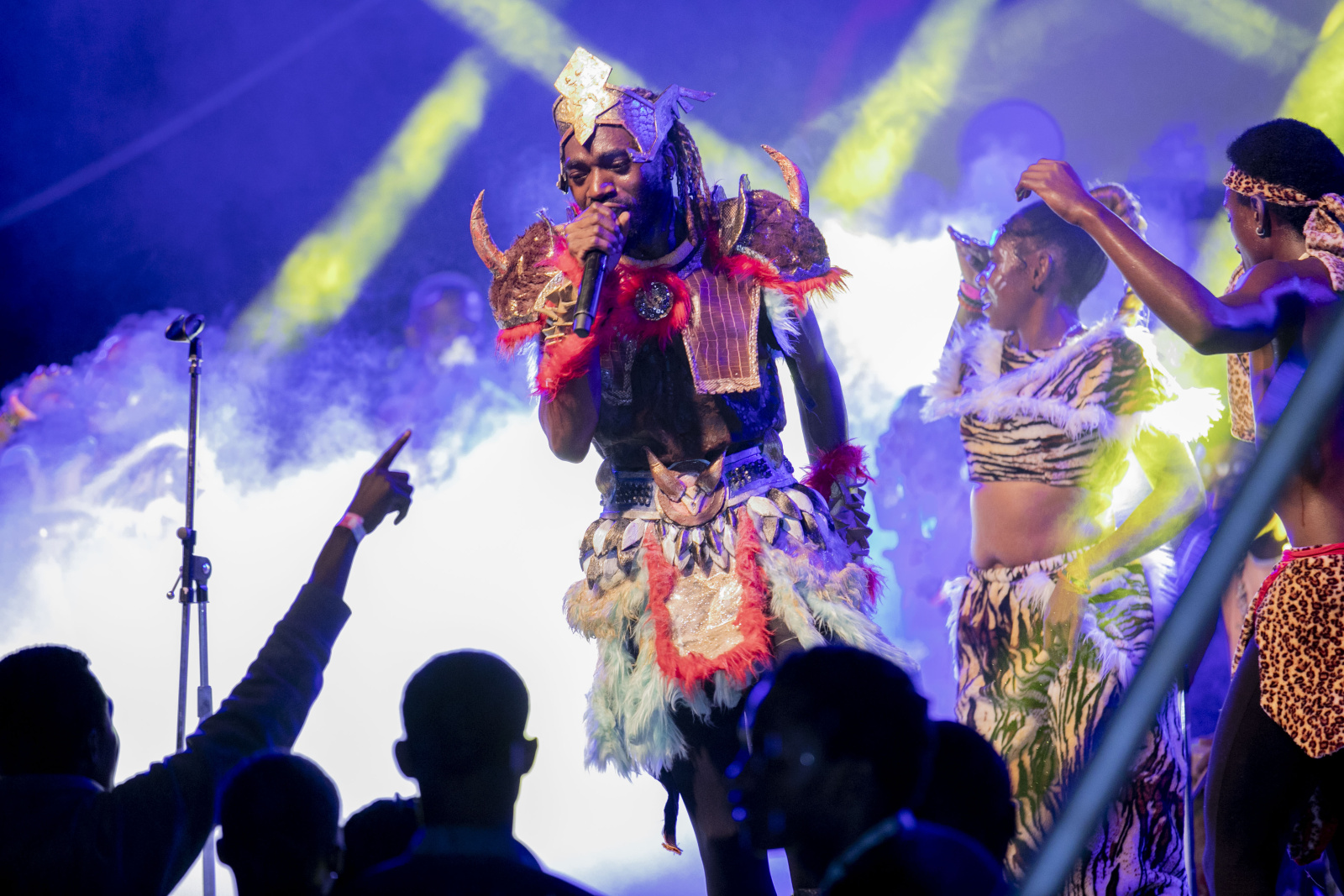
The Music In Africa Foundation (MIAF) is proud to announce its partnership with the Industrial Development Corporation (IDC) as a Strategic Implementing Partner (SIP) for its Social Employment Fund (SEF). Through this collaboration, MIAF is launching a new national programme designed to create jobs, address skills gaps, and strengthen South Africa’s creative industries — in line with the SEF’s overarching goal to generate work for the common good and build community value through employment, social contribution, and inclusive economic participation. Operating under the banner NEFCISA (National Employment Facility for Creative Industries in South Africa), the initiative will recruit and train participants, match them with host organisations, and place a minimum of 1 000 workers across the country. Key Objectives: Support employment and entrepreneurship in the creative industries. Offer skills development and training programmes. Foster partnerships between public and private creative sectors. Promote South African creativity at both provincial and national levels Foster community development through social contribution.

ACCES
ACCES

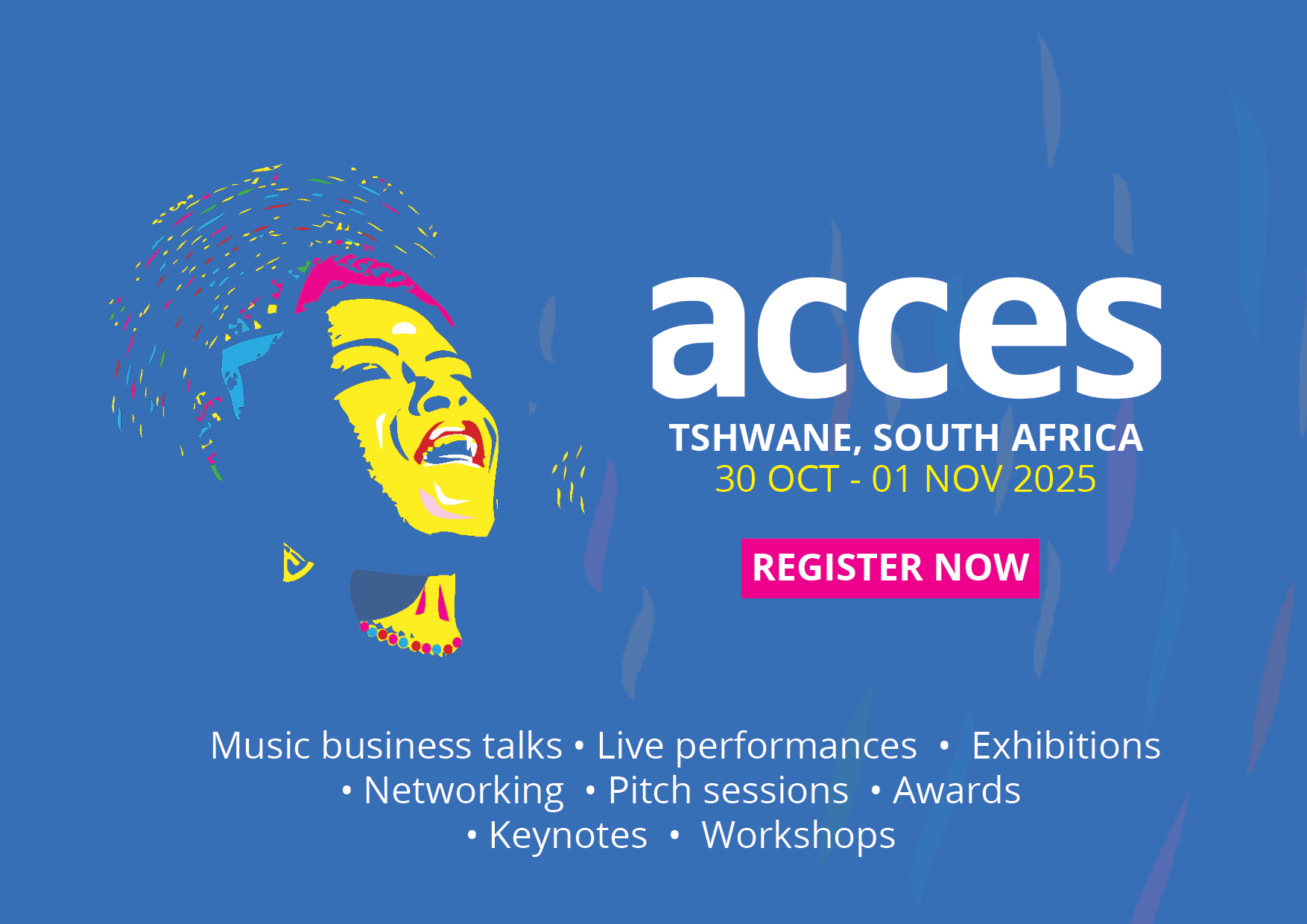
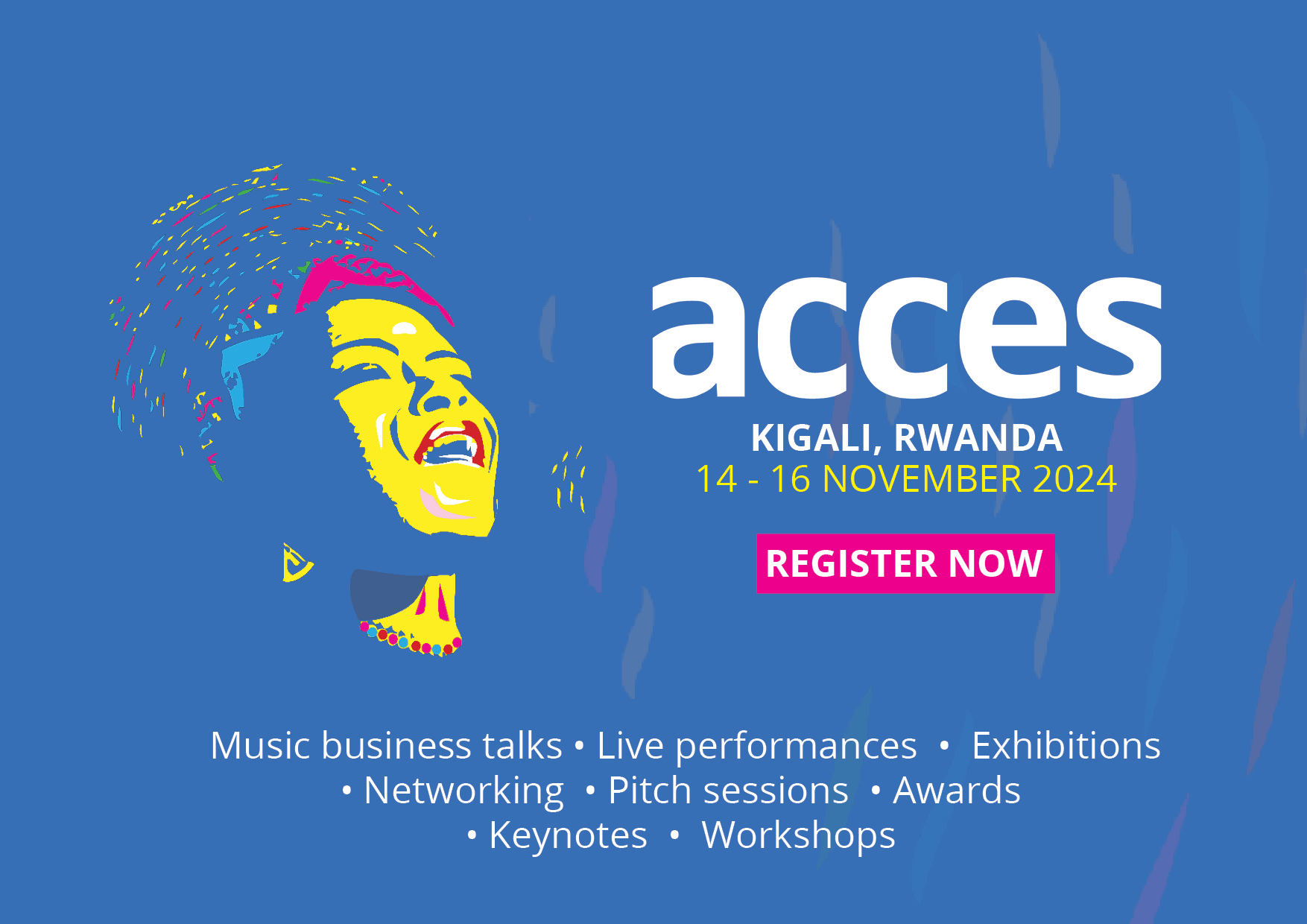
Chaque année, nous fournissons des informations générales afin de guider les participants dans la préparation de leur voyage. En plus de ce site, des mises à jour importantes seront envoyées par e-mail à tous les délégués inscrits. Assurez-vous de vous inscrire dès que possible. Pour plus d'informations, veuillez contacter [email protected] Continuez à consulter cette page pour plus d'information.  

Gender@Work
Gender@Work

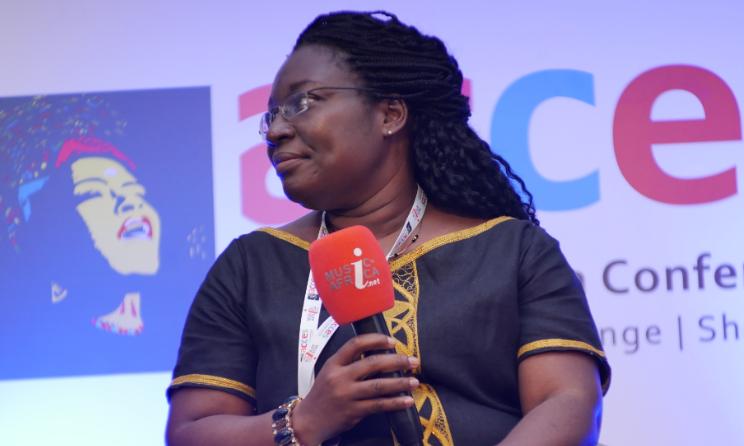
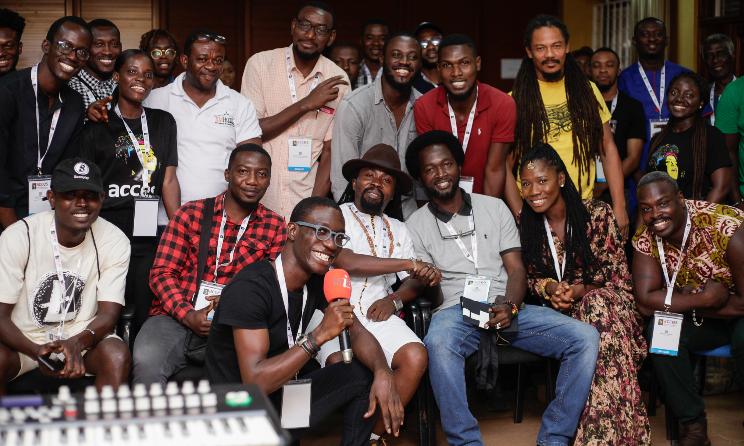
Music In Africa Gender @ Work is a three-year training programme aimed at upskilling and increasing the participation of female professionals in the African music sector. Launched by the Music In Africa Foundation (MIAF) in April 2019, the programme is connected to the MIAF’s ACCES music conference – a pan-African event held in a different African country every year. This connection enables the programme to reach new participants in a different African country every year. The programme marks the beginning of a more concerted effort by the Foundation to support the participation and inclusion of women in all facets of its programmes and the music sector in Africa as a whole. Over the three years, the programme will aim to address gender imbalances in the sector through training, lobbying, facilitating knowledge exchange and dialogues that foster the interest of women. The broader objectives of the programme are to: Provide industry training for women on critical music industry skills, focusing on: Stage management Electronic music production and recording Music business management Technical knowledge Provide an opportunity for both professional and aspiring women to benefit from the Music In Africa network and its broad range of activities in 2019, 2020 and 2021. Provide a solution-based platform in the form of a round table at ACCES with a view to identify challenges, discuss opportunities and lobby for the interests of female practitioners. Offer participants the opportunity to benefit from programmes offered by MIAF’s partners. Increase access to educational materials. Integrate participants in the broader ACCES programme to maximise experience and exposure to the industry. Record and present training materials on the www.musicinafrica.net, including but not limited to tutorials, templates and other best-practice materials. Communicate women-based themes that support the initiatives and messages of the programme. MAIN TRAINING ACTIVITIES Training in first country (Ghana): In the first year, participants will be trained on all aspects of stage management by a team of experienced stage managers from 10 to 17 November 2019. The programme will offer robust classroom training as well as practical, hands-on training in which participants will also be given the opportunity to manage various aspects of the ACCES performance programme. Training in second country: The second training iteration will take place at ACCES 2020 when the programme will diversify its course to include music production lessons and training on other music business topics. A round-table platform will also be introduced to coincide with the ACCES programme. Training in third country: The third training iteration will take place at ACCES 2021 in a different country, offering an advanced course. HOW DO YOU GET INVOLVED?  As a participant, facilitator or trainer: The programme enrolls up to 12 trainees every year. All opportunities are advertised publicly on this website, and will be added to this page. Please keep checking this page for new calls (below under UPDATES & CURRENT OPPORTUNITIES). As a partner Please contact Claire Metais at [email protected]. APPLY The call for applications for 2020 will be announced soon. The Music In Africa Gender @ Work programme is made possible with the support of the Prince Claus Fund, Siemens Stiftung and Goethe-Institut.

Sound Connects Fund
Sound Connects Fund

Pour les praticiens et les organisations culturels et créatifs opérant en Afrique australe, l’accès au financement reste un défi majeur. La pandémie de COVID-19 a également eu un impact massif sur les politiques gouvernementales, les dépenses et l’économie en général, et a vu les dépenses consacrées à la culture reléguées plus bas dans la liste des priorités. De plus, les industries culturelles et créatives citent régulièrement quatre domaines principaux où l’investissement est nécessaire pour la croissance : une visibilité accrue, la mobilité incluant l’accès à de nouveaux marchés, le financement et les structures de soutien.

Music In Africa Live

MUSIC IN AFRICA LIVE Lancé en 2020 pour une durée de 3 ans, Music In Africa Live est une initiative visant à soutenir l'écosystème de la musique africaine face aux contraintes imposées par la pandémie de COVID-19 ; le projet a été lancé par la Fondation Music In Africa (MIAF) en partenariat avec le ministère fédéral allemand des Affaires étrangères, Siemens Stiftung et le Goethe Institut. Plus de 30 aides sont disponibles dans le cadre de la troisième édition de Music In Africa Live, dans 3 catégories :  showcases, renforcement des compétences et plaidoyer, en conformité avec les modalités énoncées.

Instrument Building And Repair Project

The overarching objective of Music In Africa Foundation’s Instrument Building and Repair (IBR) project is to encourage the formalisation and professionalisation of instrument-making and repair in Africa, especially in relation to indigenous African instruments. Background In 2014, the Music In Africa Foundation (MIAF) identified as one of its focus areas for development the need to encourage young people from music and music-related sectors to consider instrument-making as a career. This need extended itself from the recognition that the making of traditional African instruments is not a widely practiced skill and seems to be limited to the older generation. Traditional African instrument makers are also few and far between, making communication and logistics between teachers and learners an obstacle. When instrument building workshops take place, budgetary constraints do not allow teachers or learners the time to explore the finer details of an instrument. Based on these observations, the MIAF designed and piloted the first IBR workshop at the Dhow Countries Music Academy (DCMA) in Zanzibar in February 2015. In 2016, the foundation received funding from the South African National Lotteries Commission to implement a much bigger version of the project in Johannesburg. The project drew participants from five African countries. 25 students from South Africa, Ghana, Senegal, Kenya and Ethiopia were trained on how to build and repair musical instruments. The instruments that they made were: Traditional Instruments: Umakhweyana and Marimba Conventional Instrument: Dulcimer guitar The workshop culminated in a traditional instruments concert at the Wits Theatre in Johannesburg. It is the MIAF’s aim to roll out similar workshops in as many African countries as possible over the next few years. Objectives Developing awareness of musical instrument makers in Africa with a view to promote their work to a wider global audience. Facilitating the sharing and transfer of skills in indigenous instruments between countries on the continent. Encouraging the formalisation and professionalisation of instrument-making and repair in Africa, especially in relation to indigenous instruments. Helping instrument makers develop their careers. Fostering the rapid monetisation and sustainable development of instrument-making and repair in Africa. Promoting constant exchange of ideas, expertise, experiences and know-how among instrument makers in Africa. Facilitating the identification of existing gaps in the field with a view to contribute new solutions. Facilitating the transfer of knowledge and skills of indigenous instruments between younger and older generations. 2020 edition The MIAF has also announced that multi-instrumentalist and instrument maker Joe Makhanza will facilitate one of the workshops on the building of the kamale ngoni instrument. Kamale ngoni is a kora-like, stringed instrument that originated in West Africa. The instrument contributed to the rise of Wassoulou music in the 1970s and 1990s. Makhanza was born in Giyani in South Africa's Limpopo province. He completed a bachelor of music degree and a post-graduate diploma in arts marketing from Wits University. He is currently completing his masters in ethnomusicology and is a part-time lecturer in African music studies at Rhodes University. He plays the kora, mbira, valiha, masenqo, xiwewe, ngoni ba and xizambi, among others. He also manufactures the aforementioned instruments. The MIAF will confirm more trainers who will join the workshops as well as the other instruments that will be featured in the 2020 IBR programme.  Apply to participate here. Connect with us on Twitter, Instagram and Facebook, and subscribe to our monthly newsletter. The Music In Africa Instrument Building and Repair project is funded by the National Lotteries Commission. It is implemented in partnership with Siemens Stiftung, Goethe-Institut, Wits Theatre and Kaya FM.

banner image

The media in Tanzania

Accueil/Non classé/The media in Tanzania

The local media industry in Tanzania has gone through several phases, including that of German colonial era in the 1880s to 1919, which mostly catered for the needs of the then German administration. The British administration took over from 1919 to 1961, during which time the media was also not geared towards the majority of Tanzanians.

After Tanzania became independent in 1961, Julius Nyerere, the new regime’s founding president, did not boost or allow the media to flourish. However, the music industry grew, with local bands becoming popular across Africa, and some receiving support from the state. The only recording facility available at the time was at the state-owned Radio Tanzania Dar Es Salaam (RTD), now the Tanzania Broadcasting Cooperation (TBC). From the late 60s RTD consistently sponsored Tanzanian bands, contributing to the development of a Tanzanian music style known as Mtindo.

In the mid-1980s Nyerere’s socialist experiment came to an end, which necessitated change in the way the media industry operated.  This gave rise to the current period, which has seen the birth of independent press in the country, leading to the mushrooming of a whole lot of private print and electronic media. The proliferation of the private media outlets and the growth of press freedom since the mid-1990s due to this economic liberalization have provided a wide variety of print, broadcast and online media in Tanzania today.

Tanzania is among a few countries in sub-Saharan Africa where the media operates in two official languages, namely English and Kiswahili – the latter being the national language. Most Tanzanians are fluent in Swahili and prefer it over English, explaining why Kiswahili still dominates the local media.

Print media

The Daily News[i], a state-owned newspaper, was the result of a forced merger of two papers, The Standard (first published as the Tanganyika Standard in January 1930 by the Kenyan East African Standard Ltd) and The Nationalist (first published on April 1964 as a government-owned daily). In January 1972, the Tanganyika African National Union (TANU), the principle political party in the struggle for sovereignty in the East African state of Tanganyika (now Tanzania), decided to end the rivalry between the two papers and force a merger that resulted to what is today The Daily News, which was first published on 26th April 1972. The company that published the newspaper retained the name Standard and is still known as Tanzania Standard (Newspapers) Ltd[ii] , which currently publishes Daily News[iii], Sunday News, Habari Leo[iv] and Spoti Leo.  These newspapers have pages for entertainment, which would include stories of local and sometimes international musicians.  Spoti Leo focusses on sports and entertainment news.

Some of the private newspapers that have emerged since the 1990s include The Citizen[v], Mwananchi[vi], Mtanzania[vii] and Tanzania Daima[viii], which provide more coverage on local music artists including upcoming artists who would not otherwise be featured in the state newspapers. Mwananchi typically dedicates a full page carrying detailed stories of artists in Swahili[ix], while it’s English sister publication The Citizen also has one full page dedicated to entertainment, covering mostly local artists[x].

There are tabloid newspapers published in Swahili that also write about musicians and other celebs, such as Ijumaa, Uwazi and Kiu. 

Broadcast media

The only radio and TV transmission allowed to cover the whole country is the state-owned Tanzania Broadcasting Corporation (TBC)[xi], which broadcasts both television and radio countrywide. Of the radio stations under the TBC, Taifa broadcasts features, news and music programmes such as ‘Habari na Muziki’ (news and music). TBC FM broadcasts mostly music, on programmes such as ‘Pasopaso’, ‘Njozi Njema, ‘Magoma Time’ and ‘Milazo XP’.

The mushrooming of FM music stations since the 1990s has been a blessing to the music industry, coupled with increase of recording studios, which have played a major part in boosting the music industry in the country.

One of the most popular private radio stations that have been instrumental in promoting artists is Clouds FM[xii], which also streams live online from its website and recently launched a TV station called Clouds TV[xiii]. Popular artists such as Diamond Platinumz, Juma Nature, Lady Jaydee and others command huge support from fans both within and outside the country. At one point in their music career passed through Clouds FM.

Cloud FM is associated with Tanzania House of Talent (THT)[xiv] , which grooms youth for the entertainment industry. THT was founded in January 2006 as a centre for performing arts for the youth who have limited access to vocational training or employment opportunities within the music and entertainment industry. THT has supported over 400 young Tanzanians who have shown promise in music and music promotion, dance and choreography, theatre and script writing, film and post production activities.

Radio One[xv] is another popular radio station that offer dedicated music programmes, including ‘DJ Show’ from Monday to Friday at 3pm.

Another private company, the Sahara Media Group Ltd[xvi], operates the popular radio stations Kiss FM and Radio Free Africa, as well as Star TV.

In terms of private television channels, Independent Television Limited (ITV)[xvii] features music shows such as ‘Reggae Ridim’, mostly reggae music from local and international artists, ‘African Fiesta’, a mixture of music from Africa, and ‘Mambo Yoyo’, which features local artists. The DStv bouquet is available and offers numerous international music channels such as MTV, albeit only to those who can afford it.

Online media

Surprisingly, the majority of Tanzanian artists do not have their own websites, which can be hugely instrumental in promoting their music both within and outside the country. There are a few music websites, such as Vibe[xviii] and Bongo5[xix], which feature both local and international artists. Other online magazines also occasionally feature news of Bongo Flava artists, such as Fas Magazine[xx] and Mambo Magazine[xxi]. Popular music blogs include Tanzania Dance[xxii] and Wanamuziki Tanzania[xxiii].

Online radio stations are also growing in popularity. Bongo Radio[xxiv], based in the USA, is one of the most popular web-based radio stations that feature Bongo Flava music. Another US-based station, Radio Mbao[xxv], also features Bongo Flava as well as a mixture of regional and international artists.

Popular online platforms for streaming or downloading music in Tanzania include Mziiki[xxvi] and Mdundo[xxvii].

Media freedom and censorship

As explained earlier, until the early 1990s, the few publications, radio and TV stations that were operating in Tanzania were state-controlled. The nation’s founding president, Julius Nyerere, feared that wider access to communication channels (through the private ownership of TV sets, for example) would increase the gap between the rich and the poor. Although this has changed drastically since the 1990s, the government remains careful about the way it deals with the freedom of the press, as enshrined in the legal domain.  

Article 18 of the current Constitution guarantees every Tanzania the right to expression and freedom of opinion. However, the Newspaper Act of 1976 allows government authorities to exercise powers and prohibit publications deemed against the interests of the nation. The 1993 Broadcasting Services Act ensures that private broadcasters are only allowed to broadcast to 25% of the country.

The Tanzania communications Regulatory Authority (TCRA)[xxviii] is a quasi-independent government body responsible for regulating the communications and broadcasting sectors in the country. It was established under the TCRA Act of 2003 to regulate the electronic communication and postal services and management of the national frequency spectrum in the country.  The authority is trying to create a level playing field for all.

Despite guarantee of free speech in the constitution, there are examples of the government repressing information. The government has banned newspapers that it feels go against the nations’ principles, such newspaper include The East African[xxix], a regional publication published in Nairobi, Kenya, and a local newspaper Mwanahalisi[xxx], which now publishes stories online. As a result, international watchdog Freedom House has declared that the media in Tanzania is only ‘partly free’[xxxi].

As in the early decades following Tanzania’s independence, the media remains an effective platform for promoting Tanzanian music. It is safe to say that the Tanzanian media has had a big role in promoting Bongo Flava in particular, bringing it up to international standards and making it possible for local musicians to collaborate with international artists.


newsletter banner

Abonnez-vous à notre newsletter

Retrouvez-nous sur les réseaux sociaux