
















NEFCISA
NEFCISA

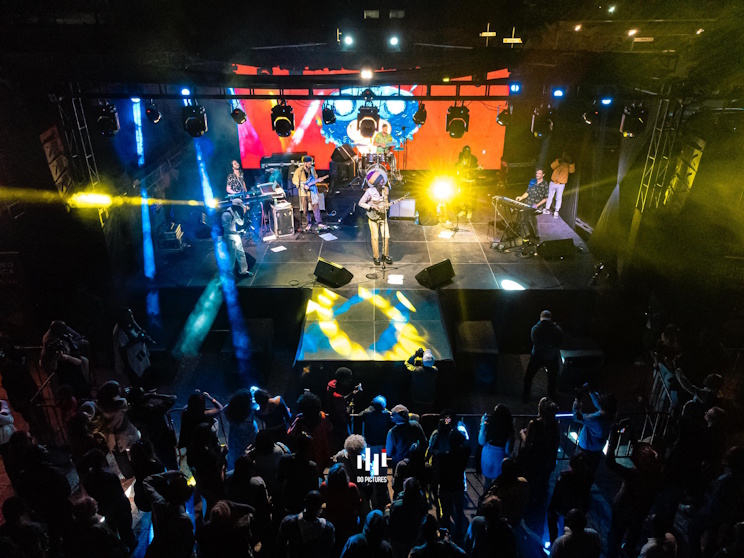
The Music In Africa Foundation (MIAF) is proud to announce its partnership with the Industrial Development Corporation (IDC) as a Strategic Implementing Partner (SIP) for its Social Employment Fund (SEF). Through this collaboration, MIAF is launching a new national programme designed to create jobs, address skills gaps, and strengthen South Africa’s creative industries — in line with the SEF’s overarching goal to generate work for the common good and build community value through employment, social contribution, and inclusive economic participation. Operating under the banner NEFCISA (National Employment Facility for Creative Industries in South Africa), the initiative will recruit and train participants, match them with host organisations, and place a minimum of 1 000 workers across the country. Key Objectives: Support employment and entrepreneurship in the creative industries. Offer skills development and training programmes. Foster partnerships between public and private creative sectors. Promote South African creativity at both provincial and national levels Foster community development through social contribution.

ACCES
ACCES

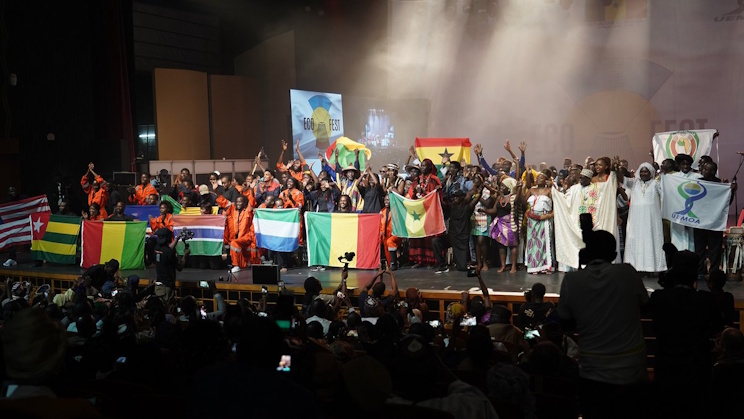
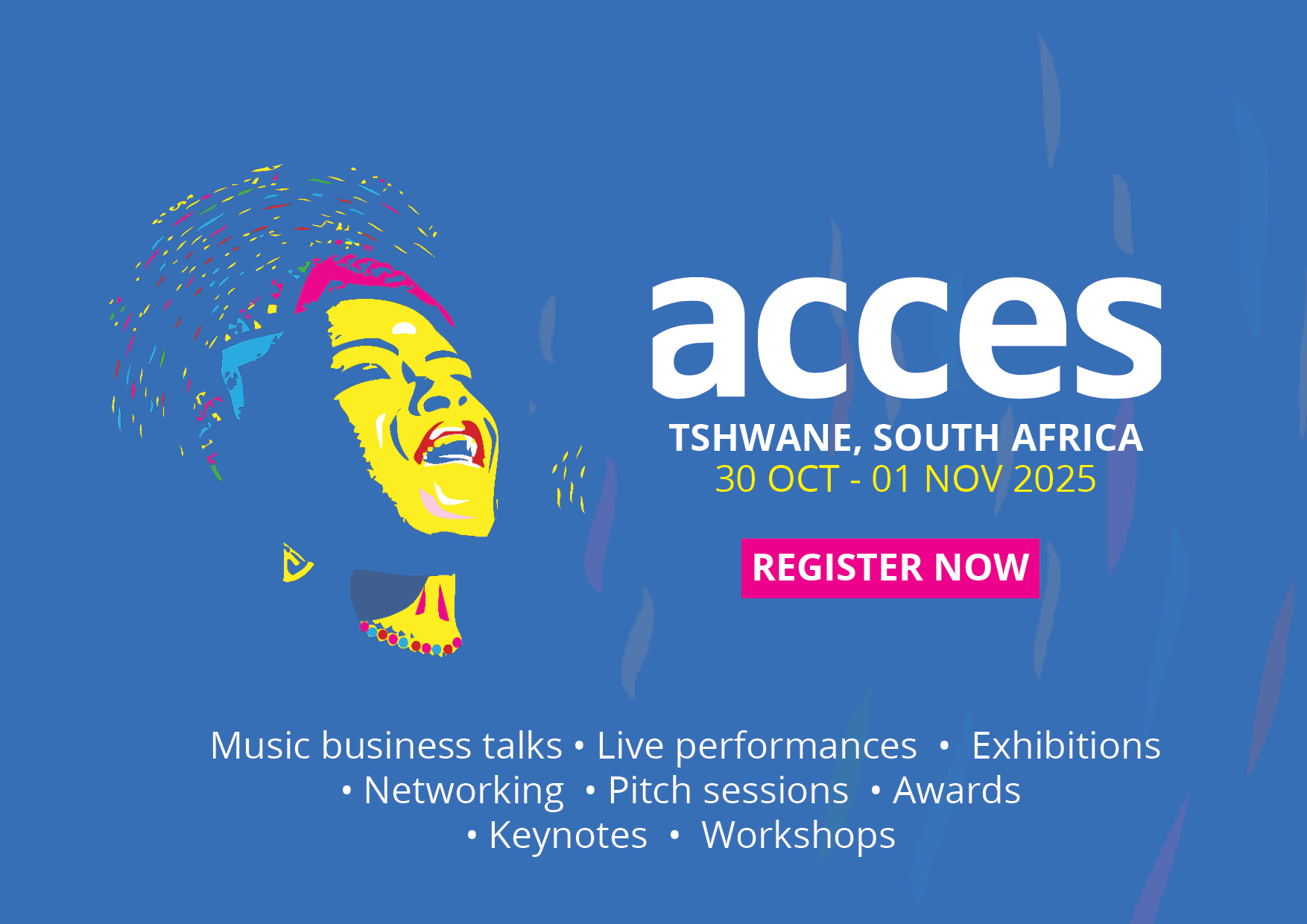
Chaque année, nous fournissons des informations générales afin de guider les participants dans la préparation de leur voyage. En plus de ce site, des mises à jour importantes seront envoyées par e-mail à tous les délégués inscrits. Assurez-vous de vous inscrire dès que possible. Pour plus d'informations, veuillez contacter [email protected] Continuez à consulter cette page pour plus d'information.  

Gender@Work
Gender@Work

Music In Africa Gender @ Work is a three-year training programme aimed at upskilling and increasing the participation of female professionals in the African music sector. Launched by the Music In Africa Foundation (MIAF) in April 2019, the programme is connected to the MIAF’s ACCES music conference – a pan-African event held in a different African country every year. This connection enables the programme to reach new participants in a different African country every year. The programme marks the beginning of a more concerted effort by the Foundation to support the participation and inclusion of women in all facets of its programmes and the music sector in Africa as a whole. Over the three years, the programme will aim to address gender imbalances in the sector through training, lobbying, facilitating knowledge exchange and dialogues that foster the interest of women. The broader objectives of the programme are to: Provide industry training for women on critical music industry skills, focusing on: Stage management Electronic music production and recording Music business management Technical knowledge Provide an opportunity for both professional and aspiring women to benefit from the Music In Africa network and its broad range of activities in 2019, 2020 and 2021. Provide a solution-based platform in the form of a round table at ACCES with a view to identify challenges, discuss opportunities and lobby for the interests of female practitioners. Offer participants the opportunity to benefit from programmes offered by MIAF’s partners. Increase access to educational materials. Integrate participants in the broader ACCES programme to maximise experience and exposure to the industry. Record and present training materials on the www.musicinafrica.net, including but not limited to tutorials, templates and other best-practice materials. Communicate women-based themes that support the initiatives and messages of the programme. MAIN TRAINING ACTIVITIES Training in first country (Ghana): In the first year, participants will be trained on all aspects of stage management by a team of experienced stage managers from 10 to 17 November 2019. The programme will offer robust classroom training as well as practical, hands-on training in which participants will also be given the opportunity to manage various aspects of the ACCES performance programme. Training in second country: The second training iteration will take place at ACCES 2020 when the programme will diversify its course to include music production lessons and training on other music business topics. A round-table platform will also be introduced to coincide with the ACCES programme. Training in third country: The third training iteration will take place at ACCES 2021 in a different country, offering an advanced course. HOW DO YOU GET INVOLVED?  As a participant, facilitator or trainer: The programme enrolls up to 12 trainees every year. All opportunities are advertised publicly on this website, and will be added to this page. Please keep checking this page for new calls (below under UPDATES & CURRENT OPPORTUNITIES). As a partner Please contact Claire Metais at [email protected]. APPLY The call for applications for 2020 will be announced soon. The Music In Africa Gender @ Work programme is made possible with the support of the Prince Claus Fund, Siemens Stiftung and Goethe-Institut.

Sound Connects Fund
Sound Connects Fund

Pour les praticiens et les organisations culturels et créatifs opérant en Afrique australe, l’accès au financement reste un défi majeur. La pandémie de COVID-19 a également eu un impact massif sur les politiques gouvernementales, les dépenses et l’économie en général, et a vu les dépenses consacrées à la culture reléguées plus bas dans la liste des priorités. De plus, les industries culturelles et créatives citent régulièrement quatre domaines principaux où l’investissement est nécessaire pour la croissance : une visibilité accrue, la mobilité incluant l’accès à de nouveaux marchés, le financement et les structures de soutien.

Music In Africa Live

MUSIC IN AFRICA LIVE Lancé en 2020 pour une durée de 3 ans, Music In Africa Live est une initiative visant à soutenir l'écosystème de la musique africaine face aux contraintes imposées par la pandémie de COVID-19 ; le projet a été lancé par la Fondation Music In Africa (MIAF) en partenariat avec le ministère fédéral allemand des Affaires étrangères, Siemens Stiftung et le Goethe Institut. Plus de 30 aides sont disponibles dans le cadre de la troisième édition de Music In Africa Live, dans 3 catégories :  showcases, renforcement des compétences et plaidoyer, en conformité avec les modalités énoncées.

Instrument Building And Repair Project

The overarching objective of Music In Africa Foundation’s Instrument Building and Repair (IBR) project is to encourage the formalisation and professionalisation of instrument-making and repair in Africa, especially in relation to indigenous African instruments. Background In 2014, the Music In Africa Foundation (MIAF) identified as one of its focus areas for development the need to encourage young people from music and music-related sectors to consider instrument-making as a career. This need extended itself from the recognition that the making of traditional African instruments is not a widely practiced skill and seems to be limited to the older generation. Traditional African instrument makers are also few and far between, making communication and logistics between teachers and learners an obstacle. When instrument building workshops take place, budgetary constraints do not allow teachers or learners the time to explore the finer details of an instrument. Based on these observations, the MIAF designed and piloted the first IBR workshop at the Dhow Countries Music Academy (DCMA) in Zanzibar in February 2015. In 2016, the foundation received funding from the South African National Lotteries Commission to implement a much bigger version of the project in Johannesburg. The project drew participants from five African countries. 25 students from South Africa, Ghana, Senegal, Kenya and Ethiopia were trained on how to build and repair musical instruments. The instruments that they made were: Traditional Instruments: Umakhweyana and Marimba Conventional Instrument: Dulcimer guitar The workshop culminated in a traditional instruments concert at the Wits Theatre in Johannesburg. It is the MIAF’s aim to roll out similar workshops in as many African countries as possible over the next few years. Objectives Developing awareness of musical instrument makers in Africa with a view to promote their work to a wider global audience. Facilitating the sharing and transfer of skills in indigenous instruments between countries on the continent. Encouraging the formalisation and professionalisation of instrument-making and repair in Africa, especially in relation to indigenous instruments. Helping instrument makers develop their careers. Fostering the rapid monetisation and sustainable development of instrument-making and repair in Africa. Promoting constant exchange of ideas, expertise, experiences and know-how among instrument makers in Africa. Facilitating the identification of existing gaps in the field with a view to contribute new solutions. Facilitating the transfer of knowledge and skills of indigenous instruments between younger and older generations. 2020 edition The MIAF has also announced that multi-instrumentalist and instrument maker Joe Makhanza will facilitate one of the workshops on the building of the kamale ngoni instrument. Kamale ngoni is a kora-like, stringed instrument that originated in West Africa. The instrument contributed to the rise of Wassoulou music in the 1970s and 1990s. Makhanza was born in Giyani in South Africa's Limpopo province. He completed a bachelor of music degree and a post-graduate diploma in arts marketing from Wits University. He is currently completing his masters in ethnomusicology and is a part-time lecturer in African music studies at Rhodes University. He plays the kora, mbira, valiha, masenqo, xiwewe, ngoni ba and xizambi, among others. He also manufactures the aforementioned instruments. The MIAF will confirm more trainers who will join the workshops as well as the other instruments that will be featured in the 2020 IBR programme.  Apply to participate here. Connect with us on Twitter, Instagram and Facebook, and subscribe to our monthly newsletter. The Music In Africa Instrument Building and Repair project is funded by the National Lotteries Commission. It is implemented in partnership with Siemens Stiftung, Goethe-Institut, Wits Theatre and Kaya FM.

banner image

Diverse Africa strikes chord with 2018 Grammys

Accueil/Non classé/Diverse Africa strikes chord with 2018 Grammys

Although the four-time Grammy winning band is up for Best Children’s Album and Best World Music Album, music from the continent is represented in other ways and by other artists, as a diverse set of countries from east, west and southern Africa receive recognition from the Recording Academy. 

From setting up Malian band Tinariwen against Ladysmith in the world music category to nominating a compilation of songs from old Burkinabe artists to selecting a Mariam Makeba homage, the Recording Academy has honoured the contribution of African acts to global music in a variety of ways. 

1. Ladysmith Black Mambazo

Before the release of their album for children, the South African group expressed a wish that the Grammys consider their unreleased work, Songs of Peace & Love for Kids & Parents Around the World, even if it appeared to go in a different direction from its past albums. “Our last album was very well received and was nominated for a Grammy,” said Sibongiseni, son of founder Joseph Shabalala, to TimesLive. “This album will still keep our unique sound but be more personal so we hope that it will do the same as our previous albums and be nominated for a Grammy.”

That wish has been granted as the group, which has never received a nomination outside of the world or folk music categories, are now in the running for a Best Children’s Album award. A reissue of their 1987 album, which won Ladysmith its first Grammy decades ago, is also up for a Best World Music award.

  • Buy Songs of Peace and Love here; buy Shaka Zulu Revisited here.

2. Tinariwen

A thorn in the flesh of the powers in their country, this band of Malian misfit musicians was named winner of the 2012 Grammy Best World Music Album for Tassili, with the New Yorker commenting that the band’s “songs didn’t just lionize the uprising, they fuelled it”.

After the success of Tassili, the band released the album Emmaar in 2014. Formed in 1979 and with a mostly changeable line-up, Tinariwen has now returned to the Grammys by earning a nomination in the Best World Music Album category. The nominated project, Elwan, was released in February this year.

[video:https://www.youtube.com/watch?v=vACZA9dGvV4 width:850 height:415 autoplay:0]

3. Burkina Faso

The album Bobo Yeye: Belle Epoque In Upper Volta is up for two awards. Comprising music from various sources, all of which have roots in present day Burkina Faso, the album presents sounds of the country from the 1970s to around 1984, when restrictions imposed by the late leader Thomas Sankara ended the post-colonial musical moment.

Appropriately, the album is up for Best Historical Album at the Grammys. A three-disc record sold with a book of 144 pages showing black and white photos of the bands and fans, it has also been nominated for a Best Boxed Or Special Limited Edition Package. The producers are Jon Kirby, Florent Mazzoleni, Rob Sevier and Ken Shipley.

  • Buy Bobo Yeye: Belle Epoque In Upper Volta here.

4. Lost Somali Tapes

Like Bobo Yeye from Burkina Faso, Sweet As Broken Dates: Lost Somali Tapes From The Horn Of Africa is also a snapshot of the 1970s and 1980s in a particular country, this time Somalia.

[video:https://www.youtube.com/watch?v=vEsPg6Y22us width:850 height:415 autoplay:0]

Released August this year, the compilation covers the Somali music scene during the military regime of Siyaad Barre. Along with taking care of the country’s police, the government supported music. Some of that music is contained in the album as are songs made outside of that provision. It is produced by Nicolas Sheikholeslami & Vik Sohonie.

  • Stream Sweet As Broken Dates: Lost Somali Tapes From The Horn Of Africa here.

5. Makeba

The video for ‘Makeba’ by Jain is nominated in the Best Music Video category. Named for the great South African musician Mariam Makeba, ‘Makeba’ was recorded and released by Jain, a young French act with part Malagasy ancestry. “It’s in the Congo that I discovered how to make songs, so it’s a really important place for me; it’s where I was musically born and where I found myself,” Jain told Fader about her connection to the continent.

Speaking about the late Mama Africa, Jain said, “I really admire her, because she was a strong woman and she was an incredible performer… When I watch videos of her shows, she had this thing—this aura—around her, full of determination and joy. And she had this groove.”

  • Watch the video for “Makeba’ from the album Zanaka below:

[video:https://www.youtube.com/watch?v=59Q_lhgGANc width:850 height:415 autoplay:0]

Bonus: Cynthia Erivo

The American with Nigerian descent Cynthia Erivo contributes to the list of songs produced by Blake Mills who is nominated for a Best Producer (Non Classical) award. Erivo herself won a Grammy last year. This time, her work with John Legend might help fetch Mills an award.

  • Listen to ‘God Only Knows’ here.
newsletter banner

Abonnez-vous à notre newsletter

Retrouvez-nous sur les réseaux sociaux
