























































By Benson Idonije
The advent of the Christian religion in Nigeria in the mid-nineteenth century greatly influenced the musical landscape of the entire West African sub-region. While secular music was evolving through the efforts of pioneer African palm wine highlife musicians who had been influenced by Spanish and Portuguese sailors that introduced the guitar and mandolin to the region (through the coastal cities), missionaries from Europe and Southern United States as well as the imperial colonial administration from England were working hard to entrench their own European cultural music. Coming as a shock encounter with cultural imperialism, the British colonies in West Africa - including Nigeria - had no choice but to drink it in and fall in line.
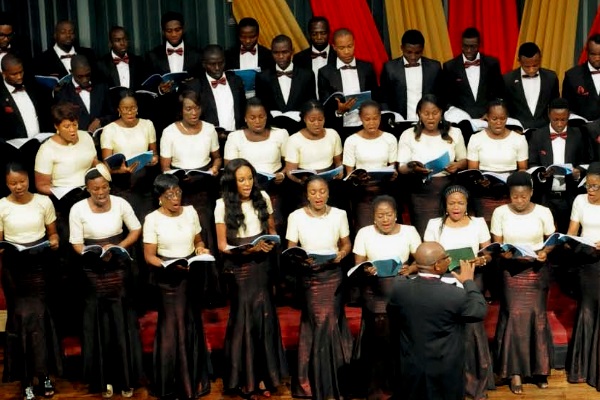
Some of the tactics employed by these colonial masters to achieve their aim included church teachings, establishment of mission schools, designing the curriculum of the mission schools in line with their objective - and various other colonial policies and devices which exposed Nigerian converts to Western classical music repertoire and classical music instruments such as the piano, harmonium and organ. This new musical culture was associated with the Christian religion, converted returnees from Europe and the mission schools but strangely enough, it became a social symbol, a mark of identification with Western civilization. Nigerians began writing compositions of their own as far back as 1910; and one of the first to lead the way was Revd. Josiah Ransome Kuti, Fela’s grandfather – who in fact added “Ransome” to this family name upon baptism in the Christian faith.
As a young man, Josaiah was an accomplished musician who played the piano with great confidence and displayed astute wizardry at the harmonium. He was gifted with a deep baritone voice and played before distinguished people and the wealthiest homes in Lagos. Josaiah composed the Egba National Anthem, ‘Lori Oke ati Petele’, a song that reminds the Egbas of the proud exploits of their ancestors and particularly of their political status as an independent nation recognized as such by the Colonial masters before 1914. The historical significance of this melodious tune bears eloquent testimony to the greatness of this illustrious Nigerian who left his footprints in the sands of time by his famous church compositions – most notably ‘Oyigiyigi L’Olorun Wa’ (Our God is impregnable). He composed many other songs for use in church services - emotive songs of Yoruba origin which made Christian worship more native and less foreign in concept to early converts. He was one of the first Nigerians to record his works on 78 rpm for commercial purposes in West Africa. As early as the 1920s, his music could be found in abundance on Zonophone Records - a label on EMI stable, for which such early highlife music pioneers as Irewolede Denge and Tunde King also recorded.
The late Fela Sowande, musicologist and pioneer composer of Nigerian art music, did a signature tune for the British Broadcasting Corporation (BBC) programme on West Africa: the tune was introduced in 1943 and was in use till the 1960s. It was based on the Obangiji theme, a well-known Yoruba folk song composed by the late J.J. Ransome-Kuti. Many of the early compositions were however fashioned after the European baroque and classical styles. But from the 1960s, Nigerian composers began experimenting with new techniques in their works such as atonality and twelve tone rows.
Apparently inspired by the new twentieth century compositional devices they had acquired from schools in London and America, they abandoned the tonal system of the previous era. Among this generation of classicists were Fela Sowande himself, Ayo Bankole, Adam Fiberesima, Akin Euba, Kehinde Okusanya, Lazarus Ekwueme, Meki Nzewi, Sam Akpabot most of whom have experimented with African themes and melodies for their compositions.
The music began from such mission schools in Lagos as CMS Grammar School, Baptist Academy among others which made the study of music compulsory. We are told that Abeokuta Grammar School which was headed by the Revd. Oludotun Ransome Kuti (Fela’s father) as principal, made the study of music so central to the school’s curriculum that if you failed in music as a subject, you were deemed to have failed the entire examination: this was the system that produced Fela Anikulapo Kuti. Taking it a step further, all these teachings in schools were harnessed by church choirs, prominent among them, the Cathedral Church of Christ Choir, Lagos which served as a major training ground.
As a matter of fact, the Cathedral Church of Christ Choir was a model for all churches in Nigeria; and it was the most prestigious Church Choir at the time. The Cathedral Church Choir boys were highly talented children who came from musical, upper middle class homes and affluent families that were the cream of the Nigerian high class society. Thomas Ekundayo Philips, the most advanced and most professionally trained organist and church musician in Nigeria at the time was the organist and Choir Master. This celebrated choir nurtured and gave exposure to almost all the great classical musicians around today – Fela Sowande, Akin Euba, Christopher Oyesiku, Ayo Bankole among others under the tutelage of Ekundayo Philips. And almost all these talented musicians either went to Trinity College of Music or Guild Hall School of Music, London; and music schools in America for advanced studies in music.
On return from further training in music, most of these musicians returned to Nigeria and worked at the Nigerian Broadcasting Corporation which was the only establishment that could offer them employment in those days - until they began to be absorbed by universities which have now established music and research departments in their institutions. Fela Sowande, Akin Euba, Ayo Bankole, Meki Nzewi, Sam Akpabot and others began their careers from the NBC. Sowande left for the University of Ibadan; Euba and Bankole moved to the University of Lagos while Akpabot and Nzewi chose to offer their services to University of Nsuka. Some of them eventually went to Europe and America because the Nigerian musical environment no longer held any promise for them.
It is impossible to tell the whole story of classical music in Nigeria, highlighting the activities of all who contributed to the development of the music - in an essay such as this, but suffice it to say that the credibility of this account will be deficient if major players such as Fela Sowande and Ayo Bankole are not given special mention. These two have placed Nigeria on the world map in the area of classical music. Classical music is the composer’s art as opposed to jazz which is the performer’s: Fela Sowande’s compositional feat is incredible. His works cover three major media: the organ, the voice and the orchestra.
Awarded Professor Emeritus of music (Pittsburg University), Sowande consistently fought against what he called musical colonialism of the African culture by promoting the use of identifiable African musical traits and characteristics without composing ecstatic standards. For example, in 1960, he decided to take his African Symphony which he composed to celebrate Nigerian independence to the United States of America for performance and recording because of the lack of an orchestra that could play the composition. In spite of the controversy that greeted this decision, Sowande said of himself: “I don’t compose unless I feel that I have to put it this way. I never say to myself that I must write something. Something says to me, ‘I want to be written.’ This is the only time I compose.” An organist, composer, researcher and writer of international repute, Sowande’s unrivalled list of achievements in the field of music, art and humanities are a glorious tribute to Nigeria and Africa.
Ayo Bankole’s name has continued to feature prominently where ever and when ever modern Nigerian art music is mentioned. Scholarly articles, theses and books have been written about his profound talent as a composer and organist. His compositions are present in several archival centers of the world. As a prolific composer, he has contributed extensively to modern art music in Nigeria through his vocal and instrumental works and represents the forerunners of avant - garde compositional feat in Nigeria through the use of diverse twentieth – century tonal scheme and creative techniques. He is well respected among Nigerian musicologists as a scholar for his research work and documentation.
Classical music has continued to develop in Nigeria through the various universities with music departments organizing and nurturing choirs drawn from their immediate environments and communities. Courtesy of The Musical Society Of Nigeria (MUSON), the establishment’s School of Music has continued to boost this developmental effort with the training of young Nigerians (on instruments and voice) and a MUSON Symphony Orchestra - as a showpiece.


Most popular

Top Naija songs of 2026
31 Mar 2026

Top Afrobeats songs of 2026
19 Mar 2026

Ghana: Mr Eazi and MOLIY’s ‘Comfort’ earns Urban Music Awards nomination
21 Oct 2026

Top amapiano songs of 2026
16 Feb 2026
Open call: CANEX Music Business Lab and Songwriting Camp
15 Oct 2026
Nigeria: CANEX WKND unveils 2026 programme
21 Oct 2026
Disclaimer: Music In Africa provides a platform for musicians and contributors to embed music and videos solely for promotional purposes. If any track or video embedded on this platform violates any copyrights please inform us immediately and we will take it down. Please read our Terms of Use for more.

Subscribe to our monthly Newsletter
Follow us on social media


Please log in to post a comment.