

































NEFCISA
NEFCISA

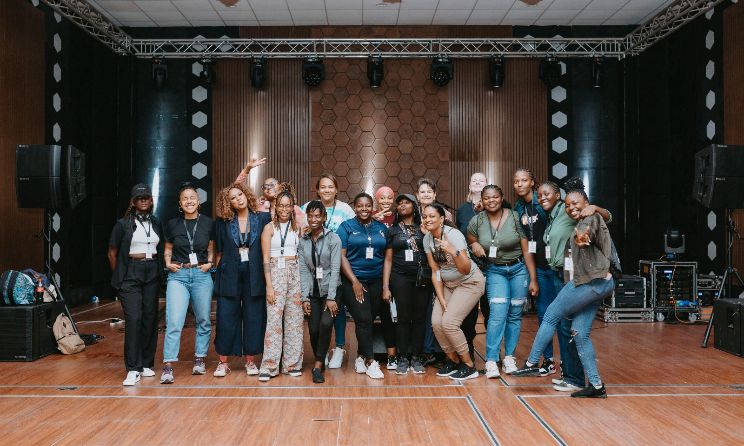
The Music In Africa Foundation (MIAF) is proud of its partnership with the Industrial Development Corporation (IDC) as a Strategic Implementing Partner (SIP) for its Social Employment Fund (SEF). Through this collaboration, MIAF is running a national programme that is creating jobs, addressing skills gaps, and strengthening South Africa's creative industries — in line with the SEF's overarching goal to generate work for the common good and build community value through employment, social contribution, and inclusive economic participation. Operating under the banner NEFCISA (National Employment Facility for Creative Industries in South Africa), the initiative is recruiting and training participants, matching them with host organisations, and has already placed 1 500 workers across the country — surpassing its original target of 1 000. NEFCISA is delivered through a network of 20 host organisations spanning five provinces, who are actively hosting participants and contributing to work for the common good across South Africa's creative and cultural industries. Key Objectives: Support employment and entrepreneurship in the creative industries. Offer skills development and training programmes. Foster partnerships between public and private creative sectors. Promote South African creativity at both provincial and national levels Foster community development through social contribution.

ACCES
ACCES

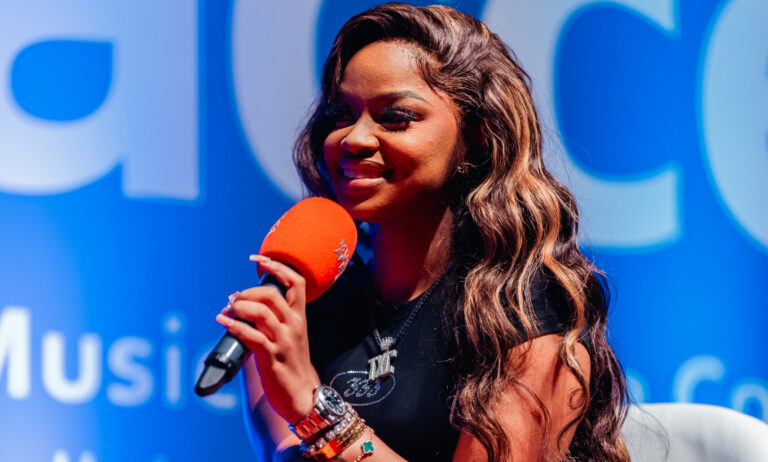
ACCES Conference and Showcase Festival is Africa's leading music industry gathering, bringing together the people shaping the future of the continent's music business. Artists, entrepreneurs, executives, investors, policymakers and cultural leaders from across Africa and around the world come to ACCES to build partnerships, exchange ideas, discover talent and create new business opportunities. Since its launch in 2017, ACCES has become the continent's premier platform for professional exchange and music market development. Combining a high-level conference with a curated showcase festival, networking, exhibitions and industry programmes, ACCES offers a unique space where creativity meets business and where African music connects with the global industry.

Gender@Work
Gender@Work

Music In Africa Gender @ Work is a three-year training programme aimed at upskilling and increasing the participation of female professionals in the African music sector. Launched by the Music In Africa Foundation (MIAF) in April 2019, the programme is connected to the MIAF’s ACCES music conference – a pan-African event held in a different African country every year. This connection enables the programme to reach new participants in a different African country every year. The programme marks the beginning of a more concerted effort by the Foundation to support the participation and inclusion of women in all facets of its programmes and the music sector in Africa as a whole. Over the three years, the programme will aim to address gender imbalances in the sector through training, lobbying, facilitating knowledge exchange and dialogues that foster the interest of women. The broader objectives of the programme are to: Provide industry training for women on critical music industry skills, focusing on: Stage management Electronic music production and recording Music business management Technical knowledge Provide an opportunity for both professional and aspiring women to benefit from the Music In Africa network and its broad range of activities in 2019, 2020 and 2021. Provide a solution-based platform in the form of a round table at ACCES with a view to identify challenges, discuss opportunities and lobby for the interests of female practitioners. Offer participants the opportunity to benefit from programmes offered by MIAF’s partners. Increase access to educational materials. Integrate participants in the broader ACCES programme to maximise experience and exposure to the industry. Record and present training materials on the www.musicinafrica.net, including but not limited to tutorials, templates and other best-practice materials. Communicate women-based themes that support the initiatives and messages of the programme. MAIN TRAINING ACTIVITIES Training in first country (Ghana): In the first year, participants will be trained on all aspects of stage management by a team of experienced stage managers from 10 to 17 November 2019. The programme will offer robust classroom training as well as practical, hands-on training in which participants will also be given the opportunity to manage various aspects of the ACCES performance programme. Training in second country: The second training iteration will take place at ACCES 2020 when the programme will diversify its course to include music production lessons and training on other music business topics. A round-table platform will also be introduced to coincide with the ACCES programme. Training in third country: The third training iteration will take place at ACCES 2021 in a different country, offering an advanced course. HOW DO YOU GET INVOLVED?  As a participant, facilitator or trainer: The programme enrolls up to 12 trainees every year. All opportunities are advertised publicly on this website, and will be added to this page. Please keep checking this page for new calls (below under UPDATES & CURRENT OPPORTUNITIES). As a partner Please contact Claire Metais at [email protected]. APPLY The call for applications for 2020 will be announced soon. The Music In Africa Gender @ Work programme is made possible with the support of the Prince Claus Fund, Siemens Stiftung and Goethe-Institut.

Sound Connects Fund
Sound Connects Fund

For cultural and creative practitioners and organisations operating in southern Africa, access to funding remains a major challenge. The COVID-19 pandemic has also had a massive impact on government policy, spending and the economy in general, and has seen spending on culture being moved further down the list of priorities. Further, the cultural and creative industries repeatedly cite four main areas where investment is needed for growth, which are increased visibility, mobility including access to new markets, finance and support structures.

Instrument Building And Repair Project

Experience the Vibrations African Instruments Exhibition online in 3D

News

Panel discussion: Music as a tool for activism

13 Oct 2017 - 14:13

cc-img flag-img

Prominent musician-activists held a discussion at the Uganda National Museum in Kampala on 3 October.
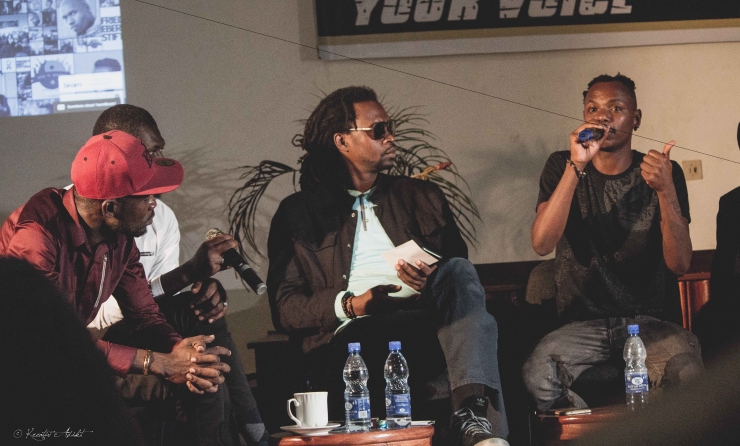
Musicians discussing at Your Music Your Voice symposium in Kampala. Photo: KreativeAdikt

Titled Your Music Your Voice, the discussion centered on the role of music and fame in raising awareness about social issues, as well as the role of social media in respect to freedom of expression. It was organised by Goethe-Zentrum Kampala in partnership with Friedrich-Ebert-Stiftung and supported by Goethe-Institut, Arterial Network and the Music In Africa Foundation.

Such a discussion was long overdue, said Anja Göbel, director of Goethe-Zentrum Kampala. “After Bobi Wine, who has risen to be a symbol of hope for the youth through his socially conscious music joined politics, we felt that it was the right moment to create a platform for African rap activists to meet and network,” she said.

Bobi Wine was present, as were other Ugandan musicians, including Sylvester and Abramz from Break Dance Project Uganda, St Nellysade, female rappers Lady Slyke and MC Yalla. Others who participated were Juma (Kenya), Eric1key (Rwanda), Nash MC (Tanzania), Xuman (Senegal), Monza (Mauritania), Pacy (Burundi) and Outspoken (Zimbabwe).

It was agreed that hip hop and reggae were major genres used for activism.

The government vs the musician

Xuman, co-founder of Journal Rappé, a short weekly TV segment that broadcasts public interest news through hip hop and rap, has been denied airplay, prompting him to play his music on social media platforms.

“The government only funds pro-government musicians," he said. "The rest of us have had propaganda thrown at us by the government which believes that we are being used by the white people to push for their agenda in Senegal. It is true that we are being funded by NGOs but we work with them and not for them.”

Monza told Music In Africa that the government of Mauritania is threatened by hip hop artists because hip hop is the most popular genre of music in the country. Everytime a hip hop concert coincides with a state function, everyone attends the concert, he said. “The government is aware of the influence that the hip hop activist artists have on the people that is why I have been approached several times to join the government. My answer is always no because I know my mission which is to inspire the people to take power and not to take power for myself."

Reggae musician Pacy who has been exiled in Uganda since 2014 said, “I am a refugee because I released songs that targeted those in power and naturally the government does not like to be corrected. I was jailed several times but I decided to relocate to Uganda after receiving numerous death threats."

People vs the musician

The need for public education on music and its role was raised by Nash MC from Tanzania. “Many Tanzanians do not understand my music," he said. "For those that understand, they choose to ignore it...That is why my social conscious songs have very few receivership.”

Eric1key said, “I am from a society that is very conservative and any opinion that seems to not be in line with the government is given no attention. I occasionally get emails and calls from people asking me why I am looking for trouble, I am not looking for trouble they just do not understand what I do.”

Musician now turned politician Bobi Wine openly declared that he is willing to die so that his idea can live on. “In case anyone thinks that if I die my idea will die, they are wrong, if I die there will be 1 000 more Bobi Wines. It is because of this reason that I am multiplying myself in so many young people, through mentorship.”

Should musicians draw a line when it comes to writing about social conscious music? asked Ugandan journalist David Tumusiime.

According to Outspoken from Zimbabwe, self-censorship is important, an artist can still deliver the message in a creative way. “After we realized that there was need for freedom fighters, not street fighters but creative artists that will give voice to the public, we began Magamba network, an award-winning organization which uses creative forms of youth activism with the hope of building a democratic and just Zimbabwe.”

A concert was held the next day, with the musicians performing at Design Hub. German hip hop artist Megaloh and Ghanaian Stallion also performed.

“The artists I had the chance to work with in Kampala showed me that there are so many different ways and forms of using your mind and your voice to fight for freedom and equality," Megaloh said to Music in Africa. "I feel blessed to have connected with these great peaceful warriors, we fight for the same cause.”

As with any event, said Gobel, there were challenges as the organisers “had a bit of a problem with the local authorities when we were trying to get a permit but eventually we succeeded. However, the most nerve-wracking experience was the uncertainty of Bobi Wine's attendance since his home had been attacked with grenades on the day of the symposium. I was glad when he made it.”

Please log in to post a comment.

Most popular

Disclaimer: Music In Africa provides a platform for musicians and contributors to embed music and videos solely for promotional purposes. If any track or video embedded on this platform violates any copyrights please inform us immediately and we will take it down. Please read our Terms of Use for more.

newsletter banner

Subscribe to our monthly Newsletter

Follow us on social media