



















NEFCISA
NEFCISA

The Music In Africa Foundation (MIAF) is proud to announce its partnership with the Industrial Development Corporation (IDC) as a Strategic Implementing Partner (SIP) for its Social Employment Fund (SEF). Through this collaboration, MIAF is launching a new national programme designed to create jobs, address skills gaps, and strengthen South Africa’s creative industries — in line with the SEF’s overarching goal to generate work for the common good and build community value through employment, social contribution, and inclusive economic participation. Operating under the banner NEFCISA (National Employment Facility for Creative Industries in South Africa), the initiative will recruit and train participants, match them with host organisations, and place a minimum of 1 000 workers across the country. Key Objectives: Support employment and entrepreneurship in the creative industries. Offer skills development and training programmes. Foster partnerships between public and private creative sectors. Promote South African creativity at both provincial and national levels Foster community development through social contribution.

ACCES
ACCES

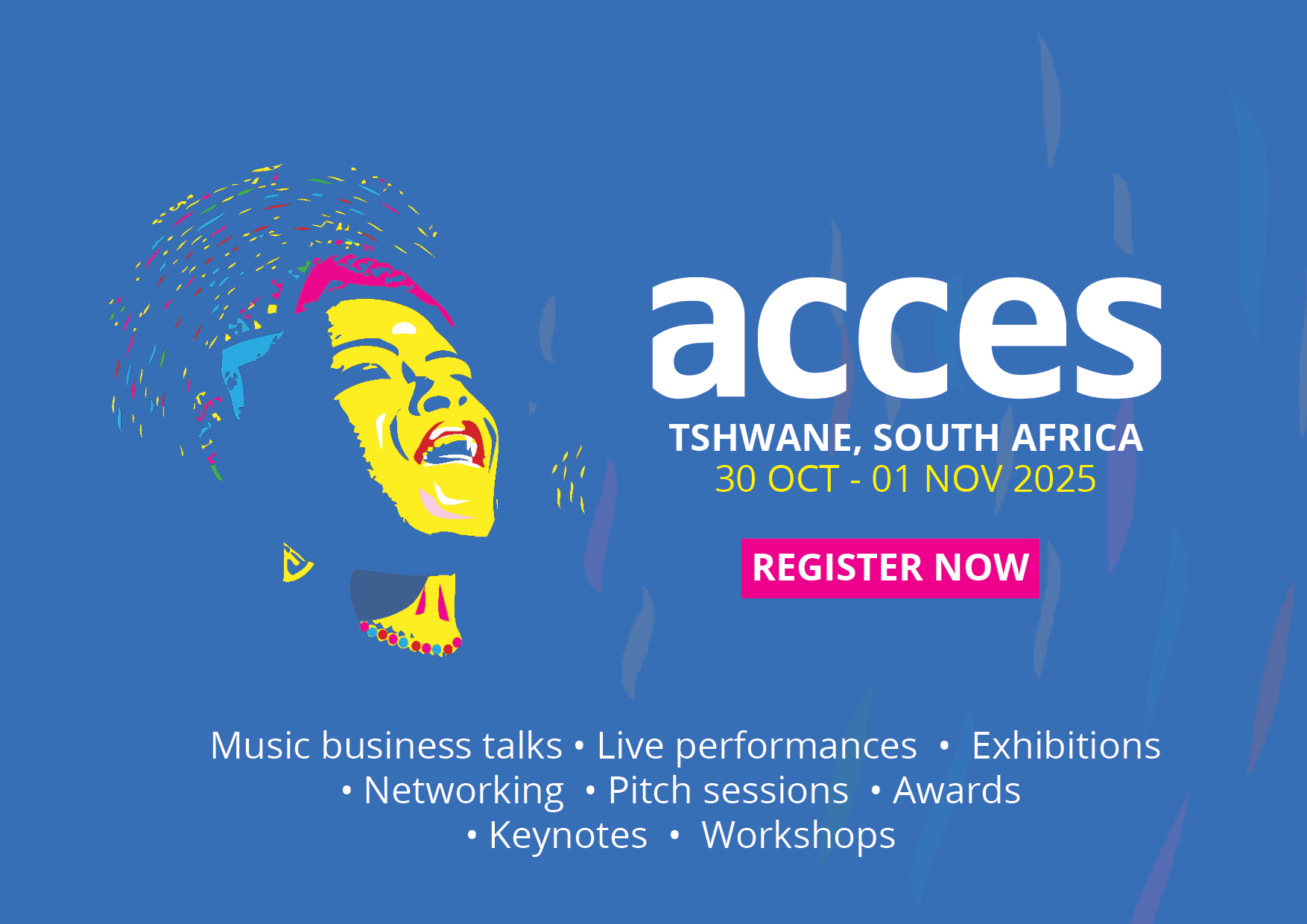
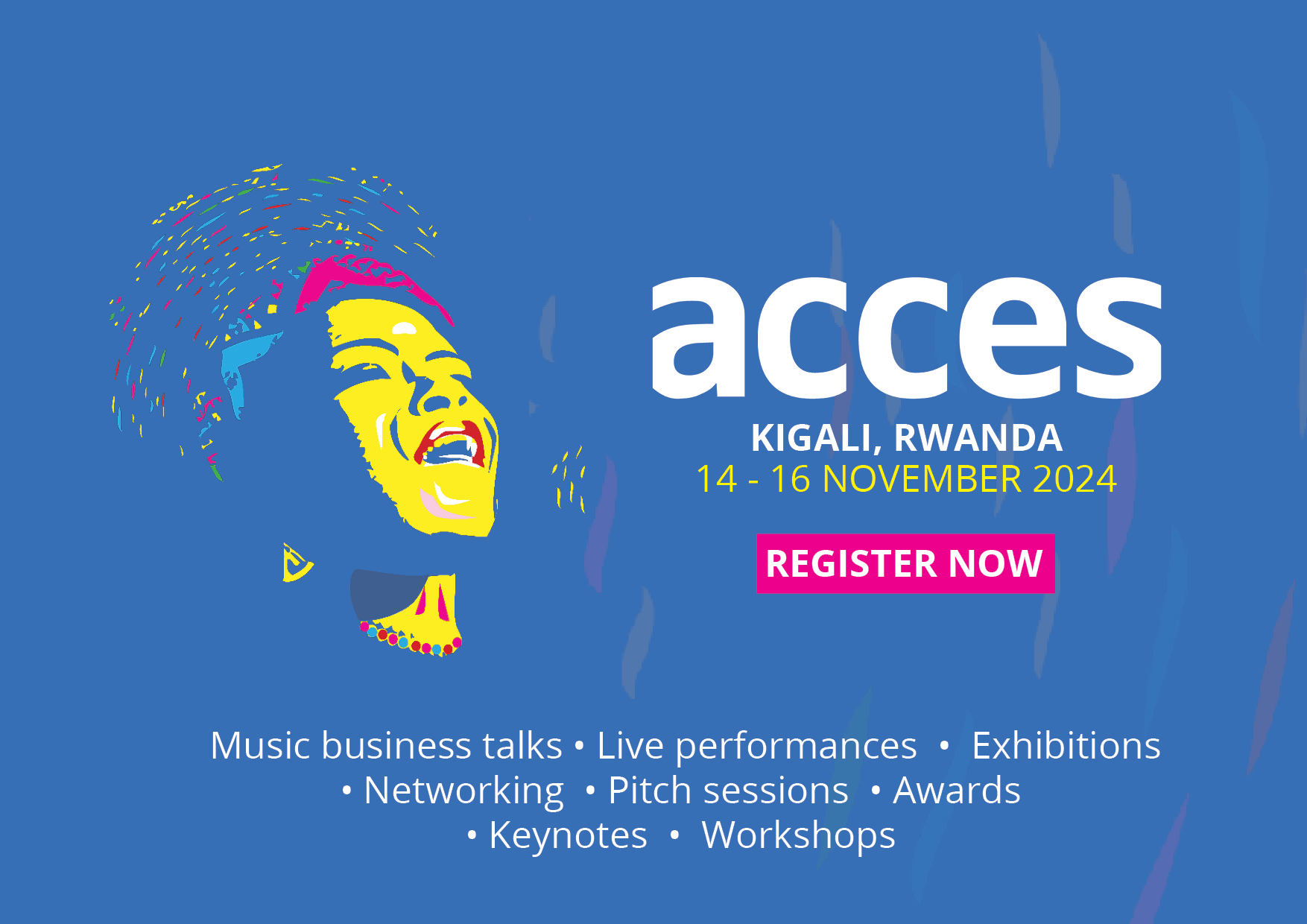
Chaque année, nous fournissons des informations générales afin de guider les participants dans la préparation de leur voyage. En plus de ce site, des mises à jour importantes seront envoyées par e-mail à tous les délégués inscrits. Assurez-vous de vous inscrire dès que possible. Pour plus d'informations, veuillez contacter [email protected] Continuez à consulter cette page pour plus d'information.  

Gender@Work
Gender@Work

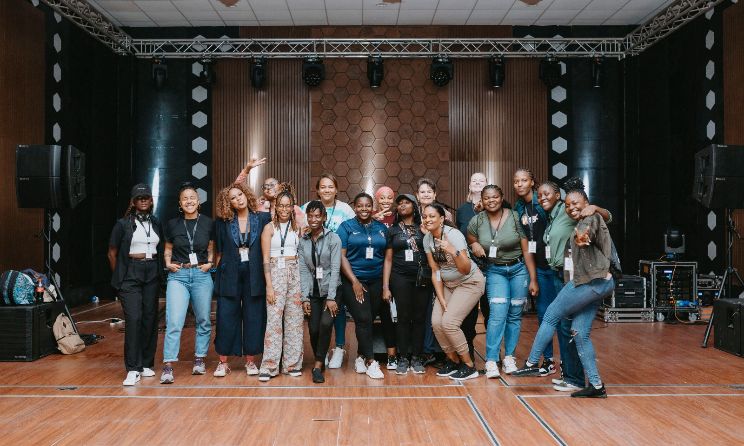
Music In Africa Gender @ Work is a three-year training programme aimed at upskilling and increasing the participation of female professionals in the African music sector. Launched by the Music In Africa Foundation (MIAF) in April 2019, the programme is connected to the MIAF’s ACCES music conference – a pan-African event held in a different African country every year. This connection enables the programme to reach new participants in a different African country every year. The programme marks the beginning of a more concerted effort by the Foundation to support the participation and inclusion of women in all facets of its programmes and the music sector in Africa as a whole. Over the three years, the programme will aim to address gender imbalances in the sector through training, lobbying, facilitating knowledge exchange and dialogues that foster the interest of women. The broader objectives of the programme are to: Provide industry training for women on critical music industry skills, focusing on: Stage management Electronic music production and recording Music business management Technical knowledge Provide an opportunity for both professional and aspiring women to benefit from the Music In Africa network and its broad range of activities in 2019, 2020 and 2021. Provide a solution-based platform in the form of a round table at ACCES with a view to identify challenges, discuss opportunities and lobby for the interests of female practitioners. Offer participants the opportunity to benefit from programmes offered by MIAF’s partners. Increase access to educational materials. Integrate participants in the broader ACCES programme to maximise experience and exposure to the industry. Record and present training materials on the www.musicinafrica.net, including but not limited to tutorials, templates and other best-practice materials. Communicate women-based themes that support the initiatives and messages of the programme. MAIN TRAINING ACTIVITIES Training in first country (Ghana): In the first year, participants will be trained on all aspects of stage management by a team of experienced stage managers from 10 to 17 November 2019. The programme will offer robust classroom training as well as practical, hands-on training in which participants will also be given the opportunity to manage various aspects of the ACCES performance programme. Training in second country: The second training iteration will take place at ACCES 2020 when the programme will diversify its course to include music production lessons and training on other music business topics. A round-table platform will also be introduced to coincide with the ACCES programme. Training in third country: The third training iteration will take place at ACCES 2021 in a different country, offering an advanced course. HOW DO YOU GET INVOLVED?  As a participant, facilitator or trainer: The programme enrolls up to 12 trainees every year. All opportunities are advertised publicly on this website, and will be added to this page. Please keep checking this page for new calls (below under UPDATES & CURRENT OPPORTUNITIES). As a partner Please contact Claire Metais at [email protected]. APPLY The call for applications for 2020 will be announced soon. The Music In Africa Gender @ Work programme is made possible with the support of the Prince Claus Fund, Siemens Stiftung and Goethe-Institut.

Sound Connects Fund
Sound Connects Fund

Pour les praticiens et les organisations culturels et créatifs opérant en Afrique australe, l’accès au financement reste un défi majeur. La pandémie de COVID-19 a également eu un impact massif sur les politiques gouvernementales, les dépenses et l’économie en général, et a vu les dépenses consacrées à la culture reléguées plus bas dans la liste des priorités. De plus, les industries culturelles et créatives citent régulièrement quatre domaines principaux où l’investissement est nécessaire pour la croissance : une visibilité accrue, la mobilité incluant l’accès à de nouveaux marchés, le financement et les structures de soutien.

Music In Africa Live

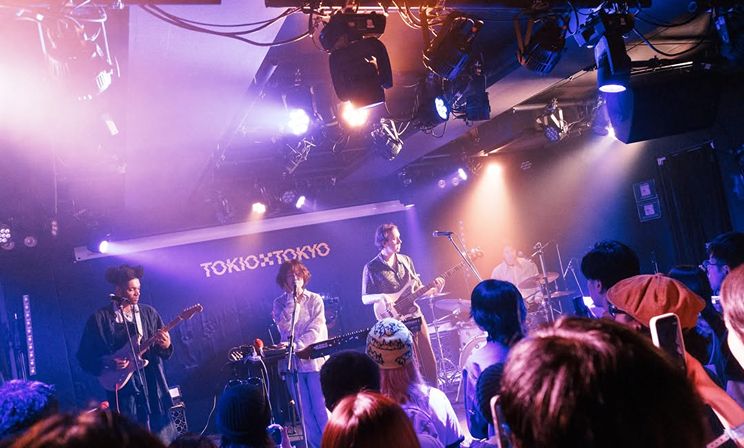
MUSIC IN AFRICA LIVE Lancé en 2020 pour une durée de 3 ans, Music In Africa Live est une initiative visant à soutenir l'écosystème de la musique africaine face aux contraintes imposées par la pandémie de COVID-19 ; le projet a été lancé par la Fondation Music In Africa (MIAF) en partenariat avec le ministère fédéral allemand des Affaires étrangères, Siemens Stiftung et le Goethe Institut. Plus de 30 aides sont disponibles dans le cadre de la troisième édition de Music In Africa Live, dans 3 catégories :  showcases, renforcement des compétences et plaidoyer, en conformité avec les modalités énoncées.

Instrument Building And Repair Project

The overarching objective of Music In Africa Foundation’s Instrument Building and Repair (IBR) project is to encourage the formalisation and professionalisation of instrument-making and repair in Africa, especially in relation to indigenous African instruments. Background In 2014, the Music In Africa Foundation (MIAF) identified as one of its focus areas for development the need to encourage young people from music and music-related sectors to consider instrument-making as a career. This need extended itself from the recognition that the making of traditional African instruments is not a widely practiced skill and seems to be limited to the older generation. Traditional African instrument makers are also few and far between, making communication and logistics between teachers and learners an obstacle. When instrument building workshops take place, budgetary constraints do not allow teachers or learners the time to explore the finer details of an instrument. Based on these observations, the MIAF designed and piloted the first IBR workshop at the Dhow Countries Music Academy (DCMA) in Zanzibar in February 2015. In 2016, the foundation received funding from the South African National Lotteries Commission to implement a much bigger version of the project in Johannesburg. The project drew participants from five African countries. 25 students from South Africa, Ghana, Senegal, Kenya and Ethiopia were trained on how to build and repair musical instruments. The instruments that they made were: Traditional Instruments: Umakhweyana and Marimba Conventional Instrument: Dulcimer guitar The workshop culminated in a traditional instruments concert at the Wits Theatre in Johannesburg. It is the MIAF’s aim to roll out similar workshops in as many African countries as possible over the next few years. Objectives Developing awareness of musical instrument makers in Africa with a view to promote their work to a wider global audience. Facilitating the sharing and transfer of skills in indigenous instruments between countries on the continent. Encouraging the formalisation and professionalisation of instrument-making and repair in Africa, especially in relation to indigenous instruments. Helping instrument makers develop their careers. Fostering the rapid monetisation and sustainable development of instrument-making and repair in Africa. Promoting constant exchange of ideas, expertise, experiences and know-how among instrument makers in Africa. Facilitating the identification of existing gaps in the field with a view to contribute new solutions. Facilitating the transfer of knowledge and skills of indigenous instruments between younger and older generations. 2020 edition The MIAF has also announced that multi-instrumentalist and instrument maker Joe Makhanza will facilitate one of the workshops on the building of the kamale ngoni instrument. Kamale ngoni is a kora-like, stringed instrument that originated in West Africa. The instrument contributed to the rise of Wassoulou music in the 1970s and 1990s. Makhanza was born in Giyani in South Africa's Limpopo province. He completed a bachelor of music degree and a post-graduate diploma in arts marketing from Wits University. He is currently completing his masters in ethnomusicology and is a part-time lecturer in African music studies at Rhodes University. He plays the kora, mbira, valiha, masenqo, xiwewe, ngoni ba and xizambi, among others. He also manufactures the aforementioned instruments. The MIAF will confirm more trainers who will join the workshops as well as the other instruments that will be featured in the 2020 IBR programme.  Apply to participate here. Connect with us on Twitter, Instagram and Facebook, and subscribe to our monthly newsletter. The Music In Africa Instrument Building and Repair project is funded by the National Lotteries Commission. It is implemented in partnership with Siemens Stiftung, Goethe-Institut, Wits Theatre and Kaya FM.

Reviews

Unstoppable : le résilient coup de volant de Sabrina

02 Sep 2024 - 11:09

cc-img flag-img

Une suite de ballades au parfum afropop telle une succession d’oratorios modernes pour l’artiste camerounaise de 23 ans. Unstoppable, dévoilé en Juin 2024, sonne comme le nouveau mini-album de la renaissance.

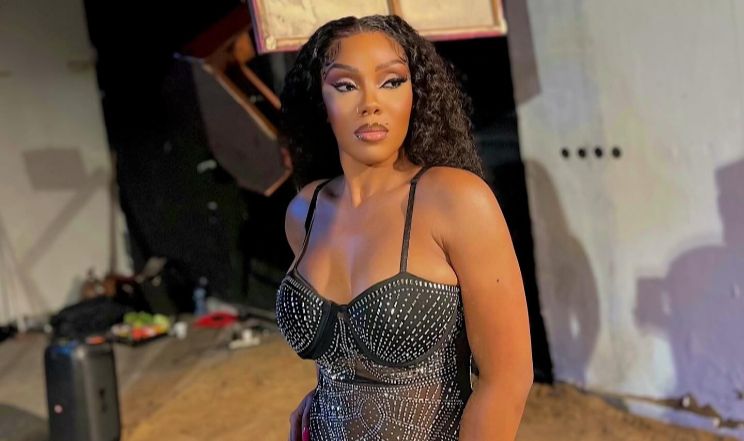
L'artiste camerounaise Sabrina

Une pochette à la leçon inaugurale

Armée d’une volonté de fer et d’une paire d’oreilles bien affûtées, la camerounaise Wamba Kuegou Sabrina Ruth de son vrai nom, contourne en brillante autodidacte, les interdits autour de sa passion. Cette ancienne choriste à Bafoussam (Ouest-Cameroun), a faim aujourd’hui, loin des petits pas à Yaoundé. Sur la pochette en 7 paniers, on aperçoit la chanteuse sous 7 expressions faciales différentes, sept sentiments distincts. Le noir a de multiples significations, elles peuvent être, positives et incarner la simplicité, l'élégance, la sobriété, le luxe et la modernité. Sur ce art cover inventif, il est dominatif. L’absence, du dépouillement, de l'inexistant et de l'immatériel sont matérialisées par du blanc cassé. Cette fusion de couleurs aussi étranges soient-ils, représentent les nouveaux départs. Comme une sorte de résurrection, de transformation. Au regard de la pochette officielle, on aura affaire à un EP qui additionne la découverte, l’intrinsèque, et l’équilibre phonographique, dans les langages communs de la diversité.

Curiosité en héritage

Comme un air de griot, et de cris de ralliement au combat à l’africaine, la chanteuse ouvre son tout nouveau disque avec convictions : Celui de présenter une Afrique jalouse de son patrimoine, mais pas que. De son ouverture au monde, tel que le soulignent les partitions saxophoniques et de violoncelle pour lui donner une couleur spirituelle et traditionnaliste en afropop.

Le titre « My Africa » est la carte d’identité sonore du terroir africain, du fait de la transposition des us ancestraux au plan communicatif, l’usage des voix pour rappeler l’effet collectif, et le sens de l’altruisme amplifié par les trompettes à la conclusion. La chanson est donc une conjonction de coordination, entre l’authenticité qui caractérise le continent noir avec des dominos primitifs & sauvages dans le bon sens du terme, et le coté inspirant. L’Afrique est réputée pour ses paysages extraordinaires, son hospitalité légendaire, et son creuset humaniste.

« Unstoppable » dépeint avec audace comme une fauve, son ambition de briser les barrières, de déconstruire les frontières de l’impossible car pour l’artiste tout est possible lorsque la providence et le travail acharné épousent l’esprit de conquête au-delà des difficultés quotidiennes. Pour cet épisode auditif, Sabrina, fait le pari d’une jeune rythmique africaine d’une dizaine d’années, dérivée de la deep-house et du jazz : l’amapiano. L’usage du violoncelle remarqué.

Autre changement de décor, « Allo Money » est un petit collier niché entre le hip-pop progressiste et le Kwaito/amapiano. Les arrangements et les cœurs qui accompagnent ce gourmet inventif, lui donnent comme un gout d’inachevé. Vu les temps anxiogènes d’une société du chacun pour soi, ce titre pourrait être un titre provocateur, pour la mise à l’honneur du capitalisme, du profit.

Cependant, chaque œuvre mérite de nos jours sa rétribution, et il serait hypocrite de blâmer l’auteure. Ce titre, c’est la vie qui coule, la vie qui passe, finalement la vie d’adulte marqué par la course à la sécurité financière. Alors pour trouver du sens, Sabrina écrit des chansons et invite une dream team à ses côtés.

On ferme les yeux et l’on voit l’arc en ciel d’ « Ojoro ». La chanteuse est une artisane, elle chante l’or de la vie, l’instant présent de cette vie moderne qui peut être un miracle comme une cavalcade tranquille où les doigts se promènent sur ta peau ou encore ce groovy chant des sirènes au chœur enjôleur. L’auteure choisit des mots simples pour parler d’amour, sincère, limpides, une poésie apaisée du quotidien, avec une diction, une voix, un flow qui nous rendent ces chansons familières.

On est touchés ou pas par le récit de son coup de foudre, avec cette esquisse de douceur, son violoncelle et son mellotron enlaçant, sa métrique chaotique dévoilant le trouble des sentiments, la peur de perdre l’être aimé, le changement de comportement et des fleurs d’une étrange rareté. Sabrina pleure sur les amours ébréchés : On aurait cru une histoire vécue.

« Frienemies », ce titre est admirable pour moi de par sa construction, et pour sa réussite d’avoir mêlé la voix avec une musique très ambiante et actuelle qu’est l’afrobeat. Ce mélange n’est pas si évident, mais là c’est une belle réussite. La voix de Sabrina s’intègre parfaitement à la musique, tout en la dominant et en lui donnant un autre sens. On est à un point idéal entre la pop africaine et l’ambient.

En faisant un mini-album coloré comme celui-ci, pour aller vite, il y a toujours un grand risque pour moi de sombrer dans l’abstraction totale, la complaisance, en larguant l’auditeur dans un néant abscons. Pour ma part, j’ai toujours le souci que l’auditeur ne s’ennuie pas, qu’on lui donne un fil, un ancrage minimum pour qu’il fasse le voyage qu’on lui propose. Pour moi il faut toujours garder quelque chose, même de succin. Un certain souci d’efficacité pour continuer de capter l’auditeur tout le long de l’aventure. Ce qui captive mon attention c’est surtout le message caché derrière cette cinquième piste : De faire attention aux faux amis, de se nourrir de ses propres expériences pour pouvoir avancer.

Comme souvent le titre en fin d’un disque est le plus déroutant. « Big Boys » commence comme un chant d’amour et se termine dans un kaléidoscope à la Master KG ou TitoM.

« My Africa » est l’emblème de cet album, des paroles sombres et lumineuses et un outro dantesque que l’on a hâte d’écouter sur scène. Avec « Simplicity » qui donne son ADN à l’album, on se reconnaît malgré nous.

Et si Sabrina parle de ces choses et de ces jours froids, c’est pour parler encore mieux de ce dont elle ne parle pas. De la beauté d’un corps ou d’un sourire croisé, que l’on aura aimé, un jour, que l’on aura connu. Et quand enfin resteront les marées plus basses, moins houleuses, moins bruyantes, quand ce vain coulis se sera retiré, on cherchera à contempler, à chercher ce qu’il reste. Les valeurs d’humilité et de partage, la chanteuse en fait le porte-étendard dans cette dernière pièce engourdie d’ambiance à la sauce amapiano & de polyphonies hybrides, qui me rappellent le Melody Orchestra, en 1970, auquel faisait partie de regretté mémoire, Prince Nico Mbarga.

Provoquer le destin

Unstoppable n’a rien d’un hymne à la joie ou détermination uniquement, ou d’une farce pop. Sept titres, pas plus, selon la volonté de l’artiste. Qui filent. Ou qui découpent. Traversant la nasse, comme un couteau dans un gâteau trop mou. Car c’est bien de ça qu’il s’agit, d’un implacable sillon, au milieu des louvoiements, des accommodations paresseuses d’une grosse masse déconfite, dans un vague monde défait, que plus rien ne retient, à part l’apathie.

Ce disque est une fragile âpreté. Sabrina séduit immédiatement par sa simplicité, par la proximité de la voix, par les thèmes familiers de ses chansons cathartiques. Comment ne pas sombrer avec « My Africa » qui ouvre le disque ? Et pourtant tout n’est pas toujours chaleureux, gracieux et harmonieux. Bien sûr on pense à Khalil Harisson, Ayra Starr ou encore Timi Dakolo, mais très vite on est happé par cette petite musique qui s’insinue dans notre oreille, puis notre cœur. Rarement un disque récent n’aura été aussi brut et cohérent à la fois. Des semaines pour des multiples prises par morceau a suffi pour créer cette œuvre.

Après une intro lumineuse qui donne une couleur à ce mini-album, surgissent des trompettes et une violencelle dominante et ces refrains entêtants, hymne hédoniste et juvénile où l’on se revoit danser seul, dans notre chambre en écoutant les CD ramenés de la discothèque, souvent choisis au hasard d’une pochette.

Ce projet rappelle les photos carrées familiales des années 70-80, le freak, les musiques africaines, le rapport à l’autre. Dommage qu’on n’a pas connaissance de la fiche technique pour apprécier le génie singulier de chaque acteur ayant contribué à sa production. La domination des instruments à vent, la pertinence des messages, la présence et la recherche permanente de nouvelles perspectives, la technique et l’orientation, font de Unstoppable un disque unique dont j’anoterai à 7/10.

Album : Unstoppable
Artiste : Sabrina
Label / Année : Afrobit Productions /2024

Please se connecter to post a comment.

Most popular

Disclaimer: Music In Africa provides a platform for musicians and contributors to embed music and videos solely for promotional purposes. If any track or video embedded on this platform violates any copyrights please inform us immediately and we will take it down. Please read our Terms of Use for more.

newsletter banner

Abonnez-vous à notre newsletter

Retrouvez-nous sur les réseaux sociaux