


































NEFCISA
NEFCISA

The Music In Africa Foundation (MIAF) is proud of its partnership with the Industrial Development Corporation (IDC) as a Strategic Implementing Partner (SIP) for its Social Employment Fund (SEF). Through this collaboration, MIAF is running a national programme that is creating jobs, addressing skills gaps, and strengthening South Africa's creative industries — in line with the SEF's overarching goal to generate work for the common good and build community value through employment, social contribution, and inclusive economic participation. Operating under the banner NEFCISA (National Employment Facility for Creative Industries in South Africa), the initiative is recruiting and training participants, matching them with host organisations, and has already placed 1 500 workers across the country — surpassing its original target of 1 000. NEFCISA is delivered through a network of 20 host organisations spanning five provinces, who are actively hosting participants and contributing to work for the common good across South Africa's creative and cultural industries. Key Objectives: Support employment and entrepreneurship in the creative industries. Offer skills development and training programmes. Foster partnerships between public and private creative sectors. Promote South African creativity at both provincial and national levels Foster community development through social contribution.

ACCES
ACCES

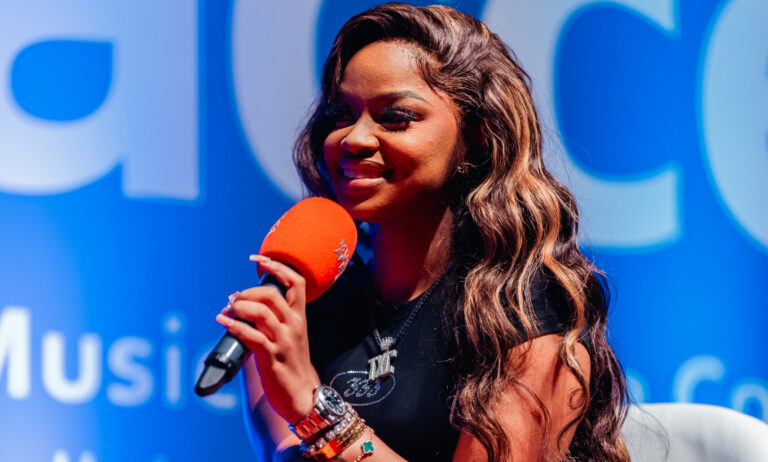
ACCES Conference and Showcase Festival is Africa's leading music industry gathering, bringing together the people shaping the future of the continent's music business. Artists, entrepreneurs, executives, investors, policymakers and cultural leaders from across Africa and around the world come to ACCES to build partnerships, exchange ideas, discover talent and create new business opportunities. Since its launch in 2017, ACCES has become the continent's premier platform for professional exchange and music market development. Combining a high-level conference with a curated showcase festival, networking, exhibitions and industry programmes, ACCES offers a unique space where creativity meets business and where African music connects with the global industry.

Gender@Work
Gender@Work

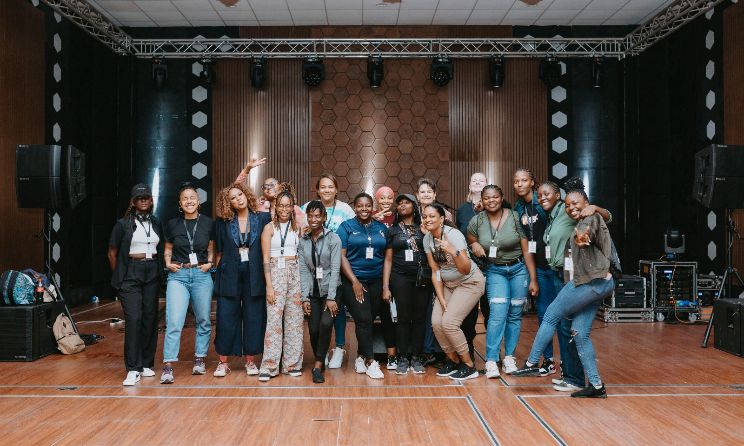
Music In Africa Gender @ Work is a three-year training programme aimed at upskilling and increasing the participation of female professionals in the African music sector. Launched by the Music In Africa Foundation (MIAF) in April 2019, the programme is connected to the MIAF’s ACCES music conference – a pan-African event held in a different African country every year. This connection enables the programme to reach new participants in a different African country every year. The programme marks the beginning of a more concerted effort by the Foundation to support the participation and inclusion of women in all facets of its programmes and the music sector in Africa as a whole. Over the three years, the programme will aim to address gender imbalances in the sector through training, lobbying, facilitating knowledge exchange and dialogues that foster the interest of women. The broader objectives of the programme are to: Provide industry training for women on critical music industry skills, focusing on: Stage management Electronic music production and recording Music business management Technical knowledge Provide an opportunity for both professional and aspiring women to benefit from the Music In Africa network and its broad range of activities in 2019, 2020 and 2021. Provide a solution-based platform in the form of a round table at ACCES with a view to identify challenges, discuss opportunities and lobby for the interests of female practitioners. Offer participants the opportunity to benefit from programmes offered by MIAF’s partners. Increase access to educational materials. Integrate participants in the broader ACCES programme to maximise experience and exposure to the industry. Record and present training materials on the www.musicinafrica.net, including but not limited to tutorials, templates and other best-practice materials. Communicate women-based themes that support the initiatives and messages of the programme. MAIN TRAINING ACTIVITIES Training in first country (Ghana): In the first year, participants will be trained on all aspects of stage management by a team of experienced stage managers from 10 to 17 November 2019. The programme will offer robust classroom training as well as practical, hands-on training in which participants will also be given the opportunity to manage various aspects of the ACCES performance programme. Training in second country: The second training iteration will take place at ACCES 2020 when the programme will diversify its course to include music production lessons and training on other music business topics. A round-table platform will also be introduced to coincide with the ACCES programme. Training in third country: The third training iteration will take place at ACCES 2021 in a different country, offering an advanced course. HOW DO YOU GET INVOLVED?  As a participant, facilitator or trainer: The programme enrolls up to 12 trainees every year. All opportunities are advertised publicly on this website, and will be added to this page. Please keep checking this page for new calls (below under UPDATES & CURRENT OPPORTUNITIES). As a partner Please contact Claire Metais at [email protected]. APPLY The call for applications for 2020 will be announced soon. The Music In Africa Gender @ Work programme is made possible with the support of the Prince Claus Fund, Siemens Stiftung and Goethe-Institut.

Sound Connects Fund
Sound Connects Fund

For cultural and creative practitioners and organisations operating in southern Africa, access to funding remains a major challenge. The COVID-19 pandemic has also had a massive impact on government policy, spending and the economy in general, and has seen spending on culture being moved further down the list of priorities. Further, the cultural and creative industries repeatedly cite four main areas where investment is needed for growth, which are increased visibility, mobility including access to new markets, finance and support structures.

Instrument Building And Repair Project

Experience the Vibrations African Instruments Exhibition online in 3D

Reviews

Falz, Olamide, Davido – ‘Bahd, Baddo, Baddest’

07 Apr 2016 - 21:34

cc-img flag-img

‘Bahd, Baddo, Baddest’, the new song from Falz, is perhaps the first time in Nigerian pop a song title (and maybe the song itself) was conceived wholly from alliterating nicknames.

Falz, Davido and Olamide record a song named after their nicknames.

It’s an easy explanation:

  1. The moniker Falz (real name, Folarin Falana) is, fully, 'Falz the Bahd Guy'.
  2. Baddo is Olamide's other rap name. It is the first semi-coherent thing you hear him say on 2012’s ‘Stupid Love’.
  3. For a while, Davido has called himself the Baddest, although on the 2014 hit song 'Aiye' the word refers to his beloved.

In short: Bahd, Baddo, Baddest. Just in case anyone was in danger of missing the joke, the trio repeats those three made-up words in the chorus. Someone must have thought this clever, and it is. And yet, for that reason, the song never had a chance at greatness.

It is, however, a serviceable piece of music—if only for its beat, which seems to have a lot of synthetic parts that cohere. It is one of those songs that hardly serves a purpose beyond a thumping declaration of its own existence. It is not exactly a club song. It is not thinking music. It isn’t as funny as the usual Falz servings. You can’t really dance to it; you can’t laugh to it; you can’t think to it. Nonetheless, it is a valuable artefact of the mind-sets of three of Nigeria’s leading young men in music. And it is interesting how all of the artists use the song as a snapshot of their current circumstances.

Falz, who almost certainly came up with the title and chorus, begins with a verse not quite as impressive as the best cuts on his sophomore Stories that Touch. “They say know they his father,” he says at the start. Then he explains that his success is not connected to his well-respected lawyer father. Instead, he has succeeded because of his skills at rapping, he boasts. Otherwise, no one would know him.

With the self-justification over, he asks the question which he has clearly needed to ask for weeks now: “Which musician do you know has an AMVCA?” By AMVCA, he means the yearly African Magic Viewers’ Choice Awards, the award ceremony that last month rewarded the rapper with a trophy for his role in a comedy.

Girls, money, alcohol, acting awards—rappers will brag with anything. So Falz’s verse is a rapper asking that his success should not be traced to his well-off dad. Why? Because he really can rap and because he has an acting award. If the second reason makes you laugh, well Falz is part comedian. In any case, that entire story about his father is one he will have to keep telling.

In a key sense, all three rappers are sons seeking to escape a very familiar affliction: the persistence of the father. Two of them, Falz and Davido, are from famously rich families, with fathers they were never going to surpass if they stuck to the family business. Both were sent overseas to school, perhaps to continue that family business. Both broke out from that familial tyranny.

Davido, who finished his university education in Nigeria and at 23 is somewhat still a child by Nigerian standards, now has his own daddy issues since he has a child of his own. Unfortunately, he spends time on ‘Bahd, Baddo, Baddest’ belatedly addressing the uncle of his baby-mama, bringing up an old story long after Nigerian blogs and tabloids have forgotten the controversy.

It does him no favours but boys will be boys. Until they become men, that is. And from this evidence that may be a long while from now. Like Falz, he brags, “I cover magazine, I cover magazine” - a reference to his appearance on the cover of US magazine Fader. Davido is hardly a rapper but, by association, it’s okay to add feature stories to the list of things rappers brag about.

As the sole artist on the song without a wealthy provenance, Olamide is focused on the new realities of his life: money and women. Apparently, every girl he meets wants to marry him. “To be a man is not easy,” he sighs in Nigerian pidgin and Yoruba. “I greet my father.” Naturally, he craves money more, a detail that sets up the song’s best sequence:

Money is all I know, all I know
Money is all I know
If you ain’t talking money
I can’t hear you
Your volume is somehow low.

Olamide is, of course, motivated by a fear of returning to the poverty of his early life, an area covered on the song ‘Anifowose’ from his third solo album Baddest Guy Ever Liveth (2013). Even if the man who has recorded five solo albums in five years greets and commends his father, the old man’s fate is what he is working hard to avoid.

And so we have it that three of Nigeria’s swaggering male artists come together to record a song. You would think they will emerge as men. Instead, we get boys, sons preoccupied with daddy issues. Bahd, Baddo, Baddest? Not quite. 'Fath, Fatho, Fathest' sounds about right. All of these words are misspellings anyway...

Artist: Falz x Olamide x Davido
Song: 'Bahd, Baddo, Baddest'
Label, Year: Bahdguys, 2016

Please log in to post a comment.

Most popular

Disclaimer: Music In Africa provides a platform for musicians and contributors to embed music and videos solely for promotional purposes. If any track or video embedded on this platform violates any copyrights please inform us immediately and we will take it down. Please read our Terms of Use for more.

newsletter banner

Subscribe to our monthly Newsletter

Follow us on social media