












































NEFCISA
NEFCISA

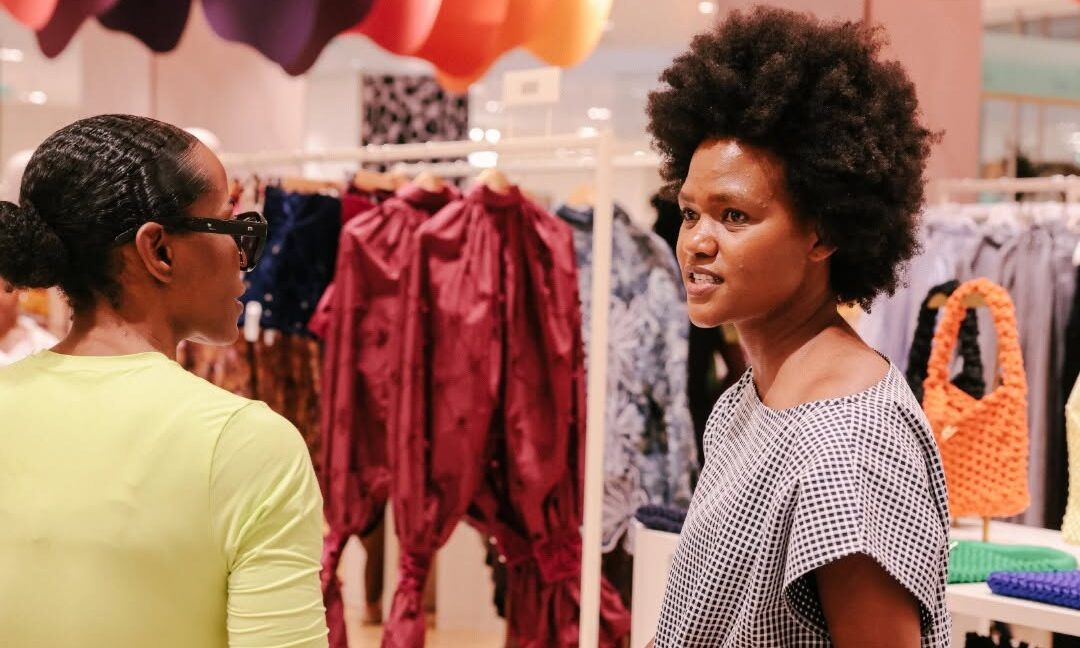
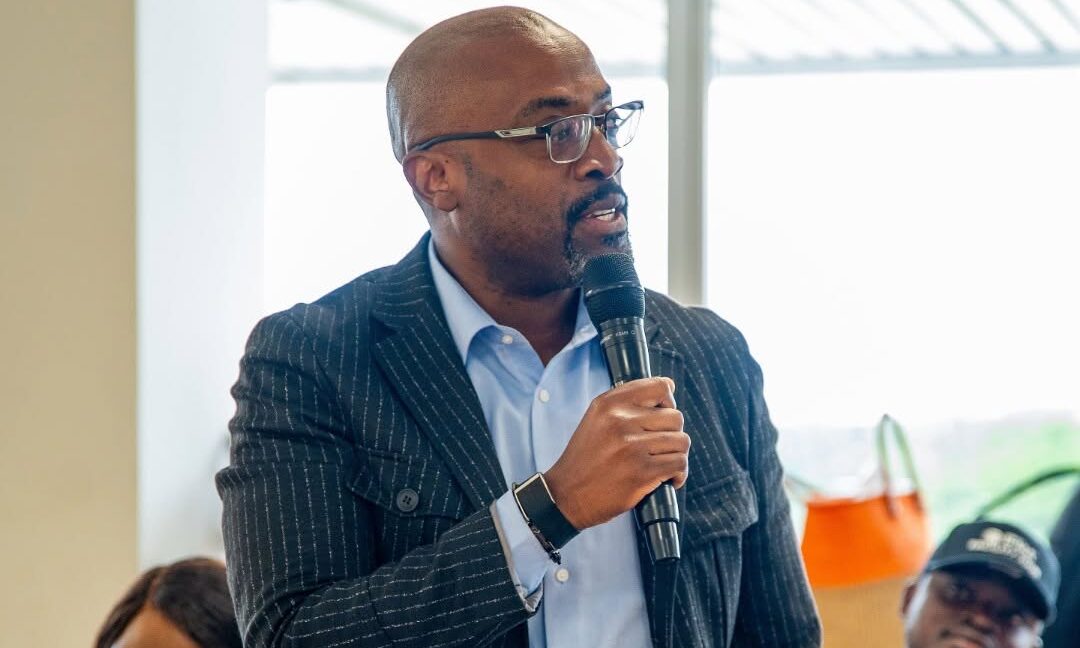
The Music In Africa Foundation (MIAF) is proud of its partnership with the Industrial Development Corporation (IDC) as a Strategic Implementing Partner (SIP) for its Social Employment Fund (SEF). Through this collaboration, MIAF is running a national programme that is creating jobs, addressing skills gaps, and strengthening South Africa's creative industries — in line with the SEF's overarching goal to generate work for the common good and build community value through employment, social contribution, and inclusive economic participation. Operating under the banner NEFCISA (National Employment Facility for Creative Industries in South Africa), the initiative is recruiting and training participants, matching them with host organisations, and has already placed 1 500 workers across the country — surpassing its original target of 1 000. NEFCISA is delivered through a network of 20 host organisations spanning five provinces, who are actively hosting participants and contributing to work for the common good across South Africa's creative and cultural industries. Key Objectives: Support employment and entrepreneurship in the creative industries. Offer skills development and training programmes. Foster partnerships between public and private creative sectors. Promote South African creativity at both provincial and national levels Foster community development through social contribution.

ACCES
ACCES

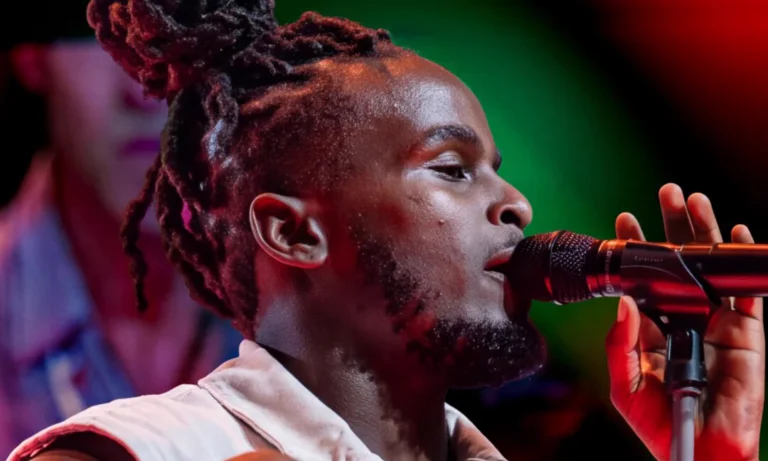
ACCES Conference and Showcase Festival is Africa's leading music industry gathering, bringing together the people shaping the future of the continent's music business. Artists, entrepreneurs, executives, investors, policymakers and cultural leaders from across Africa and around the world come to ACCES to build partnerships, exchange ideas, discover talent and create new business opportunities. Since its launch in 2017, ACCES has become the continent's premier platform for professional exchange and music market development. Combining a high-level conference with a curated showcase festival, networking, exhibitions and industry programmes, ACCES offers a unique space where creativity meets business and where African music connects with the global industry.

Gender@Work
Gender@Work

Music In Africa Gender @ Work is a three-year training programme aimed at upskilling and increasing the participation of female professionals in the African music sector. Launched by the Music In Africa Foundation (MIAF) in April 2019, the programme is connected to the MIAF’s ACCES music conference – a pan-African event held in a different African country every year. This connection enables the programme to reach new participants in a different African country every year. The programme marks the beginning of a more concerted effort by the Foundation to support the participation and inclusion of women in all facets of its programmes and the music sector in Africa as a whole. Over the three years, the programme will aim to address gender imbalances in the sector through training, lobbying, facilitating knowledge exchange and dialogues that foster the interest of women. The broader objectives of the programme are to: Provide industry training for women on critical music industry skills, focusing on: Stage management Electronic music production and recording Music business management Technical knowledge Provide an opportunity for both professional and aspiring women to benefit from the Music In Africa network and its broad range of activities in 2019, 2020 and 2021. Provide a solution-based platform in the form of a round table at ACCES with a view to identify challenges, discuss opportunities and lobby for the interests of female practitioners. Offer participants the opportunity to benefit from programmes offered by MIAF’s partners. Increase access to educational materials. Integrate participants in the broader ACCES programme to maximise experience and exposure to the industry. Record and present training materials on the www.musicinafrica.net, including but not limited to tutorials, templates and other best-practice materials. Communicate women-based themes that support the initiatives and messages of the programme. MAIN TRAINING ACTIVITIES Training in first country (Ghana): In the first year, participants will be trained on all aspects of stage management by a team of experienced stage managers from 10 to 17 November 2019. The programme will offer robust classroom training as well as practical, hands-on training in which participants will also be given the opportunity to manage various aspects of the ACCES performance programme. Training in second country: The second training iteration will take place at ACCES 2020 when the programme will diversify its course to include music production lessons and training on other music business topics. A round-table platform will also be introduced to coincide with the ACCES programme. Training in third country: The third training iteration will take place at ACCES 2021 in a different country, offering an advanced course. HOW DO YOU GET INVOLVED?  As a participant, facilitator or trainer: The programme enrolls up to 12 trainees every year. All opportunities are advertised publicly on this website, and will be added to this page. Please keep checking this page for new calls (below under UPDATES & CURRENT OPPORTUNITIES). As a partner Please contact Claire Metais at [email protected]. APPLY The call for applications for 2020 will be announced soon. The Music In Africa Gender @ Work programme is made possible with the support of the Prince Claus Fund, Siemens Stiftung and Goethe-Institut.

Sound Connects Fund
Sound Connects Fund

For cultural and creative practitioners and organisations operating in southern Africa, access to funding remains a major challenge. The COVID-19 pandemic has also had a massive impact on government policy, spending and the economy in general, and has seen spending on culture being moved further down the list of priorities. Further, the cultural and creative industries repeatedly cite four main areas where investment is needed for growth, which are increased visibility, mobility including access to new markets, finance and support structures.

Instrument Building And Repair Project

Experience the Vibrations African Instruments Exhibition online in 3D

Reviews

Falz – ‘Stories That Touch’

05 Jan 2016 - 10:30

cc-img flag-img

Artist: Falz
Album: Stories That Touch
Label & Year: Bahdguys Entertainment, 2015
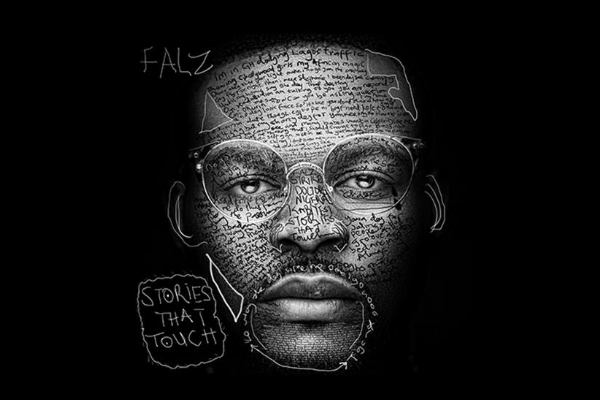
Album art for 'Stories that Touch'

On Stories That Touch, an album title that is Nigerianese for a tongue-in-cheek display of sympathy, flecks of Falz’s true status mix with the fabricated. Real name Folarin Falana, he is the barrister son of a famous Nigerian lawyer. Following his abandonment of wig for snapback, he created a comic character Brother Taju, who is the uncouth but somewhat-cool alter ego of his creator. It is easy to see both aspects of Falz on television, where his stylish outfits blend with bad English. On the album under review, his second after 2014's Waz Up Guy, the best example of his two-timing is the song 'Karishika' and its remix.

Falz features Phyno on the original 'Karishika'; MI and Show Dem Camp rap on the remix. In essence, one version has a local rapper, the other has returnee rappers. Both songs are enjoyable but none of the featured stars spits a line with enough connection to the source of the title (a Nollywood film) to produce something truly culturally resonant. Although MI’s “She started to levitate/she was higher than kpoli” comes close.

Thus both versions belong to Falz who, in choosing that title, shows just how connected he is to the cultural life of the average Nigerian. Perhaps because the film was released in 1996, years before the former law student’s time at the UK’s University of Reading. Both songs are also tributes to Nollywood, back when the film industry was monolithic and yet to split into distinct cinema and home video sections.

Further, there is the mellow tune 'Time Difference' about a man in Lag but his ‘shorty dey for Yankee’. The relationship is complicated by an actual time difference and the hopelessness of a sexual side to the affair. Absolutely one of the highlights of Stories that Touch, it is also one of a few Falz songs that could be sung without the interference of Brother Taju’s accent. Regardless of the geographical inversion—Falz’s male narrator is the one in Lagos—it is no stretch to assume that Time Difference may owe some of its excellence to the rapper’s familiarity with the situation.

So Falz has it both ways, whipping out his ‘abroad-status’ when it serves, turning local when it helps (which maybe how he received a Best Street Hop nomination at the 2015 Headies).

Is this fair? Maybe. Maybe not.

Whatever the case, it isn’t Falz’s fault. Privilege works like gravity. It’s tricky but easier to move down the class pole; moving up is nearly impossible. Put differently, his colleague and compatriot Olamide will always have a whiff of Bariga and his lower-class upbringing in his music—this is true of love songs 'Melo Melo' and the Phyno duet 'Carry Me Go' as it is of the straight-up English 'Boom, Boom, Boom'. Of course, this is irrelevant to Olamide because he now has a sizable audience and has almost completely defied his own class origins. On the other hand, MI is thought of as elitist, but he appealed somewhat to a different class when he used pidgin on 'My Belle My Head' from MI2. He went one better aided by Reminisce on 'Shekpe' from The Chairman. Falz may have found the link between both classes.

And yet. For Falz, the sole disadvantage of his class shape-shifting is that for such a gifted rapper, he'll never be an MI or an Olamide. Falz will never command a class. This, you could say, is the upshot of being Falz of both classes and master of none. A truly talented rapper, his gift is his curse: He escapes charges of class appropriation because he’s funny; yet partly for the same reason, he’ll never be rated as highly as those two.

If you think this is unfair, just imagine what Falz himself thinks. The man begins his album by calling himself 'kabiyesi', a Yoruba word used for kings. Is this another story that touch? You bet.

Please log in to post a comment.

Most popular

Disclaimer: Music In Africa provides a platform for musicians and contributors to embed music and videos solely for promotional purposes. If any track or video embedded on this platform violates any copyrights please inform us immediately and we will take it down. Please read our Terms of Use for more.

newsletter banner

Subscribe to our monthly Newsletter

Follow us on social media