






























NEFCISA
NEFCISA

The Music In Africa Foundation (MIAF) is proud of its partnership with the Industrial Development Corporation (IDC) as a Strategic Implementing Partner (SIP) for its Social Employment Fund (SEF). Through this collaboration, MIAF is running a national programme that is creating jobs, addressing skills gaps, and strengthening South Africa's creative industries — in line with the SEF's overarching goal to generate work for the common good and build community value through employment, social contribution, and inclusive economic participation. Operating under the banner NEFCISA (National Employment Facility for Creative Industries in South Africa), the initiative is recruiting and training participants, matching them with host organisations, and has already placed 1 500 workers across the country — surpassing its original target of 1 000. NEFCISA is delivered through a network of 20 host organisations spanning five provinces, who are actively hosting participants and contributing to work for the common good across South Africa's creative and cultural industries. Key Objectives: Support employment and entrepreneurship in the creative industries. Offer skills development and training programmes. Foster partnerships between public and private creative sectors. Promote South African creativity at both provincial and national levels Foster community development through social contribution.

ACCES
ACCES

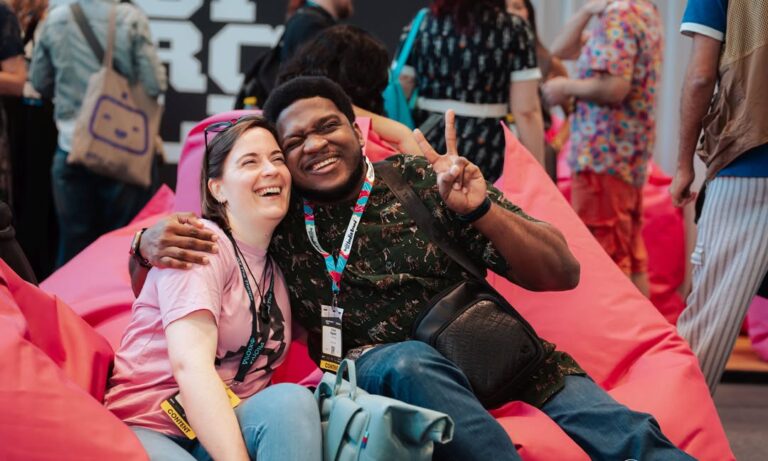
ACCES Conference and Showcase Festival is Africa's leading music industry gathering, bringing together the people shaping the future of the continent's music business. Artists, entrepreneurs, executives, investors, policymakers and cultural leaders from across Africa and around the world come to ACCES to build partnerships, exchange ideas, discover talent and create new business opportunities. Since its launch in 2017, ACCES has become the continent's premier platform for professional exchange and music market development. Combining a high-level conference with a curated showcase festival, networking, exhibitions and industry programmes, ACCES offers a unique space where creativity meets business and where African music connects with the global industry.

Gender@Work
Gender@Work

Music In Africa Gender @ Work is a three-year training programme aimed at upskilling and increasing the participation of female professionals in the African music sector. Launched by the Music In Africa Foundation (MIAF) in April 2019, the programme is connected to the MIAF’s ACCES music conference – a pan-African event held in a different African country every year. This connection enables the programme to reach new participants in a different African country every year. The programme marks the beginning of a more concerted effort by the Foundation to support the participation and inclusion of women in all facets of its programmes and the music sector in Africa as a whole. Over the three years, the programme will aim to address gender imbalances in the sector through training, lobbying, facilitating knowledge exchange and dialogues that foster the interest of women. The broader objectives of the programme are to: Provide industry training for women on critical music industry skills, focusing on: Stage management Electronic music production and recording Music business management Technical knowledge Provide an opportunity for both professional and aspiring women to benefit from the Music In Africa network and its broad range of activities in 2019, 2020 and 2021. Provide a solution-based platform in the form of a round table at ACCES with a view to identify challenges, discuss opportunities and lobby for the interests of female practitioners. Offer participants the opportunity to benefit from programmes offered by MIAF’s partners. Increase access to educational materials. Integrate participants in the broader ACCES programme to maximise experience and exposure to the industry. Record and present training materials on the www.musicinafrica.net, including but not limited to tutorials, templates and other best-practice materials. Communicate women-based themes that support the initiatives and messages of the programme. MAIN TRAINING ACTIVITIES Training in first country (Ghana): In the first year, participants will be trained on all aspects of stage management by a team of experienced stage managers from 10 to 17 November 2019. The programme will offer robust classroom training as well as practical, hands-on training in which participants will also be given the opportunity to manage various aspects of the ACCES performance programme. Training in second country: The second training iteration will take place at ACCES 2020 when the programme will diversify its course to include music production lessons and training on other music business topics. A round-table platform will also be introduced to coincide with the ACCES programme. Training in third country: The third training iteration will take place at ACCES 2021 in a different country, offering an advanced course. HOW DO YOU GET INVOLVED?  As a participant, facilitator or trainer: The programme enrolls up to 12 trainees every year. All opportunities are advertised publicly on this website, and will be added to this page. Please keep checking this page for new calls (below under UPDATES & CURRENT OPPORTUNITIES). As a partner Please contact Claire Metais at [email protected]. APPLY The call for applications for 2020 will be announced soon. The Music In Africa Gender @ Work programme is made possible with the support of the Prince Claus Fund, Siemens Stiftung and Goethe-Institut.

Sound Connects Fund
Sound Connects Fund

For cultural and creative practitioners and organisations operating in southern Africa, access to funding remains a major challenge. The COVID-19 pandemic has also had a massive impact on government policy, spending and the economy in general, and has seen spending on culture being moved further down the list of priorities. Further, the cultural and creative industries repeatedly cite four main areas where investment is needed for growth, which are increased visibility, mobility including access to new markets, finance and support structures.

Instrument Building And Repair Project

Experience the Vibrations African Instruments Exhibition online in 3D

Reviews

Zulu Queens’ Isithembu finds strength in heritage, sisterhood and reinvention
28 Aug 2026 - 18:00

cc-img flag-img

There is something compelling about two women entering a musical space historically dominated by men and choosing not merely to participate, but to reshape it on their own terms. That is the central appeal of Isithembu, the 14-track collaborative project by South African vocalists MaWhoo and Lwah Ndlunkulu.

Lwah Ndlunkulu and MaWhoo. Photo: Samukelo Ngubeni

The album was introduced at an intimate listening and showcase event at the Theatre of Marcellus at Emperors Palace, where the two artists presented themselves as the Zulu Queens. Dressed in contemporary interpretations of traditional Zulu attire, MaWhoo (Thandeka Nontobeko Ngema) and Lwah Ndlunkulu (Lwandile Mtshali) used the occasion to frame Isithembu as a project rooted as much in cultural identity as in contemporary music.

At its strongest, Isithembu feels like an exercise in cultural reclamation. MaWhoo and Lwah Ndlunkulu move away from some of the commercial sounds associated with their individual careers and immerse themselves in traditions shaped by maskandi, Isicathamiya and Mbaqanga. The project draws on the acoustic character of maskandi guitar, the concertina and the layered vocal harmonies associated with Isicathamiya, while retaining enough contemporary polish to make the music accessible beyond its traditional base.

That balance is what makes the album interesting. Rather than treating traditional music as a nostalgic reference point, the Zulu Queens approach it as a living form that can accommodate new voices. Their use of traditional guitar patterns, vocal arrangements and rhythmic structures gives the project a strong sense of place, while the two singers bring distinctly different vocal personalities to the material.

Lwah Ndlunkulu’s voice carries a rustic, earthy quality, while MaWhoo tends towards a smoother and more contemporary delivery. The contrast could easily have made the project feel disjointed, but instead it becomes one of its defining characteristics. Their voices provide different entry points into the same musical world.

The project’s lead single, ‘Distance’, featuring Feza, offers an early indication of that chemistry. Other tracks performed during the listening session, including ‘Iso Ngeso’, ‘Vela’ and ‘Woolies’, featuring Mthandeni SK, further demonstrated the breadth of the album and its willingness to move between traditional and contemporary textures.

The making of Isithembu was itself marked by an unexpected setback. During the media session, the artists revealed that the original recordings of all 14 songs were accidentally lost. They subsequently returned to the studio and recreated the project from the ground up.

Such an incident could easily have compromised a project built around intricate vocal arrangements and instrumental details. Instead, the second recording process appears to have given the album another layer of purpose. The circumstances surrounding its recreation add an element of resilience to a project already concerned with identity, heritage and the strength of women.

That theme was made explicit by Lwah Ndlunkulu during the event.

“We intentionally entered a male-dominated genre to prove that women can do anything and succeed at it.”

The statement captures much of what Isithembu is attempting. Its significance does not rest solely on two established artists experimenting with traditional sounds. It also lies in their decision to occupy a musical territory in which women have historically had less visibility and to approach it without compromising their identities.

The album therefore works on two levels. Musically, it is a meeting point between maskandi, Isicathamiya, Mbaqanga and contemporary South African pop. Culturally, it is an argument for the continued relevance of traditional music and the importance of allowing new generations of artists to reinterpret it.

The listening session, moderated by television presenter Ntombi Ngcobo-Mzolo, gave attendees an opportunity to hear the artists discuss the project and its individual songs. Afro-pop singer and songwriter Starr Healer opened the evening, while MaWhoo and Lwah Ndlunkulu performed selected tracks from the album.

Ultimately, Isithembu is most convincing when it trusts its traditional foundations. Its greatest strength is not the spectacle surrounding its arrival, but the decision at its core: two women taking sounds deeply associated with Zulu cultural identity and giving them new space to breathe.

Whether the project becomes a defining statement in the evolution of traditional South African music remains to be seen. But Isithembu makes a persuasive case that heritage does not have to be preserved by leaving it untouched. Sometimes, the best way to keep a tradition alive is to let new voices change it.

Contributors: Amahle Mkungela, Tsholo Moteka, Keamohetswe Mokoena and Lerato Ramogase

Please log in to post a comment.

Most popular

Disclaimer: Music In Africa provides a platform for musicians and contributors to embed music and videos solely for promotional purposes. If any track or video embedded on this platform violates any copyrights please inform us immediately and we will take it down. Please read our Terms of Use for more.

newsletter banner

Subscribe to our monthly Newsletter

Follow us on social media