




















































Against all odds: 20 years of cultural exchange and Hip-hop custodianship

12 Oct 2026 - 10:11


For two decades, Mary Fitzgerald Square in Newtown has been a gathering place for South African hip hop, bringing together established artists, emerging talent and audiences united by a shared love of the culture. On Saturday, 10 October 2026, the Back to the City (BTTC) Festival marked its 20th anniversary with a programme that extended beyond live music to celebrate hip-hop’s history, creativity and economic potential.
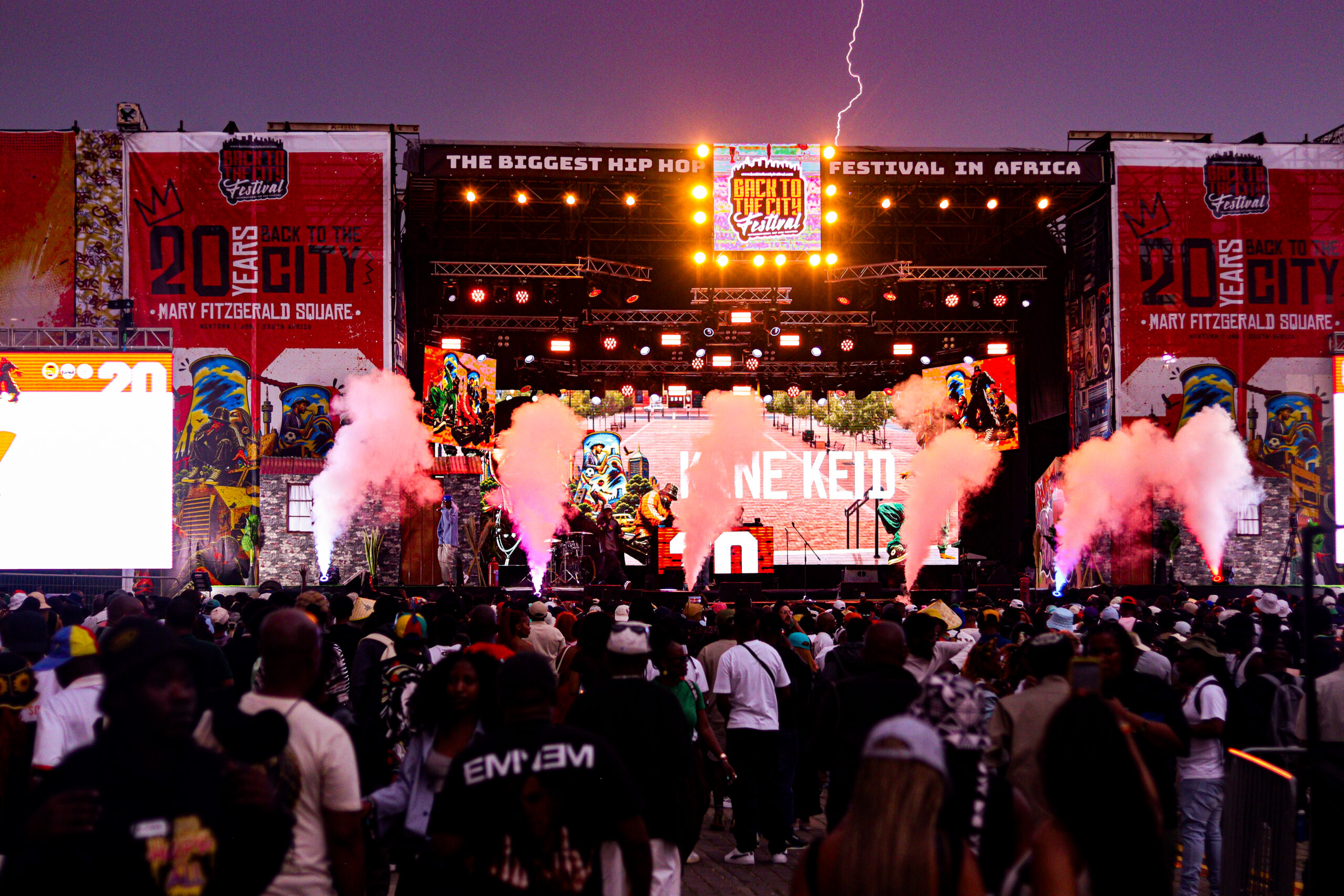
This year’s edition coincided with the 140th anniversary of Johannesburg and commemorations marking 50 years since the 1976 Soweto Youth Uprising. Photo: Lebogang Leteane
This year’s edition coincided with the 140th anniversary of Johannesburg and commemorations marking 50 years since the 1976 Soweto Youth Uprising. Staged in Newtown, an area associated with Johannesburg’s cultural and political history, the festival offered a reminder of the role young people and creative expression have played in shaping South African identity. Under founder Osmic Menoe, Back to the City has continued to provide a platform for hip-hop as both an artistic movement and a vehicle for youth expression and entrepreneurship.
International acts meet local talent
The festival’s international programme featured US artists Ab-Soul, Slum Village and Blu & Exile, alongside a broad selection of South African performers. The international appearances provided an opportunity for local audiences to engage with artists whose work has influenced hip-hop across generations, while the domestic line-up reflected the range of sounds and styles within South Africa’s scene.
One of the evening’s memorable moments came when Johannesburg was hit by heavy rain. Rather than emptying the square, the downpour became part of the performance atmosphere as Blu & Exile took to the stage and performed their song ‘Dancing in the Rain’. Fans sang along as the rain fell across the packed venue, turning the performance into a striking visual and communal moment. The weather added an unexpected dimension to the set and did little to diminish the crowd’s enthusiasm.
Ab-Soul’s performance brought another surge of excitement. As fans moved closer to the stage, one spectator breached the security barrier and ran up the steps in an apparent attempt to join the US rapper. Security personnel intercepted the individual before he reached the performer and escorted him away. The incident was brief, and the performance continued without interruption.
The local line-up included Cassper Nyovest, Emtee, Blxckie, Stogie T, Reason and Tuks, alongside Kane Keid, Zulu Mecca, Touchline, Babylowski, Loatinover Pounds, Buzzi Lee, Frank Casino, Dee Koala, Zakwe, Maraza, Revivolution and Last Days Fam. Other performers included 9nakons, Ta Longz, Ziggy4x, Firoy, Landrose, Emdeeyou, Scar Stunner, Seag Adkins, Marley Bloo and Babygirl Zae.
The programme also included a Power Hour set featuring La Cabra, Just Sam, Tshego Santana and Mfana Touchline, while kwaito group Trompies delivered a performance under the festival’s Heritage theme. Sixby9ine Presents brought together Flow Jones Jr, Roiii, The Northmob and Bantu Ndts. DJs and selectors, including DJ Speedsta, Kyotic, Kenzhero, DJ Azhul, Mr X, C-Live, DJ Easy, Amu, Mac Breezy, Skywalker, Zero, Spontaneous, Speeka, U&I, Tha Cutt, Nikki Newlands, Mac Shawty, DJ Soosh and Rush-Awa, contributed to the festival’s wider musical programme. The Rare Groove section featured Nutty Nys, Kitchen Mess, Trev The Japanese, Maxx, Doda, Bubbles and Boisanza. Hosts Nomfundo Yekani, Mmambo ‘The Voice of God’, DJ Fae Fae, XXC Legacy and Xavier Thxmas guided the programme.
Keeping hip hop’s foundations alive
Live performances were only one part of the festival. Competitions celebrating emceeing, beatmaking, DJing and graffiti placed hip-hop’s foundational practices at the centre of the programme.
The 10K Challenge brought MCs and producers into competition, with participants vying for a prize package that included R10,000 in cash, studio time at the SA Hip Hop Museum, a Studio-in-a-Box setup and an opening slot at Back to the City 2027. The opportunity to perform at the following year’s festival offered the winner a potential step towards greater industry exposure.
MC and DJ battles, alongside graffiti showcases, further highlighted the skills and creative disciplines that helped shape hip-hop culture. These activities reinforced the festival’s role as a space where performers could compete, develop their craft and connect with audiences beyond the main stage.
The festival grounds also featured activities aimed at visitors interested in sport, gaming and visual art. The Games Zone hosted a 3x3 street basketball tournament with R10,000 in prize money, a 1PAL street soccer tournament and a FIFA FC 26 and arcade competition, which offered a further R10,000 prize. At the Skatepark and Live Art zone, skateboarders used custom ramps while 40 graffiti artists worked on a shared urban canvas, turning the area into an open-air display of street art. Helicopter rides offered visitors an aerial view of the festival and the surrounding Johannesburg skyline.
Streetwear, food and the business of hip hop
Back to the City’s wider programme also reflected the commercial and lifestyle dimensions of hip-hop. The First Fits fashion competition spotlighted streetwear and thrift culture, while more than 100 independent clothing stalls and sneaker pop-ups gave local designers and traders access to festival-goers.
Food vendors served a range of options, including kotas, braai, pizzas, boerewors rolls and vegan dishes. A designated beer garden provided a separate space for adult visitors, while amusement rides, including a Ferris wheel, added another attraction to the festival grounds.
Together, these activities demonstrated how hip-hop events can support businesses beyond music, creating opportunities for clothing designers, food vendors, artists and other independent traders. For a festival built around a culture that has long connected music with fashion, visual art and street-level enterprise, these spaces were an important part of the overall experience.
Two decades of cultural continuity
Back to the City’s 20th anniversary was a celebration of its longevity, but also an opportunity to consider the culture it continues to serve. Its combination of international performers, established South African acts, emerging artists, competitions and independent businesses illustrated the many ways hip-hop operates beyond recorded music.
The festival’s place in Newtown, alongside its connection to Johannesburg’s history and the legacy of youth activism, gave the anniversary added resonance. Hip hop has developed through changing sounds, technologies and commercial opportunities, yet its emphasis on self-expression, community and creative independence remains central to its appeal.
Two decades on, Back to the City continues to provide a meeting point for those who make, perform and support hip hop. Its 2026 edition showed that the culture’s legacy is sustained not only by headline performances, but also by the artists, DJs, dancers, graffiti writers, entrepreneurs and audiences who keep it moving. Even the rain could not stop the celebration.
Contributors: Amahle Mkungela, Keamohetswe Mokoena, Lerato Ramogase and Lebogang Leteane


Most popular
Gambia: Suntou Susso announce UK tour for ‘The Path of a Griot’
09 Oct 2026
Open call: 2026 Gender@Work music industry training in Johannesburg
09 Oct 2026

Top amapiano songs of 2026
16 Feb 2026

Top Afrobeats songs of 2026
19 Mar 2026
Call for applications: ACCES 2026 Emerging Artist Spotlight Competition
01 Oct 2026
Top Naija songs of 2026
31 Mar 2026
Disclaimer: Music In Africa provides a platform for musicians and contributors to embed music and videos solely for promotional purposes. If any track or video embedded on this platform violates any copyrights please inform us immediately and we will take it down. Please read our Terms of Use for more.

Subscribe to our monthly Newsletter
Follow us on social media


Please log in to post a comment.