























































South Sudan already has musicians and an audience for music, although the market remains relatively small and only a limited number of listeners can regularly pay for recordings and live performances. Much of the sector is built around live performance, with weddings, concerts, hospitality venues, community gatherings and cultural events providing important spaces for music to circulate and generate income.

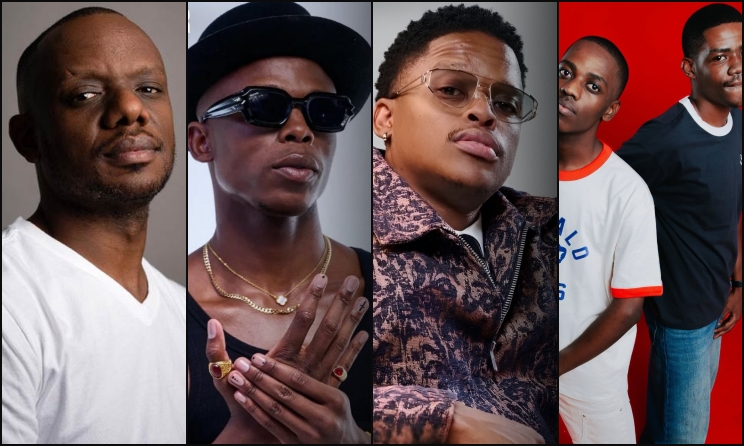
South Sudanese artists Dawa Luga and Bro Winner at the 2026 edition of the Pojulu Cultural Festival.
Because specialised skills and professional services are limited, practitioners often perform several roles themselves.
But a functioning music industry is measured by more than the number of artists recording songs or performing. It depends on the businesses, specialised skills, infrastructure, rights systems, financing and public institutions operating around them. These systems determine whether musical activity remains informal and occasional or develops into a sustainable sector.
This is where culture needs to be considered within the South Sudan Development Plan (SSDP) 2026–2036.
The plan places peace and security, economic diversification, human capital development and stronger institutions at the centre of national development. Culture intersects with all four. Sustained advocacy is therefore needed to ensure that culture is reflected in the plan’s implementation frameworks, budgets and measurable national priorities.
Without that integration, cultural activity risks remaining peripheral to national planning, even when it contributes to employment, social cohesion and enterprise development.
The reliance on Uganda for recording and production illustrates why this matters. When production takes place elsewhere, South Sudan loses more than recording expenditure. Skills accumulate outside the country, local producers have fewer opportunities to develop their businesses, and companies supplying equipment and technical services have less incentive to emerge. Over time, this can deepen dependence on external production networks.
The baseline found no professional, well-equipped studio in Juba and fewer than five home studios. Many musicians and producers are self-taught, while rehearsal spaces and venues equipped for professional sound are limited or non-existent. Much of the city’s live music takes place in clubs, hotels and open spaces that were not designed specifically for music.
These conditions affect not only production quality but also artists’ ability to rehearse, experiment and prepare for professional performances.
South Sudan does not need to begin with large cultural monuments. Smaller rehearsal spaces, shared production facilities and properly equipped mid-sized venues could address some of the most immediate gaps.
Rehearsal facilities are particularly important because many performances currently rely heavily on playback, while live bands may not have complete sets or sufficient opportunities to practise together. Regular access to suitable spaces would allow musicians to develop fuller live repertoires and arrangements, while creating points of contact between artists, producers, technicians and audiences.
The people operating these spaces matter just as much.
Formal training and professional support in music production, sound engineering, artist management, event production and other specialised areas remain limited. Publishing, royalty administration and other copyright-related activities cannot yet operate as established parts of the industry because South Sudan lacks a comprehensive copyright framework and the institutional systems required to administer it.
As infrastructure expands, the country will need people with the skills to manage, maintain and commercialise it.
What exists today is largely informal and practice-based. Musicians, producers, event organisers, sound technicians and other practitioners learn through experience, peer networks and short-term opportunities. These activities are important foundations, but they do not yet constitute a fully developed music ecosystem.
The challenge is to build on this existing knowledge while creating structured training, professional standards and long-term career pathways.
Training should therefore move beyond one-off workshops. Professional development needs to be continuous and connected to the practical needs of the industry, with opportunities for participants to apply their skills in studios, venues, events, media organisations and creative businesses.
Regional exchange should remain part of this process, but the objective should be to strengthen local expertise and ensure that knowledge gained through international partnerships contributes to the domestic market.
The same principle applies online.
South Sudanese artists and cultural practitioners already use platforms such as Facebook, WhatsApp, TikTok and YouTube, including to reach audiences in the diaspora. But digital visibility alone does not constitute a digital music business.
Turning online activity into income requires systems that connect creative work to ownership, distribution, payment and accountability. Creators need professional distribution, accurate metadata, clearly documented ownership, reliable payment channels and mechanisms through which royalties and licensing income can be identified and collected.
Copyright sits at the centre of this chain. Ownership has economic value only when there are institutions capable of administering rights, issuing licences, collecting revenue and returning it to rights holders.
Without those systems, digital platforms may increase exposure without providing reliable income.
This is why the long-delayed Copyright Bill matters economically. South Sudan needs legislation, but it will also need the institutions and professional expertise to implement it. Publishers, rights administrators, entertainment lawyers, managers and licensing specialists are part of the commercial infrastructure of a music industry just as studios and stages are.
A functioning rights framework would give artists greater clarity over ownership, give businesses more certainty and create a foundation for licensing and investment.
Better rights administration could also improve access to finance. Banks and investors need evidence of how a business generates income. Contracts, royalty statements, ticketing records, licensing agreements and documented digital revenue can create financial histories that make creative enterprises easier to assess.
Copyright reform is therefore connected not only to artistic ownership but also to the broader financial credibility of the sector.
The baseline shows interest among practitioners in developing studios, production companies, artist-management businesses and events. The challenge is to help these activities develop into properly structured enterprises with financial records, contracts, business plans and clearer revenue models.
That cannot be achieved by supporting individual businesses in isolation. The wider regulatory, financial and infrastructure environment also needs to become more predictable.
This makes a properly resourced Ministry of Culture, Museums and National Heritage important. The ministry is expected to develop policy, support infrastructure, collect sector data, advance copyright administration, protect heritage and coordinate partnerships across a complex cultural sector. Its capacity will influence whether recommendations become practical programmes.
The issue is not simply the ministry’s budget, but also the strength of the government agencies responsible for implementing cultural policy.
The National Arts Council, for example, exists in law and public discourse but has yet to become a fully operational institution with a clear mandate, staffing, budget, governance structure and functioning programmes. Without effective institutions, cultural policy can remain largely aspirational, while responsibility for supporting artists and creative enterprises remains unclear.
Clarifying and operationalising these bodies is therefore as important as increasing the ministry’s allocation.
Greater public investment in culture should be considered within the wider national-development agenda. Effective cultural programmes can support youth employment, enterprise development, heritage protection, peacebuilding and economic diversification. Studios, rehearsal spaces and performance venues can also provide constructive spaces for young people and strengthen social connections.
Development partners can support these efforts, but they cannot replace the public institutions mandated to lead cultural policy.
Public investment must also be guided by evidence.
Civil society organisations, artists and industry associations should advocate for culture to feature more clearly in SSDP implementation plans, sector budgets and national development indicators. The government cannot plan effectively for an industry it does not measure, while the sector will struggle to make a strong case for resources without reliable data.
Regular information on employment, businesses, venues, audiences, production, digital activity and revenue would make it easier to identify gaps and determine whether interventions are working.
Institutional mandates also need to be clearer.
The National Association of Musicians currently functions both as an industry representative body and, in practice, as a regulator. These responsibilities should be separated in line with established governance principles. A representative association should advocate for artists and industry professionals, support professional development and help coordinate the sector, while an independent body with a clear statutory mandate should handle regulation, licensing, standards and oversight.
Clearer institutional responsibilities would strengthen accountability, reduce potential conflicts of interest and give artists and businesses greater confidence in the system. It would also help government and development partners identify the appropriate institutions through which support should be channelled.
South Sudan has the creative ambition and cultural inheritance to build a stronger sector. As sounds move rapidly across borders, its artists will naturally absorb influences from Africa and beyond.
The task is not to prevent that exchange, but to build enough knowledge and confidence at home for those influences to meet local rhythms, languages, histories and musical traditions in new ways.
A stronger domestic ecosystem would allow South Sudanese artists to participate in regional and global markets without losing the cultural foundations that make their work distinctive.
There are signs that this conversation is beginning to gain policy attention. The Ministry of Culture, Museums and National Heritage and the National Commission of UNESCO have been working together to strengthen the cultural sector.
In a discussion about these efforts, the Minister of Culture, Museums and National Heritage, Hon. Sarah Nyanath Elijah, emphasised the ministry’s intention to move beyond heritage work and activate the country’s cultural and creative industries, particularly through job creation and support for culture-based small and medium-sized enterprises.
The ministry is also exploring ways to position South Sudan as a tourism destination through culture, alongside work on relevant legislation and policies, including copyright, and programmes informed by research.
That ambition provides a potential policy foundation, but turning it into measurable results will require cooperation among government, artists, industry stakeholders, civil society, donors and development partners.
The roles of each actor need to be clear, with realistic timelines and mechanisms for monitoring progress.
Development partners should also treat culture as a sector in its own right. South Sudan, Somalia, Sudan and other countries affected by conflict, fragility or severe institutional constraints should be considered for cultural, creative-industry and youth programmes when funding opportunities arise.
These countries should not be judged solely against institutional benchmarks designed for more stable and better-resourced environments. Limited infrastructure, disrupted education systems, restricted mobility, weak markets and limited access to finance are not evidence of a lack of creative potential. They are precisely the conditions that can make targeted and sustained investment necessary.
At the same time, external assistance should strengthen local institutions and businesses rather than creating parallel systems that disappear when a project ends.
Ultimately, the goal is not simply to produce more music. It is to build the institutions, skills, infrastructure and markets that allow music and the wider creative sector to contribute meaningfully to South Sudan’s development.
The songs are already being made. The audiences already exist. The challenge now is to build the ecosystem around them.
Read Part 1 here.
Lucy Ilado is a cultural policy specialist, researcher and programme manager working across Africas’s cultural and creative industries. Her work focuses on cultural policy, research, ecosystem building and programme design.


Most popular

Top amapiano songs of 2026
16 Feb 2026

Top Afrobeats songs of 2026
19 Mar 2026

Top Naija songs of 2026
31 Mar 2026
Open call: 2026 Gender@Work music industry training in Johannesburg
09 Oct 2026
Gambia: Suntou Susso announce UK tour for ‘The Path of a Griot’
09 Oct 2026

ACCES unveils stellar programme for 2026 edition
17 Oct 2026
Disclaimer: Music In Africa provides a platform for musicians and contributors to embed music and videos solely for promotional purposes. If any track or video embedded on this platform violates any copyrights please inform us immediately and we will take it down. Please read our Terms of Use for more.

Subscribe to our monthly Newsletter
Follow us on social media


Please log in to post a comment.