





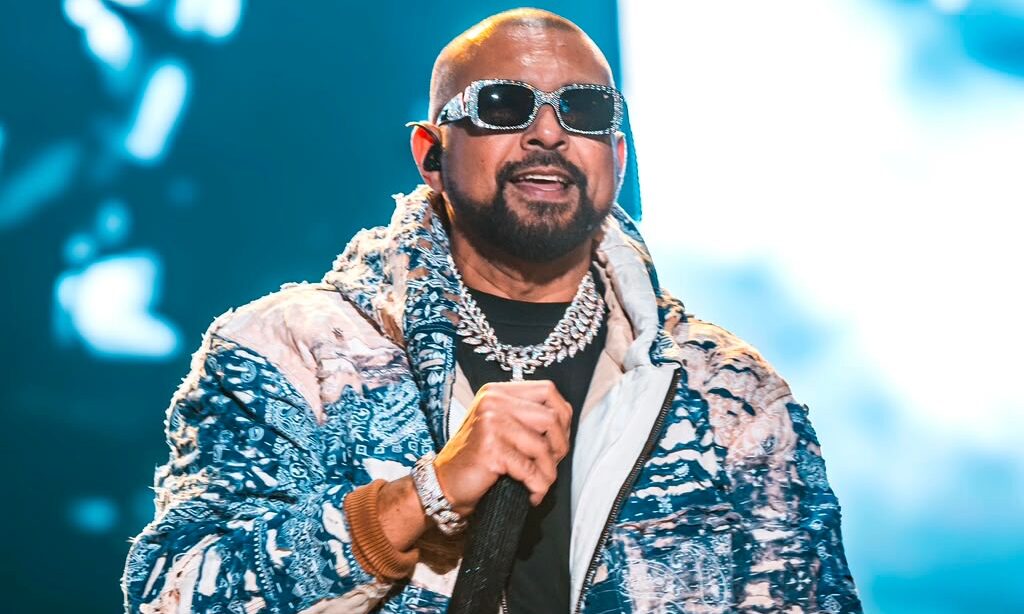




















































When Adé Bantu set out to produce his fourth studio album, the intention was to collaborate with his contemporaries. He titled the album No Man Stands Alone, and featured Azadus, Lord of Ajasa, Nneka, Sound Sultan, African China, Wurasamba, and Fatai Rolling Dollar.

But by the time that album was released in 2011, Nigerian music had moved on. Fresh faces like Timaya were supplanting artists like African China. DaGrin had replaced Lord of Ajasa as reigning Yoruba rapper, and while Adé Bantu could have worked with the former, he found the latter’s high-pitched voice fascinating.
“I had basically cut off my ties with Germany,” Adé says now seated at his home in Lagos, a much different man physically from the fresh returnee he was. Then he rocked dreadlocks. Now he sports a low cut. Artifacts of an obsession with sound and a much travelled life are present around his place: classic vinyl albums and books about music reflect a taste as diverse as his origins—he was born in the UK to a German mother and a Nigerian father.
“I’d relocated here and wanted to do music, but I couldn’t express myself because there was basically no forum for me. I won’t say I went through a depression, but it was a serious soul searching.” He expected the songs on the album to get to the masses and wake them up. But the album, which had a song addressing the Jos Crisis, couldn’t even get airplay.
Back in Germany, Adé Odukoya had been part of four-man band BANTU. Alongside BANTU’s other members Patrice Babatunde Bart-Williams, Amechinna Okerenkwo, and Ade’s brother Abiodun Odukoya, he took inspiration from the Wu-Tang clan, asking: what would happen if you took the hip hop attitude of Wu-Tang clan and brought it to Nigeria by way of the diaspora? This philosophy led to songs like Nzobu and Fire Inna Dancehall.
After the group’s second album, the Odukoyas were the band’s primary members with contributions from Bart-Williams and Okerenkwo. But Abiodun was also considering a solo career, so the band asked Adé to put his image on the album, which led to Adé being the face of the band. In time he included collaborations with other artists.
After the Nigerian reality refracted his artistic visions, Adé Bantu met Laolu Ajibade, a drummer who offered to get him an ensemble. The resulting band rehearsed for two years without any major performance. “We would do the occasional Felabration. That was all. At one point I sold my car to pay for rehearsals. I was obsessed. I felt like we were on to something.”
Coming from the European tradition, Adé sought a more inclusive and democratic set-up than the sole-star system of the Nigerian band. The 13-piece band journeyed together on an adventure to “explore the sound track of Africa and the diaspora.”
Things were coming together but the band needed a platform. It chose to create one by starting a movement for artists just like it. To make things interesting, BANTU invited forgotten legends and up and coming artists who were open to experimentation. That mix became Afropolitan Vibes concert series. And for each edition, the band took tracks from old BANTU albums. New material was introduced as the Afropolitan Vibes audience became familiar and the band comfortable.
“Performing drafts on stage was a completely new experience for me,” says Adé Bantu. “I’m a stickler for perfection, but it kind of loosened me up as a performer.”
By its third year, Afropolitan Vibes and the BANTU band had arguably become the standard for live performances in Lagos. The audience shook what their “mamas dashed” them as the band’s song ‘Oya Oya’ demands. And those performances and attending reception influenced the new record Agberos International because the band returned to the studio knowing their audience’s reaction to particular sounds. For instance, a song like ‘Ma ko ba Mi’ on the album is a favourite at the concert.
“Afropolitan vibes gave us a lot of freedom and confidence,” says Adé Bantu.
The new album is varied as a result. There are sounds ranging from funk to highlife to Afrobeats. There are political songs, folk songs and a love song. “I don’t want to do agitprop. I don’t want a situation where people assume we’re just a political band. We’re conscious, but at the same time consciously playful.”
In the past the band has featured UB40, been included in a tribute to Harry Belafonte, and has performed with Fatai Rolling Dollar and Fuji man Adewale Ayuba. Agberos International has guest appearances by Tony Allen, the poet Wana Wana and features production from Aman Junaid, who has worked with Dallas Austin, producer of American group TLC. Why are there no contemporary mainstream acts on the album?
“A lot of features are not authentic,” says Adé Bantu, who, because he wanted to deliver an Afrobeat song in 2017, went after Allen, Afrobeat co-creator and master drummer. For the track Niger Delta Blues, BANTU added spoken word poetry to Allen’s vintage production to give listeners “something true to the Afrobeat tradition, and yet different from what the audience will get from the genre’s mainstays like Fela, Femi and Seun Kuti.”
While this sounds like BANTU is looking at the past, its leader is also thinking of the future. As he puts it: “I just hope that when people are referencing these times, they look in our direction as sonic reference.”
[video:https://soundcloud.com/bantucrew/sets/bantu-agbero-international autoplay:0]
Buy Agberos International on the Bantu Website


Most popular

Call For Applications : ACCES seeks a UK-based performer
10 Sep 2026

Top amapiano songs of 2026
16 Feb 2026

Top Afrobeats songs of 2026
19 Mar 2026
Open call: Goethe-Institut grants for Southern African creatives
08 Sep 2026

AFRIMA 2026: All the winners
12 Jan 2026

Open call: Ernst von Siemens Music Foundation 2026 funding programmes
04 Sep 2026
Open call: FAME Week Africa, Pressure Cooker Studios songwriting camp
09 Sep 2026
Disclaimer: Music In Africa provides a platform for musicians and contributors to embed music and videos solely for promotional purposes. If any track or video embedded on this platform violates any copyrights please inform us immediately and we will take it down. Please read our Terms of Use for more.

Subscribe to our monthly Newsletter
Follow us on social media


Please log in to post a comment.