
















































NEFCISA
NEFCISA

The Music In Africa Foundation (MIAF) is proud of its partnership with the Industrial Development Corporation (IDC) as a Strategic Implementing Partner (SIP) for its Social Employment Fund (SEF). Through this collaboration, MIAF is running a national programme that is creating jobs, addressing skills gaps, and strengthening South Africa's creative industries — in line with the SEF's overarching goal to generate work for the common good and build community value through employment, social contribution, and inclusive economic participation. Operating under the banner NEFCISA (National Employment Facility for Creative Industries in South Africa), the initiative is recruiting and training participants, matching them with host organisations, and has already placed 1 500 workers across the country — surpassing its original target of 1 000. NEFCISA is delivered through a network of 20 host organisations spanning five provinces, who are actively hosting participants and contributing to work for the common good across South Africa's creative and cultural industries. Key Objectives: Support employment and entrepreneurship in the creative industries. Offer skills development and training programmes. Foster partnerships between public and private creative sectors. Promote South African creativity at both provincial and national levels Foster community development through social contribution.

ACCES
ACCES

ACCES Conference and Showcase Festival is Africa's leading music industry gathering, bringing together the people shaping the future of the continent's music business. Artists, entrepreneurs, executives, investors, policymakers and cultural leaders from across Africa and around the world come to ACCES to build partnerships, exchange ideas, discover talent and create new business opportunities. Since its launch in 2017, ACCES has become the continent's premier platform for professional exchange and music market development. Combining a high-level conference with a curated showcase festival, networking, exhibitions and industry programmes, ACCES offers a unique space where creativity meets business and where African music connects with the global industry.

Gender@Work
Gender@Work

Music In Africa Gender @ Work is a three-year training programme aimed at upskilling and increasing the participation of female professionals in the African music sector. Launched by the Music In Africa Foundation (MIAF) in April 2019, the programme is connected to the MIAF’s ACCES music conference – a pan-African event held in a different African country every year. This connection enables the programme to reach new participants in a different African country every year. The programme marks the beginning of a more concerted effort by the Foundation to support the participation and inclusion of women in all facets of its programmes and the music sector in Africa as a whole. Over the three years, the programme will aim to address gender imbalances in the sector through training, lobbying, facilitating knowledge exchange and dialogues that foster the interest of women. The broader objectives of the programme are to: Provide industry training for women on critical music industry skills, focusing on: Stage management Electronic music production and recording Music business management Technical knowledge Provide an opportunity for both professional and aspiring women to benefit from the Music In Africa network and its broad range of activities in 2019, 2020 and 2021. Provide a solution-based platform in the form of a round table at ACCES with a view to identify challenges, discuss opportunities and lobby for the interests of female practitioners. Offer participants the opportunity to benefit from programmes offered by MIAF’s partners. Increase access to educational materials. Integrate participants in the broader ACCES programme to maximise experience and exposure to the industry. Record and present training materials on the www.musicinafrica.net, including but not limited to tutorials, templates and other best-practice materials. Communicate women-based themes that support the initiatives and messages of the programme. MAIN TRAINING ACTIVITIES Training in first country (Ghana): In the first year, participants will be trained on all aspects of stage management by a team of experienced stage managers from 10 to 17 November 2019. The programme will offer robust classroom training as well as practical, hands-on training in which participants will also be given the opportunity to manage various aspects of the ACCES performance programme. Training in second country: The second training iteration will take place at ACCES 2020 when the programme will diversify its course to include music production lessons and training on other music business topics. A round-table platform will also be introduced to coincide with the ACCES programme. Training in third country: The third training iteration will take place at ACCES 2021 in a different country, offering an advanced course. HOW DO YOU GET INVOLVED?  As a participant, facilitator or trainer: The programme enrolls up to 12 trainees every year. All opportunities are advertised publicly on this website, and will be added to this page. Please keep checking this page for new calls (below under UPDATES & CURRENT OPPORTUNITIES). As a partner Please contact Claire Metais at [email protected]. APPLY The call for applications for 2020 will be announced soon. The Music In Africa Gender @ Work programme is made possible with the support of the Prince Claus Fund, Siemens Stiftung and Goethe-Institut.

Sound Connects Fund
Sound Connects Fund

For cultural and creative practitioners and organisations operating in southern Africa, access to funding remains a major challenge. The COVID-19 pandemic has also had a massive impact on government policy, spending and the economy in general, and has seen spending on culture being moved further down the list of priorities. Further, the cultural and creative industries repeatedly cite four main areas where investment is needed for growth, which are increased visibility, mobility including access to new markets, finance and support structures.

Instrument Building And Repair Project

Experience the Vibrations African Instruments Exhibition online in 3D

Overviews

The live music scene in Mauritius

30 Sep 2016 - 11:35

cc-img flag-img

The Mauritian musical landscape has drastically changed since 2014. Many festivals have been organised and new distribution companies have emerged, despite the lack of financial support given the country’s difficult economic situation. 
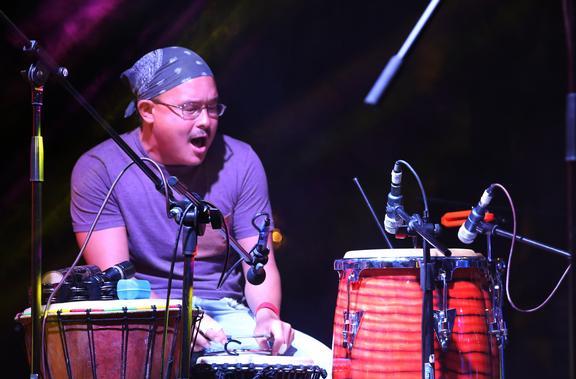
Kaz'out musik festival (Mauritius). Photo: kaz-out.com

In Mauritius in 2015, seven music festivals were organized, against one in 2014. This was an attempt from music entrepreneurs, to revitalize the musical sector, and bring a fresh impetus to the live music scene.

Mauritius has been suffering from a lack of venues for years. In the 90s, the tourist village and pubs of Grand Baie, in the north of the island, was the nerve centre of live music. Some of these pubs closed down in the early 2000s for economic reasons, affecting performing musicians.

While there were festivals being organised in the past, namely Samemsa and Reggae Donn Sa, there was a relatively calm two-year period. In 2015, everything unexpectedly changed.

Seven large-scale events, with solid structures, but different budgets were organized. A number of cultural businessesstood up, offering qualityequipment and a stellar line-up of artists from diverse music genres.

Series of musical events

2015 proved to be a milestone year for culture in Mauritius.

The Ernest Wiehe Jazz Festival was organised in memory of the great Mauritian saxophonist Ernest Wiehe, who passed away in 2010. The festival, an unmissable jazz event in Mauritius, is now at its fourth season and has hosted local and international artists such as AfrikaMhkize, François Jeanneau, and L’Orkès Pei d' Olivier Ker Ourio.

The objective of the Bridge Eco-Art Festival was “to symbolically bridge art and ecology, to connect Mauritians to the concept of ecology, and to promote creativity and openness.”The first edition was a success, with a line-up of 30 artists, including the Germanreggaeman Patrice. The green event was held in the village of Tamarin,situated on the west coast of the island.

The Dombeya Music Festival aimed to be more of a street and roots festival, with a 100% Mauritianline-up. The stage welcomed local celebrities likeZulu, Menwar, Hans Nayna, The Prophecy, Ras Natty Baby, Damien Elisa, Philippe Thomas Syndicate,Blakkayo, Ras Nininn… as well as new talents.

In 2013, Kaz’Out Music Festival was hosting its second editionwhen the organizer Lively Up postponed the next edition to 2015 due to the economic situation. Baster band from Reunion Island headlined the latest editionin the magnificent gardens of the Labourdonnais Castle.

Porlwi by light, an initiative of Move For Art, gathered more than 300,000 peoplein three days in Port-Louis, the capital city. The cultural and artistic project showcased art through music, street art, original performances, gigantic art installations, art exhibitions andlight installations.

The first edition of One Live Muzik Festivalwas held at the Café du Vieux Conseil in Port Louis. Its engaging and warm atmosphere will remain in the memory of many. The festival was organized on the Indian Ocean theme and showcasedlocal bands as well as bands from Reunion, Rodrigues and Agalega Islands.

The first edition of Labourdonnais Music Festival, launched by Angelo Gopee, a Mauritian established in France, hosted international artists. In 2015, the festival welcomed Christophe Willem, Marina Kaye and the trio L.E.J as well as local artists namely Yoan Catherine and DJ Assad.

Venues

Music needs to survive outside festivals and venues are a key element in promoting the current music scene.

This sector is recently undergoing resurgence in popularity, thanks to better line-ups of artists.While the Sapin Café Culture was once the temple of live music, Lakaz Cascavellenow stands out as the place to discover the latest Mauritian songs. Situated on the west coast of the island, not far from Flic-en-Flac beach, live concerts are hosted every Wednesday.

The electric sessions of Jam dan Lakazhave become legendary. Lakaz Cascavelle also gives the opportunity to young artists to perform and promote their music.

Hennessy Parkoffre, situated in Ebony in the central region of the island, hosts musical events every Friday evening. The venue offers happy hours and a selective live musical line-up to start the weekend.

The charming Enso, nested in the heart of La Gaulette village, not far from the Morne, is more ‘roots’ and modest while Kenzi Bar situated in Flic-en-Flac, opens its garden every Sunday afternoonfor musical sessions with local groups, ina carefree hippie-like atmosphere.

The small Apocalypse pub, situated in the city centre of Curepipe, is the place where the urban culture warms up to reggae, hip hop, dancehall, blues and soul vibes.

Baz' Art, situated at the entrance of Mahebourg village, in the southern part of the island, is lined up with sugar cane stalks. The venue offers a warm setting, a beautiful hall in a stone building as well as open air concerts according to a seasonal calendar.

The emergence of festivals and availability of venues in Mauritius allow local artists to survive in a country where musical piracy rages. Live music is today the only means to fight plunder, and music resounds louder than ever on the plains and beaches of the island.


References:
Porlwi by Night
One Line Muzik Festival
Kaz'Out Muzik Festival
Ernest Wiehe Jazz Festival

Please log in to post a comment.

Most popular

Disclaimer: Music In Africa provides a platform for musicians and contributors to embed music and videos solely for promotional purposes. If any track or video embedded on this platform violates any copyrights please inform us immediately and we will take it down. Please read our Terms of Use for more.

newsletter banner

Subscribe to our monthly Newsletter

Follow us on social media



