







































NEFCISA
NEFCISA

The Music In Africa Foundation (MIAF) is proud of its partnership with the Industrial Development Corporation (IDC) as a Strategic Implementing Partner (SIP) for its Social Employment Fund (SEF). Through this collaboration, MIAF is running a national programme that is creating jobs, addressing skills gaps, and strengthening South Africa's creative industries — in line with the SEF's overarching goal to generate work for the common good and build community value through employment, social contribution, and inclusive economic participation. Operating under the banner NEFCISA (National Employment Facility for Creative Industries in South Africa), the initiative is recruiting and training participants, matching them with host organisations, and has already placed 1 500 workers across the country — surpassing its original target of 1 000. NEFCISA is delivered through a network of 20 host organisations spanning five provinces, who are actively hosting participants and contributing to work for the common good across South Africa's creative and cultural industries. Key Objectives: Support employment and entrepreneurship in the creative industries. Offer skills development and training programmes. Foster partnerships between public and private creative sectors. Promote South African creativity at both provincial and national levels Foster community development through social contribution.

ACCES
ACCES

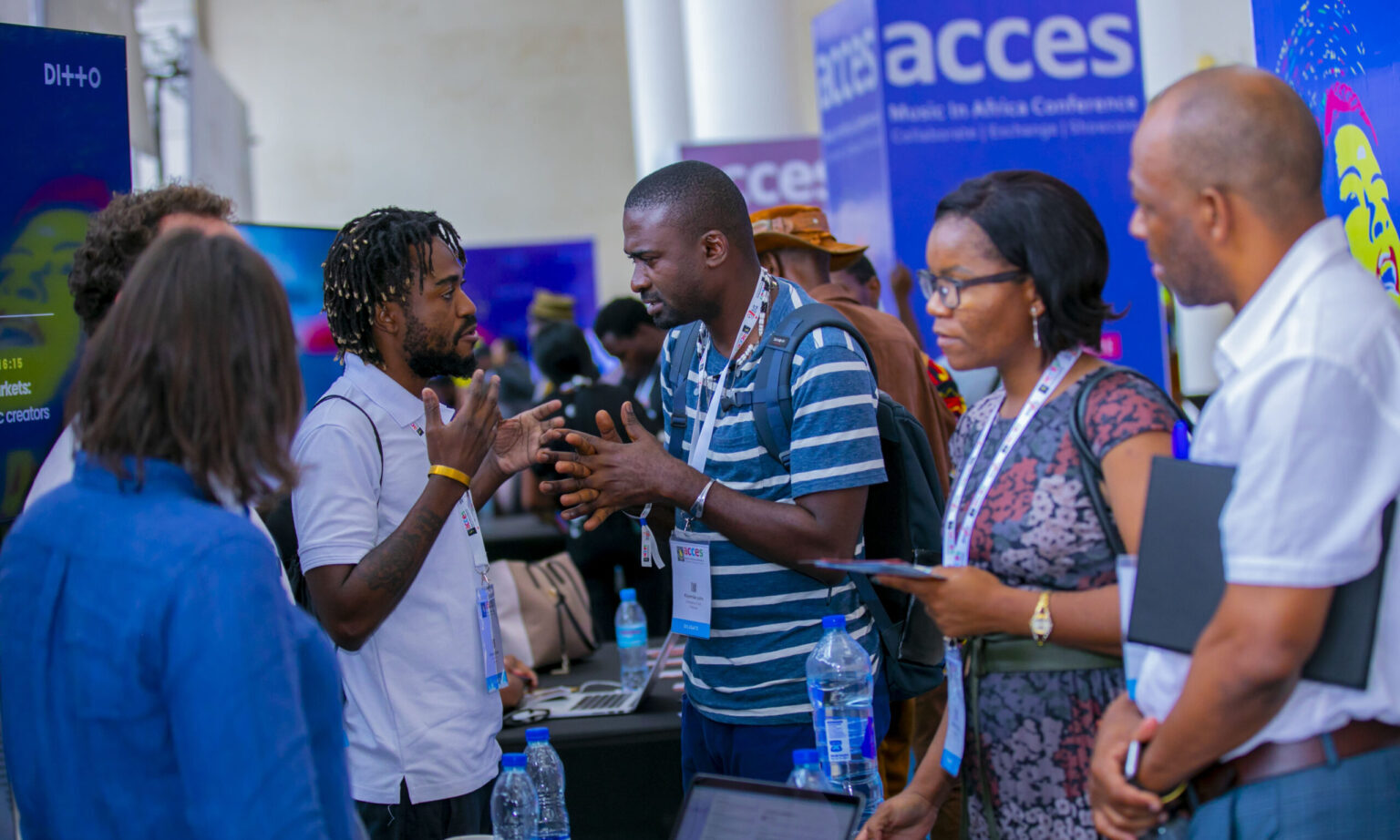
ACCES Conference and Showcase Festival is Africa's leading music industry gathering, bringing together the people shaping the future of the continent's music business. Artists, entrepreneurs, executives, investors, policymakers and cultural leaders from across Africa and around the world come to ACCES to build partnerships, exchange ideas, discover talent and create new business opportunities. Since its launch in 2017, ACCES has become the continent's premier platform for professional exchange and music market development. Combining a high-level conference with a curated showcase festival, networking, exhibitions and industry programmes, ACCES offers a unique space where creativity meets business and where African music connects with the global industry.

Gender@Work
Gender@Work

Music In Africa Gender @ Work is a three-year training programme aimed at upskilling and increasing the participation of female professionals in the African music sector. Launched by the Music In Africa Foundation (MIAF) in April 2019, the programme is connected to the MIAF’s ACCES music conference – a pan-African event held in a different African country every year. This connection enables the programme to reach new participants in a different African country every year. The programme marks the beginning of a more concerted effort by the Foundation to support the participation and inclusion of women in all facets of its programmes and the music sector in Africa as a whole. Over the three years, the programme will aim to address gender imbalances in the sector through training, lobbying, facilitating knowledge exchange and dialogues that foster the interest of women. The broader objectives of the programme are to: Provide industry training for women on critical music industry skills, focusing on: Stage management Electronic music production and recording Music business management Technical knowledge Provide an opportunity for both professional and aspiring women to benefit from the Music In Africa network and its broad range of activities in 2019, 2020 and 2021. Provide a solution-based platform in the form of a round table at ACCES with a view to identify challenges, discuss opportunities and lobby for the interests of female practitioners. Offer participants the opportunity to benefit from programmes offered by MIAF’s partners. Increase access to educational materials. Integrate participants in the broader ACCES programme to maximise experience and exposure to the industry. Record and present training materials on the www.musicinafrica.net, including but not limited to tutorials, templates and other best-practice materials. Communicate women-based themes that support the initiatives and messages of the programme. MAIN TRAINING ACTIVITIES Training in first country (Ghana): In the first year, participants will be trained on all aspects of stage management by a team of experienced stage managers from 10 to 17 November 2019. The programme will offer robust classroom training as well as practical, hands-on training in which participants will also be given the opportunity to manage various aspects of the ACCES performance programme. Training in second country: The second training iteration will take place at ACCES 2020 when the programme will diversify its course to include music production lessons and training on other music business topics. A round-table platform will also be introduced to coincide with the ACCES programme. Training in third country: The third training iteration will take place at ACCES 2021 in a different country, offering an advanced course. HOW DO YOU GET INVOLVED?  As a participant, facilitator or trainer: The programme enrolls up to 12 trainees every year. All opportunities are advertised publicly on this website, and will be added to this page. Please keep checking this page for new calls (below under UPDATES & CURRENT OPPORTUNITIES). As a partner Please contact Claire Metais at [email protected]. APPLY The call for applications for 2020 will be announced soon. The Music In Africa Gender @ Work programme is made possible with the support of the Prince Claus Fund, Siemens Stiftung and Goethe-Institut.

Sound Connects Fund
Sound Connects Fund

For cultural and creative practitioners and organisations operating in southern Africa, access to funding remains a major challenge. The COVID-19 pandemic has also had a massive impact on government policy, spending and the economy in general, and has seen spending on culture being moved further down the list of priorities. Further, the cultural and creative industries repeatedly cite four main areas where investment is needed for growth, which are increased visibility, mobility including access to new markets, finance and support structures.

Instrument Building And Repair Project

Experience the Vibrations African Instruments Exhibition online in 3D

Reviews

Zahara – Loliwe

16 Feb 2015 - 10:59

cc-img flag-img

Artist: Zahara
Album: Loliwe
Label & Year: TS Records, 2011

zahara

By David Durbach

Weekends at the Fox Den, a downtown tavern boasting Jozi’s loudest soundsystem and cheapest beer, usually mean droning ultra-bass until well after midnight, much to the confusion of the hundreds of people living within spitting distance of the place. Yet this Saturday, the DJ chose to play a melancholy, near-drumless groove instead, twice in succession.

There’s something happening here - but what it is ain’t exactly obvious. Two and a half months ago, Bulelwa Mkutukana was another struggling musician from the Eastern Cape. Now she is being hailed as the saviour of the local music industry. Zahara’s debut album Lolilwe, released less than two months ago, struck gold (20 000) in just two weeks, and has gone on to rack up sales in excess of 200 000 (and counting) ­- at an unprecedented 4 000 CDs a day.

Unable to fathom her whirlwind success, skeptics remain convinced that it’s all a sham, a marketing ploy to boost an ailing record industry where even the so-called major labels are now running on skeleton staff. Perhaps those doubters are reluctant to believe that Zahara’s music can have such a massive appeal at a time when house producers rule the roost and are only matched by a handful of gospel heavyweights. Now here comes a young 24-year-old songbird, whose music - catchy acoustic pop with varying degrees of local influence ­- defies the soulless status quo, and blows her contemporaries out of the water.

Of course the key to her newfound popularity is the accessibility of her sound - far catchier and less dark or cerebral than Thandiswa and Simphiwe Dana, yet infinitely more soulful and down-to-earth than the likes of Lira, Asanda Bam or Siphokazi. Clearly, Zahara has found that happy medium that appeals to as wide an audience as possible. Her voice may not be quite so polished, but the sheer power and passion she puts out has proven enough to send her straight to the top of the list of Mzansi’s leading ladies. Also setting her above many of her peers are her songwriting and her acoustic guitar skills, enabling her to draws further comparisons to both the late Busi Mhlongo and US folk icon Tracy Chapman.

As with any great pop album, every song on Loliwe sounds like a hit, from the mellow soul of the title track, ‘Umthwalo’ and ‘Ndize’ to the reggae-tinged ‘Away’ and uptempo ‘Brand New Day’. Each carries distinctive melodies and messages that clearly resonate instantly with Zahara’s ever-expanding listenership.

So profound has her effect been that many have quickly developed a close emotional attachment not only to her music, but to the singer herself. Daily Sun ran a page 3 story (on 28/09/2011) about Thandisile Sidina, a fan who nearly died after he took on hawkers selling pirated Zahara CDs for five bucks a pop on Smal Street in the Joburg CBD. “I felt for Zahara because she has worked so hard to be where she is and they just want to pirate her music,” he told the paper. “I’m also an artist and because I love Zahara’s music, I decided to destroy the pirated CDs. That’s when these two men started to beat me with a steel bar and a brick.

“I thought I was going to die but that was not a problem for me because I am willing to die for Zahara! She has revolutionised our music industry and her music deserves to be protected.”

Interestingly, while most artists and critics tend to draw a huge distinction between western and African influences, Zahara effortlessly bridges the two. Although most lyrics are in isiXhosa and her voice undoubtedly draws comparisons to her local predecessors, the guitar and piano melodies are as sugary sweet as any international teen queen. ‘Xa Bendingena Mama’ and ‘Thekwana’ are the only tracks that carry a distinctly South African sound, the former rooted in the hills of the Eastern Cape, the latter a kwela/marabi bassline that echoes the song’s tribute to our nation’s heroes.

While hard-nosed critics may struggle to find anything unique or remarkable in her work, big sales have seldom been a sign of singular innovation. With Loliwe, Zahara doesn’t try to re-invent the wheel – she simply keeps it real, and checks all the right boxes in the process.

Originally published on 07.10.2011 at http://www.mahala.co.za/music/loliwe/

Please log in to post a comment.

Most popular

Disclaimer: Music In Africa provides a platform for musicians and contributors to embed music and videos solely for promotional purposes. If any track or video embedded on this platform violates any copyrights please inform us immediately and we will take it down. Please read our Terms of Use for more.

newsletter banner

Subscribe to our monthly Newsletter

Follow us on social media