































NEFCISA
NEFCISA

The Music In Africa Foundation (MIAF) is proud of its partnership with the Industrial Development Corporation (IDC) as a Strategic Implementing Partner (SIP) for its Social Employment Fund (SEF). Through this collaboration, MIAF is running a national programme that is creating jobs, addressing skills gaps, and strengthening South Africa's creative industries — in line with the SEF's overarching goal to generate work for the common good and build community value through employment, social contribution, and inclusive economic participation. Operating under the banner NEFCISA (National Employment Facility for Creative Industries in South Africa), the initiative is recruiting and training participants, matching them with host organisations, and has already placed 1 500 workers across the country — surpassing its original target of 1 000. NEFCISA is delivered through a network of 20 host organisations spanning five provinces, who are actively hosting participants and contributing to work for the common good across South Africa's creative and cultural industries. Key Objectives: Support employment and entrepreneurship in the creative industries. Offer skills development and training programmes. Foster partnerships between public and private creative sectors. Promote South African creativity at both provincial and national levels Foster community development through social contribution.

ACCES
ACCES

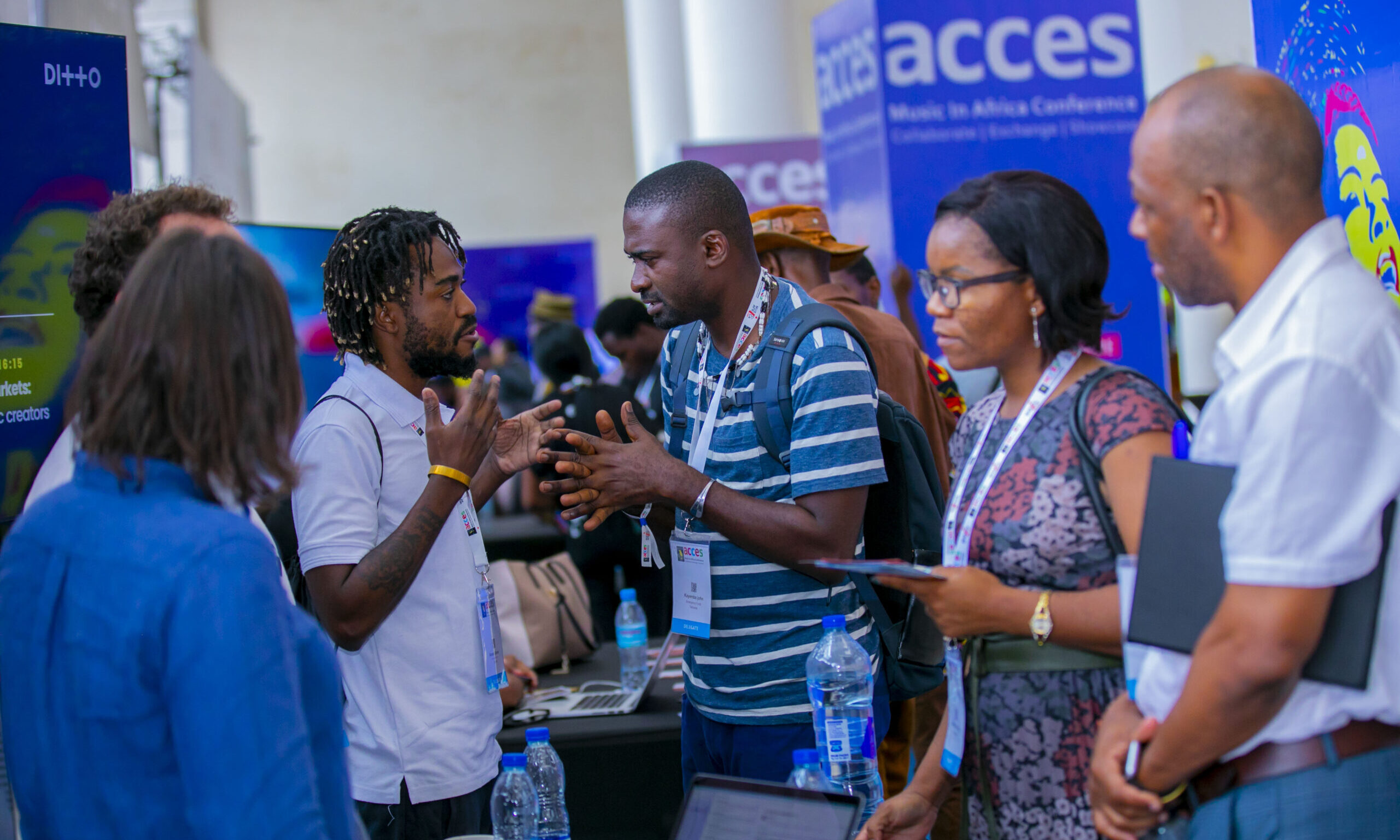
ACCES Conference and Showcase Festival is Africa's leading music industry gathering, bringing together the people shaping the future of the continent's music business. Artists, entrepreneurs, executives, investors, policymakers and cultural leaders from across Africa and around the world come to ACCES to build partnerships, exchange ideas, discover talent and create new business opportunities. Since its launch in 2017, ACCES has become the continent's premier platform for professional exchange and music market development. Combining a high-level conference with a curated showcase festival, networking, exhibitions and industry programmes, ACCES offers a unique space where creativity meets business and where African music connects with the global industry.

Gender@Work
Gender@Work

Music In Africa Gender @ Work is a three-year training programme aimed at upskilling and increasing the participation of female professionals in the African music sector. Launched by the Music In Africa Foundation (MIAF) in April 2019, the programme is connected to the MIAF’s ACCES music conference – a pan-African event held in a different African country every year. This connection enables the programme to reach new participants in a different African country every year. The programme marks the beginning of a more concerted effort by the Foundation to support the participation and inclusion of women in all facets of its programmes and the music sector in Africa as a whole. Over the three years, the programme will aim to address gender imbalances in the sector through training, lobbying, facilitating knowledge exchange and dialogues that foster the interest of women. The broader objectives of the programme are to: Provide industry training for women on critical music industry skills, focusing on: Stage management Electronic music production and recording Music business management Technical knowledge Provide an opportunity for both professional and aspiring women to benefit from the Music In Africa network and its broad range of activities in 2019, 2020 and 2021. Provide a solution-based platform in the form of a round table at ACCES with a view to identify challenges, discuss opportunities and lobby for the interests of female practitioners. Offer participants the opportunity to benefit from programmes offered by MIAF’s partners. Increase access to educational materials. Integrate participants in the broader ACCES programme to maximise experience and exposure to the industry. Record and present training materials on the www.musicinafrica.net, including but not limited to tutorials, templates and other best-practice materials. Communicate women-based themes that support the initiatives and messages of the programme. MAIN TRAINING ACTIVITIES Training in first country (Ghana): In the first year, participants will be trained on all aspects of stage management by a team of experienced stage managers from 10 to 17 November 2019. The programme will offer robust classroom training as well as practical, hands-on training in which participants will also be given the opportunity to manage various aspects of the ACCES performance programme. Training in second country: The second training iteration will take place at ACCES 2020 when the programme will diversify its course to include music production lessons and training on other music business topics. A round-table platform will also be introduced to coincide with the ACCES programme. Training in third country: The third training iteration will take place at ACCES 2021 in a different country, offering an advanced course. HOW DO YOU GET INVOLVED?  As a participant, facilitator or trainer: The programme enrolls up to 12 trainees every year. All opportunities are advertised publicly on this website, and will be added to this page. Please keep checking this page for new calls (below under UPDATES & CURRENT OPPORTUNITIES). As a partner Please contact Claire Metais at [email protected]. APPLY The call for applications for 2020 will be announced soon. The Music In Africa Gender @ Work programme is made possible with the support of the Prince Claus Fund, Siemens Stiftung and Goethe-Institut.

Sound Connects Fund
Sound Connects Fund

For cultural and creative practitioners and organisations operating in southern Africa, access to funding remains a major challenge. The COVID-19 pandemic has also had a massive impact on government policy, spending and the economy in general, and has seen spending on culture being moved further down the list of priorities. Further, the cultural and creative industries repeatedly cite four main areas where investment is needed for growth, which are increased visibility, mobility including access to new markets, finance and support structures.

Instrument Building And Repair Project

Experience the Vibrations African Instruments Exhibition online in 3D

banner image

Le Hip Hop au Tchad

Home/Non classé/Le Hip Hop au Tchad

Les précurseurs

Le Hip Hop introduit sur la scène musicale au même moment que le ragga (sous-genre musical issu du reggae), a envahi les rues de N’Djamena vers la fin des années 80. On a vu des groupes de jeunes, imitant souvent des stars américaines (Vanilla Ice, Mc Hummer, Shabba Ranks…), exibher des pas de danse lors des petites fêtes organisées dans les quartiers du sud de la capitale tchadienne.

Aussi, on assiste au début des années 90 à la naissance des groupes comme Komplyss (avec feu Mc Satan, Jean Marie, Dread Slash, Aîmé Palyo, Emmanuel My Jack), et Les Banlyeuzars. Ils sont les premiers à faire découvrir la musique Hip Hop au grand public.

D’autres groupes inspirés des rappeurs Mc Solaar et Boss Mc (qui vit en Belgique) vont ensuite émerger. Parmi eux P. Phou, dont est issu Daïgou Tchadna dit Daïsson, figure du R&B au Tchad, Arsenal de l’actuel rappeur Guy Djikoloum alias Sultan ou encore Excellence J Lover de Ndolassem Hilaire, qui formera plus tard avec Daïsson le groupe Kamikazz.

[video:https://www.youtube.com/watch?v=N1qRfl1RtVE(sultan) autoplay:0]

Kamikazz est le premier collectif de rap tchadien à prendre part aux festivals internationaux comme le Marché des Arts et du Spectacle Africain (Masa) à Abidjan en Côte d’Ivoire en 1997. Il réalise son premier album Laatfakat avant que les deux leads vocaux (Daïsson et Hilaire) ne s’installent au Sénégal où ils créent le groupe Yalad.

Komplyss et Banlyeuzars avec l’appui de l’ex CCF (l’actuel Institut Français du Tchad) ont eu l’opportunité de s’exprimer chaque deux mois sur une plateforme d’expression appelée «Tapage Nocturne». Une initiative perçue comme du « favoritisme » car elle n’accueille que les groupes programmés par le CCF (Tibesti, Komplyss, Banlyeuzars et 7e Temps).

Se sentant marginalisés, Célestin Mawndoé, Love Nixon (animateur et journaliste culturel ), Takilal Ndolassem et Daïgou Daïsson Tchadna, créent l’association « Génération 3R » (Rap-Raga-Reggae), soutenue en son temps par M. Seid Farah, ancien ministre tchadien de la culture.

[video:https://www.youtube.com/watch?v=M9n8k_JY-HI autoplay:0]

La seconde génération

Devenue influente, l’association « Génération 3R » sera rejointe par d’autres collectifs tels T4J (Turbo For John) du rappeur Turbo alias Imaam T (qui va plus tard intégrer les Banlyeuzars avant de créer le Walta Klan).

C’est le début d’un nouveau genre musical avec son propre langage, le « verlan » (forme d’argot français qui consiste en l’inversion des syllabes d’un mot) et bien d’autres expressions qu’eux seuls maitrisent. Pour ces artistes, il fallait relever le défi et prouver aux « protégés du CCF » qu’ils étaient capable de réussir sur la scène tchadienne sans le soutien d’une quelconque institution.

Mais tout n’est pas rose pour autant. Car les membres de la « Génération 3R » fonctionnent en clan comme leurs collègues outre-Atlantique. Parfois, certaines de leurs rencontres se soldaient par des bagarres.

Néamoins, les artistes du hip hop tchadien (toute tendance confondue) se sont battus pour la reconnaissance de cette musique importée des Etats-Unis d’Amérique et des initiatives fleurissent de partout pour la souutenir malgré des maigres moyens (techniques et financiers) dont ils disposent. Les festivals N’Djam Vi et N’Djam Hip Hop sont parmi les événements qui ont contribué à l’émergence de la musique Hip Hop au Tchad.

Crée en 2007 et organisé par le Réseau culturel et Artistique pour la Formation et la francophonie (Récaf), le festival N’DjamVi est le plus grand événement culturel au Tchad. Il soutient les jeunes talents et leur donne l’occasion de se faire connaître du grand public. N’Djam Vi est également un espace de rencontre et d’échange entre les artistes tchadiens et ceux d’ailleurs. En 2010, le festival a étendu sa programmation en valorisant la musique moderne africaine et en invitant le groupe Pacificator du Gabon et Duc-Z du Cameroun .

N’Djam Hip Hop, est le rendez-vous de la culture urbaine qui se tient à N’Djamena. Lancé en 2005, le festival est organisé par le Récaf en collaboration avec l’Institut Français de Kinshasa et autres instititions locales comme la Maison de la Culture Baba Moustapha . Plusieurs activités y sont programmées: concerts, concours de jeunes talents, etc,. N’Djam Hip Hop donne également la possibilité aux artistes tchadiens de participer à d’autres festivals de la sous-région tels le Gabao Hip Hop au Gabon.

Le Hip Hop au Tchad doit aussi son existence et sa promotion à des noms comme Nguinambaye Manassé (initiateur et directeur de N’Djam Hip Hop et de Ndjam Vi), Armel Ramadji, Memhic’s, et Fabrizio Colombo.


Référence:
Blog de Tchad Hip Hop: http://tchadhiphop.skyrock.com/
Journal du Tchad : www.journaldutchad.com
newsletter banner

Subscribe to our monthly Newsletter

Follow us on social media