


























NEFCISA
NEFCISA

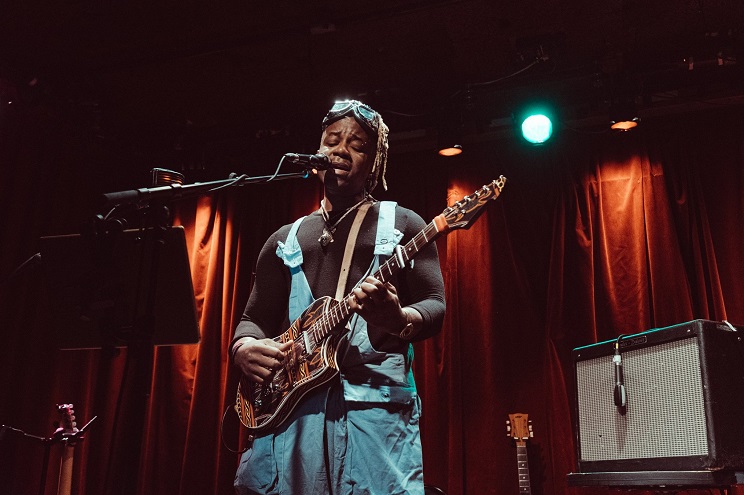
The Music In Africa Foundation (MIAF) is proud to announce its partnership with the Industrial Development Corporation (IDC) as a Strategic Implementing Partner (SIP) for its Social Employment Fund (SEF). Through this collaboration, MIAF is launching a new national programme designed to create jobs, address skills gaps, and strengthen South Africa’s creative industries — in line with the SEF’s overarching goal to generate work for the common good and build community value through employment, social contribution, and inclusive economic participation. Operating under the banner NEFCISA (National Employment Facility for Creative Industries in South Africa), the initiative will recruit and train participants, match them with host organisations, and place a minimum of 1 000 workers across the country. Key Objectives: Support employment and entrepreneurship in the creative industries. Offer skills development and training programmes. Foster partnerships between public and private creative sectors. Promote South African creativity at both provincial and national levels Foster community development through social contribution.

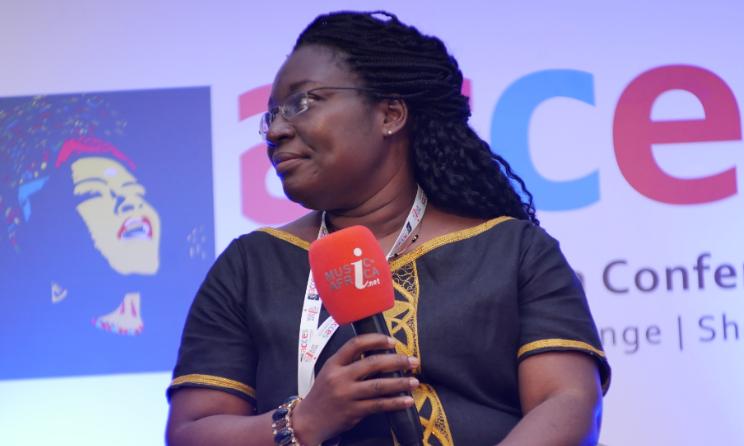
ACCES
ACCES

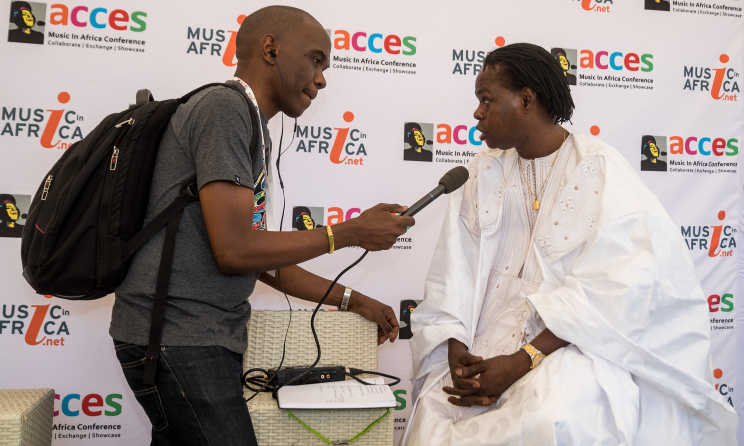
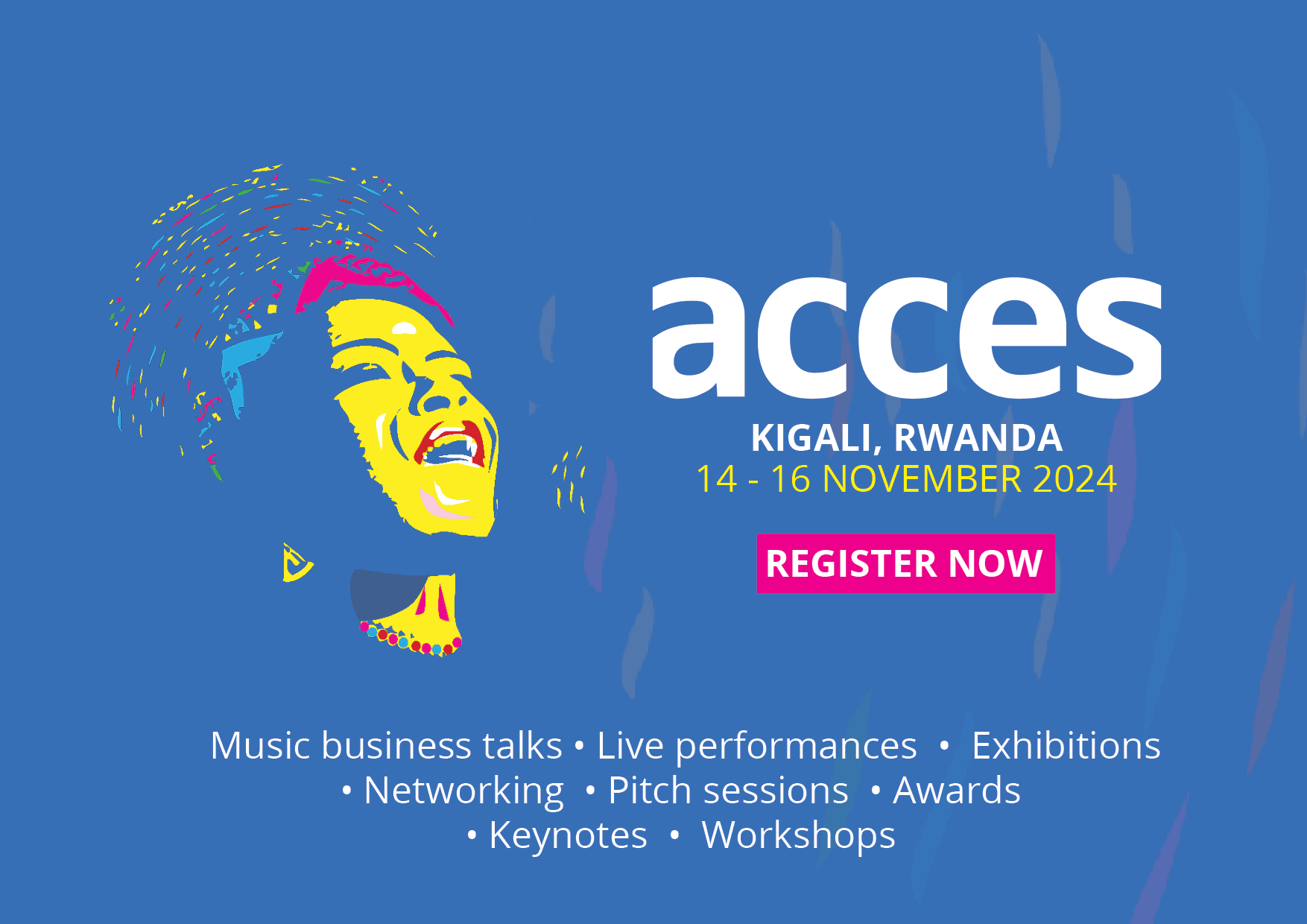
Chaque année, nous fournissons des informations générales afin de guider les participants dans la préparation de leur voyage. En plus de ce site, des mises à jour importantes seront envoyées par e-mail à tous les délégués inscrits. Assurez-vous de vous inscrire dès que possible. Pour plus d'informations, veuillez contacter [email protected] Continuez à consulter cette page pour plus d'information.  

Gender@Work
Gender@Work

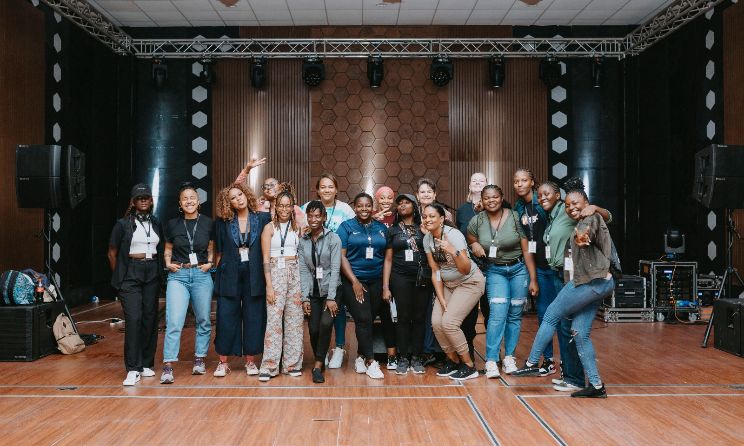
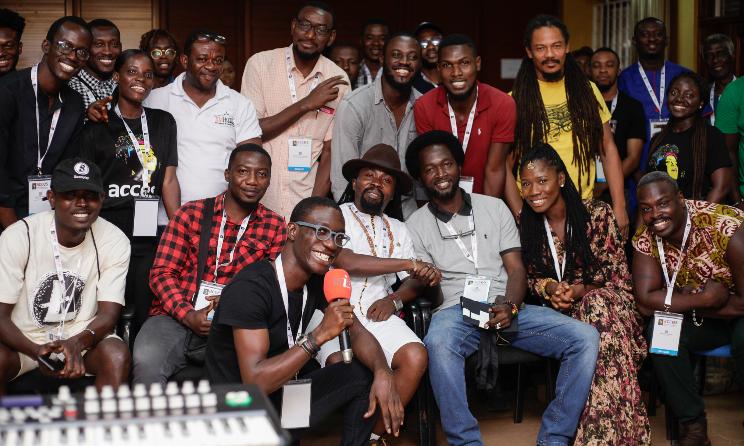
Music In Africa Gender @ Work is a three-year training programme aimed at upskilling and increasing the participation of female professionals in the African music sector. Launched by the Music In Africa Foundation (MIAF) in April 2019, the programme is connected to the MIAF’s ACCES music conference – a pan-African event held in a different African country every year. This connection enables the programme to reach new participants in a different African country every year. The programme marks the beginning of a more concerted effort by the Foundation to support the participation and inclusion of women in all facets of its programmes and the music sector in Africa as a whole. Over the three years, the programme will aim to address gender imbalances in the sector through training, lobbying, facilitating knowledge exchange and dialogues that foster the interest of women. The broader objectives of the programme are to: Provide industry training for women on critical music industry skills, focusing on: Stage management Electronic music production and recording Music business management Technical knowledge Provide an opportunity for both professional and aspiring women to benefit from the Music In Africa network and its broad range of activities in 2019, 2020 and 2021. Provide a solution-based platform in the form of a round table at ACCES with a view to identify challenges, discuss opportunities and lobby for the interests of female practitioners. Offer participants the opportunity to benefit from programmes offered by MIAF’s partners. Increase access to educational materials. Integrate participants in the broader ACCES programme to maximise experience and exposure to the industry. Record and present training materials on the www.musicinafrica.net, including but not limited to tutorials, templates and other best-practice materials. Communicate women-based themes that support the initiatives and messages of the programme. MAIN TRAINING ACTIVITIES Training in first country (Ghana): In the first year, participants will be trained on all aspects of stage management by a team of experienced stage managers from 10 to 17 November 2019. The programme will offer robust classroom training as well as practical, hands-on training in which participants will also be given the opportunity to manage various aspects of the ACCES performance programme. Training in second country: The second training iteration will take place at ACCES 2020 when the programme will diversify its course to include music production lessons and training on other music business topics. A round-table platform will also be introduced to coincide with the ACCES programme. Training in third country: The third training iteration will take place at ACCES 2021 in a different country, offering an advanced course. HOW DO YOU GET INVOLVED?  As a participant, facilitator or trainer: The programme enrolls up to 12 trainees every year. All opportunities are advertised publicly on this website, and will be added to this page. Please keep checking this page for new calls (below under UPDATES & CURRENT OPPORTUNITIES). As a partner Please contact Claire Metais at [email protected]. APPLY The call for applications for 2020 will be announced soon. The Music In Africa Gender @ Work programme is made possible with the support of the Prince Claus Fund, Siemens Stiftung and Goethe-Institut.

Sound Connects Fund
Sound Connects Fund

Pour les praticiens et les organisations culturels et créatifs opérant en Afrique australe, l’accès au financement reste un défi majeur. La pandémie de COVID-19 a également eu un impact massif sur les politiques gouvernementales, les dépenses et l’économie en général, et a vu les dépenses consacrées à la culture reléguées plus bas dans la liste des priorités. De plus, les industries culturelles et créatives citent régulièrement quatre domaines principaux où l’investissement est nécessaire pour la croissance : une visibilité accrue, la mobilité incluant l’accès à de nouveaux marchés, le financement et les structures de soutien.

Music In Africa Live

MUSIC IN AFRICA LIVE Lancé en 2020 pour une durée de 3 ans, Music In Africa Live est une initiative visant à soutenir l'écosystème de la musique africaine face aux contraintes imposées par la pandémie de COVID-19 ; le projet a été lancé par la Fondation Music In Africa (MIAF) en partenariat avec le ministère fédéral allemand des Affaires étrangères, Siemens Stiftung et le Goethe Institut. Plus de 30 aides sont disponibles dans le cadre de la troisième édition de Music In Africa Live, dans 3 catégories :  showcases, renforcement des compétences et plaidoyer, en conformité avec les modalités énoncées.

Instrument Building And Repair Project

The overarching objective of Music In Africa Foundation’s Instrument Building and Repair (IBR) project is to encourage the formalisation and professionalisation of instrument-making and repair in Africa, especially in relation to indigenous African instruments. Background In 2014, the Music In Africa Foundation (MIAF) identified as one of its focus areas for development the need to encourage young people from music and music-related sectors to consider instrument-making as a career. This need extended itself from the recognition that the making of traditional African instruments is not a widely practiced skill and seems to be limited to the older generation. Traditional African instrument makers are also few and far between, making communication and logistics between teachers and learners an obstacle. When instrument building workshops take place, budgetary constraints do not allow teachers or learners the time to explore the finer details of an instrument. Based on these observations, the MIAF designed and piloted the first IBR workshop at the Dhow Countries Music Academy (DCMA) in Zanzibar in February 2015. In 2016, the foundation received funding from the South African National Lotteries Commission to implement a much bigger version of the project in Johannesburg. The project drew participants from five African countries. 25 students from South Africa, Ghana, Senegal, Kenya and Ethiopia were trained on how to build and repair musical instruments. The instruments that they made were: Traditional Instruments: Umakhweyana and Marimba Conventional Instrument: Dulcimer guitar The workshop culminated in a traditional instruments concert at the Wits Theatre in Johannesburg. It is the MIAF’s aim to roll out similar workshops in as many African countries as possible over the next few years. Objectives Developing awareness of musical instrument makers in Africa with a view to promote their work to a wider global audience. Facilitating the sharing and transfer of skills in indigenous instruments between countries on the continent. Encouraging the formalisation and professionalisation of instrument-making and repair in Africa, especially in relation to indigenous instruments. Helping instrument makers develop their careers. Fostering the rapid monetisation and sustainable development of instrument-making and repair in Africa. Promoting constant exchange of ideas, expertise, experiences and know-how among instrument makers in Africa. Facilitating the identification of existing gaps in the field with a view to contribute new solutions. Facilitating the transfer of knowledge and skills of indigenous instruments between younger and older generations. 2020 edition The MIAF has also announced that multi-instrumentalist and instrument maker Joe Makhanza will facilitate one of the workshops on the building of the kamale ngoni instrument. Kamale ngoni is a kora-like, stringed instrument that originated in West Africa. The instrument contributed to the rise of Wassoulou music in the 1970s and 1990s. Makhanza was born in Giyani in South Africa's Limpopo province. He completed a bachelor of music degree and a post-graduate diploma in arts marketing from Wits University. He is currently completing his masters in ethnomusicology and is a part-time lecturer in African music studies at Rhodes University. He plays the kora, mbira, valiha, masenqo, xiwewe, ngoni ba and xizambi, among others. He also manufactures the aforementioned instruments. The MIAF will confirm more trainers who will join the workshops as well as the other instruments that will be featured in the 2020 IBR programme.  Apply to participate here. Connect with us on Twitter, Instagram and Facebook, and subscribe to our monthly newsletter. The Music In Africa Instrument Building and Repair project is funded by the National Lotteries Commission. It is implemented in partnership with Siemens Stiftung, Goethe-Institut, Wits Theatre and Kaya FM.

Overviews

La musique traditionnelle au Burundi

30 Sep 2019 - 10:10

cc-img flag-img

Par Jean Baptiste Karegeya

Le Burundi traditionnel ancien présente un précieux héritage instrumental régissant sa musique traditionnelle. Cependant, de nos jours, certains artistes résistent à cette tradition alors que dans les pays voisins, une telle histoire est déjà presque oubliée. Dans les lignes suivantes, nous aborderons la musique traditionnelle du Burundi, sa situation actuelle ainsi que les perspectives de protection contre sa disparition.
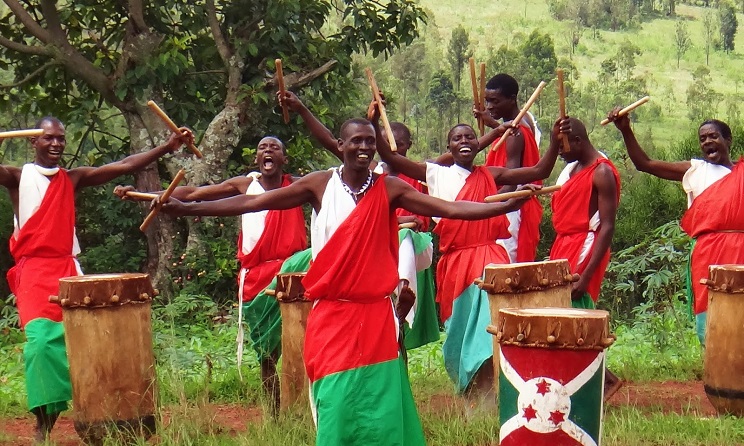
Tambourinaires du Burundi.

Jusqu’à présent, le Burundi a maintenu sa tradition musicale basée sur l’utilisation d’instruments traditionnels tels que l’Inanga (cithare), Amayugi (grelots), Ikembe (lamellophone), Indingiti (vièle), Ingoma (tambour), Inzamba (trompe), Umuduri (arc musical), et l'Umwironge (flûte). Chaque instrument a une forme distincte et la musique qu’il produit a une connotation particulière.

Inanga (Cithare)

L’Inanga est un instrument traditionnel autrefois joué à la cour royale pour divertir le roi. Les organologues désignent l’inanga comme une ‘cithare sur cuvette’, ce qui fait référence à la forme de l’instrument. Ce dernier est monté sur une caisse de résonance plate, avec des bords légèrement incurvés vers le haut. Cette caisse est un peu plus petite, car elle est entourée d’une bordure. Aux extrémités, ce rebord est beaucoup plus large et comporte 8 à 12 incisions qui maintiennent les cordes en place. L’Inanga a une signification particulière. Comme le tambour, ses parties sont assimilables au corps humain comme l’explique l’artiste burundais Niyonizigiye. Les différentes parties représentent des parties du corps telles que le ventre, le dos, les yeux.

Ingoma (Tambours)

Le tambour burundais est un instrument de musique composé d’un tronc découpé dans certaines espèces forestières. Ce morceau de tronc creux est tendu avec un cuir de vache, fixé au bois avec des goujons en bois. Généralement, le tambour est joué à l'aide de baguettes. Les rythmes des tambours du Burundi sont particuliers surtout avec leur jeu de scène très spectaculaire.

Au Burundi, le terme « ingoma » est doté d’un très vaste champ sémantique, qui peut signifier : tambour de batterie, tambour rituel, tambour dynastique, pouvoir (royauté ou autre) règne (ou équivalent), gouvernement, époque, tel pays (royaume).

Dans le passé, personne ne pouvait fabriquer ou faire fabriquer un tambour sans l’ordre formel du roi qui seul avait le privilège de posséder les tambours et de les faire battre pour lui-même.

En 2014, les tambours burundais ont été classés par l’UNESCO dans le « patrimoine de l’humanité ».

Dans le Burundi ancien, les tambours objets sacrés, réservés aux seuls ritualistes, n’étaient battus que dans des circonstances exceptionnelles, c’est à dire, dans les grands événements du pays - intronisations, funérailles de souverain - et rythmaient, dans la joie et la ferveur de tous les Burundais.

En 1983, les chercheurs Léonidas Ndoricimpa et Claude Guillet ont écrit : « De nos jours, le tambour reste un instrument à la fois vénéré et populaire, réservé aux fêtes nationales et aux hôtes de marque. Les anciens lignages de tambourinaires ont maintenu vivant leur art et, pour certains, l’ont fait connaître avec un grand succès dans le monde entier ».

Ikembe (Lamellophone)

L’ikembe appartient à la catégorie des lamellophones et est composé d’une caisse de résonance rectangulaire en bois sur laquelle sont montées des tiges de fer. Dans l’histoire de la musique traditionnelle au Burundi, l’ikembe n’a été introduit qu’au début du vingtième siècle, importé du Congo à l’époque de la colonisation belge. Deux peuplades ont assuré cette diffusion : les Kongo et les Bangala. Ils jouaient de cet instrument pour s’accompagner dans leurs chants en solo. Au Burundi, les ikembe étaient produits par les Twa. Les chants accompagnés à l’ikembe sont soit des histoires chantées pour le divertissement, soit des hymnes à la gloire des autorités, soit l’expression de sentiments personnels.

Umwironge (Flûte)

L’umwironge fait partie des aérophones et est une flûte réalisée à partir de la tige de la plante « intomvu », souvent en bambou ou d’autres plantes. Cet instrument de 49 à 75 cm est fabriqué à partir de tiges jeunes, séchées et vidées. L’instrument se rétrécit légèrement de haut en bas sur toute sa longueur. Les parois étant très fines, cet instrument est très fragile et doit donc souvent être réparé (ou jeté).

Les umwironge étaient surtout utilisés par les pâtres, pour passer le temps ou pour tenir à distance les éventuels voleurs de bétail ou les prédateurs, la nuit.

Mais l’instrument avait aussi sa propre signification symbolique, comme la fertilité de l’homme, de la terre et du bétail. À ce titre, il était aussi utilisé dans un contexte rituel lors des semailles et des plantations.

Ces instruments traditionnels ont toujours donné une saveur à la musique burundaise, et même aujourd'hui, de sorte que certains d'entre eux, comme des tambours, font l'envie des pays voisins.

Les artistes actuels face à la musique traditionnelle

Les jeunes artistes burundais sont peu nombreux à s'intéresser à cette musique basée sur des instruments traditionnels que certains décrivent comme archaïque.

Jérémie Hatangimana joue du tambour et de la flûte. Il indique qu’actuellement les jeunes semblent être emportés par la musique moderne. « Ils investissent dans des instruments modernes automatiques, parfois, ils ne peuvent pas manipuler et produisent ainsi une musique qui qui disparaît le lendemain de sa sortie …. Lorsque vous jouez d’un instrument, c’est à ce moment-là que vous êtes rempli d’inspiration », a déclaré Hatangimana.

Pour lui, l’initiation de jeunes artistes à la manipulation d’instruments de musique traditionnels constituerait une bonne base pour une musique authentiquement burundaise et durable.

« Dans l’air de la technologie, il n’y a pas de temps à perdre pour aller fabriquer ces instruments traditionnels dont les sons se retrouvent facilement dans les instruments modernes comme le synthétiseur, le piano, ... », réplique, Eugene Niyindorera, artiste moderne burundais en exil au Rwanda.

De son côté, Anicet Icimpaye, jouant de la cithare, pense que même si la musique burundaise n’échappe pas à la technologie moderne, elle ne doit pas être complètement perdue. « Elle doit préserver son originalité qui repose sur sa musique traditionnelle mise en œuvre dans la manipulation de ses instruments », conclut-il.

Les conservateurs attribuent le comportement de la jeunesse à la paresse et au désir de vouloir s'enrichir facilement en ne pensant pas laisser de morceaux de musique qui seraient durables.

Sur la voie de la préservation du patrimoine musical traditionnel

Selon les recherches de l’Institut de Musicologie de Gitega, la musique traditionnelle du Burundi est menacée de disparition. Elle fait face au manque de vision de la responsabilité des aînés à qui incombe le rôle capital de transmettre les richesses artistiques traditionnelles aux générations à venir. Elle souffre aussi d'un manque d’une prise de conscience nationale quant à la sauvegarde des valeurs artistiques, dont les instruments musicaux traditionnels, qui doivent rester perpétuellement une des facettes de l’identité culturelle du pays au sein du concert des nations.

Enfin, le pays manque d’un programme national concret d’éducation de la jeunesse afin de les inciter à aimer et pratiquer l’usage de ces instruments musicaux traditionnels.

Mgr Justin Baransananikiye, chercheur, professeur de musique, Directeur fondateur de l’Institut de Musicologie de Gitega, croit qu’il n’est jamais trop tard pour agir et susciter une prise de conscience. Cela honorerait ces instruments et contribuera à leur préservation.

Selon ce conservateur, l’avenir culturel du Burundi en matière de musique, ne pourra évoluer que quand les élites universitaires l’auront pris en mains.

En plus, Mgr Baransananikiye conseille aux chanteurs/musiciens burundais qui veulent vraiment faire carrière au niveau international, de rester authentique et promouvoir les couleurs traditionnelles burundaises sous les trois piliers : l’art original traditionnel, des instruments traditionnels et une expression poétique lyrique soignée du Kirundi.

Ressources et citations :

[1] http://www.rfi.fr/afrique/20141127-tambours-burundi-inscrits-patrimoine-mondial-unesco

[2] http://www.musicologygitega.wordpress.com

[3] https://www.ppbdi.com/index.php/extras/sports/8422-instruments-musicaux-traditionnels-leur-place-dans-la-promotion-de-la-musique

Avertissement/Clause de non-responsabilité

Les aperçus de Music In Africa fournissent des informations générales sur les scènes de musique dans les pays africains. Music In Africa comprend que l'information contenue dans certains de ces textes pourrait devenir dépassée avec le temps. Si vous souhaitez fournir des informations plus récentes ou des corrections à l'un de nos textes, veuillez nous contacter sur [email protected].

Édité par Walter Badibanga

Please se connecter to post a comment.

Most popular

Disclaimer: Music In Africa provides a platform for musicians and contributors to embed music and videos solely for promotional purposes. If any track or video embedded on this platform violates any copyrights please inform us immediately and we will take it down. Please read our Terms of Use for more.

newsletter banner

Abonnez-vous à notre newsletter

Retrouvez-nous sur les réseaux sociaux