















NEFCISA
NEFCISA

The Music In Africa Foundation (MIAF) is proud to announce its partnership with the Industrial Development Corporation (IDC) as a Strategic Implementing Partner (SIP) for its Social Employment Fund (SEF). Through this collaboration, MIAF is launching a new national programme designed to create jobs, address skills gaps, and strengthen South Africa’s creative industries — in line with the SEF’s overarching goal to generate work for the common good and build community value through employment, social contribution, and inclusive economic participation. Operating under the banner NEFCISA (National Employment Facility for Creative Industries in South Africa), the initiative will recruit and train participants, match them with host organisations, and place a minimum of 1 000 workers across the country. Key Objectives: Support employment and entrepreneurship in the creative industries. Offer skills development and training programmes. Foster partnerships between public and private creative sectors. Promote South African creativity at both provincial and national levels Foster community development through social contribution.

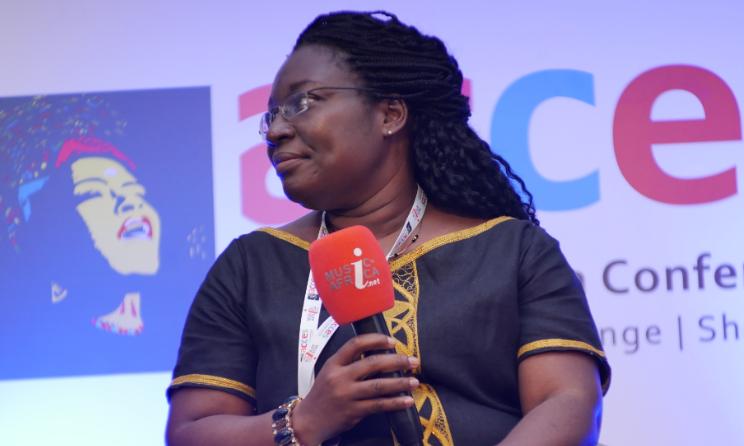
ACCES
ACCES

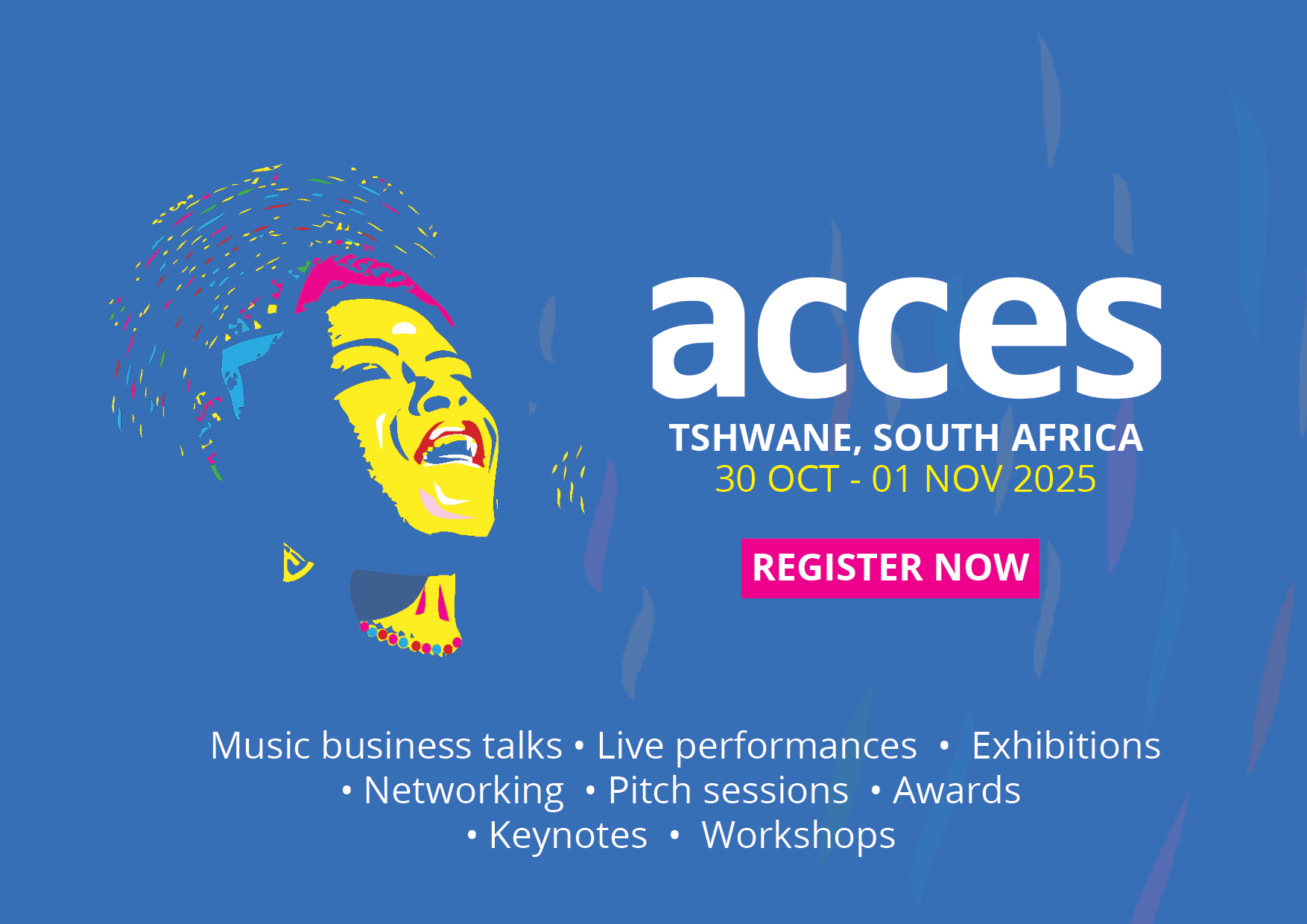
Chaque année, nous fournissons des informations générales afin de guider les participants dans la préparation de leur voyage. En plus de ce site, des mises à jour importantes seront envoyées par e-mail à tous les délégués inscrits. Assurez-vous de vous inscrire dès que possible. Pour plus d'informations, veuillez contacter [email protected] Continuez à consulter cette page pour plus d'information.  

Gender@Work
Gender@Work

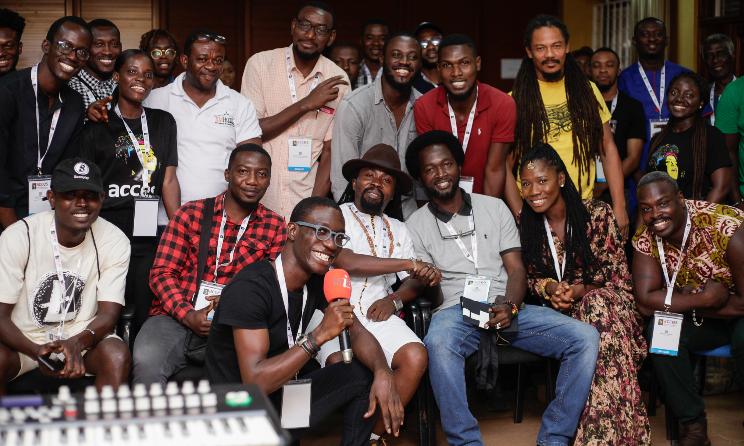
Music In Africa Gender @ Work is a three-year training programme aimed at upskilling and increasing the participation of female professionals in the African music sector. Launched by the Music In Africa Foundation (MIAF) in April 2019, the programme is connected to the MIAF’s ACCES music conference – a pan-African event held in a different African country every year. This connection enables the programme to reach new participants in a different African country every year. The programme marks the beginning of a more concerted effort by the Foundation to support the participation and inclusion of women in all facets of its programmes and the music sector in Africa as a whole. Over the three years, the programme will aim to address gender imbalances in the sector through training, lobbying, facilitating knowledge exchange and dialogues that foster the interest of women. The broader objectives of the programme are to: Provide industry training for women on critical music industry skills, focusing on: Stage management Electronic music production and recording Music business management Technical knowledge Provide an opportunity for both professional and aspiring women to benefit from the Music In Africa network and its broad range of activities in 2019, 2020 and 2021. Provide a solution-based platform in the form of a round table at ACCES with a view to identify challenges, discuss opportunities and lobby for the interests of female practitioners. Offer participants the opportunity to benefit from programmes offered by MIAF’s partners. Increase access to educational materials. Integrate participants in the broader ACCES programme to maximise experience and exposure to the industry. Record and present training materials on the www.musicinafrica.net, including but not limited to tutorials, templates and other best-practice materials. Communicate women-based themes that support the initiatives and messages of the programme. MAIN TRAINING ACTIVITIES Training in first country (Ghana): In the first year, participants will be trained on all aspects of stage management by a team of experienced stage managers from 10 to 17 November 2019. The programme will offer robust classroom training as well as practical, hands-on training in which participants will also be given the opportunity to manage various aspects of the ACCES performance programme. Training in second country: The second training iteration will take place at ACCES 2020 when the programme will diversify its course to include music production lessons and training on other music business topics. A round-table platform will also be introduced to coincide with the ACCES programme. Training in third country: The third training iteration will take place at ACCES 2021 in a different country, offering an advanced course. HOW DO YOU GET INVOLVED?  As a participant, facilitator or trainer: The programme enrolls up to 12 trainees every year. All opportunities are advertised publicly on this website, and will be added to this page. Please keep checking this page for new calls (below under UPDATES & CURRENT OPPORTUNITIES). As a partner Please contact Claire Metais at [email protected]. APPLY The call for applications for 2020 will be announced soon. The Music In Africa Gender @ Work programme is made possible with the support of the Prince Claus Fund, Siemens Stiftung and Goethe-Institut.

Sound Connects Fund
Sound Connects Fund

Pour les praticiens et les organisations culturels et créatifs opérant en Afrique australe, l’accès au financement reste un défi majeur. La pandémie de COVID-19 a également eu un impact massif sur les politiques gouvernementales, les dépenses et l’économie en général, et a vu les dépenses consacrées à la culture reléguées plus bas dans la liste des priorités. De plus, les industries culturelles et créatives citent régulièrement quatre domaines principaux où l’investissement est nécessaire pour la croissance : une visibilité accrue, la mobilité incluant l’accès à de nouveaux marchés, le financement et les structures de soutien.

Music In Africa Live

MUSIC IN AFRICA LIVE Lancé en 2020 pour une durée de 3 ans, Music In Africa Live est une initiative visant à soutenir l'écosystème de la musique africaine face aux contraintes imposées par la pandémie de COVID-19 ; le projet a été lancé par la Fondation Music In Africa (MIAF) en partenariat avec le ministère fédéral allemand des Affaires étrangères, Siemens Stiftung et le Goethe Institut. Plus de 30 aides sont disponibles dans le cadre de la troisième édition de Music In Africa Live, dans 3 catégories :  showcases, renforcement des compétences et plaidoyer, en conformité avec les modalités énoncées.

Instrument Building And Repair Project

The overarching objective of Music In Africa Foundation’s Instrument Building and Repair (IBR) project is to encourage the formalisation and professionalisation of instrument-making and repair in Africa, especially in relation to indigenous African instruments. Background In 2014, the Music In Africa Foundation (MIAF) identified as one of its focus areas for development the need to encourage young people from music and music-related sectors to consider instrument-making as a career. This need extended itself from the recognition that the making of traditional African instruments is not a widely practiced skill and seems to be limited to the older generation. Traditional African instrument makers are also few and far between, making communication and logistics between teachers and learners an obstacle. When instrument building workshops take place, budgetary constraints do not allow teachers or learners the time to explore the finer details of an instrument. Based on these observations, the MIAF designed and piloted the first IBR workshop at the Dhow Countries Music Academy (DCMA) in Zanzibar in February 2015. In 2016, the foundation received funding from the South African National Lotteries Commission to implement a much bigger version of the project in Johannesburg. The project drew participants from five African countries. 25 students from South Africa, Ghana, Senegal, Kenya and Ethiopia were trained on how to build and repair musical instruments. The instruments that they made were: Traditional Instruments: Umakhweyana and Marimba Conventional Instrument: Dulcimer guitar The workshop culminated in a traditional instruments concert at the Wits Theatre in Johannesburg. It is the MIAF’s aim to roll out similar workshops in as many African countries as possible over the next few years. Objectives Developing awareness of musical instrument makers in Africa with a view to promote their work to a wider global audience. Facilitating the sharing and transfer of skills in indigenous instruments between countries on the continent. Encouraging the formalisation and professionalisation of instrument-making and repair in Africa, especially in relation to indigenous instruments. Helping instrument makers develop their careers. Fostering the rapid monetisation and sustainable development of instrument-making and repair in Africa. Promoting constant exchange of ideas, expertise, experiences and know-how among instrument makers in Africa. Facilitating the identification of existing gaps in the field with a view to contribute new solutions. Facilitating the transfer of knowledge and skills of indigenous instruments between younger and older generations. 2020 edition The MIAF has also announced that multi-instrumentalist and instrument maker Joe Makhanza will facilitate one of the workshops on the building of the kamale ngoni instrument. Kamale ngoni is a kora-like, stringed instrument that originated in West Africa. The instrument contributed to the rise of Wassoulou music in the 1970s and 1990s. Makhanza was born in Giyani in South Africa's Limpopo province. He completed a bachelor of music degree and a post-graduate diploma in arts marketing from Wits University. He is currently completing his masters in ethnomusicology and is a part-time lecturer in African music studies at Rhodes University. He plays the kora, mbira, valiha, masenqo, xiwewe, ngoni ba and xizambi, among others. He also manufactures the aforementioned instruments. The MIAF will confirm more trainers who will join the workshops as well as the other instruments that will be featured in the 2020 IBR programme.  Apply to participate here. Connect with us on Twitter, Instagram and Facebook, and subscribe to our monthly newsletter. The Music In Africa Instrument Building and Repair project is funded by the National Lotteries Commission. It is implemented in partnership with Siemens Stiftung, Goethe-Institut, Wits Theatre and Kaya FM.

banner image

Music in the Eritrean media

Accueil/Non classé/Music in the Eritrean media

Background

Eritrea’s achievements are extensive in many fields, yet little is mentioned of the country’s rich arts and culture. With nine different ethnic languages in the country, the music of each ethnic group was historically confined to its respective region. It is only with the advent of media technology, however, that the various styles of Eritrean music started spreading to the rest of the country, the region and the world.

During Ethiopia’s occupation of Eritrea (1961-91), Eritreans were actively discouraged from listening to music in their indigenous languages and were banned from following the popular radio broadcast, Voice of the Broad Masses of Eritrea, which aired from the ‘liberated’ area of the country. Despite the ban, music remained a lifeline between the public and Eritrean liberation fighters. People listened and the music helped drive many youth to join the liberation struggle.

After Eritrea’s independence in 1991, music continued to be used for political reasons – but this time, by Eritrea’s government against its own people. Various bands worked directly under the party’s organs and the army, producing a disproportionate number of songs for the many national holidays that fill up the Eritrean calendar. Only songs produced in this fashion received substantial media airplay. This tradition has resulted in an « echo chamber » in which Eritrean artists produce music that they know the state-controlled media want – despite the songs’ obvious lack of quality, integrity or creativity. Singers are rewarded according to how well their songs are received in the state media and how much airtime they receive. This sort of « success » opens further opportunities for these artists to tour outside the country.

While the state media heavily promotes music that fulfills their own agenda, this does not necessarily improve the quality of productions. With the almost constant playing of patriotic songs on national radio and TV, it’s difficult to gauge how the music is really being received. The public’s continuous exposure to mediocre music results in a limited ability to discern what good-quality music actually is. There’s little or no objective standard for quality music in Eritrea – no knowledgeable music critics, very little musical scholarship and little access to decent, freely-made music from outside the country.

Elias Weldegebriel, director of the Asmara Music School[i] in Eritrea, explains the problem: In the post-independence era, because of lack of arts institutions and national interest, there was no one who could authoritatively write, teach, critique and research the musical performance practices, although these performance practices were and are abundant. It has been difficult for musicians and audiences to discern the ‘good’ music. The problem manifests itself in the few workshops and seminars conducted. Participants are typically divided as two whether Eritrean music shows positive change, what positive change might be and how to actually bring about the potential change or enrichment[ii].

Today the Eritrean government maintains a monopoly over domestic radio and television. The few privately-owned newspapers were all closed in 2001 as part of a crackdown on the opposition. The state media strongly backs the government, while accusing the opposition and the West (especially the USA) of undermining the country and of supporting its main enemy, Ethiopia. The government controls all media in Eritrea, including a newspaper published in three languages, a television station and three radio stations. A permit is required to print a publication or to distribute a foreign publication, restricting any opposing views.

Television

The state-run TV station, Eri-TV, began in 1993 with very limited coverage in the capital. Over time the station has significantly increased its range and coverage. Currently, the TV broadcasts in six languages (Tigrinya, Tigre, Arabic, Amharic, Oromo and English) and is broadcast to all corners of the country and the world via satellite. Each broadcast language of the TV has its own music slot and tradition calls for songs to provide the transition between programs. This practice has helped popularize local music tremendously, though the programs also broadcast international music.

In recent years, most Christian and Muslim religious holidays have been celebrated with extended state TV coverage of popular Eritrean artists, particularly singers. The singers will be interviewed, perform in studio and answer questions from the audience. Although this trend might not actually contribute to the quality of local music, it certainly enhances the popularity of the featured singers and their music.

The state broadcaster also runs a second channel, Eri-TV 2, which broadcasts only within the country. It is considered the entertainment channel and broadcasts mainly live football games of European clubs, various soap operas (mostly Turkish dubbed in Arabic) and national and international music. Unlike the main channel, the second channel tends to create opportunities for budding singers. It also encouraged many young Eritrean talents to produce their own music videos. 

Radio

Eritrea has three state-owned radio stations: the national Voice of the Broad Masses of Eritrea and two FM stations, Zara FM and Radio Numa. While Voice of the Masses mainly focuses on development journalism and includes music in various programs and transitions, the two FM stations devote more of their time to music and other entertainment. Zara FM is mainly devoted to local and international music programming with little time for news, while Radio Numa cover a variety of content, including sports, interviews and other entertainment.

Several radio stations run by Eritreans abroad are attempting to reach listeners in Eritrea. These include Radio Erena[iii], which broadcasts via satellite and over the radio from Paris, France. Radio Erena features discussions of many issues of crucial importance to Eritreans. Probably for this reason, the station is very popular and is considered one of the only credible news sources available to the people of Eritrea. Satellite dishes have become very popular in recent years in Eritrea, which has enhanced the station’s reach. Nevertheless, Radio Erena’s signal has been repeatedly jammed by authorities in recent years.

One of the most popular programs on the station that is followed by many Eritreans (including those living outside the country) is a music program called ‘Shekortetina’. This two-hour show is broadcast on Sundays and hosted by singer Yonathan Habte. It is highly entertaining both due to its music selection and its presentation style that engages closely with listeners. Besides the host offering entertaining comments on many issues, listeners have the rare opportunity to choose their favorite songs.

Besides Radio Erena there were also various other opposition-aligned stations broadcasting from Ethiopia and the UK. Founded in 2008 Ethiopia based radio station named Wegahta (Tigrigna translation- dawn) used to air programs twice a day, for 3 hours beginning 6 am in the morning and for seven hours from 5PM.  However the station stopped its transmission in 2013. Another station was the UK based ‘Radio Asena[iv]‘. The station was opposed to the Eritrean government. In February 2015 Radio Asena unplugged itself and stopped its broadcast for what its founder and Editor Amanuel Eyasu announced that the unpopular satellite radio broadcasting was discontinued due to chronic lack of funding.

Print

There is only one newspaper published in Eritrea, and that is the official portal of the Ministry of Information. « Haddas Ertra » in Tigrinya is published in three languages: Tigrinya, English and Arabic. Although the newspaper gives extensive coverage to music – often through interviews with singers, for example – it doesn’t employ music critics to discuss or assess the content. 

Another print medium – run by the party organ, the National Union of Eritrean Youth and Students – is the quarterly magazine Menisey. Among this magazine’s most-read content are its interviews with popular entertainers, mainly singers and actors.

Online

Internet penetration in Eritrea remains relatively poor, with statistics suggesting that the country has around 67 000 internet users- roughly1% of the population[v]. Nevertheless, today internet cafes in major cities and towns in Eritrea have been transformed into meeting places for the exchange of music, music videos and movies. This is mainly facilitated through the use of portable flash (USB) disks. 

Eritreans living outside the country often use YouTube to access Eritrean music. In fact, some YouTube channels have emerged to cater to these demands, which are chipping away at the centralization of music in Eritrea. Halenga Eritrea[vi] is such a channel where one can discover Eritrean Music. The channel publishes Eritrean music videos every week.  Halenga Eritrea was started with the mission to help emerging and established Eritrean Musicians promote and sell their work.   The Eritrean Music[vii] is yet another channel that shares Eritrean music. LYE Musica[viii] is another channel that shares Eritrean music online. 

QieNit[ix] is another platform that used to share information about the music of Eritrea. The platform also had a TV programme called the QieNit TV Talk Show, which focused on Eritrea’s legendary musicians.

Eritrea’s media landscape is severely restricted by government interference. However, music does have an important place in Eritrean radio, TV, print and online media. Apart from the music industry’s role in sustaining the Eritrean media, the media largely depends on the music industry to convey the state’s messages.

newsletter banner

Abonnez-vous à notre newsletter

Retrouvez-nous sur les réseaux sociaux