










































By Kuda Charwadza
Live music is a major and the most vibrant sector of the music industry in Zimbabwe, employing thousands of people. The industry has the capacity to significantly contribute to the nation’s economy if run professionally and well supported. Community halls, pubs, theatres and night clubs play host to different genres of music, with Sungura music attracting a large following in both rural and urban areas.
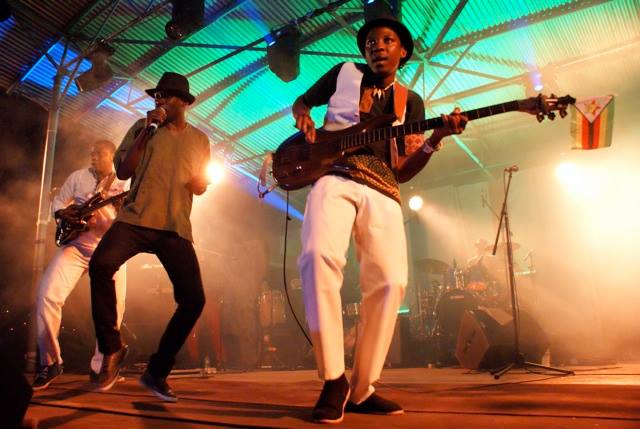
Historically, rural centres (commonly known as 'growth points') are locations where some of Zimbabwe’s greatest musicians such as Oliver Mtukudzi and Thomas Mapfumo used to play before they were famous. Almost each and every province of Zimbabwe has an arts festival that has a large influence of music, but the biggest of them all is the Harare International Festival of Arts (HIFA), which attracts musicians from all over the world, creating an exotic fiesta of both local and international music.
Venues
The Zimbabwe’s live music is played in different venues that are scattered around the country with university halls, theatres, stadiums, community halls, and night clubs hosting much of the shows. Genres such as jazz, Afro fusion and hip-hop are mostly performed in up-market venues while sungura and dancehall are usually performed in high density areas. Community halls such as Mai Musodzi Hall in Harare, Mpopoma and Njube in Bulawayo are halls of historical significance were musicians of the 1980s frequently staged shows. Almost all major towns and cities have big theatres and stadiums which are used as venues for live music. Examples include Mutare (Courtauld Theatre), Masvingo (Charles Austin Theatre) and Gweru (Gweru Theatre). However, some of these venues are now old (most were built before 1980) and there is lack of investment in live music infrastructure.
Harare, the capital city of Zimbabwe, is the epicentre of live music, drawing musicians of all genres. The city boasts of some of the finest artists as well as the best entertainment venues and festivals which play host to both local and international artists .With a cosmopolitan population, Harare provides a conducive environment for an array of musicians to showcase their artistic prowess making it a melting pot of different music genres. One unique venue in Harare that is famous for live music is the (now defunct) Book Café. This up market venue which is run by a local arts development organisation Pamberi Trust does not only host big artists such as Sulumani Chimbetu and Jah Prayzah but it also offers Open Mic sessions every week for budding musicians to showcase their talent.
Some of the venues to look out for live music in Harare include Jazz 105, Pakare Paye, the Zimbabwe-German Society, City Sports Centre, Stodart Hall, Mbare and Chitungwiza Aquatic Complex. Bulawayo consists of the likes of Large City Hall, Bulawayo Theatre and Club Cape to Cairo.
Festivals and promoters
There are a number of annual musical festivals in Zimbabwe, with each province hosting at least one big festival of multiple disciplines with music being the dominant art: Harare, Bulawayo (Intwasa Festival), Mutare (Chimanimani Arts Festival), Masvingo (Dzimbahwe Arts Festival), Gweru (Midlands Arts Festival) and Victoria Falls (Vic Falls Carnival). These festivals are mostly run by independent organisations and are supported by non-governmental organisations, embassies as well as corporates. One such NGO that champions funding of the Zimbabwean festivals is the Culture Fund of Zimbabwe Trust.
HIFA, is the largest of all the festivals and is the highlight of the Zimbabwean live music scene; attracting musicians from around the world. Annually the festival showcases some of the best of the local and international acts in its six day fun-filled programme. Although HIFA has been pigeon-holed by music critics as giving more precedence to international musicians as compared to the local ones, the festival has continued to attract huge crowds and to produce a lot of sensational collaborations between local and foreign musicians. Some of the musicians that have graced HIFA are The Magnets, Salif Keita, Dobet Gnahore, Mi Casa, Winky D and Mokoomba.
The government of Zimbabwe often hosts national galas in commemoration of national holidays and heroes. These festivities are often hosted outside major towns in-order to give remote and rural areas access to live music and business that comes along with the staging of such shows. Several local musicians rose to fame through such galas which are heavily attended as they are usually free of charge and are screened live on national television.
Delta Corporation is one corporate company that champions sponsorship of music festivals. The company in conjunction with the National Arts Council of Zimbabwe (NACZ) runs music festivals under flagship of different brands; these include Lion Lager Beer Festival and Chibuku Road To Fame, the latter being a talent search like festival which is run across the country for up-coming musicians.
Quite a number of Zimbabwean musicians - especially the established ones like sungura ace Alick Macheso and Sulumani Chimbetu - promote some of their own shows as a way of maximising profits.
Instrumentation and genres
Zimbabwe’s live music scene is dominated by musicians that play live instruments as compared to playing backtracks. Over the years, genres that play live instruments have been considered to give value for money by critics as they engage the public in long and highly entertaining performances, which crowds pay for to attend. However, the general economic meltdown that has hit Zimbabwe over the past years has caused viability challenges for instrument-playing musicians (which are almost always backed by a band). This in turn has given rise to other genres taking precedence in some areas as they are less demanding. Dancehall is one example and several artists have to date gained substantial mileage and a following with back-track based shows.
It is by no argument that a music genre called Sungura dominates the live music scene in both urban and rural areas of Zimbabwe. With the exception of Bulawayo and surrounding areas, where discos and other music styles are popular, Sungura music enjoys a lion’s share of Zimbabwean live music following. The genre became popular from as early as the 1980’s is a cash-cow for musicians, promoters as well as venue owners. Its popularity with older people who have disposable income has also made it the most successful genre in the live music scene.
Dancehall music is fast becoming popular with young people in major towns especially in high density areas where entrance fees are between US$2 and US$5 for a show. The rise of local dancehall music may be attributed to an increase of Jamaican dancehall musicians that have been frequently staging shows in Zimbabwe. To date musicians such as Mavado, Sizzla Kalonji, Capleton and Beenie Man have had successful concerts that also incorporated local dancehall artists.
The business of live performance
Live music has become the cornerstone of a music career for quite a number of artists in Zimbabwe as it is the most reliable (if not only) source of income. Rampant music piracy as well as lack of corporate support has forced musicians to solely rely on live shows for their welfare. Thus production of well-polished live show acts has been of paramount importance for one to become a successful musician. Contrary to yesteryear’s artists who made fortunes from record sales, today’s musicians have to maximise on live performances therefore a number of them are often booked to perform as much as three times a week to maximise profits. Musicians are also hired to perform at weddings and corporate events.
Besides having the sole rights of clearing international musicians for performances, the National Arts Council of Zimbabwe licences and regulates the work of music promoters and there are no associations for live performers. Promoters mostly double the role of a booking agent as there are no clear structures that distinguish the two and there are also no set standards of how much an artist, sound engineer or a venue owner is supposed to have from a live performance. However, mostly there are written contracts that are drafted for all the parties that are involved in the hosting of a live performance prior to an event.
International visitors
The Zimbabwean populace is quite responsive to foreign touring acts. On-tour artist from around the globe have over the years received a fair share of audience in Zimbabwe. International presence dates back as far as 1980 when the legendary Bob Marley performed before a full house in Rufaro Stadium in Harare. Musicians that have toured the country include Akon, Bryan Adams, P-Square and Sean Paul, with most of them performing before a huge crowd despite the fact that entrance fees were hiked. Some of the visiting musicians like internationally renowned dancehall icons Capleton and Sizzla Kalonji have toured Zimbabwe more than once, a clear testimony that they are bringing good business to promoters. From Southern Africa, South Africa contributes a large number of musicians coming into Zimbabwe for performances.
Conclusively, live music is playing a major role in the survival of the music industry as a whole, although many artists are finding it hard to maintain big bands which are usually associated with live music set up. Harare remains the focal point for different genres of live music for both local and international artists although other cities like Bulawayo and some mining towns receive the finest musicians occasionally. The general economic melt-down that Zimbabwe is facing at the moment has endangered the survival of a vibrant live music scene as evidenced by a drop in audience compared to the 1990s, leaving players in the industry with less income. However, with decisive strategies of enacting professional entities and associations the Zimbabwean live music scene is poised for a better future.


Most popular
Call for applications: ACCES 2026 Emerging Artist Spotlight Competition
01 Oct 2026

Top amapiano songs of 2026
16 Feb 2026

Top Naija songs of 2026
31 Mar 2026
Open call: 2026 Gender@Work music industry training in Johannesburg
03 Oct 2026

Top Afrobeats songs of 2026
19 Mar 2026
AFRIMA 2026: All the winners
12 Jan 2026
Disclaimer: Music In Africa provides a platform for musicians and contributors to embed music and videos solely for promotional purposes. If any track or video embedded on this platform violates any copyrights please inform us immediately and we will take it down. Please read our Terms of Use for more.

Subscribe to our monthly Newsletter
Follow us on social media


Please log in to post a comment.