

















































The Night Felabration hosted Mode 9 and Keziah Jones
15 Oct 2015 - 09:32


In Lagos, on October 14, Fela was spitting blasphemy from the speakers of the New Afrika Shrine. Throwing insults at God and government as he moved from blasphemy to treason. His music is a litany of sins.
On the Shrine’s sole stage a few men patrolled fixing this, shaping that. It was the third day of Felabration 2015 and a full hour behind schedule. Minutes later, and mercifully, the MC came up.
‘Everybody say yeah yeah,’ he said as Fela’s music stopped. ‘We are going to take off right now.’
The folkloric singer Edaoto, a Freedom Park staple, came out first. ‘Respect to that iconic figure,’ he said and raised both fists in the universal sign of Fela worship. Most of Edaoto’s imbibing audience raised their fists too, temporarily relinquishing the neck of bottles and waists of partners. ‘And my name is Edaoto,’ he said doing an uneasy spin. The sound production was remarkable—it would deteriorate as the night and festival went on. A lady got closer to the stage and, as is the norm these days, filmed the proceedings with a phone.
The audience sat still.
But Edaoto never needs a dancing audience. A self-contained act, as performer and reveller he is his own best audience. He took his time, band and coloured lights behind him. Channelling Fela, he spat insults of public figures.
'Agbaya oshi,' he called them, name checking former ministers and governors and presidents. The lights flickered, Edaoto jerked more, and the intensity of the music increased. Then he took off his shirt. A little over twenty minutes later he was off. 'Thank you Afrikan Shrine,' he said. ‘See you next year.’
Odourless grilled fishes and chickens on trays snaked through the swelling crowd. Above, on an illuminated ad board, a grinning Kcee held a bottle of an alcoholic beverage.
‘Are we ready?’ the MC boomed again. ‘Help me welcome AK 47.’ Not the gun. The man called AK 47 and his band began, instrumental-only. And then the leader with a new undergarment took to a lax impression of the maestro. To do Fela’s dance, a guy came out as if by miracle to claim the saxophone. Twice. Femi Kuti showed up shortly to play a solo, cheeks puffed out to applause and 2-fisted salutes. AK 47 and Femi then did a duet that seemed a contest Femi won easily. Post-Fela, afrobeat only has one king of horns. AK 47 had to concede defeat.
'My name is Akinlabi but you can call me AK47,’ he said, now alone. Right now I don forget the song when I wan sing.' But he did manage a short song. And then the DJ took over, playing Cynthia Morgan's ‘I'm Taken’. A few steps resulted. An unknown artist came out. 'Thank you for this opportunity,' he said. But he didn't really take the opportunity. One day the audience may regret not noting his genius early. Just not on this night.
'Everybody let's go,' he shouted. But the crowd wanted him to go offstage instead.
Next up another unknown. The non-response proved the laziness of the Shrine crowd. The guys were thankful for the chance but with the audience weren't, unable to make the leap for these obscure acts. A message rang out: come back when you're famous.
Another one came out. In a bid to give everyone a platform, Felabration can be quite an abyss of bad filler music. And as if to emphasise the gap between known and unknown a 2face song played by the DJ received more response from the crowd than the toiling dudes doing what they could on stage. By the time 9ice's ‘Street Credibility’ came on the crowd, drunk, sober, in-between sang along. It began to seem like an engaging concert only when the DJ played.
Clever DJ, in a place where people are holding wraps, he started on ‘Ganja Farmer’. The audience lapped it up. And on and on. Absent or no, only popular musicians reap rewards from popular music. The night’s only successful unknown was a reedy young man called Ojonlo. He engaged the crowd, chiefly with a rapid-fire flow. The syllables rolled off his tongue. He was the redemption of the night’s unknowns. As he exited the stage, the crowd appeared to think he has a future.
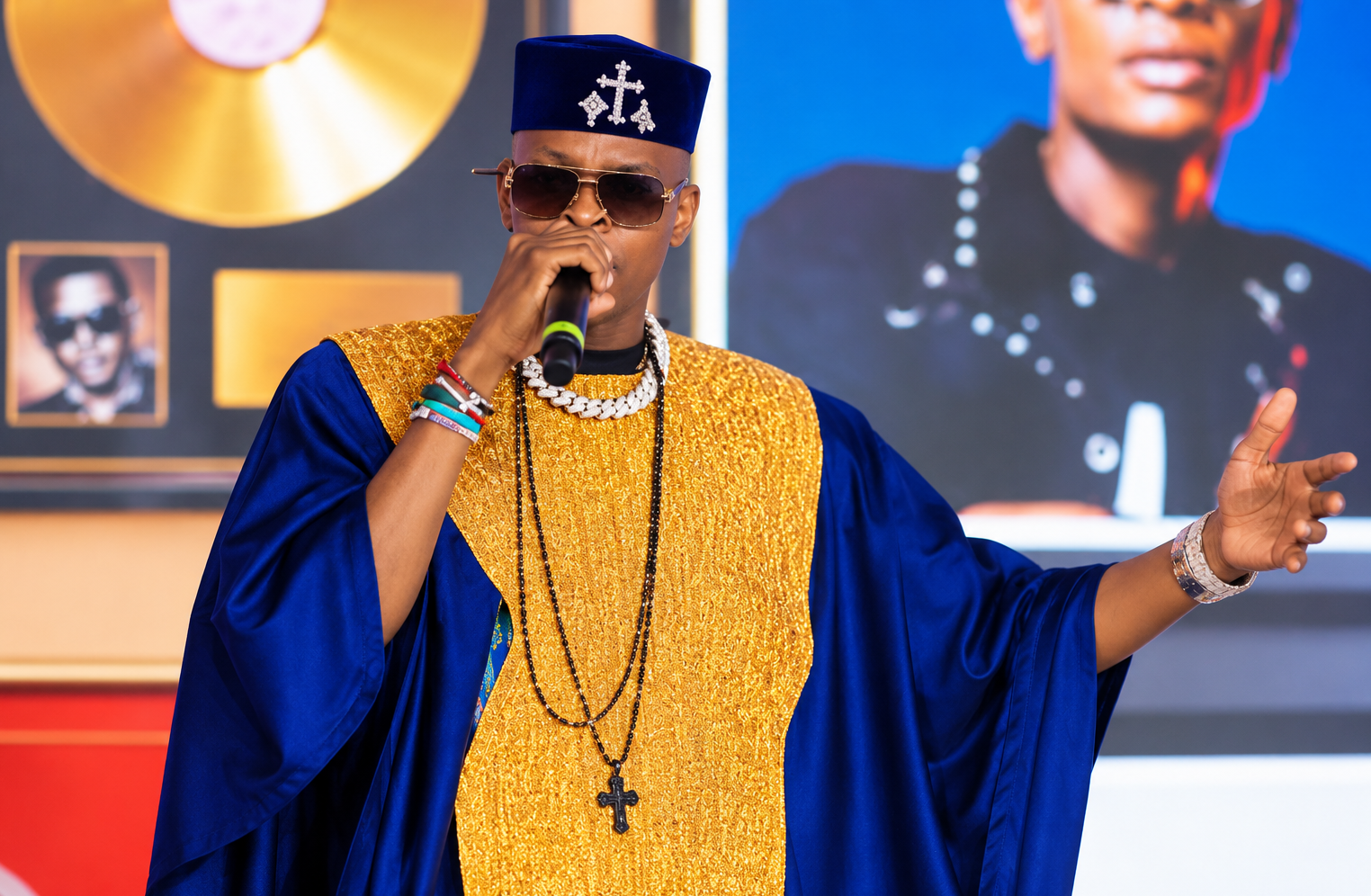
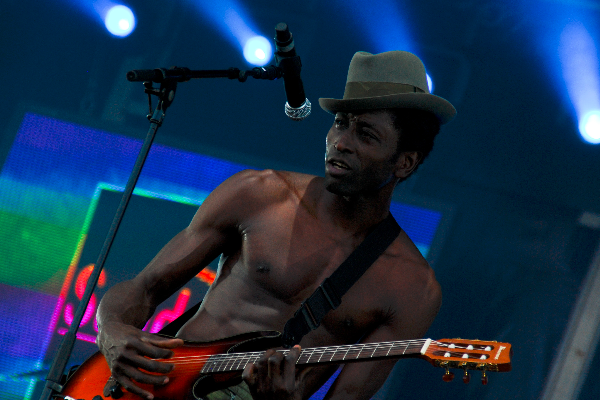
Keziah Jones came on. Hat on head, he didn't so much caress as stroke his instrument, holding the guitar close to his crotch. Were the guitar a slimmer, straight device it could pass for a phallic extension. Femi Kuti, unable to resist, showed up again. A surprised Jones smiled in appreciation. Then he continued stroking. The smattering of camera holders had turned to a horde: they had to get this instance of Jones and Kuti going mano a mano. But this was a more complimentary contest Jones’s stroking led to ‘Pafuka’ and a shirt-pull. Some waist twirling removed the prior innuendo, transforming those guitar licks and caresses into intentional propositions. To conclude, Jones played the national anthem, said his name, and dissipated.
Queen of Waka music Salawa Abeni came on to sing with her son, a rapper whose corpulence forced him to ape Rick Ross. While ‘Ross’ scowled, Ms. Abeni was more ingratiating, smiling to the crowd. A popular musician in the 1990s, she had a maternal approach to the crowd. Her son had a confrontational one, taking off his shirt and forcing the crowd to pay obeisance to Salawa Abeni. He was obliged, mostly.
A few more acts and an interlude and it was time for rapper Mode 9 to come on stage.
Introduced as a teacher, Mode 9 came in with blue tracksuit, white towel in back pocket and an LA hat. Young men in the audience were ecstatic—for most of their life Mode 9 has been Nigerian hip hop's only equal to any of the American heavyweights. The sound was failing, the track overwhelming the words but they didn’t care. Mode 9 invited Terry the Rapman. With a third artist they broke into some of that old time, hopping around hip-hop. They performed ‘GOD’, Terry the Rapman’s first single in years. The sound, wonky throughout, nearly marred what was supposed to be a potent return.
But no one cared. For anyone else the awful sound may have been the source of a rising disappointment. Not for these ones—they, after all, are gods of the genre. The only permissible response was worship. The crowd cheered.


Most popular

Top Naija songs of 2026
31 Mar 2026

Top Afrobeats songs of 2026
19 Mar 2026

Top amapiano songs of 2026
16 Feb 2026
Ghana: Mr Eazi and MOLIY’s ‘Comfort’ earns Urban Music Awards nomination
21 Oct 2026
Open call: CANEX Music Business Lab and Songwriting Camp
15 Oct 2026
Nigeria: CANEX WKND unveils 2026 programme
21 Oct 2026
Disclaimer: Music In Africa provides a platform for musicians and contributors to embed music and videos solely for promotional purposes. If any track or video embedded on this platform violates any copyrights please inform us immediately and we will take it down. Please read our Terms of Use for more.

Subscribe to our monthly Newsletter
Follow us on social media


Please log in to post a comment.