















NEFCISA
NEFCISA

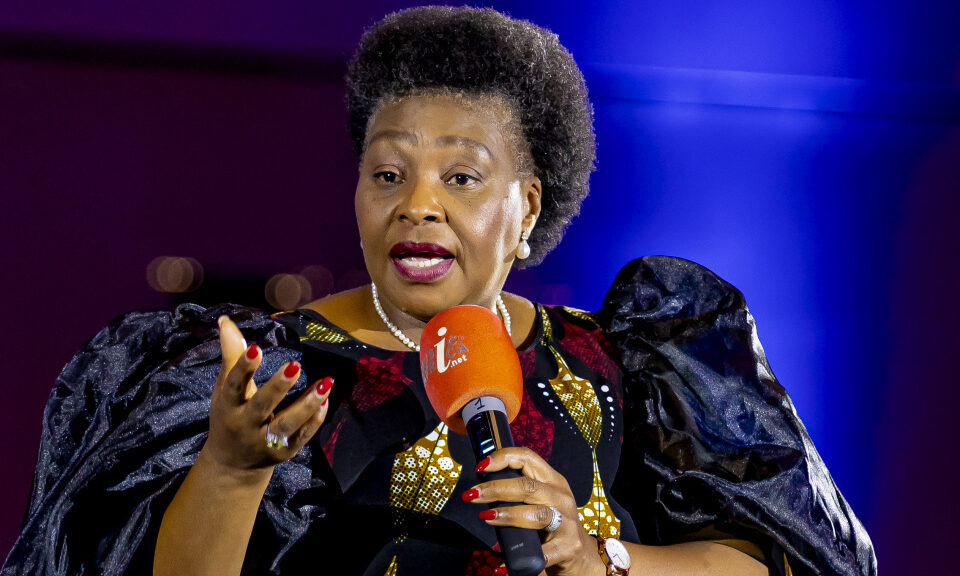
The Music In Africa Foundation (MIAF) is proud to announce its partnership with the Industrial Development Corporation (IDC) as a Strategic Implementing Partner (SIP) for its Social Employment Fund (SEF). Through this collaboration, MIAF is launching a new national programme designed to create jobs, address skills gaps, and strengthen South Africa’s creative industries — in line with the SEF’s overarching goal to generate work for the common good and build community value through employment, social contribution, and inclusive economic participation. Operating under the banner NEFCISA (National Employment Facility for Creative Industries in South Africa), the initiative will recruit and train participants, match them with host organisations, and place a minimum of 1 000 workers across the country. Key Objectives: Support employment and entrepreneurship in the creative industries. Offer skills development and training programmes. Foster partnerships between public and private creative sectors. Promote South African creativity at both provincial and national levels Foster community development through social contribution.

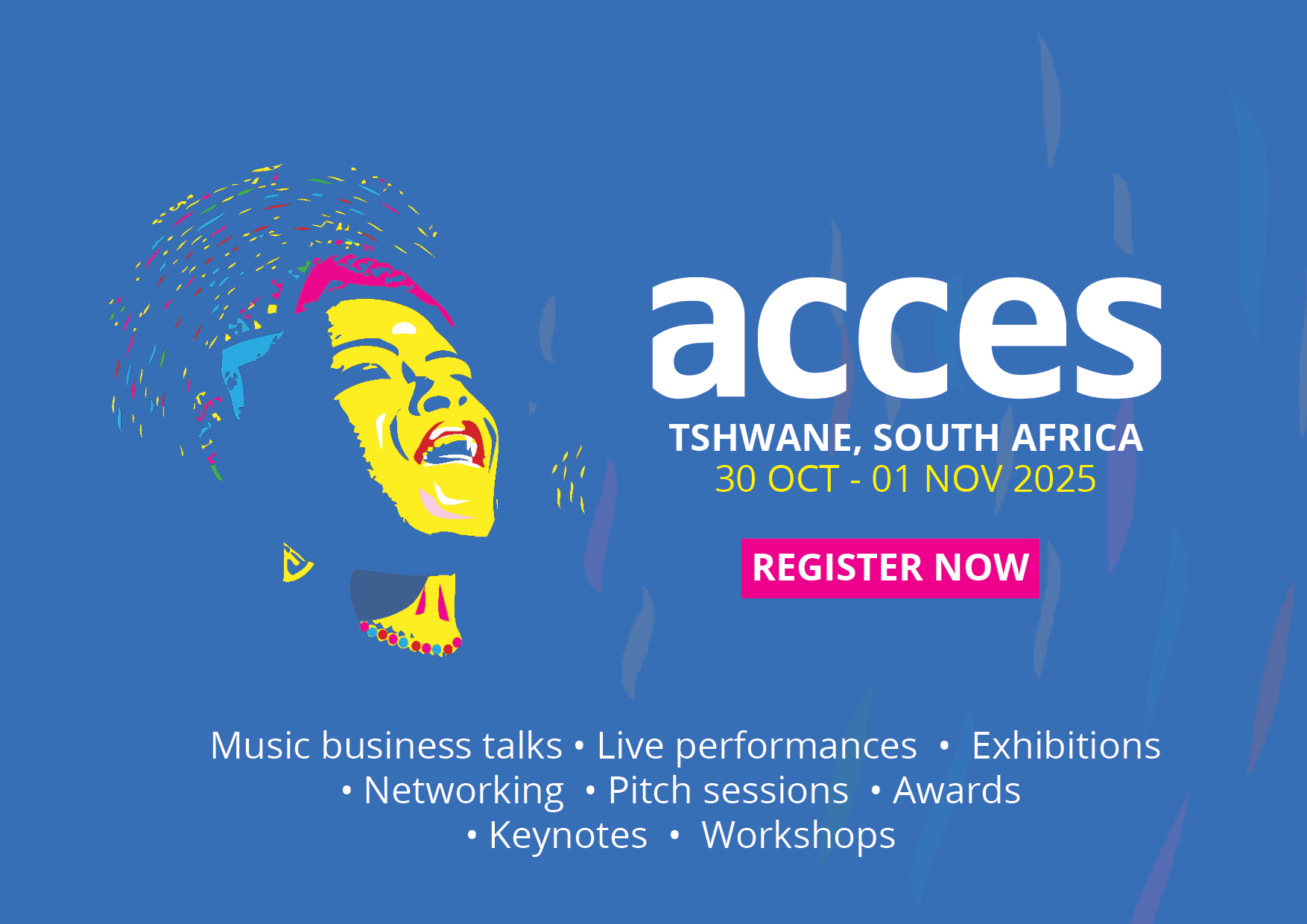
ACCES
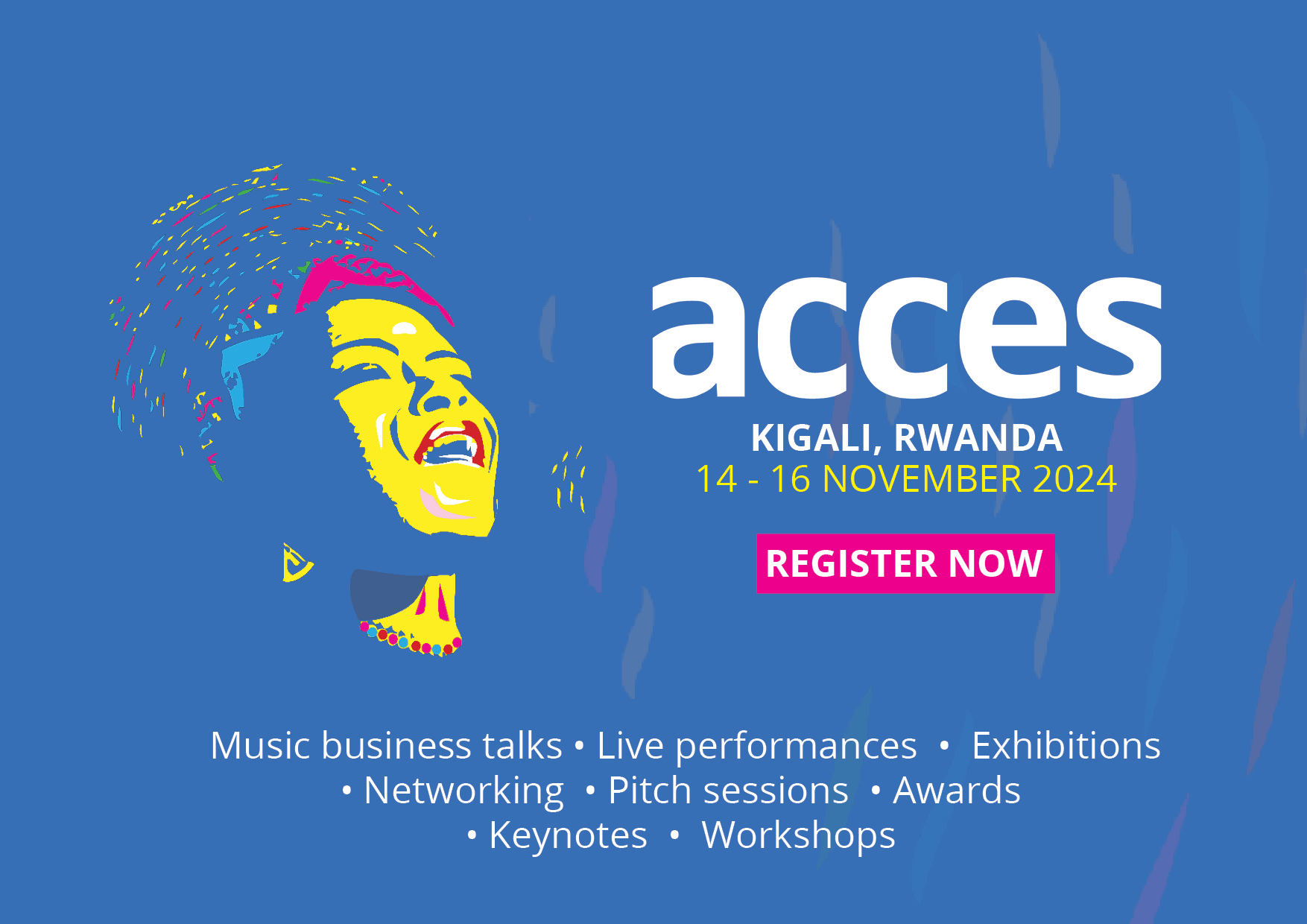
ACCES

Chaque année, nous fournissons des informations générales afin de guider les participants dans la préparation de leur voyage. En plus de ce site, des mises à jour importantes seront envoyées par e-mail à tous les délégués inscrits. Assurez-vous de vous inscrire dès que possible. Pour plus d'informations, veuillez contacter [email protected] Continuez à consulter cette page pour plus d'information.  

Gender@Work
Gender@Work

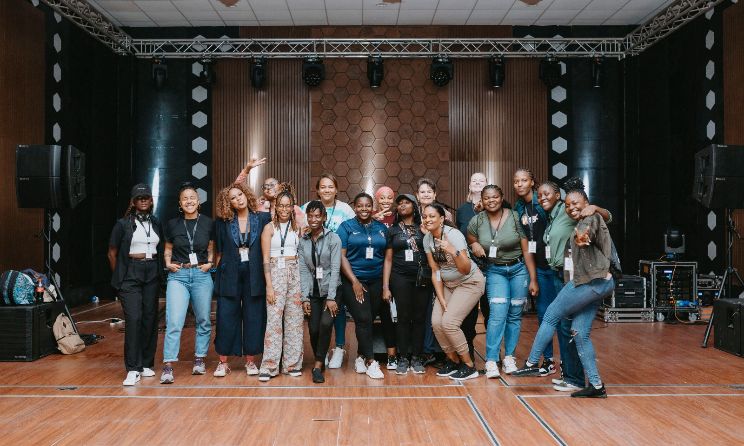
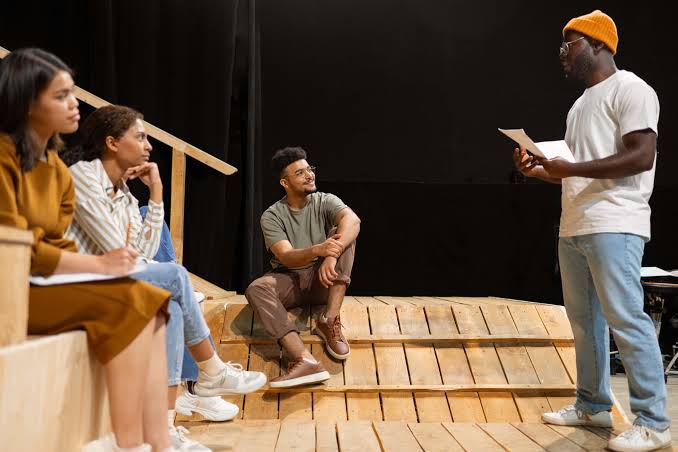
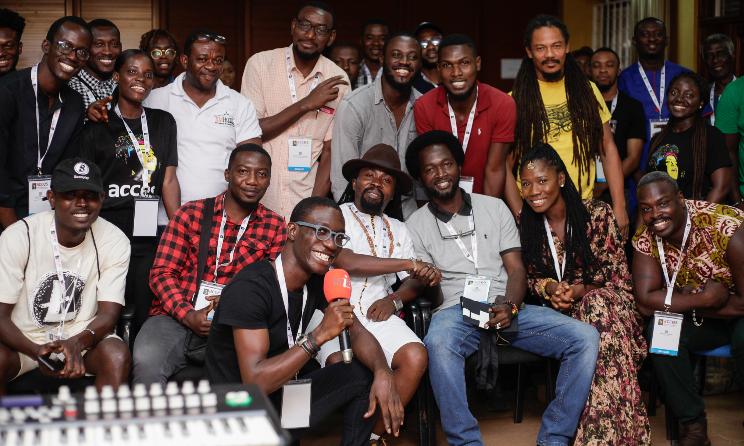
Music In Africa Gender @ Work is a three-year training programme aimed at upskilling and increasing the participation of female professionals in the African music sector. Launched by the Music In Africa Foundation (MIAF) in April 2019, the programme is connected to the MIAF’s ACCES music conference – a pan-African event held in a different African country every year. This connection enables the programme to reach new participants in a different African country every year. The programme marks the beginning of a more concerted effort by the Foundation to support the participation and inclusion of women in all facets of its programmes and the music sector in Africa as a whole. Over the three years, the programme will aim to address gender imbalances in the sector through training, lobbying, facilitating knowledge exchange and dialogues that foster the interest of women. The broader objectives of the programme are to: Provide industry training for women on critical music industry skills, focusing on: Stage management Electronic music production and recording Music business management Technical knowledge Provide an opportunity for both professional and aspiring women to benefit from the Music In Africa network and its broad range of activities in 2019, 2020 and 2021. Provide a solution-based platform in the form of a round table at ACCES with a view to identify challenges, discuss opportunities and lobby for the interests of female practitioners. Offer participants the opportunity to benefit from programmes offered by MIAF’s partners. Increase access to educational materials. Integrate participants in the broader ACCES programme to maximise experience and exposure to the industry. Record and present training materials on the www.musicinafrica.net, including but not limited to tutorials, templates and other best-practice materials. Communicate women-based themes that support the initiatives and messages of the programme. MAIN TRAINING ACTIVITIES Training in first country (Ghana): In the first year, participants will be trained on all aspects of stage management by a team of experienced stage managers from 10 to 17 November 2019. The programme will offer robust classroom training as well as practical, hands-on training in which participants will also be given the opportunity to manage various aspects of the ACCES performance programme. Training in second country: The second training iteration will take place at ACCES 2020 when the programme will diversify its course to include music production lessons and training on other music business topics. A round-table platform will also be introduced to coincide with the ACCES programme. Training in third country: The third training iteration will take place at ACCES 2021 in a different country, offering an advanced course. HOW DO YOU GET INVOLVED?  As a participant, facilitator or trainer: The programme enrolls up to 12 trainees every year. All opportunities are advertised publicly on this website, and will be added to this page. Please keep checking this page for new calls (below under UPDATES & CURRENT OPPORTUNITIES). As a partner Please contact Claire Metais at [email protected]. APPLY The call for applications for 2020 will be announced soon. The Music In Africa Gender @ Work programme is made possible with the support of the Prince Claus Fund, Siemens Stiftung and Goethe-Institut.

Sound Connects Fund
Sound Connects Fund

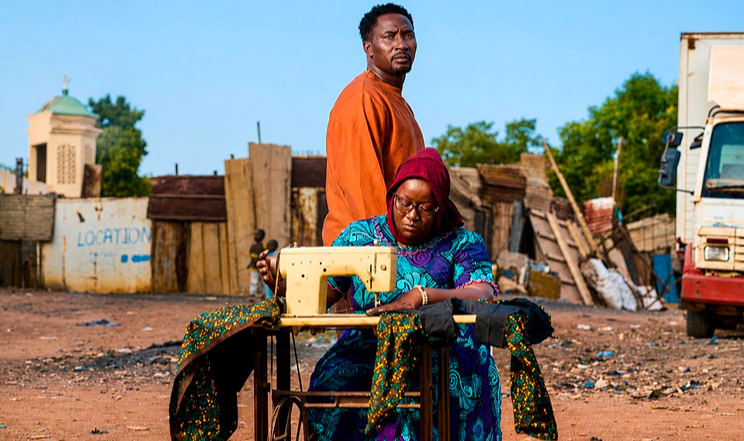
Pour les praticiens et les organisations culturels et créatifs opérant en Afrique australe, l’accès au financement reste un défi majeur. La pandémie de COVID-19 a également eu un impact massif sur les politiques gouvernementales, les dépenses et l’économie en général, et a vu les dépenses consacrées à la culture reléguées plus bas dans la liste des priorités. De plus, les industries culturelles et créatives citent régulièrement quatre domaines principaux où l’investissement est nécessaire pour la croissance : une visibilité accrue, la mobilité incluant l’accès à de nouveaux marchés, le financement et les structures de soutien.

Music In Africa Live

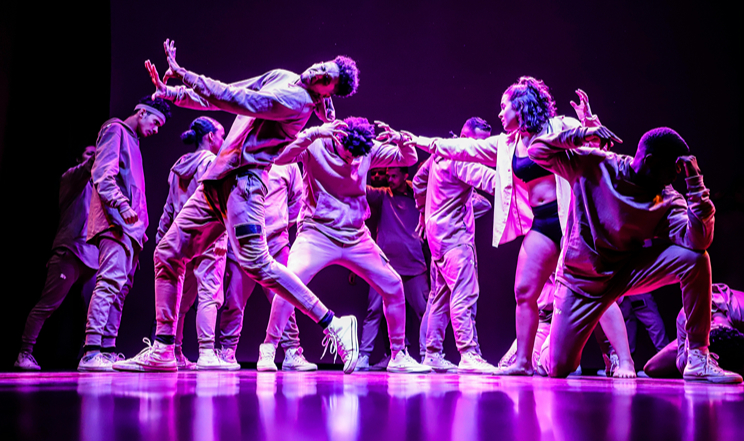
MUSIC IN AFRICA LIVE Lancé en 2020 pour une durée de 3 ans, Music In Africa Live est une initiative visant à soutenir l'écosystème de la musique africaine face aux contraintes imposées par la pandémie de COVID-19 ; le projet a été lancé par la Fondation Music In Africa (MIAF) en partenariat avec le ministère fédéral allemand des Affaires étrangères, Siemens Stiftung et le Goethe Institut. Plus de 30 aides sont disponibles dans le cadre de la troisième édition de Music In Africa Live, dans 3 catégories :  showcases, renforcement des compétences et plaidoyer, en conformité avec les modalités énoncées.

Instrument Building And Repair Project

The overarching objective of Music In Africa Foundation’s Instrument Building and Repair (IBR) project is to encourage the formalisation and professionalisation of instrument-making and repair in Africa, especially in relation to indigenous African instruments. Background In 2014, the Music In Africa Foundation (MIAF) identified as one of its focus areas for development the need to encourage young people from music and music-related sectors to consider instrument-making as a career. This need extended itself from the recognition that the making of traditional African instruments is not a widely practiced skill and seems to be limited to the older generation. Traditional African instrument makers are also few and far between, making communication and logistics between teachers and learners an obstacle. When instrument building workshops take place, budgetary constraints do not allow teachers or learners the time to explore the finer details of an instrument. Based on these observations, the MIAF designed and piloted the first IBR workshop at the Dhow Countries Music Academy (DCMA) in Zanzibar in February 2015. In 2016, the foundation received funding from the South African National Lotteries Commission to implement a much bigger version of the project in Johannesburg. The project drew participants from five African countries. 25 students from South Africa, Ghana, Senegal, Kenya and Ethiopia were trained on how to build and repair musical instruments. The instruments that they made were: Traditional Instruments: Umakhweyana and Marimba Conventional Instrument: Dulcimer guitar The workshop culminated in a traditional instruments concert at the Wits Theatre in Johannesburg. It is the MIAF’s aim to roll out similar workshops in as many African countries as possible over the next few years. Objectives Developing awareness of musical instrument makers in Africa with a view to promote their work to a wider global audience. Facilitating the sharing and transfer of skills in indigenous instruments between countries on the continent. Encouraging the formalisation and professionalisation of instrument-making and repair in Africa, especially in relation to indigenous instruments. Helping instrument makers develop their careers. Fostering the rapid monetisation and sustainable development of instrument-making and repair in Africa. Promoting constant exchange of ideas, expertise, experiences and know-how among instrument makers in Africa. Facilitating the identification of existing gaps in the field with a view to contribute new solutions. Facilitating the transfer of knowledge and skills of indigenous instruments between younger and older generations. 2020 edition The MIAF has also announced that multi-instrumentalist and instrument maker Joe Makhanza will facilitate one of the workshops on the building of the kamale ngoni instrument. Kamale ngoni is a kora-like, stringed instrument that originated in West Africa. The instrument contributed to the rise of Wassoulou music in the 1970s and 1990s. Makhanza was born in Giyani in South Africa's Limpopo province. He completed a bachelor of music degree and a post-graduate diploma in arts marketing from Wits University. He is currently completing his masters in ethnomusicology and is a part-time lecturer in African music studies at Rhodes University. He plays the kora, mbira, valiha, masenqo, xiwewe, ngoni ba and xizambi, among others. He also manufactures the aforementioned instruments. The MIAF will confirm more trainers who will join the workshops as well as the other instruments that will be featured in the 2020 IBR programme.  Apply to participate here. Connect with us on Twitter, Instagram and Facebook, and subscribe to our monthly newsletter. The Music In Africa Instrument Building and Repair project is funded by the National Lotteries Commission. It is implemented in partnership with Siemens Stiftung, Goethe-Institut, Wits Theatre and Kaya FM.

Features

5 questions à Ghita Khaldi

18 Déc 2017 - 16:42

cc-img flag-img

Ghita Khaldi est fondatrice et présidente de l’association marocaine Afrikayna. En marge de la conférence ACCES 2017, elle a dressé un bilan des 4 années d’existence de son association.
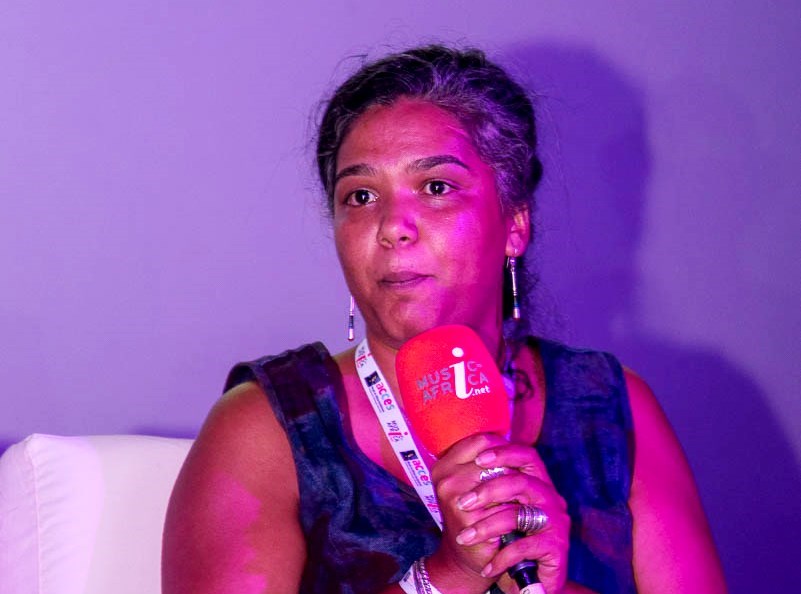
Ghita Khaldi (Photo) : Guillaume Bassinet

Bonjour Ghita Khaldi, pouvez-vous nous présenter brièvement Afrikayna ?

Afrikayna est une association existant depuis 2013 et basée à Casablanca. Elle mène des actions d’échange inter-culturels sud-sud portant sur : les programmes de formation artistique, de résidence, la co-production de projets et surtout la circulation des projets entre le Maroc et le reste du continent.

Comment est venue l’idée de créer cette association ?

Initialement, nous avons démarré les travaux au niveau d’Afrikayna avec une conviction pan-africaniste : la solidarité permet de progresser ensemble.

Nous devons pouvoir évaluer le volume de choses que nous avons en commun. Cela permet aux peuples et aux artistes africaines de mieux se connaitre, mais aussi de s’enrichir de nos différences culturelles.

Puis, nous avons essayé de comprendre pourquoi cet éloignement, ce faible volume d’échanges entre artistes vivant tous sur le continent africain.

Nous avons fait un travail de recherche auprès d’artistes et d’opérateurs culturels pour essayer de savoir ce qui bloquait effectivement les échanges. Les réponses reçues se résument en une phrase : tant que les artistes du continent n’arriveront pas à se déplacer en Afrique, nous ne pourrons pas avoir des collaborations, nous connaître à travers nos richesses et diversités culturelles.

Quels problèmes furent identifiés et quelles furent les pistes de solution proposées pour les résoudre ?

La cherté des billets d’avion a été le principal obstacle à la mobilité des artistes africains sur le continent !

La contrainte de la mobilité était une réponse partagée par tous. Nous sommes partis de ce constat pour rédiger un projet qui porterait sur la facilitation de la circulation des artistes et professionnels.

Dans un premier temps, le projet a porté sur le secteur musical avant de s’ouvrir à toutes les disciplines du spectacle vivant.

Nous avons écrit ce projet, puis on a tapé aux portes pour voir qui serait partant pour financer. Ça a pris du temps pour expliquer qu’Afrikayna était juste un intermédiaire. L’association faisait une collecte avant de redistribuer les fonds reçus selon certains critères.

Nous avons eu la chance d’avoir un retour favorable d’abord d’opérateurs culturels locaux dont le groupe OCP ( Office Chérifien des Phosphates) qui est notre principal bailleur de fonds en plus du réseau du Technopark du Boultek. Toutes ces organisations travaillent beaucoup sur le développement d’espaces de travail communs, de collaboration et d’échange.

À partir du moment où nous avons eu avec nous ces partenaires qui ont compris, nous avons lancé le fonds « Africa art lines » en janvier 2016. Nous arrivons à la 2e année de déploiement de ce fonds. La première année fut exclusivement consacrée à la musique. Pendant la deuxième, nous avons élargi le champ des bénéficiaires.

Rétrospectivement, quels sont les points satisfaisants et les points pouvant être améliorés ?

Quand on a démarré, on a tenu à se poser les questions réalistes par rapport au terrain marocain et continental, on a compris certaines contraintes.

En ce mois de novembre 2017, notre satisfaction est indescriptible car toutes nos réalisations sont le fruit d’une réflexion collective et pas seulement marocaine. Les chanteurs et les autres professionnels de l’industrie artistique avec lesquels nous avons réfléchi pour faire un diagnostic puis monté Afrikayna viennent du Sénégal, du Mali, du Maroc et d’autres pays de la sous-région.

Autre motif de satisfaction : nous sommes parvenus à rectifier certaines contraintes posées par d’autres initiatives pour la mobilité. Exemple : l’obligation parfois faite aux artistes d’avancer les fonds. Nous avons cherché, trouvé et mis en œuvre des solutions adaptées à nos contextes en évitant par exemple d’envoyer des financements. Nous avons choisi par exemple d’émettre directement des billets d’avion et non de faire des virements ou des transferts d’argent.

La mobilité est un levier important et crucial, mais il fallait alimenter notre action par d’autres leviers. Nous avons lancé une série de Master Class professionnelles appelées « Casablanca drum n base » où on a tenu à maintenir des échanges.

Globalement nous avons une belle communauté de musiciens, mais pas toujours bien formée. Ces Master Class ont permis de créer des échanges entre des jeunes artistes et des artistes ayant réussi dans le monde du show-business. Ces célébrités pouvant être des exemples à suivre. Ces chanteurs à forte notoriété ont proposé aux débutants des exemples de chemins en termes de carrière, mais le principal intérêt des échanges c’est que les carrières proposées aux jeunes étaient centrées sur des africains et sur le continent africain.

Les formateurs passaient 3 jours avec des jeunes musiciens. Les leaders expliquent leur parcours, leur expérience, leurs techniques de jeu font la promotion du fait de s’inspirer des ressources traditionnelles de l’Afrique afin de faire la différence sur la scène musicale mondiale.

En effet, si les artistes du continent continuent à vouloir jouer comme des américains ou des espagnols sans apporter un peu de leurs racines, il leur sera impossible de faire la différence.

Nous avons eu la chance d’avoir été suivis par de très grands noms : Paco Sery, Habib Faye, Marcus Miller, sont venus partager leur expérience et l’importance de s’accrocher au patrimoine local qui risque de s’éteindre si on ne le valorise pas quitte à le mettre dans un écrin contemporain.

Cet accompagnement a été fait avec le soutien de plusieurs co-producteurs du projet.

Entre autres exemples d’actions d’Afrikayna, nous avons travaillé sur le duo entre Stanley Enow et le grand rappeur marocain H Name.

Nous avons collaboré sur des projets existants ayant besoin d’aide. Parmi eux, on peut citer la résidence annuelle Jokko. Elle a démarré avec 3 festivals : Boulevard Casa, Festa 2h Dakar et Assalamalekoum Nouakchott. Cette année l’initiative initiale a évolué pour aboutir sur un projet plus grand appelé Forum des Cultures Urbaines d’Afrique (FOCUS). Cette collaboration rassemble désormais 4 festivals grâce à l’inclusion du festival sur le Niger de Ségou.

Toutes les réalisations précédentes sont des projets permettant aux artistes africains de se voir, d’échanger concrètement, de communiquer, ce ne sont pas juste des billets d’avion…

Quel bilan d’Afrikayna et d’ACCES ?

En 2016, Afrikayna a commencé par le secteur musical. 25 projets d’Afrique de l’Ouest, d’Afrique du Nord et d’Afrique Centrale ont été financés. Mais dans cette première phase, la demande de mobilité était plus orientée vers le Maroc. Nous sommes allés vers les directeurs de festivals en utilisant plusieurs réseaux dont Music In Africa et Arterial Network.

En 2017, il y a eu plus de programmations marocaines dans les autres festivals, ça a rééquilibré le volume d’échanges.

À propos d’ACCES, je suis très optimiste, après ces 2 jours et les thématiques traitées ! Nous savons qu’on peut et doit faire des choses chez nous avec nos propres grilles de lecture et codes culturels.

Avoir des rencontres comme ACCES où nous pouvons être tous ensemble et envisager l’avenir selon nos propres perspectives, c’est intéressant. Le chemin qui reste à parcourir est long, mais je suis très optimiste. Nous pourrons faire avancer le secteur musical. Plus que des projets, il se réalise la prise de conscience du volume de travail à accomplir, merci à la fondation Music In Africa pour cette initiative.

L’an 2018 sera plus riche, en projets, en échanges et en constructions…

Please se connecter to post a comment.

Most popular

Disclaimer: Music In Africa provides a platform for musicians and contributors to embed music and videos solely for promotional purposes. If any track or video embedded on this platform violates any copyrights please inform us immediately and we will take it down. Please read our Terms of Use for more.

newsletter banner

Abonnez-vous à notre newsletter

Retrouvez-nous sur les réseaux sociaux