





















NEFCISA
NEFCISA

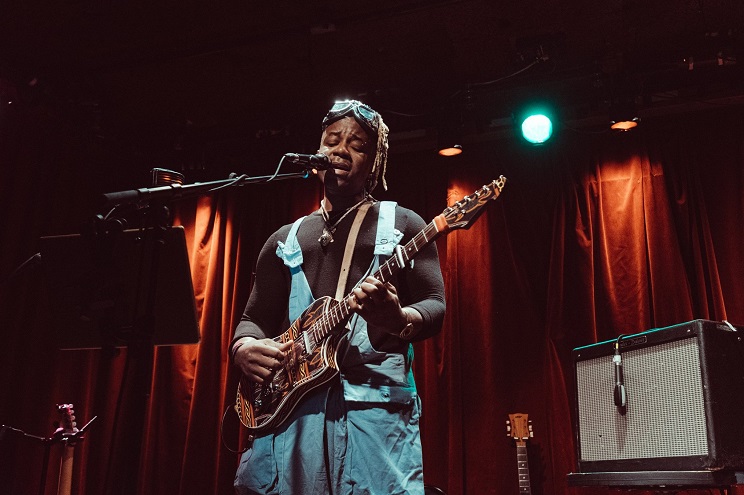
The Music In Africa Foundation (MIAF) is proud to announce its partnership with the Industrial Development Corporation (IDC) as a Strategic Implementing Partner (SIP) for its Social Employment Fund (SEF). Through this collaboration, MIAF is launching a new national programme designed to create jobs, address skills gaps, and strengthen South Africa’s creative industries — in line with the SEF’s overarching goal to generate work for the common good and build community value through employment, social contribution, and inclusive economic participation. Operating under the banner NEFCISA (National Employment Facility for Creative Industries in South Africa), the initiative will recruit and train participants, match them with host organisations, and place a minimum of 1 000 workers across the country. Key Objectives: Support employment and entrepreneurship in the creative industries. Offer skills development and training programmes. Foster partnerships between public and private creative sectors. Promote South African creativity at both provincial and national levels Foster community development through social contribution.

ACCES
ACCES

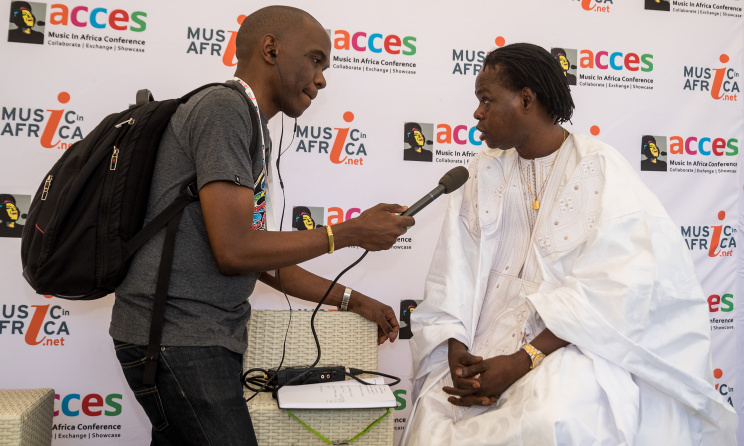
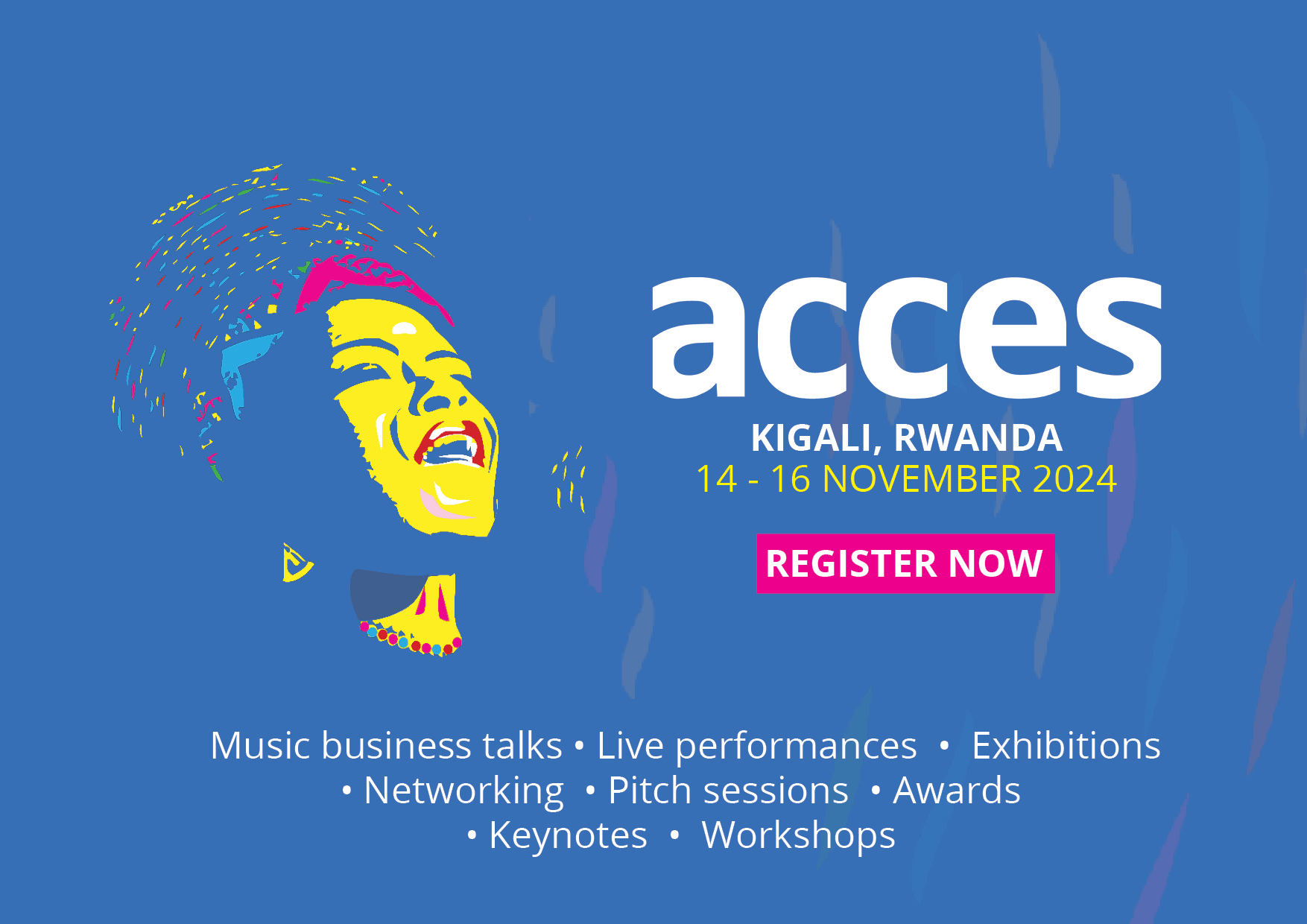
Chaque année, nous fournissons des informations générales afin de guider les participants dans la préparation de leur voyage. En plus de ce site, des mises à jour importantes seront envoyées par e-mail à tous les délégués inscrits. Assurez-vous de vous inscrire dès que possible. Pour plus d'informations, veuillez contacter [email protected] Continuez à consulter cette page pour plus d'information.  

Gender@Work
Gender@Work

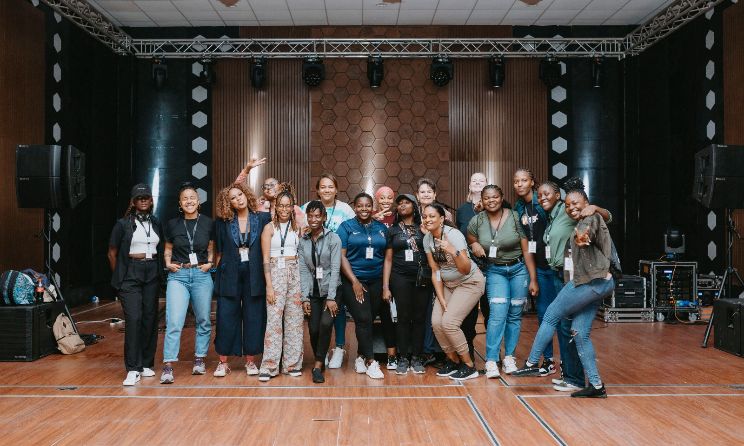
Music In Africa Gender @ Work is a three-year training programme aimed at upskilling and increasing the participation of female professionals in the African music sector. Launched by the Music In Africa Foundation (MIAF) in April 2019, the programme is connected to the MIAF’s ACCES music conference – a pan-African event held in a different African country every year. This connection enables the programme to reach new participants in a different African country every year. The programme marks the beginning of a more concerted effort by the Foundation to support the participation and inclusion of women in all facets of its programmes and the music sector in Africa as a whole. Over the three years, the programme will aim to address gender imbalances in the sector through training, lobbying, facilitating knowledge exchange and dialogues that foster the interest of women. The broader objectives of the programme are to: Provide industry training for women on critical music industry skills, focusing on: Stage management Electronic music production and recording Music business management Technical knowledge Provide an opportunity for both professional and aspiring women to benefit from the Music In Africa network and its broad range of activities in 2019, 2020 and 2021. Provide a solution-based platform in the form of a round table at ACCES with a view to identify challenges, discuss opportunities and lobby for the interests of female practitioners. Offer participants the opportunity to benefit from programmes offered by MIAF’s partners. Increase access to educational materials. Integrate participants in the broader ACCES programme to maximise experience and exposure to the industry. Record and present training materials on the www.musicinafrica.net, including but not limited to tutorials, templates and other best-practice materials. Communicate women-based themes that support the initiatives and messages of the programme. MAIN TRAINING ACTIVITIES Training in first country (Ghana): In the first year, participants will be trained on all aspects of stage management by a team of experienced stage managers from 10 to 17 November 2019. The programme will offer robust classroom training as well as practical, hands-on training in which participants will also be given the opportunity to manage various aspects of the ACCES performance programme. Training in second country: The second training iteration will take place at ACCES 2020 when the programme will diversify its course to include music production lessons and training on other music business topics. A round-table platform will also be introduced to coincide with the ACCES programme. Training in third country: The third training iteration will take place at ACCES 2021 in a different country, offering an advanced course. HOW DO YOU GET INVOLVED?  As a participant, facilitator or trainer: The programme enrolls up to 12 trainees every year. All opportunities are advertised publicly on this website, and will be added to this page. Please keep checking this page for new calls (below under UPDATES & CURRENT OPPORTUNITIES). As a partner Please contact Claire Metais at [email protected]. APPLY The call for applications for 2020 will be announced soon. The Music In Africa Gender @ Work programme is made possible with the support of the Prince Claus Fund, Siemens Stiftung and Goethe-Institut.

Sound Connects Fund
Sound Connects Fund

Pour les praticiens et les organisations culturels et créatifs opérant en Afrique australe, l’accès au financement reste un défi majeur. La pandémie de COVID-19 a également eu un impact massif sur les politiques gouvernementales, les dépenses et l’économie en général, et a vu les dépenses consacrées à la culture reléguées plus bas dans la liste des priorités. De plus, les industries culturelles et créatives citent régulièrement quatre domaines principaux où l’investissement est nécessaire pour la croissance : une visibilité accrue, la mobilité incluant l’accès à de nouveaux marchés, le financement et les structures de soutien.

Music In Africa Live

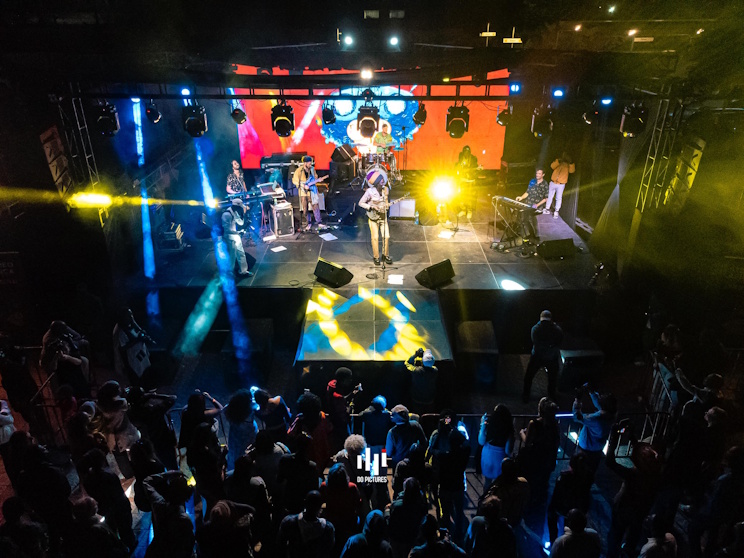
MUSIC IN AFRICA LIVE Lancé en 2020 pour une durée de 3 ans, Music In Africa Live est une initiative visant à soutenir l'écosystème de la musique africaine face aux contraintes imposées par la pandémie de COVID-19 ; le projet a été lancé par la Fondation Music In Africa (MIAF) en partenariat avec le ministère fédéral allemand des Affaires étrangères, Siemens Stiftung et le Goethe Institut. Plus de 30 aides sont disponibles dans le cadre de la troisième édition de Music In Africa Live, dans 3 catégories :  showcases, renforcement des compétences et plaidoyer, en conformité avec les modalités énoncées.

Instrument Building And Repair Project

The overarching objective of Music In Africa Foundation’s Instrument Building and Repair (IBR) project is to encourage the formalisation and professionalisation of instrument-making and repair in Africa, especially in relation to indigenous African instruments. Background In 2014, the Music In Africa Foundation (MIAF) identified as one of its focus areas for development the need to encourage young people from music and music-related sectors to consider instrument-making as a career. This need extended itself from the recognition that the making of traditional African instruments is not a widely practiced skill and seems to be limited to the older generation. Traditional African instrument makers are also few and far between, making communication and logistics between teachers and learners an obstacle. When instrument building workshops take place, budgetary constraints do not allow teachers or learners the time to explore the finer details of an instrument. Based on these observations, the MIAF designed and piloted the first IBR workshop at the Dhow Countries Music Academy (DCMA) in Zanzibar in February 2015. In 2016, the foundation received funding from the South African National Lotteries Commission to implement a much bigger version of the project in Johannesburg. The project drew participants from five African countries. 25 students from South Africa, Ghana, Senegal, Kenya and Ethiopia were trained on how to build and repair musical instruments. The instruments that they made were: Traditional Instruments: Umakhweyana and Marimba Conventional Instrument: Dulcimer guitar The workshop culminated in a traditional instruments concert at the Wits Theatre in Johannesburg. It is the MIAF’s aim to roll out similar workshops in as many African countries as possible over the next few years. Objectives Developing awareness of musical instrument makers in Africa with a view to promote their work to a wider global audience. Facilitating the sharing and transfer of skills in indigenous instruments between countries on the continent. Encouraging the formalisation and professionalisation of instrument-making and repair in Africa, especially in relation to indigenous instruments. Helping instrument makers develop their careers. Fostering the rapid monetisation and sustainable development of instrument-making and repair in Africa. Promoting constant exchange of ideas, expertise, experiences and know-how among instrument makers in Africa. Facilitating the identification of existing gaps in the field with a view to contribute new solutions. Facilitating the transfer of knowledge and skills of indigenous instruments between younger and older generations. 2020 edition The MIAF has also announced that multi-instrumentalist and instrument maker Joe Makhanza will facilitate one of the workshops on the building of the kamale ngoni instrument. Kamale ngoni is a kora-like, stringed instrument that originated in West Africa. The instrument contributed to the rise of Wassoulou music in the 1970s and 1990s. Makhanza was born in Giyani in South Africa's Limpopo province. He completed a bachelor of music degree and a post-graduate diploma in arts marketing from Wits University. He is currently completing his masters in ethnomusicology and is a part-time lecturer in African music studies at Rhodes University. He plays the kora, mbira, valiha, masenqo, xiwewe, ngoni ba and xizambi, among others. He also manufactures the aforementioned instruments. The MIAF will confirm more trainers who will join the workshops as well as the other instruments that will be featured in the 2020 IBR programme.  Apply to participate here. Connect with us on Twitter, Instagram and Facebook, and subscribe to our monthly newsletter. The Music In Africa Instrument Building and Repair project is funded by the National Lotteries Commission. It is implemented in partnership with Siemens Stiftung, Goethe-Institut, Wits Theatre and Kaya FM.

News

ACCES 2023 : découvrez les artistes à l’affiche pour un spectacle musical exceptionnel
16 Août 2023 - 13:36

cc-img

ACCES revient à Dar es Salaam les 9, 10 et 11 novembre après un édition spectaculaire dans la ville tanzanienne l'année dernière. Maintenant dans sa sixième édition, la conférence musicale organisée par la Music In Africa Foundation continue de repousser les limites, en impulsant un programme panafricain dans son rôle d'interface pour les principaux professionnels de l'industrie afin de se rencontrer, partager leurs connaissances et façonner le secteur musical du continent.
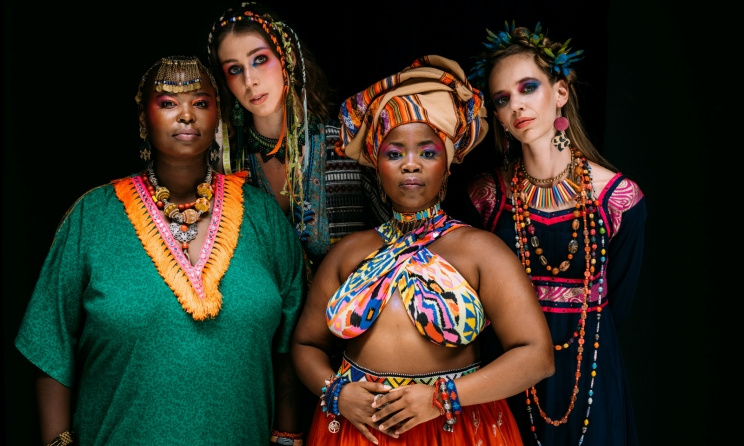
Zolani Mahola and The Feminine Force (Photo) : Gary van Wyk

Cette année, l'événement se tiendra au prestigieux Julius Nyerere International Convention Centre ainsi que dans d'autres lieux de Dar es Salaam.

Avant l'événement le plus important de l'industrie musicale africaine, nous vous présentons un avant-goût des artistes en vedette que vous pourrez voir se produire live en novembre.

Zolani Mahola & The Feminine Force (Afrique du Sud)

Zolani Mahola, ancienne membre de Freshlyground, qui a connu une renommée mondiale avec le tube « Waka Waka », la collaboration du groupe avec la chanteuse conlombienne Shakira, pour la Coupe du Monde de la FIFA en 2010. En 2019, Mahola a annoncé sa carrière solo et a sorti Thetha Mama, qui a remporté le prix de la Meilleure Production d' Album aux South African Music Awards. Certaines de ses collaborations les plus notables sont avec le violoncelliste mondialement connu Yo-Yo Ma et le chanteur-compositeur Dave Matthews. Au-delà de la musique, ses talents s'étendent à l'art dramatique, ayant remporté un prestigieux Fleur Du Cap Award pour sa pièce en solo autobiographique The One Who Sings. En tant que leader de The Feminine Force, Mahola rend hommage à l'ancien esprit des femmes à travers la chanson et la danse, mettant en avant l'essence bienveillante et émancipatrice de la communauté. À ACCES, elle brillera sans aucun doute, présentant son art polyvalent et inspirant.

Siti Muharam and The Unguja All Stars (Tanzanie)

Siti Muharam, connue sous le nom d' « Héritière du Taarab » et arrière-petite-fille de la légendaire Siti binti Saad, dirige les The Unguja All Stars. En 2020, elle a sorti l'album Sitii of Unguja (Romance Revolution On Zanzibar) », qui a été nommé Album Global du Mois par The Guardian en juin. À ACCES 2023, Muharam sera le porte-étendard de l'héritage et du legs musicaux du Taarab.

Nour Harkati (Tunisie)

Le chanteur-compositeur tunisien Nour Harkati puise son inspiration dans son lieu de naissance et ses explorations nomades à travers l'Afrique du Nord, l'Europe et New York City. Sa musique est une toile captivante de cordes énigmatiques, de claquements de mains, de cuivres étouffés et d'une voix vibrato chaleureuse. À ACCES, il partagera des histoires et des expériences personnelles et texturées que ses voyages lui ont permis de découvrir, abordant des thèmes tels que l'amour, la vie, le doute, la méfiance et la joie.

Feli Nandi (Zimbabwe)

Inspirée par des légendes locales comme Oliver Mtukudzi, et possédant une voix émouvante, la sensation montante zimbabwéenne a fait sa percée dans le mainstream en 2020 avec "Mufudzi WeMombe". La sortie de son album éponyme en 2021 a solidifié davantage le statut de Feli Nandi en tant qu'étoile montante. Une série d'autres singles à succès, dont "Munhu Wangu" et "Unotyei", lui ont valu des nominations lors de cérémonies de remise de prix prestigieuses. Cette année, elle a remporté le prix du Meilleur Album Alternatif des PPC Zimbabwe Music Awards, ce qui lui a assuré sa participation à ACCES 2023. Au-delà du Zimbabwe, elle a enchanté les publics internationaux à travers des performances au Royaume-Uni, en Afrique du Sud et au Togo.

Alostmen (Ghana)

Le groupe acoustique néo-traditionnel ghanéen Alostmen apportera un mélange unique d'instruments traditionnels et de rythmes afro vibrants sur la scène d'ACCES. Le groupe met en avant les talents vocaux et les messages de Stevo Atambire, la touche dynamique du koshka de Wanlov the Kubolor et ses compétences en rap, les riches sons du gome du maître tambour Ga Abednego Sowah Ako, et l'impressionnante expertise du tambour parlant d'Aminu Amadu. Réunis de manière experte par le directeur artistique Percy Yip Tong, qui sera speaker à ACCES 2023, et le producteur Wanlov the Kubolor de FOKN Bois, le premier album d'Alostmen sorti sur le label Koool Kreol apporte aux fans une fusion rare de musique afro-trance. Cela a conduit le groupe à une renommée internationale et à des performances réussies à travers l'Afrique de l'Ouest et l'Europe.

Leo Mkanyia (Tanzanie)

Artiste soul swahili, compositeur, guitariste, producteur et auteur-compositeur-interprète, la musique de Leo Mkanyia est un mélange puissant d'histoire, de culture, de politique, de migration, d'inégalités et d'amour. Son groupe, la Swahili Blues Band, a enjolivé des scènes prestigieuses comme le London African Music Festival, le Sauti za Busara de Zanzibar ainsi que le DOADOA East African Performing Arts Market et le Bayimba International Festival en Ouganda. Mkanyia espère laisser une empreinte durable sur la scène d'ACCES.

Ngwaka Son Systéme (RDC)

Le dynamique Ngwaka Son Systéme, basé en République démocratique du Congo, est dirigé par Love Lokombe et Boms Bomolo. Le groupe perpétue la tradition de la fabrication d'instruments DIY, une caractéristique des groupes congolais contemporains. Leurs performances pleines d'énergie mettent en avant les MCs Bebé Boomastyl et Héritier Lakala, ainsi que la chanteuse Bijoux Losokola.

Kasiva Mutua (Kenya)

Lorsque la percussionniste kényane frappe, elle devient un conduit pour invoquer les esprits ancestraux et incarner l'essence du progrès, de l'activisme et de la riche tradition de narration africaine. Co-fondatrice de l'ensemble entièrement féminin MOTRA (Modern and Traditional Rhythms) et membre de The Nile Project, Kasiva Mutua est une journaliste de formation, une boursière globale TED et une ancienne élève de One Beat, dont le parcours reflète un engagement à préserver non seulement le patrimoine culturel, mais aussi à déployer la musique comme un outil d'expression et de changement social..

Madalitso Band (Malawi)

Le duo folk, qui a passé une décennie à perfectionner leur style de jeu vibrant et leurs instruments faits maison dans les rues, honorera la scène d'ACCES après une tournée européenne et américaine de quatre mois pour 80 concerts. La percée de Madalitso Band est survenue il y a six ans lorsqu'ils se sont produits au festival Sauti za Busara à Zanzibar, déclenchant un tourbillon de succès. Cinq tournées européennes, dont des concerts dans des festivals comme WOMAD et Roskilde, ont véritablement consolidé leur statut dans le monde de la musique.

Damian Soul (Tanzanie)

L'histoire de Damian Soul est caractérisée par son parcours remarquable basé sur un engagement à suivre sa voix intérieure. Son style mélange des influences afro-soul, et sa performance à ACCES 2023 inspirera non seulement les auditeurs et les créatifs, mais soulignera également un message d'acceptation de son chemin authentique et du pouvoir transformateur de la musique.

Please se connecter to post a comment.

Most popular

Disclaimer: Music In Africa provides a platform for musicians and contributors to embed music and videos solely for promotional purposes. If any track or video embedded on this platform violates any copyrights please inform us immediately and we will take it down. Please read our Terms of Use for more.

newsletter banner

Abonnez-vous à notre newsletter

Retrouvez-nous sur les réseaux sociaux