
















































- Par Mélodie Petit
L'instabilité politique récurrente perturbe l'essor de l'industrie musicale et les musiciens touarègues résolvent le problème de l’absence de structures en collaborant avec des partenaires privés et étatiques européens et américains.

Contexte politique et culturel : les vecteurs de valorisation musicale
Ancienne colonie française, le Niger a gagné son indépendance en 1960. Hamani Diori en devient le premier président, sous un régime au parti unique. Il est renversé en 1974 par un coup d'État mené par le lieutenant-colonel Seyni Kountché, qui prend la tête du pays jusqu'à sa mort, en 1987.
Le colonel Ali Saibou prend sa succession. Sous la pression de la population qui conteste sa légitimité, il libère des prisonniers politiques, libéralise la législation et promulgue une nouvelle Constitution. À la fin des années 1990, les nigériens obtiennent l'instauration d'un régime démocratique avec plusieurs partis politiques.
1990 est aussi une année tragique marquée par le massacre de Tchintabaraden et la répression contre les Touaregs.
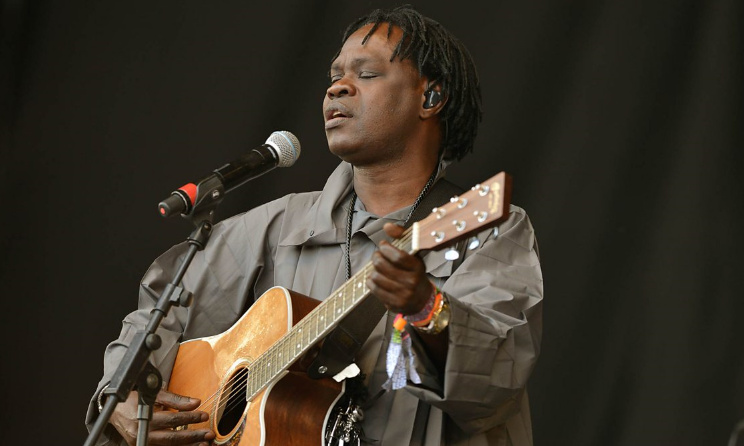
Des artistes tels que : Mdou Moctar, Bombino sont populaires à l'échelle nationale et internationale. Ils ont ainsi bénéficié de producteurs étrangers, recours principal pour pouvoir sortir un album, ou plus simplement pour pouvoir voyager afin d’aller faire des tournées internationales, car à cause des conflits touchant certaines zones du territoire nigérien, de nombreux artistes touarègues n’avaient plus de papiers d’identité[i].
Musique touarègue nigérienne souvent produite par des labels étrangers
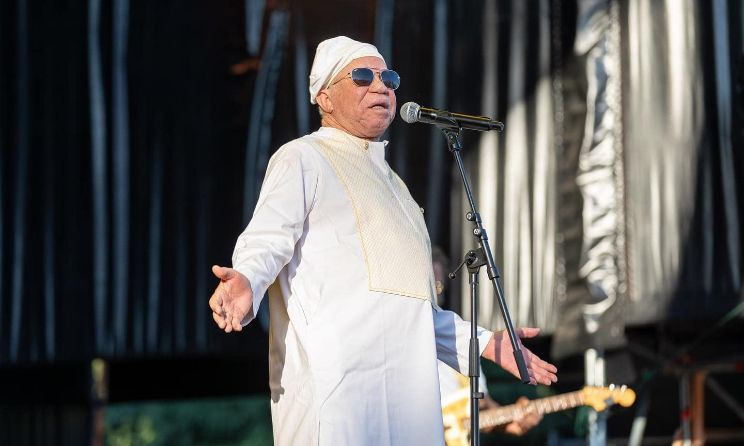
Abdallah ag Oumbadougou, est un des premiers à avoir introduit la guitare dans la musique traditionnelle touarègue. Au cours de son parcours, marqué par l'exil et la rébellion dont il rejoindra les rangs, il n'a cessé de jouer. En 1995, il rentre officiellement au Niger après la signature des accords de paix.
Son premier album, Imawalen (2002) a été financé par Mama Abou, journaliste et figure de l'opposition. Cet opus a été enregistré au Bénin, à Cotonou.
En 1996, avec d'autres groupes touarègues, il participe à la bande-originale du film réalisé par Jacques Dubuisson, Imûhar, une légende. Il gagne alors une visibilité internationale et est invité à Brest (France) par l'association CYRAV en 1998.
En 2002, Abdallah ag Oumbadougou enregistre à Niamey l'album Imawaien, puis en 2004, Afrikya, est enregistré à Brest. Il intègre alors le collectif Desert Rebel, composé entre autres des musiciens français Guizmo, du groupe Tryo, et de Daniel Jamet, de la Mano Negra.
Le groupe de musique touarègue Oyiwan (signifiant « Bonjour à tous » en tamachek), fut fondé en 1987 à Agadez, au centre du Niger. Accompagné de trois autres musiciens et de quatre chanteuses, le guitariste Barmo met en musique et interprète les poèmes d'Elhadji Gonji.
Très populaire, également grâce à l'apport des notes de guitare électrique dans les sonorités traditionnelles, le groupe donne de nombreux concerts à Agadez et dans les localités voisines. Ces spectacles ont lieu lors des mariages ou d'autres cérémonies.
En 1997, il participe lui aussi à la bande-originale du documentaire de Jacques Dubuisson et représente le Niger lors des troisièmes Jeux de la Francophonie. Ce n'est qu'en 2003 qu'Oyawan enregistrera son unique album Assode, disponible en écoute libre sur la plateforme lastfm.
Goumar Almoctar a connu un parcours similaire, surnommé Bombino mot signifiant en français « gentil homme du désert ». Sa carrière commence très jeune, en effet, dès 12 ans, Bombino chante lors des mariages et autres cérémonies familiales.
Entre 1992 et 1997, il passe cinq années en exil en Algérie pour fuir les répressions du gouvernement nigérien à l'encontre des Touaregs. Dès son retour à Agadez, il se lance dans une carrière de musicien professionnel et chante dans des mariages pendant plus de dix ans.
Plusieurs de ses albums ont été produits grâce à des structures implantées dans des pays autres que le Niger. Son premier album, Guitars from Agadez, est ainsi issu de l'enregistrement live de l'une de ces cérémonies, à la demande de Sublime Frequencies, une société de production basée à Seattle (USA).
L’opus Guitars from Agadez aura une distribution limitée. En 2007, Bombino s'exile à nouveau, cette fois au Burkina Faso. La rébellion Touarègue gagne du terrain et est réprimée dans le sang. Deux des musiciens de l'artiste sont tués par des gendarmes : « Je pense à eux à chaque fois que je monte sur scène. Je me dis que c’est injuste qu’ils n’aient pas eu la chance de profiter avec nous de ce succès » témoignera le chanteur.
Les albums : Agadez sorti en 2011, Nomad publié en 2013 et Azel datant de 2016 ont tous été produits par des maisons de disque américaines.
Bombino multiplie les concerts aux USA, en Australie et en Europe, ses tournées internationales laissent peu de place aux dates africaines et nigériennes.
Nord du Niger et absence d’infrastructures de production musicale
Dans le nord du Niger, l'industrie musicale n'existe pas. Mais des studios d'enregistrements sont ouverts dans le sud du pays et notamment à Zinder. Ce déficit n’empêche pas les artistes musiciens de préserver leur art en assurant leur transmission.
Ainsi, le centre culturel franco-nigérien est une institution binationale placé sous la tutelle de deux entités administratives : le ministère nigérien de la Culture et le ministère français des Affaires étrangères.
Chargé de diffuser la culture française et de promouvoir l’expression artistique et culturelle contemporaine du Niger, il propose des formations professionnelles, un soutien à la création et à la diffusion des œuvres musicales et dispose à Zinder d'un studio d’enregistrement numérique et une salle de répétition équipée pour orchestre.
À Niamey, le Centre de Formation et de Promotion Musicale (CFPM) El Hadj Taya a été équipé d'un studio numérique d'enregistrement offert par les coopérations française et espagnole, pour enregistrer des orchestres, groupes et solistes modernes, traditionnels et néo traditionnels des régions de Diffa, Tillabéry, Tahoua et Niamey.
Les artistes et plus spécifiquement les rappeurs, sont sollicités par les ONG, qui organisent des concerts dans les grandes villes du Niger, dont Agadez. Les artistes produisent des compilations pour sensibiliser sur des thèmes prédéfinis. Le plus souvent ces chansons commandées par des Organisations Non Gouvernementales (ONG) véhiculent des messages de sensibilisation contre le SIDA ou l'excision.
Depuis son apparition en 1990, le rap se développe au Niger. Les artistes ont imaginé de nouveaux moyens de financement impliquant d’utiliser les ressources fournies par les ONG pour pouvoir produire leurs nouveaux albums.
L’enregistrement coûte environ 60 000 FCFA (90 Euros) par chanson. La duplication est le plus souvent faite au Burkina Faso ou au Nigéria. Les concerts et les diffusions radiophoniques ne suffisent que rarement à couvrir les frais investis.
Dans les années 2000, les infrastructures musicales ont cependant vu leur nombre croître grâce à l'engagement des musiciens eux-mêmes. Abdallah ag Oumbadougou a ainsi fondé l'association Takrist N'tada, qui a pour objectif de défendre les droits des jeunes artistes.
Deux écoles de musique ont ouvert : la première en 2000 à Arlit et la seconde en 2003 à Agadez. Avec comme objectif : apprendre aux jeunes filles à jouer de l'imzad un violon monocorde traditionnel touarègue qui tend à être supplantée par la guitare. Instrument dont Abdallah ag Oumbadougou s'est servi pour donner naissance au blues touareg.
Depuis 2007, à l'initiative du reggae-man nigérien Black Mailer, un syndicat national des métiers de la musique regroupe environ trois cents membres du secteur musical parmi lesquels les fabricants d'instruments, les artistes, les instrumentistes, les producteurs …
Conclusion
L’état de l’industrie musicale dans le nord du Niger n’est pas reluisant. La persistance des foyers de tension armés depuis 27 ans empêche le développement d’une véritable industrie musicale.
Cependant des initiatives menées par des chanteurs Touaregs essayent de reconstruire le secteur. Entre autres initiatives, l'association Takrist N'tada fondée en janvier 2003[ii]par Abdallah ag Oumbadougou pour défendre les droits des jeunes artistes et leur apprendre à jouer des instruments.
Autre caractéristique de l’industrie musicale au nord du Niger, elle dépend quasi exclusivement de capitaux privés et non nigériens.
Avertissement/Clause de non-responsabilité
Les aperçus de Music In Africa fournissent des informations générales sur les scènes de musique dans les pays africains. Music In Africa comprend que l'information contenue dans certains de ces textes pourrait devenir dépassée avec le temps. Si vous souhaitez fournir des informations plus récentes ou des corrections à l'un de nos textes, veuillez nous contacter sur [email protected].
Références
http://www.jeuneafrique.com/mag/347524/culture/musique-bombino-rock-toua...
http://musique.rfi.fr/musique/20050726-rappe-le-niger
http://www.jeuneafrique.com/mag/356335/culture/musique-niger-incontourna...
http://www.nigercultures.net/
http://www.jeuneafrique.com/mag/347524/culture/musique-bombino-rock-toua...
[i] http://concert.arte.tv/fr/livestories/sahel-et-la-musique-dans-tout-ca
[ii] http://takristntada.blogspot.sn/


Most popular

Top 10 des artistes congolais les plus streamés en France en 2026
05 Mai 2026

Top 10 des artistes africains les plus populaires sur YouTube
08 Fév 2023

10 rappeurs d’origine africaine qui redéfinissent la scène rap française en 2025
06 Juin 2025

Chronique : dans « ADN », Gally Garvey raconte la rumba congolaise autrement
24 Oct 2026

ACCES DÉVOILE UNE PROGRAMMATION D’EXCEPTION POUR SON ÉDITION 2026
23 Oct 2026
ACCES dévoile une programmation exceptionnelle pour son édition 2026
14 Oct 2026
Disclaimer: Music In Africa provides a platform for musicians and contributors to embed music and videos solely for promotional purposes. If any track or video embedded on this platform violates any copyrights please inform us immediately and we will take it down. Please read our Terms of Use for more.

Abonnez-vous à notre newsletter
Retrouvez-nous sur les réseaux sociaux


Please se connecter to post a comment.